
A lot of homeowners hear the words cash buyer and automatically think lowball offer. And honestly, I get it. That reputation exists for a reason. Some cash buyers out there do try to get homes for as little as possible. But that is not how we work at Buy Your Properties, and I want to explain exactly how we come up with our offers so you know what is going on.
When we say fair market value, we mean it. Here is the full picture of how it works.
What Fair Market Value Actually Means
The Real Definition Behind the Term
Fair market value is the price a willing buyer and a willing seller would agree on when both sides know what the home is worth and nobody is being pressured into anything. It is not a magic number. It is based on what similar homes have actually sold for, what condition the home is in, and what the market is doing right now.
According to Rocket Mortgage, fair market value reflects what a buyer would reasonably pay for a property under normal market conditions, taking into account comparable sales, location, and current trends.
The key thing people miss is that fair market value is not the same as list price. It is not the same as tax assessed value. It is what a real buyer in today’s market would actually pay.
Why Cash Offers Are Sometimes Lower and When They Should Not Be
Cash buyers sometimes offer less than list price because they are buying as is, covering closing costs, and closing fast. Those things have real dollar value. No repairs, no agent commissions, no 30 to 60 day wait. When you factor all of that in, a cash offer can actually be very competitive with what you would net from a traditional sale after all the fees and costs come out.
That said, a fair cash offer should still be grounded in what the home is actually worth. Not half of it. Not whatever number someone pulls out of thin air. A real fair market value calculation.
How We Calculate What We Offer
We Start With Comparable Sales in Your Area
The foundation of every offer we make is a comparative market analysis. We look at what homes like yours have sold for recently in your neighborhood. Similar size, similar condition, similar location. Those sold prices are the most honest signal of what your home is worth right now.
This is the same method appraisers use. According to the National Association of Realtors Q3 2025 report, the Los Angeles metro area had a median existing single family home price of around $954,100. We use that kind of real, current market data to anchor every offer we make.
I have sat down with homeowners who were sure their home was worth far more than the market supported, and I have also sat with sellers who were shocked their home was worth so much. The comps do not lie. They tell the real story.
We Look at the Condition and What It Would Cost to Fix
After we run comps, we look at the actual condition of the home. If the roof needs replacing, the foundation has issues, or the kitchen has not been updated since 1985, those things affect value. They would affect value on the open market too. A traditional buyer getting a mortgage would ask for repairs or price reductions after their inspection anyway.
The difference with us is we do not ask you to fix anything. We factor the repair costs into our offer calculation so you never have to spend a dime before closing. This is what buying as is actually means.
Here is a simple breakdown of the factors we weigh when building an offer:
- Recent comparable sales within a half mile to one mile radius
- Current list price trends in your zip code
- Condition of the roof, foundation, plumbing, and electrical
- Age and condition of HVAC and major appliances
- Cosmetic updates needed versus structural repairs needed
- Any liens, title issues, or legal complications on the property
- Your desired timeline and any special circumstances
How Our Process Compares to a Traditional Sale
What You Actually Net at the End Is What Matters
A lot of sellers focus on the sale price number and forget about everything that comes out of it. Agent commissions in California typically run around five to six percent. Then there are closing costs, repair requests, staging costs, and the months of carrying costs while the home sits on the market. By the time you subtract all of that, your actual proceeds can look very different from your list price.
With a cash sale through us, there are no agent fees, no repair costs, no staging, and no waiting. We cover closing costs too. When you put those savings side by side, our offer often compares very well.
Here is a side by side look at a sample scenario:
| Item | Traditional Sale | Cash Sale With Us |
|---|---|---|
| Sale Price | $950,000 | $870,000 |
| Agent Commissions (5.5%) | $52,250 | $0 |
| Repairs and Prep | $25,000 | $0 |
| Closing Costs | $9,500 | $0 |
| Carrying Costs (4 months) | $12,000 | $0 |
| Net Proceeds | $851,250 | $870,000 |
The numbers in this example are for illustration, but the logic holds up. When you factor in everything a traditional sale costs you, our cash offer can actually put more money in your pocket.
No Appraisal Contingency Means No Last Minute Problems
One thing that kills a lot of traditional sales is the appraisal contingency. A buyer gets excited, makes an offer, and then the appraiser comes in and values the home lower than the agreed price. Now the deal is in trouble. The buyer has to renegotiate or walk away and the seller is back to square one.
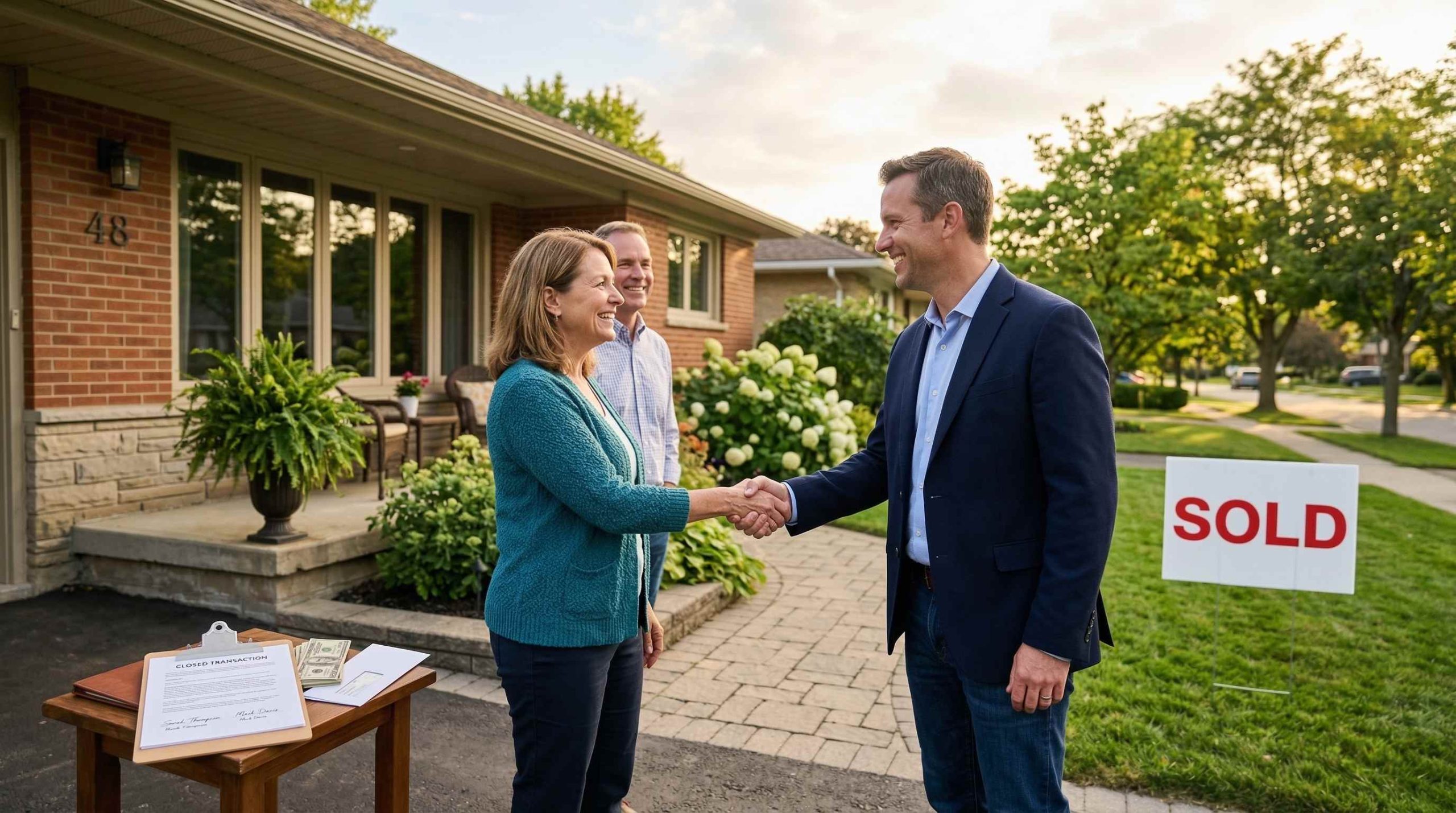
With a cash sale, there is no lender, which means there is no appraisal contingency. Once we agree on a number, that number stands. No surprises three weeks before closing. That certainty has real value for sellers who cannot afford to have a deal fall apart.
If you want to understand more about how cash sales work from start to finish in California, our post on turning equity into liquidity for LA homeowners covers the full picture.
What Makes Our Offers Different
We Base Offers on Real Data Not Guesswork
Some cash buyers use a formula. Something like 60 to 70 percent of after repair value as a starting point. That can work for investors, but it is not the same as a fair market value offer. We start with what the market says your home is worth, then we make adjustments based on condition and our costs, not the other way around.
We also never pressure you to accept quickly. You can take the time to think it over, get a second opinion, or talk to a real estate agent. We want you to feel good about the decision.
For sellers who have a rental property they want to move out of, understanding how equity can work for you in a cash sale is important. Our post on rental property liability and transitioning to passive income is a helpful read before you decide.
Transparency Is Part of How We Work
We will walk you through our offer line by line if you want. You can see the comps we used. You can see how we accounted for condition. There is nothing hidden and nothing tricky. A fair offer you understand is worth more than a mystery number you cannot verify.
If you ever want to talk through how we would value your specific property, just reach out. We are happy to have that conversation with no pressure and no obligation. You can start by visiting our contact page.
And if you are thinking about whether a cash sale makes sense as part of a larger property strategy, our post on using a cash sale to fund your next 1031 exchange is worth a look.
Conclusion
Fair market value is not just a phrase we throw around. It is the foundation of every offer we make. We look at real comps, real market data, and the real condition of your home. We factor in the costs you avoid by not using an agent, not making repairs, and not waiting months for a traditional sale. When you put it all together, a cash offer from us can be the most honest and financially smart way to sell.
If you want to see what that looks like for your home, we are ready to show you.
Frequently Asked Questions
Does a cash offer always mean a lower price?
Not necessarily. A cash offer is often lower than a list price, but when you factor in what you save on commissions, repairs, staging, and carrying costs, your actual net proceeds from a cash sale can match or beat a traditional sale. The number that matters is what you walk away with, not the headline price.
How do you decide what to offer for a home?
We start with recent comparable sales in your area, then adjust for the current condition of the home. We look at what repairs are needed, what the local market is doing, and what costs we will take on that you would otherwise have to pay. The goal is an offer that reflects real market data.
What is a comparative market analysis?
A comparative market analysis, or CMA, is a way of estimating a home’s value by looking at what similar homes in the same area have sold for recently. It is the same tool real estate agents and appraisers use to set pricing. We use this as the starting point for every offer we make.
Do you cover closing costs?
Yes. In a cash sale with us, we cover closing costs. That is one of the ways the overall deal works out well for sellers even when the headline offer number looks different from a traditional listing price.
How fast can I get an offer?
We can typically provide a cash offer within 24 to 48 hours of learning about your property. From there, you choose the closing timeline. We can close in as little as seven days or we can work around your schedule if you need more time.