
You bought a rental property to make money. And maybe for a while it did. But now the repairs never stop, the tenants keep calling, the property taxes went up again, and when you sit down and actually add everything up, you start wondering if you are really making anything at all. A lot of landlords in Los Angeles are asking themselves the same question right now.
When a Rental Property Stops Being an Asset
There is a version of rental property ownership that looks great on paper. You collect rent, it covers the mortgage, and over time the property goes up in value. That is the dream. But the reality often gets messier as the years go on.
Maintenance costs rise. Rent control laws in Los Angeles limit how much you can raise rent on long-term tenants. Vacancy periods eat into your annual return. Insurance premiums have gone up sharply in California. Property taxes get reassessed. And if you have problem tenants, the legal costs and emotional weight of dealing with an eviction can wipe out months of rent income in a single year.
When all those real costs add up and you look at what you are actually netting after everything, some rental properties in LA are breaking even or running at a loss. That is the definition of a liability, not an asset.
The Hidden Costs That Turn Landlording into a Second Job
Owning a rental sounds passive. It is not. At least not if you are doing it yourself. You are handling maintenance calls, screening tenants, chasing late rent, coordinating repairs, managing insurance claims, and keeping up with changing California tenant protection laws.
According to the IRS, rental income is generally classified as passive income for tax purposes. But the actual work involved in running a rental property in a city like Los Angeles is anything but passive. The IRS classification is about tax treatment, not about how much time and energy you are actually spending on the property.
Property management companies charge 8 to 10 percent of monthly rent on average. Add that to your mortgage, taxes, insurance, maintenance reserve, and occasional vacancy, and your profit margin can get very thin. For a lot of landlords in LA, the honest answer is that the property is paying them less per hour of stress than they realize.
Signs Your Rental Property Has Become a Burden
Not every rental is a bad investment. But here are some honest signs that yours might be working against you more than for you right now.
- You are spending more than 5 percent of the property value annually on maintenance and repairs.
- Your net cash flow after all expenses is less than $300 per month.
- You have had multiple vacancy periods in the last two years.
- You are dealing with a difficult tenant situation or a recent or pending eviction.
- Your rent is capped by local rent control and cannot keep up with rising costs.
- The property needs significant capital improvements like a roof, plumbing, or electrical work.
- You find yourself stressed, overwhelmed, or resentful every time the property comes up.
Any one of these on its own is manageable. Several of them together is a different story. And if you are also sitting on significant equity in that property, the question of whether to keep holding or cash out gets very real.
What Passive Income Actually Looks Like Without the Landlord Headaches
The goal of owning a rental is usually income without constant work. That is a reasonable goal. But there are ways to generate real, ongoing income from real estate without dealing with tenants, maintenance calls, or California eviction law.
Here is how some investors are transitioning out of active landlording into genuinely passive income streams.
One option is selling the rental property and rolling the proceeds into a real estate investment trust, better known as a REIT. REITs are companies that own and operate income-producing properties. You buy shares and receive regular dividend payments without owning or managing any physical property. According to the U.S. Securities and Exchange Commission, REITs are required by law to distribute at least 90 percent of their taxable income to shareholders as dividends. That means consistent payouts without a single maintenance call.
Another path is using the sale proceeds to fund a 1031 exchange into a larger, professionally managed commercial or multifamily property where a property management company handles everything and you simply receive your share of the income. The property grows in value, you collect distributions, and your day-to-day involvement is essentially zero.
How the Numbers Compare: Active Landlording vs Truly Passive Income
Let me show you a quick side-by-side so the difference is clear.
| Factor | Actively Managed Rental in LA | Passive Income from REIT or Managed Property |
|---|---|---|
| Time required monthly | 5 to 20 hours depending on issues | Near zero |
| Income consistency | Variable, vacancy and repairs affect it | Regular distributions or dividends |
| Maintenance responsibility | You handle or coordinate | None |
| Tenant management | You screen, manage, and evict if needed | None |
| Exposure to California tenant laws | High, direct liability | None, handled by the operator |
| Liquidity of investment | Low, tied up in real property | Higher, especially with REITs |
The Role of a Cash Sale in Making the Transition
If you have decided your rental property is more trouble than it is worth, the first step is actually selling it. And in Los Angeles, getting a rental property sold can be more complicated than selling a primary residence.
Tenants have rights in California. Depending on the lease situation, you may need to give significant notice before showing the property or before the buyer can take possession. Some tenants have the right of first refusal to purchase the property. Long-term tenants under rent control have additional legal protections that affect timing and buyer options.
A traditional listing with a mortgage-backed buyer adds even more complexity. The buyer’s lender will want to see leases, rental history, and current rent rolls. If there is a difficult tenancy or any legal action in progress, many buyers walk away.
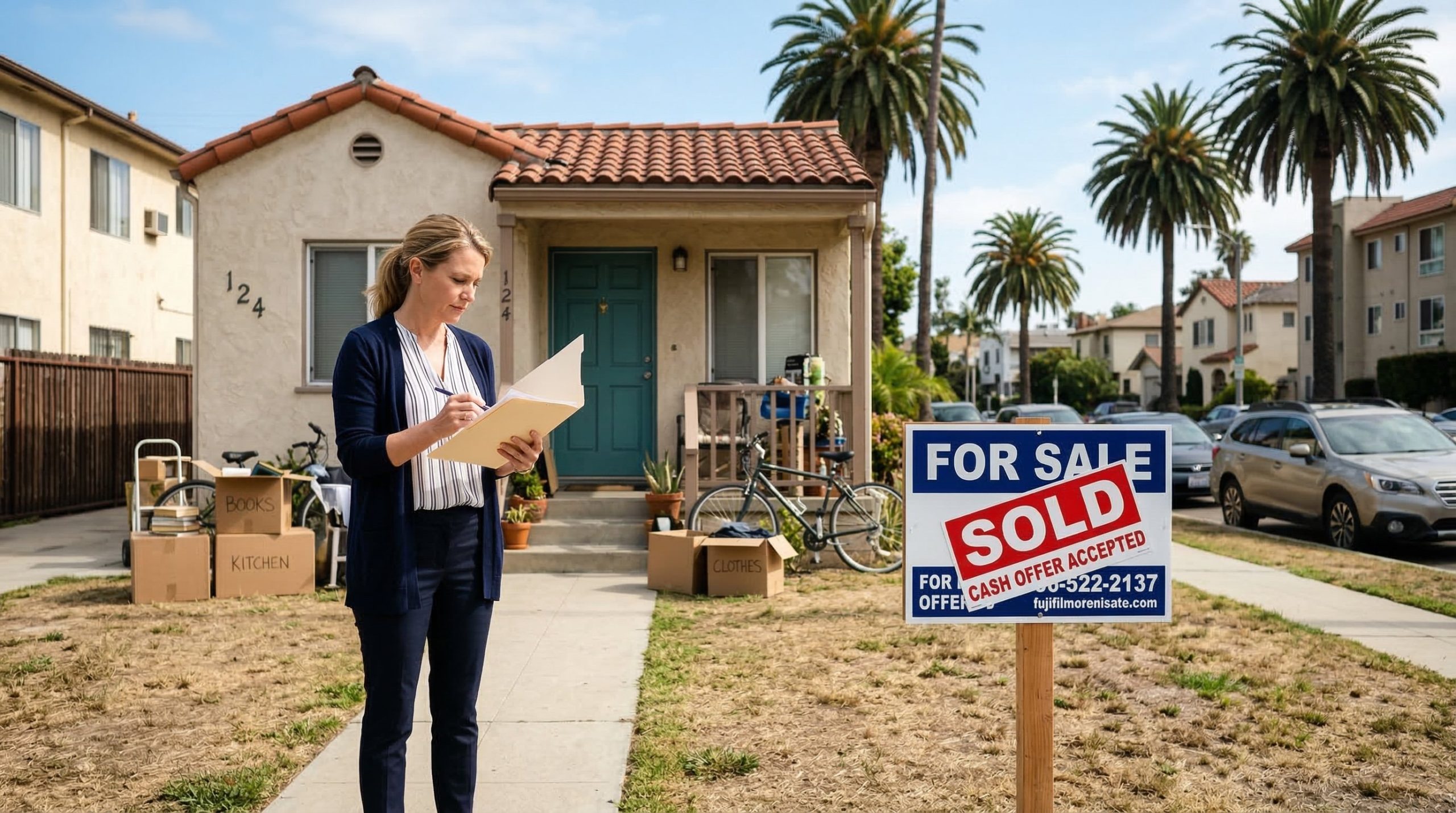
A cash sale removes most of those layers. Cash buyers in LA deal with occupied rentals regularly. They understand California tenant law, they buy properties as-is, and they close on a timeline that works around lease situations. For a landlord who is done and just wants out, a clean cash sale is often the best exit available.
If you are dealing with a problem tenant situation, a major repair need, or just years of deferred maintenance on a rental you no longer want to manage, our post on why cash sales remove drama for sellers explains exactly why this path works better than a traditional listing in situations like yours.
And for a broader look at how a sale fits into a larger investment strategy, our guide on using a cash sale to fund a 1031 exchange shows how to move out of a burdensome rental and into a better investment without paying a huge tax bill in the process.
What to Do With the Money After You Sell Your Rental
Selling your rental frees up capital that has been sitting in a property you were working hard to manage. Now the question is what to do with that money so it keeps working for you.
If you want to stay in real estate but without the landlord role, a 1031 exchange lets you roll the sale proceeds into a new property without triggering capital gains tax right away. You could invest in a turnkey property managed by professionals, a syndication deal, or a commercial property with a long-term net lease where the tenant handles the property expenses.
If you want to step back from real estate ownership entirely, you can invest in publicly traded REITs, real estate ETFs, or diversified income-producing assets. The return may be lower than a well-run rental, but the time cost and stress cost are essentially zero.
Some sellers put the money into dividend-paying stocks, bonds, or annuities that generate regular income. Others use it to pay off their own primary mortgage, which effectively gives them the same financial benefit as rental income but without the responsibilities of being a landlord.
Is It the Right Time to Sell Your LA Rental Property?
For most LA landlords with significant equity, the honest answer is that the timing is as good as it has been in years. Equity levels are high. Cash buyers are active. And the ongoing costs and legal complexities of being a landlord in California are only getting more demanding.
If your rental is draining your time, raising your stress level, or simply not producing the return it should, holding on to it because of emotional attachment or fear of the tax bill is costing you. There are strategies to manage the tax side of things, and a clean exit can give you capital that produces truly passive income going forward.
We work with landlords in Los Angeles who are ready to sell their rental properties. We buy occupied and vacant properties as-is, handle all the complexity of the tenant situation, and close fast. No open houses, no lender complications, and no uncertainty about whether the deal will actually close.
Reach out through our contact page to get a no-obligation offer and a clear picture of what your rental is worth and what you would walk away with.
You can also read about how we approach property valuation and the full selling process on our sell your house fast in Los Angeles page.
Conclusion
A rental property that was once a smart investment can slowly turn into something that costs you more than it gives you. Higher costs, tougher tenant laws, and the constant demand on your time can flip an asset into a liability before you even realize it happened.
The good news is that the equity you have built up in that property is real and accessible. You can convert it into something that actually generates passive income without the headaches. A cash sale is often the fastest and cleanest way to make that transition.
If you are tired of being a landlord and want to move on, the right time to do it is when you have the equity, the market is cooperating, and you have a clear plan for what comes next. That time for a lot of LA landlords is right now.
Frequently Asked Questions
How do I know if my rental property is actually losing money?
Add up every real cost: mortgage or loan payment, property taxes, insurance, maintenance and repairs, property management fees if applicable, vacancy costs, and any legal fees from tenant issues. Then subtract that total from your annual rental income. If the number is small, zero, or negative, your rental is not generating meaningful profit. Many LA landlords discover their actual return is far lower than they assumed once they count everything honestly.
Can I sell my rental property in LA if it still has tenants?
Yes, you can sell an occupied rental property in Los Angeles, but California tenant law adds complexity. Tenants have rights around notice periods, property access, and in some cases a right of first refusal to purchase. A cash buyer is typically the easiest route because they are experienced with tenant situations, buy as-is, and do not require the property to be vacant before closing.
What is the difference between active rental income and truly passive income?
Active rental income requires ongoing involvement: screening tenants, handling maintenance, managing lease renewals, and dealing with problems. Truly passive income requires almost none of that. REITs, real estate syndications, and professionally managed investment structures generate income distributions while experienced operators handle all the day-to-day work. You own the investment without managing it.
What happens to my capital gains tax if I sell my rental property?
When you sell an investment property, the profit is subject to capital gains tax. If you have owned the property for more than a year, long-term capital gains rates apply, which are lower than ordinary income rates. A 1031 exchange allows you to defer those taxes by rolling the proceeds into a new investment property. Your tax advisor can help you figure out the best strategy based on your equity, your income, and what you plan to do next.
Is it better to sell my rental or hire a property manager and hold?
It depends on the numbers and your goals. A good property manager removes the time burden but costs 8 to 10 percent of your monthly rent. If your cash flow is already thin, adding that cost may push you into negative territory. If the property has strong equity and solid long-term income potential, hiring a manager and holding can make sense. But if the property is struggling, the equity is high, and you want financial flexibility, selling and transitioning to a more passive investment is often the smarter move.