
That old house on the corner has been empty for years. The windows are cracked. The lawn is overgrown. And you keep wondering — who owns that place, and can I buy it? If you’ve had that thought, you’re already thinking like a real estate investor. Abandoned properties can be bought, often well below market value. You just need to know how to find them and what steps to follow.
What Is an Abandoned Property?
The Legal Definition You Need to Know
An abandoned property is a home or building where the owner has left and no longer maintains or controls it. The exact legal definition changes from state to state. In most places, a property is considered abandoned when it has been unoccupied for at least one year and the owner has effectively given up their rights to it.
It’s important to know the difference between abandoned, vacant, and condemned. A vacant property is simply empty — but someone still owns it and is responsible for it. A condemned property has been declared unsafe by local authorities. An abandoned property is usually one where the owner has walked away completely, often due to foreclosure, unpaid taxes, or death without heirs.
According to Zillow, abandoned properties are often forfeited by homeowners due to foreclosure or other financial and legal circumstances, and they’re typically not under the active control of the original owner.
Why People Walk Away From Properties
There are many reasons a home ends up abandoned. Sometimes the owner couldn’t keep up with the mortgage payments and the bank foreclosed. Sometimes property taxes went unpaid for years. Sometimes the owner passed away with no family to claim the home. And sometimes people simply walked away after a financial crisis.
Whatever the reason, abandoned homes create opportunity. They often sell for 20–50% below market value — a huge discount. If you’re thinking about this kind of investment, it’s helpful to understand the difference between pre-foreclosure and foreclosure, since many abandoned homes are tied to the foreclosure process.
How to Find Abandoned Properties
Simple Methods Anyone Can Use
Finding abandoned properties doesn’t require special software or connections. You can start with what you already have. Here are the most reliable ways:
- Drive for dollars — drive through neighborhoods and look for homes with overgrown lawns, boarded windows, peeling paint, mail piling up, or broken fences. These are visual signs a home may be abandoned.
- County tax assessor’s website — properties with delinquent taxes often show up here. These are prime candidates for abandonment.
- County clerk’s office — they keep records of properties and can often tell you if a home is unoccupied or flagged as abandoned.
- Local banks — banks may have foreclosed properties on their books they want to move. Call or check their REO (Real Estate Owned) listings.
- Real estate agents — local agents who specialize in distressed properties often know of abandoned homes that aren’t listed anywhere publicly.
- Online platforms — search Zillow, Realtor.com, or HUD’s website using filters for foreclosures or fixer-uppers.
I’ve found that driving around with a notepad is still one of the most effective methods. It sounds old-fashioned, but abandoned homes tell a story from the outside. A real estate agent friend of mine calls it “reading the neighborhood.” You start to see patterns quickly.
Using Public Records to Track Down Owners
Once you spot a potential abandoned home, your next job is to find out who legally owns it. The fastest way is through property tax records. Most counties make these available online for free. Search by address and you’ll find the owner’s name, last known mailing address, and whether taxes are current or delinquent.
If the owner’s mailing address is different from the property address, that’s a good sign the home may be abandoned. You can send a letter to that address expressing your interest in purchasing the property. Keep it simple, respectful, and personal. Most owners in this situation are either ready to deal or haven’t thought about it yet.
Here’s a comparison of methods to find and track abandoned property ownership:
| Method | Cost | Best For | Time Required |
|---|---|---|---|
| Drive for dollars | Free | Spotting visual candidates | Low |
| County tax records | Free | Finding owner + tax status | Low to medium |
| County clerk’s office | Free or small fee | Confirming ownership | Medium |
| Real estate agent | No cost until deal closes | Off-market leads | Low |
| Online auctions | Varies (registration fees) | Ready-to-buy listings | Low |
How to Buy an Abandoned Property
Step-by-Step Buying Process
Buying an abandoned home is not like buying a regular listed house. The process has a few extra steps, but it’s very doable if you go through them carefully.
Step 1: Confirm the property is truly abandoned. Just because a house looks empty doesn’t mean it legally is. Contact the county to check occupancy status and whether the home has been officially flagged as abandoned.
Step 2: Find the rightful owner. Use tax records, the county assessor’s office, or a title company to track down who legally owns the property. This can sometimes take time, especially if the owner has died or moved without leaving a forwarding address.
Step 3: Make contact and express interest. Reach out to the owner directly with a written letter or phone call. Be upfront that you’re interested in buying. Many owners of abandoned properties are relieved someone wants to take the property off their hands.
Step 4: Order a title search. Before you offer a single dollar, have a title company run a full title search. This reveals any liens, back taxes, legal judgments, or ownership disputes that could complicate or block your purchase.
Step 5: Get a property inspection. Even if the home looks terrible from the outside, an inspection gives you a real picture of structural problems, water damage, mold, electrical issues, and what the true repair costs will be.
Step 6: Make an offer based on after-repair value. Calculate the after-repair value (ARV) of the home — what it will be worth after renovations — then back out your estimated repair costs and desired profit margin to get your offer price.
Step 7: Close the deal and clear all liens. Once your offer is accepted, work with a real estate attorney to clear any outstanding liens, settle any back taxes, and transfer the title properly.
According to Quicken Loans, buying an abandoned home involves a nontraditional process, including identifying true ownership, determining legal status, and budgeting for major repairs. Going in prepared is the key to making this work.
Buying Through Tax Auctions
One of the most common ways to buy abandoned properties is through a tax lien or tax deed auction. When a property owner fails to pay property taxes for a set number of years (typically 2–4 depending on the state), the county can seize and auction the property to recover what’s owed.
These auctions are public and open to anyone. You register with the county, show up on the designated date, and bid. Properties at tax auctions can sometimes be purchased for just the amount of back taxes owed — which can be a fraction of market value.
But watch out: just like sheriff sale auctions, these properties are sold as-is. Always do your title search and property research before bidding. Our guide on buying a foreclosed home for beginners goes deeper into what to expect in these types of distressed property purchases.
Risks to Know Before You Buy
What Can Go Wrong
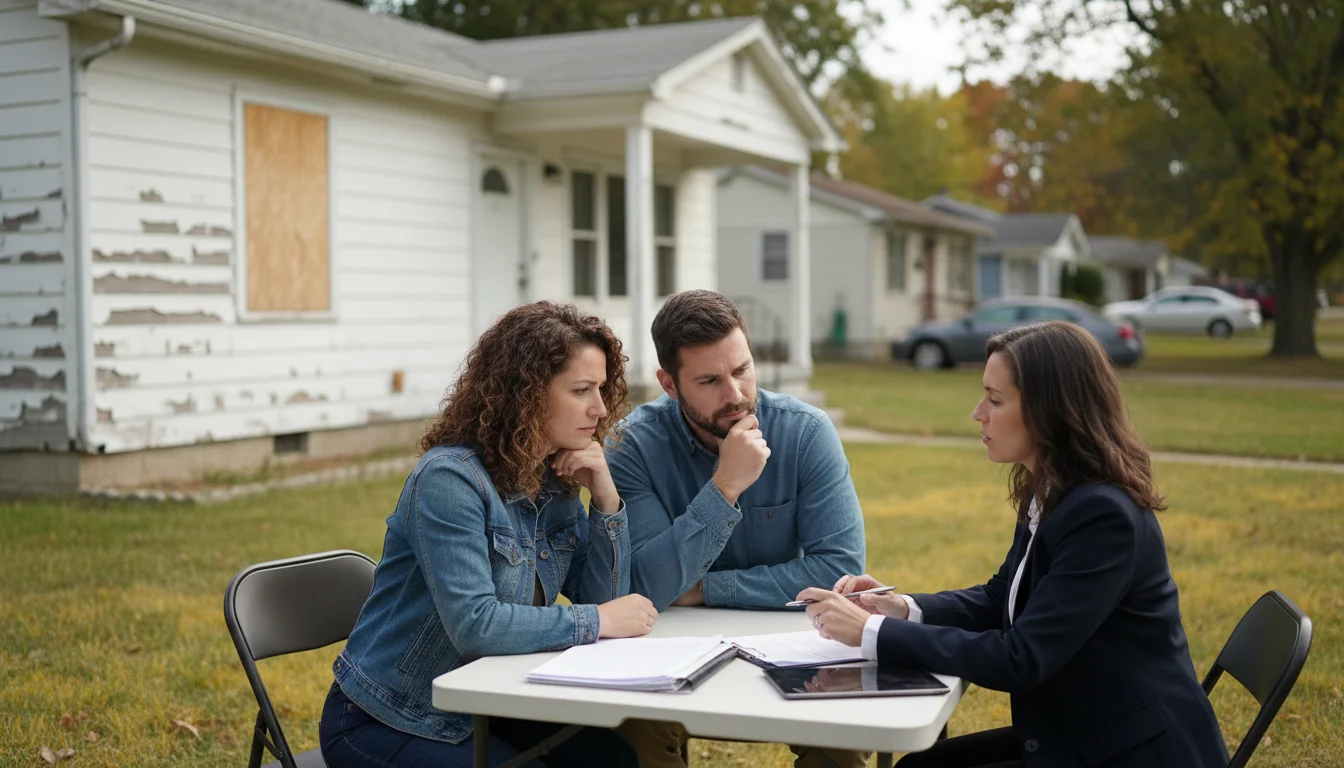
Abandoned properties come with real risks. The biggest is the unknown condition of the home. Years of neglect mean you might find anything — roof collapse, foundation problems, water damage, mold, pest infestations, or stripped-out plumbing and wiring. Some homes look manageable from the outside but cost $100,000+ to fully restore.
There are also legal risks. An heir might show up after you’ve closed and claim ownership. A lien not caught in the title search could surface later. Zoning issues or code violations can block your renovation plans. This is why working with a real estate attorney and getting a proper title search is not optional — it’s essential.
According to the Consumer Financial Protection Bureau (CFPB), buyers of distressed and foreclosed properties should always review the property’s title history carefully to identify any outstanding debts or legal claims before completing a purchase.
Financing Challenges for Abandoned Homes
Getting a traditional mortgage on an abandoned home is hard. Most lenders require a home to be in habitable condition before they’ll approve a loan. A home with a caved-in roof or no working plumbing won’t qualify for a standard FHA or conventional loan.
Your best financing options for abandoned properties are cash purchases, hard money loans, FHA 203(k) renovation loans, or private investor funding. The FHA 203(k) wraps the purchase price and renovation costs into a single loan — very useful for buyers who want to finance the whole project in one go.
If you’re unsure about your financing options or want to sell a property that’s become too much to manage, visit our sell your property page to learn how we work with property owners in all kinds of situations.
Is Buying an Abandoned Property Worth It?
When It Makes Sense
Buying an abandoned property makes a lot of sense when you find the right home at the right price and have a clear plan for what to do with it. Real estate investors who flip homes, landlords looking to add rental units, and even determined homebuyers willing to do the work have all found real success with abandoned properties.
The discount compared to move-in ready homes can be substantial. If you can buy a home for $80,000, spend $60,000 renovating it, and sell it for $200,000 in a good neighborhood — that’s a strong return. But the numbers only work if you know what the repairs will actually cost before you buy.
When to Walk Away
Not every abandoned property is a good deal. If the title has serious complications, if the structural damage is too extensive, or if the numbers don’t add up after you factor in renovation costs, walk away. There’s always another opportunity. The worst mistake in this space is falling in love with a property and ignoring the red flags.
Have a question about a specific property or situation? Our team works with buyers and sellers of all kinds of properties, including distressed and abandoned homes. Contact us today for a free, no-obligation conversation about your options.
Conclusion
Learning how to find and buy abandoned properties opens a whole new world of real estate opportunity. The process takes more research and patience than a regular home purchase, but the rewards can be significant. Start by using public records and physical scouting to find candidates. Track down owners. Do your due diligence on title and condition. Then make a smart, research-backed offer. With the right approach, abandoned properties can turn into some of the best deals in real estate.
Frequently Asked Questions
How do I find out who owns an abandoned property?
The easiest way is to check your county’s property tax records online or in person at the county assessor’s office. These records list the legal owner’s name and often their mailing address. A title company can also run a full ownership search for a small fee.
Can I just move into an abandoned house?
No. Even if a property looks abandoned, it legally belongs to someone — an individual owner, a bank, or a government entity. Moving in without permission is trespassing, which is illegal. You must purchase or legally acquire the property before occupying it.
How much do abandoned properties sell for?
Abandoned properties often sell for 20–50% below market value, depending on condition, location, and how it’s being sold (private sale, auction, or bank REO). After factoring in renovation costs, buyers should calculate the after-repair value (ARV) to make sure the deal truly makes financial sense.
What is a tax lien and how does it affect abandoned properties?
A tax lien is placed on a property when the owner fails to pay property taxes. If unpaid long enough, the county can foreclose and sell the property at a tax deed auction. As a buyer, you must check whether any tax liens exist and whether they’ll be cleared at sale or passed on to you.
Do I need a real estate attorney to buy an abandoned property?
It’s strongly recommended. Abandoned properties often have complicated ownership histories, unresolved liens, or title gaps. A real estate attorney can review the title, help you navigate any legal issues, and make sure the ownership transfer is clean and valid before you close.