
Buying a foreclosed home can feel like finding a hidden deal — and sometimes it really is. But there are things beginners don’t know that can turn a great deal into a costly headache. This guide gives you the full picture so you can buy smart and avoid the common mistakes.
What Is a Foreclosed Home?
How Foreclosure Works
A foreclosure happens when a homeowner stops making mortgage payments and the lender takes the property back. The lender — usually a bank — then tries to sell the home to recover the money they’re owed.
According to data from ATTOM, there were over 320,000 foreclosure filings in the U.S. in 2024. That’s a lot of potential deals out there for buyers who know how to find them and what to look for.
Types of Foreclosure Sales
Not all foreclosed homes are bought the same way. There are three main types:
- Pre-foreclosure: The homeowner is behind on payments but still owns the home. You deal directly with the owner, who is motivated to sell fast.
- Foreclosure auction: The home is sold at a public auction. Usually cash-only, and you buy as-is with no inspection.
- REO (Real Estate Owned): The bank already owns the property and lists it for sale. This is the most common and safest path for beginners.
For most beginners, REO properties are the best starting point. They’re listed like regular homes, you can get an inspection, and the title is usually cleared of old liens.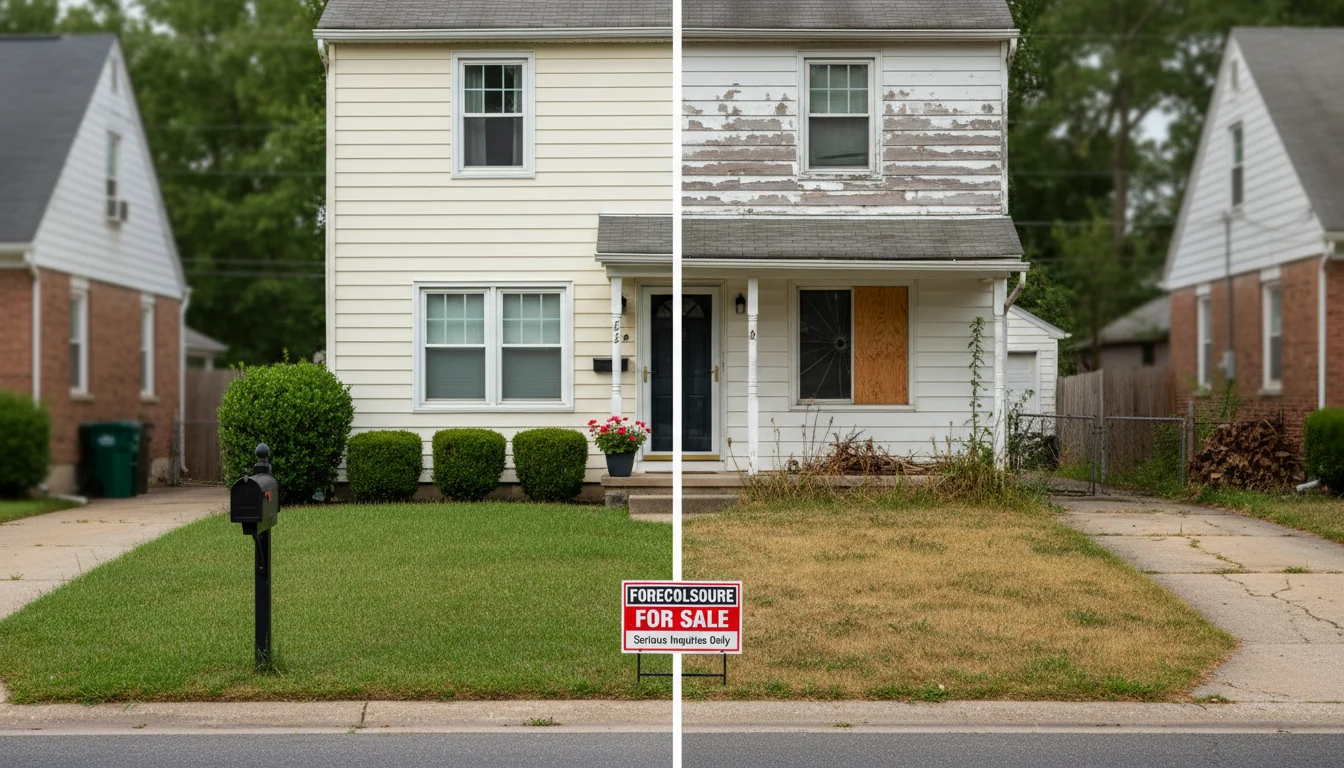
Pros and Cons of Buying a Foreclosed Home
Why Foreclosures Attract Buyers
The biggest draw is price. Foreclosed homes are often sold 20–30% below market value because lenders want to recover their money fast, not maximize profit. That discount can open the door to neighborhoods or home sizes that would normally be out of reach.
There are also more financing options than people think. You can use a conventional loan, an FHA 203(k) renovation loan, or even the Fannie Mae HomePath program for certain REO properties. Cash isn’t the only way in.
The Real Risks Beginners Overlook
Here’s what most “buy foreclosures for cheap!” articles skip. The homes are sold as-is. The bank hasn’t lived there. They don’t know the history. There’s no seller’s disclosure, no list of past repairs, nothing. What you see is what you get.
I’ve heard from buyers who purchased what looked like a great deal, only to discover major plumbing issues, mold behind the walls, or electrical systems that were completely outdated. A thorough inspection before you buy (or at least before you commit fully on an REO) saves you from that kind of shock.
You should also understand the common situations that lead homeowners to sell quickly or lose their homes, as this helps you understand the condition you might be inheriting as a foreclosure buyer.
Step-by-Step: How to Buy a Foreclosed Home
Steps 1 Through 4: Prepare and Find
Start by getting pre-approved for a mortgage. This tells you your exact budget and shows sellers (including banks) that you’re serious. Gather your financial documents — tax returns, pay stubs, bank statements — and apply with a lender before you start looking at homes.
Next, find foreclosure listings. You can search on sites like Zillow (filter for foreclosures), the HUD home store (for government-owned foreclosures), Fannie Mae’s HomePath portal, and bank websites like Bank of America’s REO section. Your real estate agent can also pull them from the MLS.
Work with an agent who has experience in distressed properties. Look for designations like CDPE (Certified Distressed Property Expert) or SFR (Short Sales and Foreclosure Resource). An experienced agent is worth their fee in this type of transaction.
Steps 5 Through 8: Inspect, Offer, Finance, and Close
For REO properties, always get a home inspection before finalizing your offer or at least include an inspection contingency. The inspection will uncover problems the bank doesn’t know about and gives you data to negotiate a lower price or walk away if the issues are too big.
When you make your offer on an REO, be prepared to wait. Bank approvals go through multiple layers and can take 2–6 weeks. Don’t rush or walk away too fast. The bank isn’t an individual homeowner — they move slow.
Once the offer is accepted, your lender will arrange the appraisal and underwriting. The closing process on a foreclosure purchase usually takes 30–60 days from contract to close. Understanding home sale closing timelines will help you set the right expectations and stay organized throughout.
Foreclosure Buying: Key Numbers to Know
What You Could Save — and What It Might Cost
Here’s a quick breakdown of the financial picture when buying a foreclosed home:
| Factor | Typical Range | Notes |
|---|---|---|
| Discount off market value | 20–30% | Varies by property condition and market |
| Repair costs (average) | $10,000–$50,000+ | Depends on how long the home sat vacant |
| Inspection cost | $300–$600 | Always worth it on REO properties |
| Closing time (REO) | 30–60 days | Banks move slower than individual sellers |
| Auction deposit (if applicable) | $5,000+ certified check | Varies by state and auction company |
Financing Options for Foreclosed Homes
You have more loan options than you might expect. For REO properties in decent shape, a regular conventional loan or FHA loan often works fine. For homes that need major repairs, the FHA 203(k) loan wraps the purchase price and renovation costs into one mortgage — very useful for fixer-uppers.
Fannie Mae’s HomePath program offers special financing for Fannie Mae-owned REO homes, including low down payment options. HUD homes also have their own financing programs for primary residence buyers.
According to the U.S. Department of Housing and Urban Development (HUD), government-owned foreclosures are listed through HUD’s online portal and are available to both owner-occupants and investors, with owner-occupants getting priority access during the initial listing period.
Common Mistakes Beginners Make
What to Watch Out For
Skipping the inspection is the biggest mistake. Even on a cheap home, discovering a $40,000 foundation problem after closing will wipe out any deal you thought you had. Always inspect, always.
Bidding too high at auction is another common trap. The excitement of an auction can push buyers past what makes financial sense. Set your maximum price before you walk in, and don’t go over it. No property is worth overpaying for.
Also watch out for outstanding liens. Some foreclosed homes have unpaid property taxes, HOA fees, or other liens attached to the title. Make sure your title company does a full title search and that the title comes back clean before you close.
According to the Consumer Financial Protection Bureau (CFPB), buyers of foreclosed properties should always review the property’s title history carefully to identify any outstanding debts or legal encumbrances before completing a purchase.
When a Foreclosure Purchase Pays Off
Buying a foreclosed home pays off when you buy an REO in decent shape at a real discount, get a full inspection, use the right financing, and have a clear budget for repairs. Real estate investors and flippers do this regularly and profit from it.
For a first-time homebuyer, an REO in a good neighborhood that just needs cosmetic updates — new paint, carpet, appliances — can be a fantastic entry point to homeownership. Just go in with eyes wide open.
If you’re on the other side of this equation — facing financial hardship and worried about losing your home to foreclosure — learn about selling a distressed property fast as a way to avoid foreclosure and protect your credit. And if you’d like to talk through your options, contact us today for an honest, no-pressure conversation.
Conclusion
Buying a foreclosed home can be a smart move — but only if you do your homework. Understand the type of sale, get pre-approved, inspect the property, and know the true cost of repairs before you commit. For beginners, REO properties are the safest and most straightforward path. Do it right, and a foreclosure can be one of the best financial decisions you ever make.
Frequently Asked Questions
Can a first-time buyer purchase a foreclosed home?
Yes. First-time buyers can absolutely buy foreclosures, especially REO properties. HUD homes even prioritize owner-occupants over investors during the first listing period. You’ll need mortgage pre-approval and some patience with the process.
Do you need cash to buy a foreclosed home?
Not always. Foreclosure auctions typically require cash or certified funds. But REO properties (bank-owned homes) can usually be purchased with a regular mortgage, FHA loan, or FHA 203(k) renovation loan.
How do I find foreclosed homes for sale?
You can search Zillow (filter for foreclosures), the HUD home store at hud.gov, Fannie Mae’s HomePath portal, and bank websites. Your real estate agent can also find them via MLS listings.
Are foreclosed homes sold as-is?
Yes. Banks don’t make repairs before selling. You buy the property in whatever condition it’s in. That’s why getting a professional home inspection before closing is so important — especially on REO purchases where inspections are usually allowed.
How long does it take to buy a foreclosed home?
REO purchases typically take 30–60 days from accepted offer to closing. Bank approvals go through multiple levels of review, so the process is slower than a regular home purchase. Foreclosure auctions move much faster but carry more risk.