
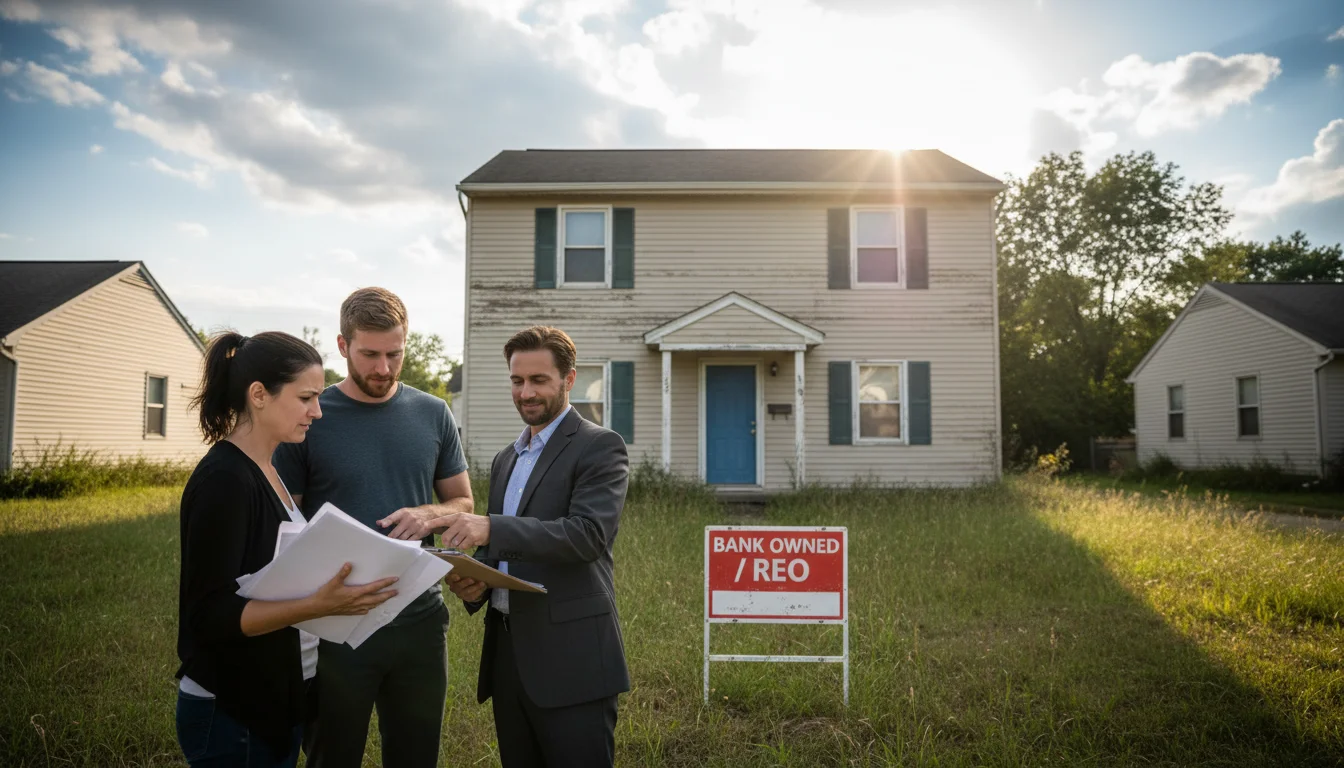
Have you ever walked past a house with a bank sign in the yard and wondered — can I actually buy that? Yes, you can. Bank-owned properties, also called REO properties (Real Estate Owned), are homes the bank took back after foreclosure. And buying one can be one of the smartest real estate moves you ever make — if you know how.
What Is a Bank-Owned (REO) Property?
How a Home Becomes REO
When a homeowner stops making mortgage payments, the lender starts the foreclosure process. The home then goes to a public foreclosure auction. If no one buys it there, the lender takes it back. That’s when it becomes an REO property — Real Estate Owned by the bank.
Banks are not in the business of owning homes. They want their money back. So they usually list these homes at prices below market value to sell them fast. That’s where your opportunity comes in.
I once helped a friend research an REO in his neighborhood. The house had been sitting empty for eight months, and the bank had already cut the price twice. We submitted an offer, and he ended up paying nearly 22% below what similar homes were selling for on the same street. Not every deal is that good — but many are close.
REO vs. Foreclosure Auction: What’s the Difference?
A lot of people mix these up. Here’s the simple version:
- At a foreclosure auction, you buy the home as-is, cash only, with no inspection allowed
- With an REO property, the bank owns it and lists it like a regular home — you can get an inspection, use a loan, and negotiate the price
REOs are safer and more accessible for most buyers. You work with a real estate agent, submit an offer, and go through a process similar to a normal home sale — just with a bank on the other side instead of a person.
Benefits and Risks of Buying a Bank-Owned Property
Why REO Properties Attract Smart Buyers
There are real reasons why investors and first-time buyers alike look at bank-owned homes:
- Below market price: Banks price REOs to sell, not to profit. Discounts of 10–30% below market value are common
- Clean title: Banks typically clear old liens before resale, so you get a clean property title
- Financing allowed: Unlike foreclosure auctions, most REOs accept conventional mortgages, FHA loans, and renovation loans
- Inspection allowed: You can hire a home inspector before committing — a big deal with distressed properties
- No emotional seller: Banks are motivated to sell. There’s no sentimental value to inflate the price
The Real Risks You Should Know
REOs aren’t risk-free. The home is sold as-is, which means the bank won’t make repairs. And since banks often don’t know the property’s full history, there’s limited disclosure. What you see — and what your inspector finds — is what you work with.
Some REOs sat vacant for a long time. That means potential damage from vandalism, weather, mold, or plumbing issues. Budget for repairs. A home that looks fine from the outside can have $20,000–$40,000 in hidden problems once a good inspector gets inside. Go in with your eyes open, not your hopes up.
If you’ve been through a difficult financial period yourself and are now in a place to buy, reading about pre-foreclosure vs foreclosure can help you understand exactly what sellers went through before you become the buyer on the other side.
Step-by-Step: How to Buy a Bank-Owned Property
Steps 1 to 4: Get Ready and Find Properties
The first step is getting pre-approved for a mortgage. This tells you your budget and shows the bank you’re serious. Banks deal with a lot of buyers, and those with financing already lined up get taken more seriously.
Next, find listings. Here’s where to look:
- MLS (Multiple Listing Service): Most REOs are listed here, accessible through any real estate agent
- Bank websites: Wells Fargo, Bank of America, and Chase all have dedicated REO sections
- HUD Home Store: For government-owned REOs at hudhomestore.hud.gov
- Fannie Mae HomePath: Fannie Mae-owned homes at homepath.com
- Zillow and Realtor.com: Filter results to show foreclosures and bank-owned homes
Work with a real estate agent who has REO experience. This type of transaction has quirks that a regular agent might not know how to handle. Ask specifically if they’ve closed REO deals before.
Steps 5 to 8: Inspect, Offer, Finance, and Close
Once you find a property you like, get a professional home inspection. Use the inspector’s findings to estimate repair costs. This gives you real data for your offer — and a reason to negotiate if the bank is asking too much.
When you make an offer on an REO, be patient. Banks don’t move fast. Multiple people inside the institution need to approve the sale. It can take 2–6 weeks to get a response. Don’t get frustrated or walk away too quickly.
Make a strong first offer. Banks usually reject lowball bids outright. Look at comparable sold homes in the area and price your offer accordingly. Ask your agent to run a comparative market analysis (CMA) first.
Once your offer is accepted, your lender will order an appraisal. From accepted offer to closing, expect 30–60 days. The closing process follows the same general steps as a regular home purchase — just with more bank paperwork on the seller’s side. Understanding how to buy a foreclosed home as a beginner gives you a fuller picture of what to expect from start to finish.
REO Property Comparison: Key Factors
REO vs. Short Sale vs. Foreclosure Auction
| Factor | REO (Bank-Owned) | Short Sale | Foreclosure Auction |
|---|---|---|---|
| Who sells the home? | Bank or lender | Homeowner (with lender approval) | Auction company / court |
| Financing allowed? | Yes | Usually yes | Cash only (typically) |
| Home inspection? | Yes | Usually yes | No |
| Price vs. market value | 10–30% below | Varies | Potentially deepest discount |
| Title issues? | Usually cleared by bank | May have liens | Buyer assumes all liens |
| How long to close? | 30–60 days | 60–120+ days | Same day or very fast |
Financing Options for REO Homes
Most REO homes accept standard financing. If the home is in good condition, a regular conventional loan or FHA loan will work fine. If it needs significant repairs, look into the FHA 203(k) rehabilitation loan, which combines the purchase price and renovation costs into one mortgage.
Fannie Mae’s HomePath program offers special financing on Fannie Mae-owned REOs, including low down payment options and no mortgage insurance requirement for some buyers. According to the U.S. Department of Housing and Urban Development (HUD), government-owned REO homes are available to both owner-occupants and investors, with owner-occupants given priority access during the initial listing period.
Tips for Making a Winning Offer on an REO
What Banks Look for in an Offer
Banks care about three things: price, proof of financing, and speed. A cash offer or a fully pre-approved mortgage with a strong earnest money deposit signals that you’re serious and the deal won’t fall apart. Banks see a lot of offers from buyers who disappear. Stand out by being prepared.
Don’t skip the earnest money deposit. REO sellers typically require it at the time of offer submission. The amount varies but is usually 1–3% of the purchase price. Have it ready as a certified check or in an escrow account.
Also ask your agent about addenda and bank-required forms. Many banks have their own purchase contracts that override the standard state form. Read every page. If anything is unclear, have a real estate attorney review it before signing.
Negotiating With the Bank
Banks rarely accept the first offer, and they almost never give big discounts from their listed price right away. That said, if a home has been sitting for 90+ days, you have more leverage. Ask your agent about the property’s days on market before crafting your offer.
If the bank won’t move on price, ask them to cover closing costs instead. Some banks will pay 2–3% of the purchase price toward closing costs as a concession, which effectively reduces your out-of-pocket expenses at the table.
If you’re on the other side of this situation — a homeowner facing foreclosure and wondering about your options — we can help. Reach out to learn how selling quickly might protect you from the full impact of foreclosure. Contact us today for a free, no-pressure conversation.
Conclusion
Buying a bank-owned (REO) property is a real opportunity for buyers who are prepared. You can get a home below market value, with a clean title, and with the ability to use financing and get a proper inspection. The process takes patience — banks move slowly and the negotiation is different than dealing with an individual seller. But for buyers willing to do their homework, an REO can be one of the most financially rewarding home purchases they ever make.
Frequently Asked Questions
What does REO stand for in real estate?
REO stands for Real Estate Owned. It refers to properties that have gone through the full foreclosure process, failed to sell at auction, and are now owned directly by the lender (usually a bank or mortgage company).
Are bank-owned properties cheaper than regular homes?
Often, yes. Banks price REO homes below market value to sell quickly and recover their losses. Discounts of 10–30% are common, though the actual savings depend on the home’s condition, location, and how long it’s been on the market.
Can I use a regular mortgage to buy an REO property?
Yes. Most REO properties can be purchased with a conventional mortgage, FHA loan, VA loan, or FHA 203(k) renovation loan. The key is that the home must meet your lender’s condition requirements. Homes needing major repairs may require a renovation loan.
Can I negotiate the price on a bank-owned home?
Yes, but banks move differently than individual sellers. They often counter with their own price and rarely accept low first offers. If the home has been sitting for a long time, you have more negotiating room. Asking for closing cost concessions is often more effective than pushing for a big price cut.
How long does it take to buy an REO property?
From accepted offer to closing, expect 30–60 days. It can be longer if the bank’s internal approval process is slow or if title issues need to be resolved. Banks process offers through multiple layers, which adds time compared to buying from a private seller.