
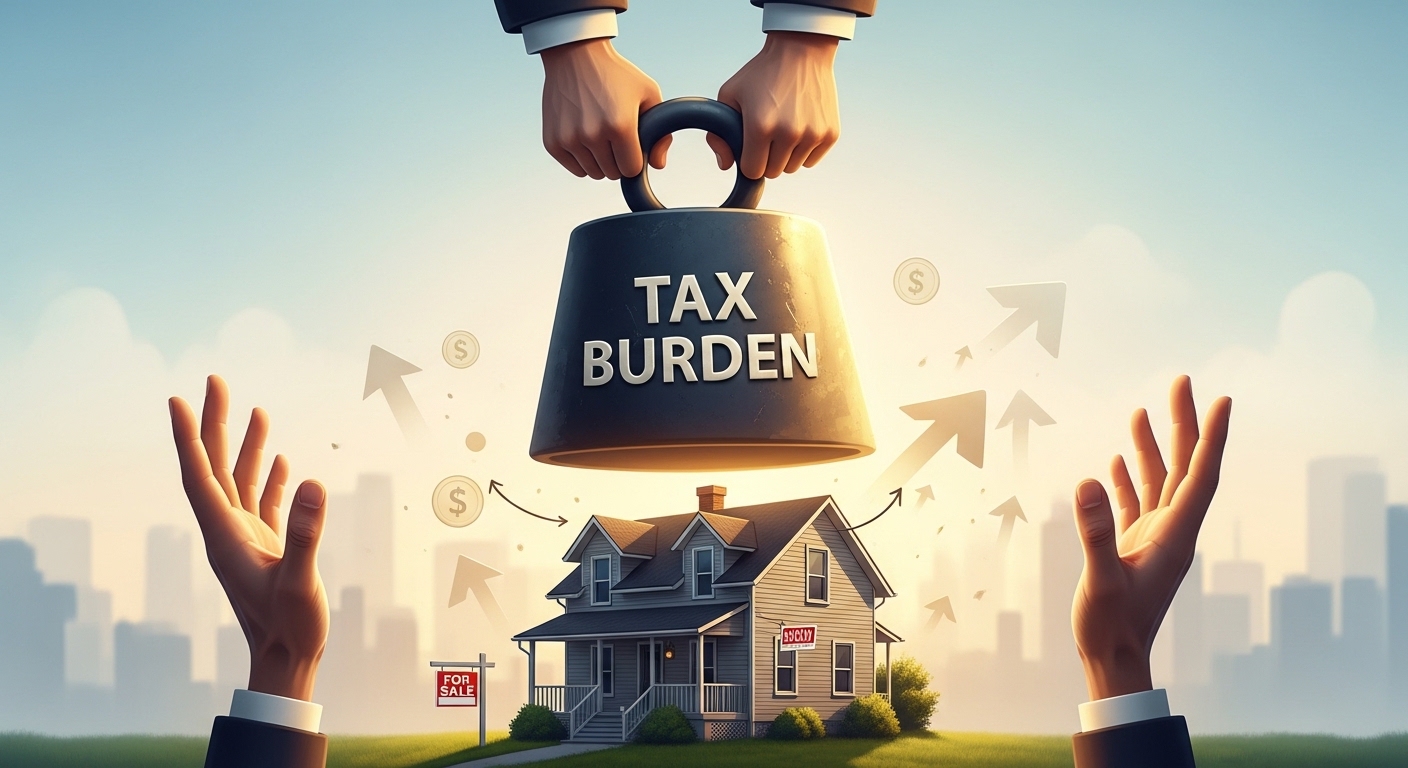
Property taxes do not stay the same forever. For a lot of homeowners, especially older ones or those on a fixed income, taxes have gone up faster than their ability to pay. And once you fall behind, things can snowball quickly. Tax liens, penalties, and the threat of losing your home are all very real outcomes if this problem goes unaddressed.
If you are at the point where you genuinely cannot afford to keep paying your property taxes, selling might be your best path forward. But it is important to understand how that works, what your options are, and how to make a move before the situation gets worse.
What Happens When You Stop Paying Property Taxes
Most people know that not paying property taxes is serious, but they do not always know exactly what happens on a timeline. According to the Internal Revenue Service, property taxes are a deductible expense, and unpaid taxes create a lien against the property, meaning the government has a legal claim on it.
Here is how it generally plays out when taxes go unpaid:
- Year 1: Penalties and interest begin to add up on the unpaid balance
- Year 2: A tax lien is formally placed on the property
- Year 2 to 3: The lien may be sold to a third party who can then begin collection actions
- Year 3 to 5: Depending on the state, the county may begin a tax foreclosure process
- Final stage: The home is sold at a tax sale, sometimes for far less than its actual value
This process moves faster in some states than others, but the direction is always the same. Waiting does not help.
Why Selling Sooner Rather Than Later Makes a Real Difference
Here is the thing most homeowners do not realize until it is too late. When you sell the home on your own terms, you get to keep the equity above what you owe, including the unpaid taxes. But if the county takes the home through a tax foreclosure, you may get nothing, or very little, even if the home has significant value.
Selling early means you walk away with money in hand instead of walking away with nothing. That difference can be tens of thousands of dollars, sometimes more.
Your Options When You Can No Longer Afford Property Taxes
Before you decide to sell, it is worth knowing all the options in front of you. Some of them might buy you time. Others might solve the problem permanently.
Property Tax Relief Programs That May Help You Stay
Many states and counties have programs designed specifically for homeowners who are struggling with property taxes. These include payment plans, deferrals, exemptions for seniors or disabled homeowners, and even outright reductions for qualifying households.
According to the Urban Institute, property tax relief programs exist in nearly every state, though eligibility requirements and benefit amounts vary widely. It is worth contacting your local county tax office to ask what is available in your area before you assume selling is the only answer.
That said, if the taxes have already gone unpaid for a year or more, the back amount may be too large for a payment plan to solve quickly. In that case, selling becomes the more practical solution.
Selling Your Home the Traditional Way With Property Tax Debt
You can sell a home even if you have unpaid property taxes. The tax debt does not disappear, but it gets paid at closing from the sale proceeds. This is very common and real estate agents know how to handle it.
The challenge with a traditional sale is time. If you need to sell in the next few weeks because a tax deadline is approaching, the standard 30 to 60 day process with a buyer who needs financing is too slow. You also need to cover real estate commissions, which typically run around 5 to 6 percent of the sale price.
How Selling to a Direct Cash Buyer Helps When Property Taxes Are Overdue
This is where a direct cash home buyer becomes a very good option. They can close in days, not months. There is no lender, no appraisal, and no long waiting period. The tax debt comes out of the sale at closing, and you walk away with whatever is left over.
I have seen homeowners in this situation panic and either do nothing, losing the home to a tax sale, or make rushed decisions with the wrong buyer. The key is to move quickly but still take the time to understand what you are agreeing to. A reputable direct cash buyer will explain everything clearly and not pressure you.
What the Process Looks Like Step by Step
| Step | What Happens | Timeline |
|---|---|---|
| Contact a cash buyer | Share basic info about your property | Day 1 |
| Property review | Buyer visits or reviews details remotely | Day 1 to 3 |
| Cash offer received | You get a written offer with no obligation | Day 2 to 4 |
| Acceptance and contract | You agree to terms and sign the purchase contract | Day 3 to 5 |
| Title search and payoff | Title company confirms tax debt and closing payoff amount | Day 5 to 10 |
| Closing | Tax debt paid from proceeds, remaining funds go to you | Day 7 to 14 |
The whole process can happen in under two weeks. Compare that to a traditional listing that might take two to four months, and the advantage is clear when time is not on your side.
What Happens to the Tax Lien at Closing
One thing that causes confusion is the tax lien. Many sellers worry that having a lien on the property makes it impossible to sell. It does not. The lien gets paid off at closing as part of the transaction. The title company handles this automatically, and the buyer receives a clear title to the property.
According to the Consumer Financial Protection Bureau, a tax lien can affect your ability to refinance or sell but does not prevent a sale from happening, as long as it is satisfied at or before closing.
If you are also dealing with other financial pressures alongside property taxes, our post on selling a home to pay off mounting credit card debt goes into how the sale process works when multiple debts are involved. And for homeowners who are worried about a more serious deadline, our post about selling to avoid pre-foreclosure is also worth reading.
You can also check out our FAQ page for answers to common questions about the selling process when you owe money on the home.
Conclusion
Falling behind on property taxes is stressful, but it does not have to mean losing your home. If you act early and understand your options, you can still walk away with equity in your pocket instead of letting the county take everything. Selling to a direct cash buyer is often the fastest and cleanest way to handle this kind of situation, especially when there are back taxes, penalties, and a shrinking window to act.
If you are ready to take the next step or just want to talk through your options, reach out through our contact page. We work with homeowners in all kinds of situations and we are happy to help you figure out the best path forward.
Frequently Asked Questions
Can I sell my house if I owe back property taxes?
Yes. You can sell a house with unpaid property taxes. The taxes owed will be paid out of the sale proceeds at closing. This happens through the title company and is a very common part of the real estate process.
How long do I have before the county can take my home for unpaid taxes?
It varies by state, but most counties give homeowners two to five years before starting a tax foreclosure. However, penalties and interest add up quickly, and the situation gets harder to fix the longer you wait.
Will I still get money from the sale if I have a tax lien?
Yes, as long as the home sells for more than the total amount owed, including the tax lien, penalties, and any other debts against the property. Whatever is left after those are paid is yours to keep.
What if my home is worth less than what I owe in taxes and other debt?
This is a more complicated situation. You may need to explore a short sale or speak with a housing counselor about your options. A direct cash buyer can still help you understand what a sale would look like and what you might realistically walk away with.
Are there programs that can help me catch up on property taxes without selling?
Yes. Many states offer payment plans, senior exemptions, and hardship deferrals. Contact your county tax office directly to ask what is available. If you qualify, these programs can buy you time without having to sell your home.