
Credit card debt has a way of growing faster than most people expect. What starts as a manageable balance becomes months of minimum payments and an interest rate that feels like it is working against you every single day. If you own a home and you are sitting on real equity, selling may be one of the most effective ways out of the cycle. Here is an honest look at how that works and whether it makes sense for your situation.
When Home Equity Becomes the Answer to Credit Card Debt
Home equity is the difference between what your home is worth and what you still owe on your mortgage. For a lot of homeowners, especially those who bought several years ago, that number is substantial. Using that equity to eliminate high-interest debt is a strategy that makes real financial sense in many situations.
Credit card interest rates in 2025 have been averaging well above 20 percent in many cases. Home equity, on the other hand, represents money that is sitting still. Converting that equity into cash and using it to zero out high-interest debt can save thousands of dollars over time, even if the sale price is somewhat below what you might hope for in a perfect market.
How Much Credit Card Debt Is Too Much to Manage?
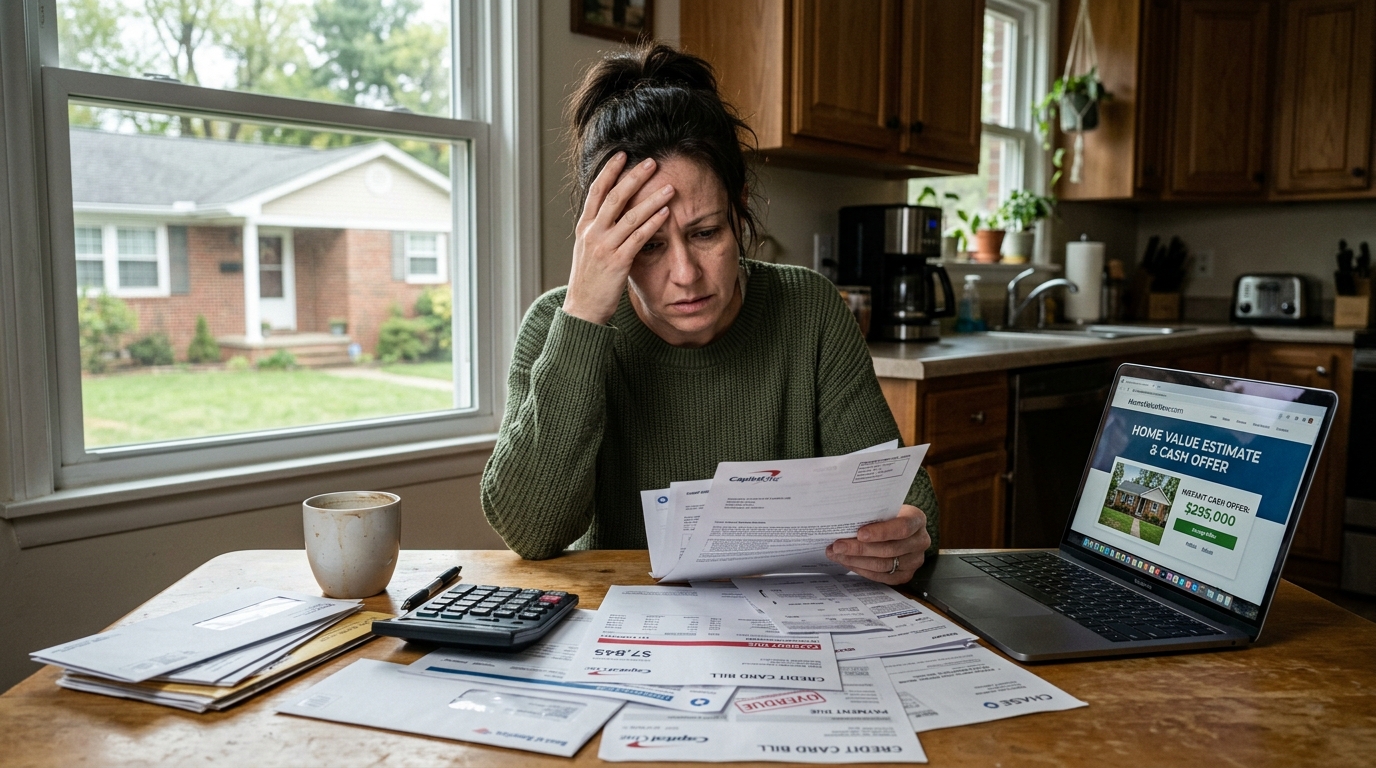
There is no magic number, but financial advisors generally consider debt to be unmanageable when minimum payments are consuming a large portion of your monthly income and the balances are not actually decreasing. If you are paying hundreds of dollars a month and barely making a dent in the principal, the math is working against you.
According to the Consumer Financial Protection Bureau (CFPB), high credit card debt can significantly affect your credit score, limit your borrowing options, and create long-term financial stress. If selling your home can eliminate that debt and give you a fresh start, it is at least worth thinking about seriously.
The Real Cost of Carrying High-Interest Debt Long Term
Here is something most people do not stop to calculate. If you carry a $30,000 credit card balance at 22 percent interest and only make minimum payments, you could end up paying back more than double the original amount over time. The interest is not just a small fee. It is a major drain on your finances every single month.
Selling your home and using the proceeds to pay off that debt eliminates the interest entirely. You are not just paying the balance. You are stopping the problem from getting worse and giving yourself a real chance to rebuild.
Your Options for Using Home Equity to Pay Off Debt
You do not necessarily have to sell your entire home to access equity. There are a few different paths, and the right one depends on your total debt load, your housing plans, and how much equity you actually have.
Full Home Sale for Maximum Cash Out
If your credit card debt is large enough that a partial solution would not really help, or if you were already thinking about downsizing or moving, selling the home outright gives you the most cash at once. You pay off the mortgage, pay off the credit cards, and whatever is left is yours to keep or invest.
A cash sale gets you there the fastest. No waiting for buyers to get approved for loans. No drawn-out negotiations. You close quickly, get your funds, and you can pay off the credit cards within days of closing. To understand how much equity you might be able to access, check out our guide on how to cash out your home equity quickly.
Home Equity Loan or HELOC as an Alternative
If you do not want to sell and you have strong credit, a home equity loan or a HELOC (home equity line of credit) lets you borrow against your equity without selling the home. You pay off the credit cards with the loan proceeds and then repay the home equity loan at a much lower interest rate.
The downside is that this approach adds a new debt secured by your home. If you struggle to repay it, you put your home at risk. It also requires good credit and sufficient equity, which may not be available to everyone carrying heavy credit card debt.
The Case for Selling Fast and Starting Fresh
For some people, the home is both the biggest asset and the biggest anchor. A large mortgage payment every month, combined with high credit card minimums, leaves very little room to breathe financially. Selling the home completely frees up cash, eliminates both debts in many cases, and lets you start over in a smaller, more affordable living situation.
What a Clean Slate Looks Like After Selling
Imagine no credit card payments, no mortgage payment, and a cash reserve from the home sale that you can use to rent a comfortable place and still have money left over. For people who have been struggling with debt, that scenario can feel completely out of reach. But for homeowners with real equity, it is actually achievable.
I have seen people completely turn their financial lives around by making one big decision to sell. It is not easy and it is not without sacrifice, but the peace of mind on the other side of that decision is genuinely life-changing for a lot of people.
Why a Cash Sale Makes the Most Sense for Debt-Driven Sellers
When you are selling because of financial pressure, speed matters a lot. Every month you wait is another month of credit card interest piling up. A cash sale eliminates that waiting period. You do not have to fix the home, stage it, or wait for a financed buyer to get loan approval. You get an offer, you accept, you close, and you pay off the debt.
Learn more about how cash offers work and why sellers choose them in our post on why cash offers provide certainty in today’s market. And if you want to talk through your situation directly, our team is ready to help. Just visit our Contact Us page.
Comparing Ways to Handle Credit Card Debt as a Homeowner
| Option | Eliminates Debt? | Risk to Home? | Speed | Best For |
|---|---|---|---|---|
| Full home sale (cash buyer) | Yes, fully | No, you sell and leave | 7 to 14 days | Large debt, want a fresh start |
| Home equity loan | Yes, if enough equity | Yes, home is collateral | 30 to 60 days to get | Moderate debt, good credit |
| HELOC | Partial or full | Yes, home is collateral | 30 to 60 days to get | Flexible borrowing needs |
| Debt consolidation loan | Moves debt, does not eliminate | No | 1 to 2 weeks | People without home equity |
| Balance transfer | No, just reorganizes | No | Days | Short-term relief only |
Tax Considerations When Selling to Pay Off Debt
When you sell your home, you may owe capital gains taxes on the profit depending on how long you have owned the home and how much you made. The IRS allows most homeowners to exclude up to $250,000 in capital gains from taxes ($500,000 for married couples filing jointly) if the home was their primary residence for at least two of the last five years.
According to data published by the Federal Reserve, household net worth data shows that homeowner equity is at historically high levels in many parts of the country. This means many sellers can access significant cash from a sale while still staying within the capital gains exclusion limits. Talk to a tax professional before you close to understand exactly what you will owe.
You can also learn more about options for accessing your equity through our page on Cash Home Buyers Los Angeles, where we buy homes fast and make the process as straightforward as possible for sellers in all kinds of financial situations.
Common Mistakes to Avoid When Selling to Pay Off Debt
A few mistakes show up again and again when people sell their homes specifically to get out of debt. The first is waiting too long. Every month you delay is more interest charges on the cards. If selling makes sense, moving faster almost always produces a better financial outcome.
The second mistake is not having a plan for where you will live after the sale. You need to figure out your next housing situation before closing, not after. Renting, moving in with family temporarily, or downsizing to a smaller home all work. Just have it sorted before you sign.
The third mistake is underestimating what you will actually net from the sale. Make sure you account for the mortgage payoff, any property taxes owed, and any fees associated with the transaction. A good cash buyer will walk you through all of this before you commit.
Conclusion
Selling your home to pay off credit card debt is not a failure. It is a financial decision, and for many homeowners it is one of the smartest ones they can make. The math often works strongly in favor of eliminating high-interest debt quickly rather than dragging it out for years. If you have equity and you have debt, you have options. A cash sale is the fastest and cleanest way to access that equity, get out of debt, and start rebuilding on solid ground.
Frequently Asked Questions
Is selling my home to pay off credit card debt a good idea?
It can be, especially if your credit card balances are large and the interest is making it hard to get ahead. If you have significant equity in your home, selling gives you a way to eliminate high-interest debt entirely and potentially walk away with cash left over. The key is making sure you have a plan for where you will live after the sale.
How long does it take to get money from a home sale?
In a cash sale, you can receive funds in as little as 7 to 14 days from the time you accept an offer. Funds are typically wired to your account at closing or available as a check the same day. A traditional sale takes much longer, often 60 to 90 days from listing to closing.
Will I owe taxes on the money I get from selling my home?
You may owe capital gains taxes if your profit exceeds the IRS exclusion limits, which are $250,000 for single filers and $500,000 for married couples filing jointly. If you have lived in the home for at least two of the last five years, you likely qualify for this exclusion. A tax professional can give you a precise answer based on your specific situation.
What if my home is worth less than what I owe on the mortgage and credit cards combined?
If your home is worth less than your mortgage, you may need to explore a short sale with your lender. If it is worth more than the mortgage but the proceeds would not cover all your credit card debt, selling still makes sense if it significantly reduces what you owe. Even partial debt elimination can make a meaningful difference in your monthly cash flow.
Can I sell my home fast if I have bad credit?
Yes. Your credit score does not affect your ability to sell your home. Buyers evaluate the property, not your credit history. A cash buyer makes you an offer based on the home’s value and condition, and your credit situation is entirely irrelevant to the transaction. This makes selling a home a uniquely accessible option even for people with very damaged credit.