
If a company claiming to buy your home asks you to pay a fee before they make an offer or before anything closes, stop right there. That is not how legitimate home buying works. Anywhere. Ever. Real cash buyers and professional home buying companies make money when they purchase and eventually resell your property. They do not charge you money just to look at it or submit a quote. Any upfront fee request is a red flag, and this post will explain exactly why.
How Legitimate Cash Home Buyers Actually Make Money
A real cash buyer makes their money on the back end of the deal, not the front. They buy your home at a price that accounts for their costs, including any repairs they plan to make, the time it takes to resell, and their own profit margin. That is the business model. You get a fast, certain sale. They take on the risk and the work of turning the property around.
There are no legitimate scenarios in which a real home buyer needs you to send them money before they buy your house. Not an application fee. Not an inspection fee. Not an administrative fee. Not an earnest money deposit going to the buyer rather than to an escrow account. If someone is asking for any of those things, they are not a buyer. They are running a scam.
Common Upfront Fee Scams Targeting Home Sellers
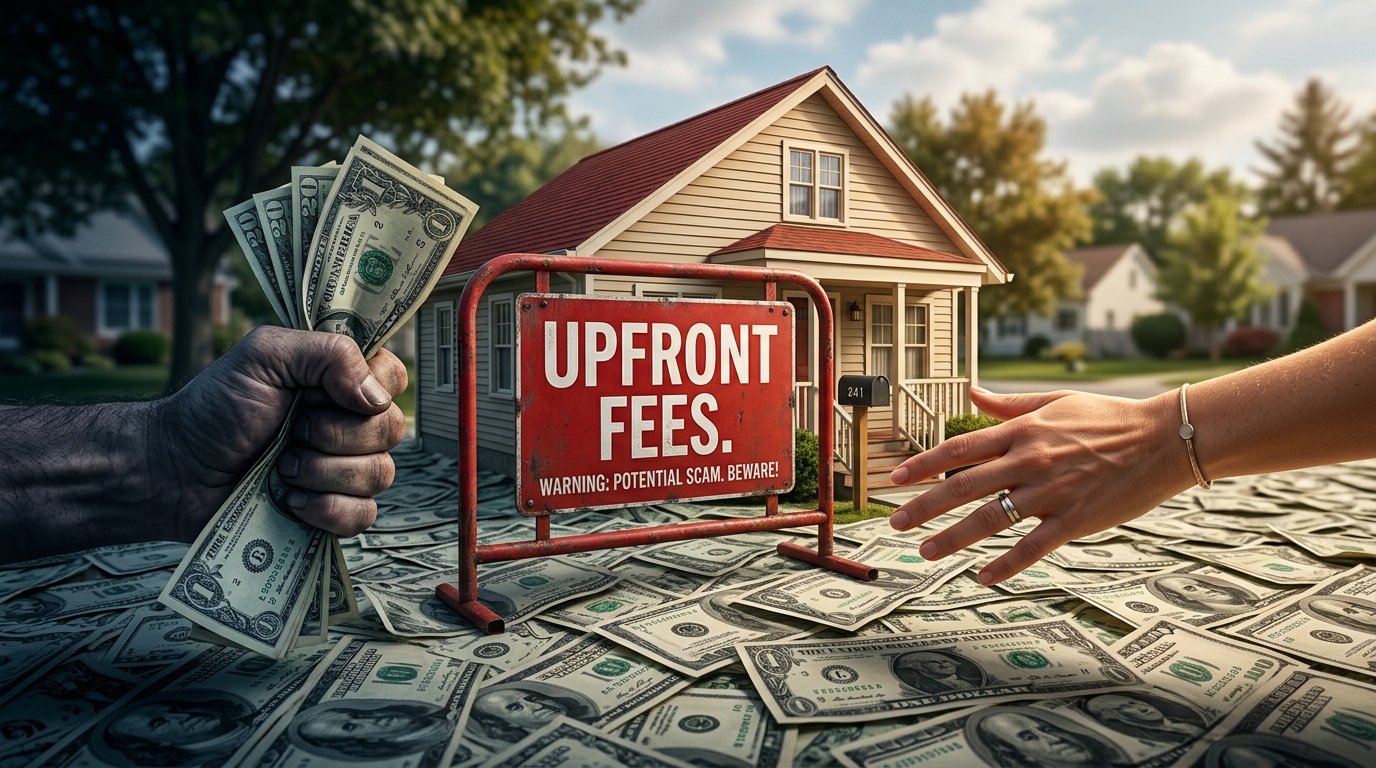
These scams have become more common in recent years, especially as more homeowners search online for ways to sell fast. Here are the versions you are most likely to encounter and how to spot each one.
- The processing fee scam. The fake buyer says they need a small fee, usually between $100 and $500, to process your property information or run a title check before making an offer. Legitimate buyers pay for their own due diligence.
- The inspection fee scam. The scammer sends someone who claims to be an inspector and then asks you to pay for the inspection report before they can make an offer. Real cash buyers order and pay for any inspections themselves.
- The reservation fee scam. The buyer asks you to pay a fee to hold your property off the market while they arrange their funds. Legitimate buyers do not need you to fund their acquisition timeline.
- The advance deposit scam. The buyer asks for an earnest money deposit from you rather than from them. In a real transaction, the buyer puts up earnest money, not the seller.
- The legal or title fee scam. A fake buyer says you must pay attorney or title fees directly to them before closing can proceed. Real closing costs go to the title company or closing attorney, not to the buyer.
What Legitimate Home Buyers Ask For vs What Scammers Ask For
| Legitimate Cash Buyer | Scammer |
|---|---|
| Makes an offer at no cost to you | Charges a fee just to see the home or make an offer |
| Pays for their own inspections | Asks you to pay for an inspection they order |
| Has a verifiable business name and address | Communicates only by email or text, no verifiable office |
| Closes through a licensed title company | Sends closing funds through wire to an unknown account |
| Does not pressure you to sign quickly | Creates urgency, says the offer expires immediately |
| Can provide references from past sellers | Cannot or will not provide verifiable references |
Knowing the difference can save you a lot of money and stress. And once you know what to look for in a legitimate buyer, the process of selling becomes much less intimidating. Our post on the difference between a professional home buyer and a fix-and-flip investor goes into more detail about how real buyers operate and what sets a trustworthy company apart from a questionable one.
Why Sellers Fall for Upfront Fee Scams
I have seen sellers in tough financial situations accept things they would normally question because they feel desperate to close fast. When you are behind on payments, facing foreclosure, or dealing with a difficult life situation, the pressure to take any offer from anyone can make warning signs easy to ignore.
Scammers know this. They target people who are stressed and looking for a quick solution. They offer numbers that sound reasonable, communicate quickly and enthusiastically, and then introduce the fee as a small, routine step that needs to happen before the deal can move forward.
According to the Federal Trade Commission, real estate and home sale scams consistently rank among the most reported consumer fraud categories. The FTC strongly advises consumers to verify any company before paying fees and to never send money to someone they have not independently confirmed is who they say they are.
How to Verify That a Cash Buyer Is Legitimate
Before you go any further with a buyer who has contacted you, take a few minutes to do some basic checks. This is not hard and it can protect you from losing real money.
Look up the company’s name in your state’s business registry. Every legitimate business has a registered entity. Search for reviews on third-party platforms where reviews cannot be faked or controlled by the company. Look at how long they have been in business. Ask for references from past sellers and actually call them.
A legitimate cash buyer will have a physical address, a working phone number, a verifiable business history, and a process that involves a licensed title company handling the closing funds. If any of those things are missing or vague, walk away.
According to the Consumer Financial Protection Bureau, verifying the legitimacy of any company asking for your financial information or money is one of the most important steps a consumer can take in any real estate transaction. The same principle applies to home buyers.
If you are looking for a buyer you can actually trust, visit our We Buy Houses page to learn how we work, or contact us directly and we will be upfront with you from the very first conversation. No fees. No tricks.
And if you want to understand the full picture of what documents and steps are involved in a legitimate cash sale, our post on the 3 documents you should have ready before calling a cash buyer will help you understand exactly how a real process works so you can spot anything that does not match.
Conclusion
No legitimate home buyer will ever ask you to pay them money before closing. That is the rule. If someone asks for any kind of fee upfront, whether they call it a processing fee, an inspection deposit, or a reservation charge, do not pay it and do not continue working with them. Real buyers get paid when they buy your home and resell it. They do not get paid by charging you. Protect yourself by knowing how the process is supposed to work and trusting your instincts when something feels off.
Frequently Asked Questions
What fees should I expect to pay when selling to a cash buyer?
In a legitimate cash sale, you typically pay nothing upfront. At closing, standard costs like prorated property taxes, title insurance, and any agreed-upon seller contributions may be deducted from your proceeds. But you pay nothing to the buyer directly before or during the transaction.
What if the buyer says the fee is refundable?
Do not rely on a refund promise from someone you cannot verify. Scammers often say the fee will be refunded at closing to make it seem low-risk. Once you send the money, it is almost always gone. A legitimate buyer does not need a refundable fee from you to get started.
Is earnest money the same as an upfront fee?
No. Earnest money in a real transaction is paid by the buyer, not the seller, and it goes into a neutral escrow account managed by the title company. If a buyer is asking you to pay earnest money to them directly, that is not how real estate works and it is a major warning sign.
How can I report a home buyer scam?
You can report it to the Federal Trade Commission at reportfraud.ftc.gov, to your state’s attorney general office, and to the FBI’s Internet Crime Complaint Center at ic3.gov. Reporting helps protect other sellers from going through the same experience.
Are all online cash home buyer companies scams?
No, not at all. Many legitimate and reputable cash home buying companies operate online and provide real value to sellers. The key is doing your homework before engaging. Look for a verified business history, real reviews, a physical address, and a process that involves a licensed title company. If all of that checks out, the company is likely legitimate.