
Nobody expected a global shift in how people work to completely change what suburban real estate looks like. But it did, and in the San Fernando Valley, the effects are still playing out in 2026. If you own a home out here, or you are thinking about buying one, understanding this shift is important before you make any decisions.
How Remote Work Changed What Buyers Want
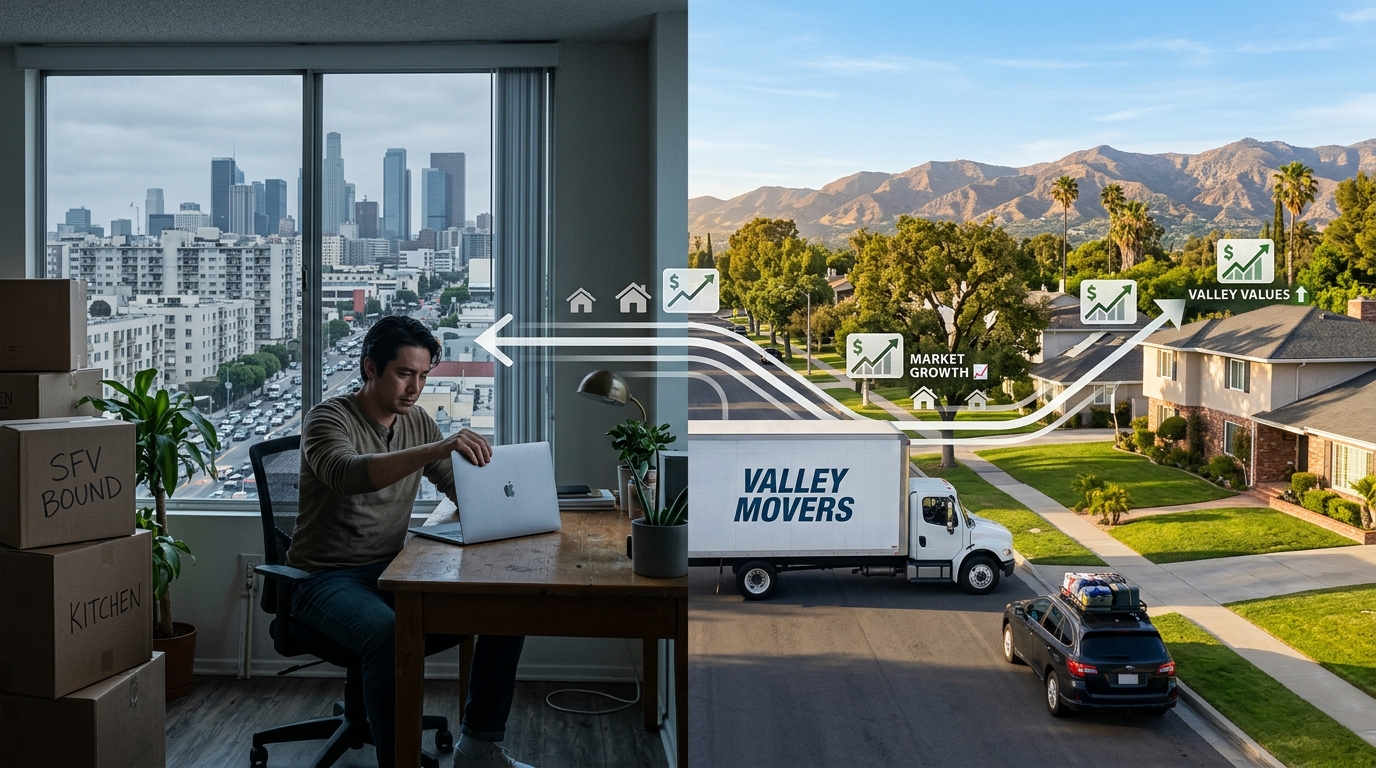
The Demand for Space Got Real
Before remote work became a fixture of daily life, a lot of buyers in Southern California were happy to trade space for location. They wanted to be close to their office, close to the freeway, close to the action. A smaller house in a walkable neighborhood made sense when you were only home to sleep.
That changed almost overnight. Suddenly, people were spending all day at home. They needed a place to work, a place for their kids to do school, and they still needed to cook, relax, and exercise. The square footage that felt fine before felt very small very fast.
The San Fernando Valley, with its larger lots, quieter streets, and more room for the money compared to the Westside or Hollywood, became a much more interesting option. Buyers started looking at neighborhoods like Northridge, Granada Hills, Chatsworth, and Porter Ranch not as compromise locations but as genuine choices.
According to a report published by the U.S. Bureau of Labor Statistics, remote work was a major driver of housing price increases in suburban markets across the country, as people prioritized more interior space over proximity to traditional employment centers.
Commute Time Stopped Being a Dealbreaker
I remember talking to a buyer a few years ago who would not even look at anything more than 20 minutes from her office in Burbank. The idea of living in, say, Chatsworth felt out of the question to her. Now she works from home three or four days a week and the drive does not bother her anymore. She bought a four-bedroom house with a backyard pool and pays less per month than she would for a two-bedroom condo near her office.
That story plays out across the Valley. When commute time becomes less of a daily burden, the calculus for where to live completely changes. Suburban San Fernando Valley becomes a lot more attractive when you only need to make the drive twice a week.
What This Has Done to San Fernando Valley Home Prices
The Price Surge and Where Things Stand in 2026
The pandemic years brought a sharp run-up in home prices across the Valley. Demand jumped, inventory was extremely low, and sellers were in total control of the market. Bidding wars were common in neighborhoods that had never seen that kind of competition before.
By 2025 and into 2026, the market has shifted to something more balanced, but prices have not collapsed back to where they were before. According to market data from Redfin, the median home price in San Fernando was around $690,000 as of late 2025, with homes selling faster than in previous years as more buyers enter with rate-adjusted budgets.
Neighborhoods that were once considered secondary choices in the Valley have held onto much of their value because remote workers brought genuine demand that was not there before.
Suburban San Fernando Valley vs. Urban Los Angeles
| Factor | San Fernando Valley | Urban LA (Westside/Hollywood) |
|---|---|---|
| Median Home Size | Larger (3-4 bed common) | Smaller (1-2 bed common) |
| Price Per Sq. Ft. | More affordable | Higher |
| Home Office Space | More available | Very limited |
| Lot Size | Larger, often with yards | Smaller or none |
| Commute Flexibility | High with remote work | Less relevant now |
| 2025-2026 Price Trend | Holding steady | More volatility |
The table tells the story pretty clearly. For remote workers who need space and value, the Valley makes a lot of sense.
Neighborhoods That Benefited the Most
Where Remote Work Buyers Landed
Not every part of the Valley saw the same results. Some neighborhoods benefited more than others from the remote work wave.
- Porter Ranch drew buyers who wanted newer construction with dedicated office spaces already built in
- Granada Hills and Northridge attracted families who needed multiple bedrooms and good school options
- Chatsworth and West Hills saw increased interest from buyers who prioritized larger lots and a quieter lifestyle
- North Hollywood (NoHo) held appeal for buyers who still wanted some proximity to creative industry employers with hybrid schedules
- Woodland Hills remained strong due to its mix of walkable amenities and larger homes
The common thread across all of them was space. Buyers wanted more of it, and the San Fernando Valley had more of it to offer than most of central Los Angeles.
What Sellers in the Valley Need to Know
The remote work shift created a different kind of buyer than the Valley had seen before. These buyers know exactly what they need, and they will walk away from a home that does not have it.
If your home has a dedicated office space, even just a room with a door that can function as one, that is now a selling feature worth highlighting. If it has a large yard, that matters more than it used to. If it has good internet infrastructure, mention it.
On the flip side, if your home has a layout that does not work well for working from home, or if it is very small for the price, you may need to adjust your expectations about what you can get.
You can learn more about how to position your home for today’s buyers by reading about why a high Zillow price does not always mean more money at closing and about equity advance options if you need cash quickly before your home closes.
For homeowners in the greater Los Angeles area, you can also browse our California locations page to see what options are available in your specific neighborhood.
If you have questions about selling your San Fernando Valley home and want to understand what it is worth in the current market, reach out to our team at Buy Your Properties for a no-pressure conversation.
Will Remote Work Stay, or Will Prices Cool?
The Hybrid Work Reality of 2026
One thing that seemed unclear a couple of years ago is getting clearer now. Remote and hybrid work is not going away. Large employers who pushed hard for full office returns in 2023 and 2024 found significant pushback from employees, and many settled on hybrid arrangements as a compromise.
This matters for the Valley because it means the demand that was created is largely staying. Workers who moved to the Valley for space are not packing up and moving back downtown. They have roots now. Kids are in schools. They renovated the home office. They like the yard.
The National Association of Realtors has noted in its ongoing housing research that suburban markets with good space and value continue to see consistent demand from hybrid workers, suggesting these shifts have a long-term quality to them rather than being a temporary trend.
What to Expect Going Forward
The wild swings of 2021 and 2022 are behind us. The Valley in 2026 is in a more mature market phase. Homes are still selling, but sellers need to price right and present well. The buyers who can afford the Valley are often remote workers with good salaries and clear priorities. Meeting those priorities is the job now.
If you have an older home in the Valley with a layout that does not serve today’s remote workers, you might want to read about how to sell your home while still finding the right next place so you do not feel rushed into a decision you are not ready to make.
Conclusion
Remote work permanently shifted what San Fernando Valley buyers want, and it did the same to prices. The Valley benefited from a genuine wave of demand that did not exist before, and that demand has largely stayed even as the broader market found its balance. For sellers, the message is to understand who your buyer is in 2026. For buyers, the Valley continues to offer real value for those who need space, flexibility, and room to live well.
Frequently Asked Questions
Did remote work directly cause San Fernando Valley home prices to rise?
Remote work was a major contributing factor. It expanded the pool of buyers willing to live further from traditional job centers, and the Valley attracted many of them due to its larger homes and relative affordability compared to central Los Angeles.
Are San Fernando Valley home prices expected to keep rising in 2026?
The market has stabilized compared to the sharp increases of 2021 and 2022. Prices in most Valley neighborhoods are holding steady rather than surging, with modest appreciation continuing in areas with strong demand like Porter Ranch and Granada Hills.
What features do remote workers look for in San Fernando Valley homes?
Remote buyers typically prioritize dedicated office space, larger square footage, outdoor areas like yards or patios, strong internet capability, and quiet neighborhoods. Homes with these features have held their value better.
Is it still a good time to sell a home in the San Fernando Valley?
Yes, but the market rewards well-prepared sellers. Homes that are priced accurately, presented well, and have features aligned with what today’s buyers want are still selling in reasonable timeframes. Overpriced homes or homes with significant issues are sitting longer.
Should I renovate before selling my San Fernando Valley home?
It depends on what work is needed. Improvements that appeal to remote workers, like creating a proper office space or upgrading the main living areas, can add value. Large renovations that exceed what comps support are harder to justify. Speaking with a local expert first is always a good starting point.