
If you’ve been searching for an affordable way to buy a home, HUD homes might be exactly what you need. They’re often priced below market, they’re available to regular buyers (not just investors), and the process — while a little different from a normal sale — is completely manageable once you understand it. This guide walks you through everything for 2026.
What Is a HUD Home?
How a Home Becomes a HUD Property
A HUD home is a property that was purchased using an FHA-insured mortgage and then went into foreclosure. When the homeowner defaulted, the lender filed a claim with the government. The U.S. Department of Housing and Urban Development (HUD) paid the lender and took ownership of the property. Now HUD needs to sell it to recover those costs.
HUD doesn’t want to be a landlord. They want to sell these homes as fast as possible, which is why they’re often priced attractively. And because their goal is to support homeownership — not profit — they actually give regular buyers (owner-occupants) priority over investors during the early days a listing is active.
That’s a big advantage most buyers don’t know about. If you’re buying the home to live in, you get first access before investors even have a chance to bid.
Who Can Buy a HUD Home?
Almost anyone can buy a HUD home. You don’t need any special qualifications beyond what’s normally required to buy a house. The main requirements are:
- You must use a HUD-registered real estate agent or broker to submit your offer
- You need to be able to finance the purchase or have cash available
- Owner-occupant buyers (people who plan to live in the home) get the first 30 days of any new listing exclusively
- After 30 days, if the home is unsold, investors can also bid
You don’t have to be a first-time buyer or low-income buyer. Anyone planning to live in the home as their primary residence qualifies as an owner-occupant.
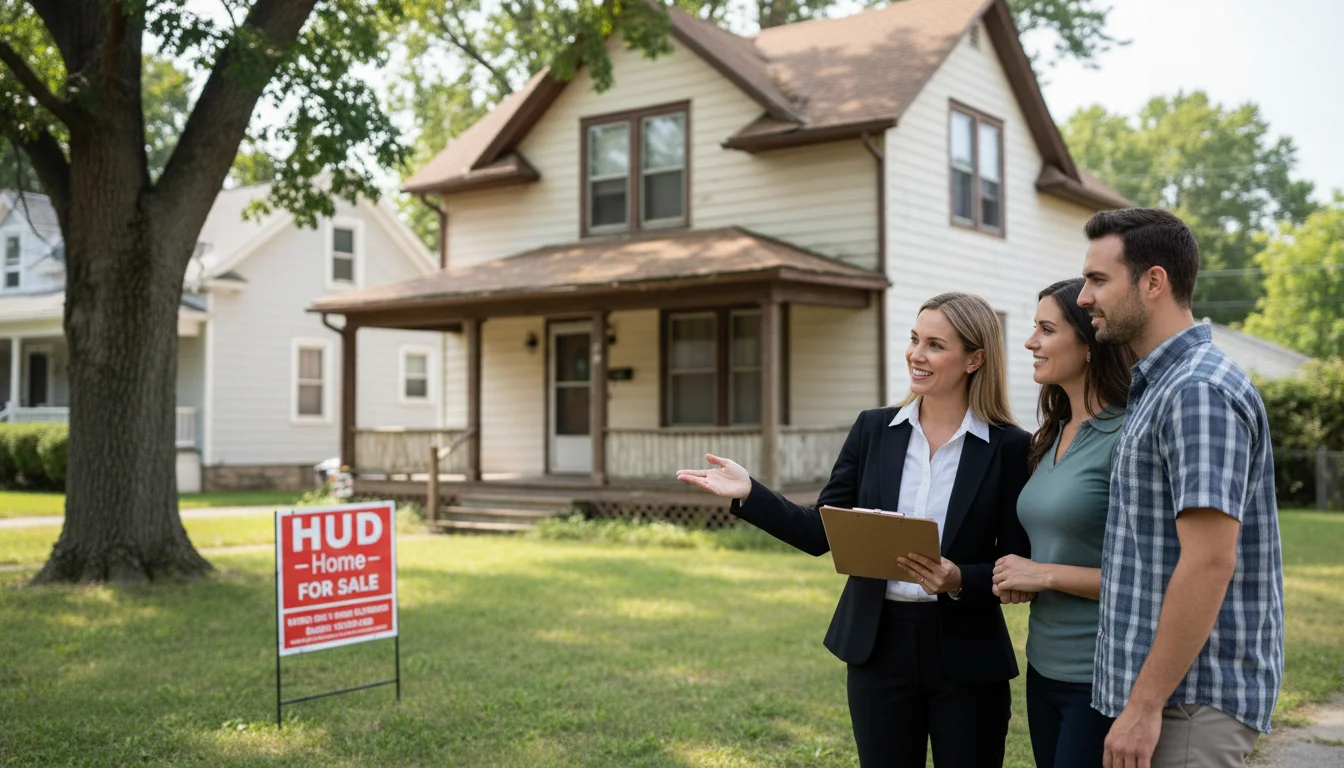
How the HUD Home Buying Process Works
Finding and Bidding on HUD Homes
All HUD homes are listed on one place: HUDHomeStore.hud.gov. This is the official government site where you can search by state, city, zip code, and price range. Every active listing shows photos, the asking price, and the property condition rating.
HUD homes are sold through a sealed-bid auction system. You don’t see what others are offering. You submit your best offer and the highest net offer to HUD (after any concessions) wins. There’s a daily bidding period, and results are posted online. If no acceptable offer comes in, the price may be reduced and the process repeats.
I once watched a colleague go through the HUD bidding process three times on the same property before finally winning. Each time, they refined their offer based on the property’s history. The fourth bid was just $1,200 above the previous rejected offer — and it won. Knowing the pattern helped.
Property Condition Ratings and What They Mean
HUD rates each property with a condition code that tells you what to expect:
- UI (Uninsured): Needs significant repairs; FHA financing usually not available; often cash buyers or renovation loans only
- IN (Insured): In reasonable condition; FHA financing allowed; repairs are minor
- IE (Insured with Escrow): Needs some repairs; FHA financing available with a repair escrow included
Always check the condition code before bidding. An “Uninsured” property can still be a great deal, but you need to budget for serious repairs and may need cash or a renovation loan to buy it.
HUD Home Financing Options
Standard FHA and Conventional Loans for HUD Homes
If the HUD home is rated “Insured” (IN), you can purchase it with a standard FHA loan with as little as 3.5% down. If the home needs some work and is rated “Insured with Escrow” (IE), you can still use FHA financing — HUD will set aside money in escrow for the required repairs, which must be completed after closing.
Conventional loans work too for homes in good condition. If you have 20% down and strong credit, a conventional mortgage may actually be a better deal for you than FHA because you avoid paying mortgage insurance premiums.
Special HUD Programs and Discounts
HUD offers several programs that can make their homes even more affordable:
- Good Neighbor Next Door Program: Teachers, police officers, firefighters, and EMTs can buy certain HUD homes at a 50% discount if they commit to living in the home for at least 3 years
- Dollar Homes: HUD homes that have been on the market for 6+ months and are priced at $1 for sale to local government agencies for community improvement
- HUD-Approved Down Payment Assistance: Many state and local programs can be combined with HUD home purchases to reduce your out-of-pocket costs
According to the U.S. Department of Housing and Urban Development, the Good Neighbor Next Door program helps revitalize communities by encouraging public servants to live in the neighborhoods they serve, with a significant 50% price reduction as the incentive.
HUD Homes vs. Other Distressed Properties
How HUD Homes Compare to REO and Short Sales
| Factor | HUD Home | REO (Bank-Owned) | Short Sale |
|---|---|---|---|
| Who is the seller? | U.S. Government (HUD) | Bank or lender | Homeowner + lender |
| Owner-occupant priority? | Yes — 30-day exclusive window | No | No |
| Bidding process | Sealed bid online auction | Negotiated offer | Offer with lender approval |
| FHA financing available? | Yes (if IN or IE rated) | Often yes | Usually yes |
| Inspection allowed? | Yes | Yes | Yes |
| Special discount programs? | Yes (Good Neighbor, etc.) | No | No |
Is a HUD Home Right for You?
HUD homes work best for buyers who are flexible on location, willing to do some repairs, and planning to use the home as a primary residence. If you’re an investor looking for a quick flip, you may need to wait for the 30-day owner-occupant window to close before you can bid.
For a first-time buyer or someone on a tight budget, HUD homes can be one of the most affordable paths to homeownership — especially when combined with down payment assistance programs.
If you’ve been looking at all kinds of foreclosure opportunities and want to compare your options, reading our guide on buying a foreclosed home as a beginner gives you the full picture of what’s available and how each type of sale works.
Common Mistakes When Buying a HUD Home
What First-Time HUD Buyers Often Get Wrong
The biggest mistake I see is buyers submitting an offer without first getting a home inspection. HUD does allow inspections before you bid — but they must be scheduled through the listing agent and done during the inspection period before bidding. If you skip it and win, you own whatever problems are hiding inside. Don’t skip it.
Another mistake: not having your financing lined up before bidding. HUD requires a pre-approval letter with your offer. If you win the bid and then can’t get financing, you lose your earnest money deposit. HUD is strict about this.
Also, many buyers try to bid without a HUD-registered broker and discover they can’t submit an offer at all. You must use an agent registered with HUD to place a bid. This isn’t optional.
Tips for a Successful HUD Home Purchase
Here are the most important things to do when buying a HUD home:
- Find a real estate agent who is registered with HUD and has experience bidding on HUD properties
- Get a pre-approval letter from your lender before you start bidding
- Schedule a home inspection during the inspection period — before you place your bid
- Research the property’s history through public records and the HUD listing
- Place your best offer first — you often only get one shot per bidding period
- Check the condition code carefully to make sure your financing type matches
According to the Consumer Financial Protection Bureau (CFPB), buyers of foreclosed and government-owned properties should conduct thorough due diligence on condition, title, and outstanding obligations before submitting an offer.
And if you ever need to explore options quickly — whether you’re buying or dealing with a distressed property situation of your own — we’re always here to help. Contact us today for an honest, no-pressure conversation about your options.
Also, compare with pre-foreclosure vs foreclosure situations to understand where HUD homes fit in the overall foreclosure pipeline.
Conclusion
Buying a HUD home in 2026 is a smart move for the right buyer. The price is often below market, the process is transparent, and owner-occupants get first access before investors can compete. Do your homework, work with a HUD-registered agent, get your financing ready, and inspect before you bid. Follow those steps and you can land a genuinely great deal on a government-owned property.
Frequently Asked Questions
What is a HUD home and who sells it?
A HUD home is a property formerly backed by an FHA mortgage that went into foreclosure. HUD (U.S. Department of Housing and Urban Development) paid the lender’s claim and now sells the home to recover costs. All listings are available at HUDHomeStore.hud.gov.
Can I use an FHA loan to buy a HUD home?
Yes, if the home is rated “Insured” (IN) or “Insured with Escrow” (IE), you can use a standard FHA loan. If it’s rated “Uninsured” (UI), you’ll likely need cash or a renovation loan like the FHA 203(k) because the home needs significant repairs.
Do I need a special agent to buy a HUD home?
Yes. Only HUD-registered real estate brokers and agents can submit offers on HUD homes. You cannot place a bid directly. Find an agent who is registered in the HUD system before you start looking at properties.
What is the Good Neighbor Next Door program?
The Good Neighbor Next Door program offers eligible public servants — teachers, police, firefighters, and EMTs — a 50% discount on HUD homes in designated revitalization areas, with the requirement to live in the home for at least 3 years.
How long does it take to close on a HUD home?
After your bid is accepted, HUD typically requires closing within 30 to 60 days. Delays can happen if financing issues arise or title work takes longer than expected. Cash buyers can often close faster, within 30 days.