
You spend weeks getting your home ready to sell. You repaint the walls, deep-clean every corner, and tidy up the yard. Then a buyer drives 45 minutes to see it — takes one look — and leaves in five minutes because the layout wasn’t what they imagined. Sound familiar? That’s the problem virtual tours solve completely. And once I saw the numbers behind them, I understood why serious sellers now use them every single time.
What Is a Virtual Tour and How Does It Work?
A virtual tour is a digital walkthrough of your home that buyers can explore on their phone, tablet, or computer — any time, from anywhere. It’s not just a slideshow of photos. It’s an interactive, 360-degree experience where the buyer can “move” from room to room, look up and down, and get a real feel for the layout and flow of the property.
The most popular tool for this is Matterport, which creates a fully navigable 3D model of your home. Other options include 360-degree photo tours stitched together with software, or even simple video walkthroughs filmed with a smartphone. Each type has its place depending on your budget and the type of property you’re selling.
Types of Virtual Tours Available for Home Sellers
Not all virtual tours are the same. Here’s a quick breakdown of the most common types sellers use today:
- 3D Matterport Tours: The gold standard. Creates a full interactive model where buyers can walk through every room at their own pace. Best for larger or premium homes.
- 360-Degree Photo Tours: Stitched panoramic photos that let buyers spin around inside each room. More affordable than Matterport and still very effective.
- Video Walkthroughs: A filmed tour of the home, usually narrated. Less interactive but great for social media sharing and reaching buyers on YouTube or Instagram.
- Drone Aerial Tours: Show the property’s exterior, lot size, neighborhood, and surroundings from above. A powerful add-on for homes with large yards or special locations.
- Live Virtual Showings: A real-time video call where the agent or seller walks a buyer through the home via FaceTime, Zoom, or similar apps.
How Virtual Tours Fit Into Your Home’s Marketing Plan
Think of a virtual tour as the bridge between your listing photos and an in-person showing. Photos catch the buyer’s eye. The virtual tour keeps them engaged and builds confidence. By the time they schedule a real visit, they already feel comfortable with the home — which means they come in much more ready to make an offer.
Pairing a virtual tour with a strong digital marketing strategy makes an even bigger difference. If you haven’t explored how digital channels can help you sell faster, our guide on digital marketing strategies for selling property covers everything you need to know.
The Real Numbers: Why Virtual Tours Sell Homes Faster
I’m not going to just tell you virtual tours are helpful. Let me show you what the data actually says — because the numbers are pretty hard to ignore.
What the Research Says About Virtual Tours and Sale Speed
According to a study published by Matterport, which analyzed MLS transaction data across multiple U.S. markets, listings featuring a 3D virtual tour closed up to 31% faster than those without one. That’s not a small difference — it translates to roughly 10 fewer days on the market. The same study found that homes with virtual tours sold for up to 9% more on average than similar homes listed without one.
A separate peer-reviewed study by researchers at the University of Texas at Dallas, published in December 2025 via Phys.org, analyzed nearly 43,000 properties and found that homes using virtual reality tours reduced their average time on market from 34 days down to just 19 days. That’s almost cutting the wait time in half. The researchers also noted that virtual tours were especially powerful when the listing agent wasn’t highly responsive — essentially the tour filled the information gap for buyers.
Buyer Behavior Has Changed Permanently
Here’s what really surprised me when I first dug into this topic: 54% of buyers won’t even look at a listing if it doesn’t include a virtual tour. More than half of your potential buyers are scrolling straight past your home. That’s not a future trend — that’s happening right now, today, in every market.
And it gets more striking with younger buyers. People aged 18 to 34 are 130% more likely to book a showing after seeing a virtual tour. Since millennials and Gen Z now make up the largest share of active home buyers, ignoring virtual tours means ignoring your most motivated buyer pool. According to NAR’s Profile of Home Buyers and Sellers, technology-driven tools are now central to how buyers discover and evaluate properties — and this shift is permanent.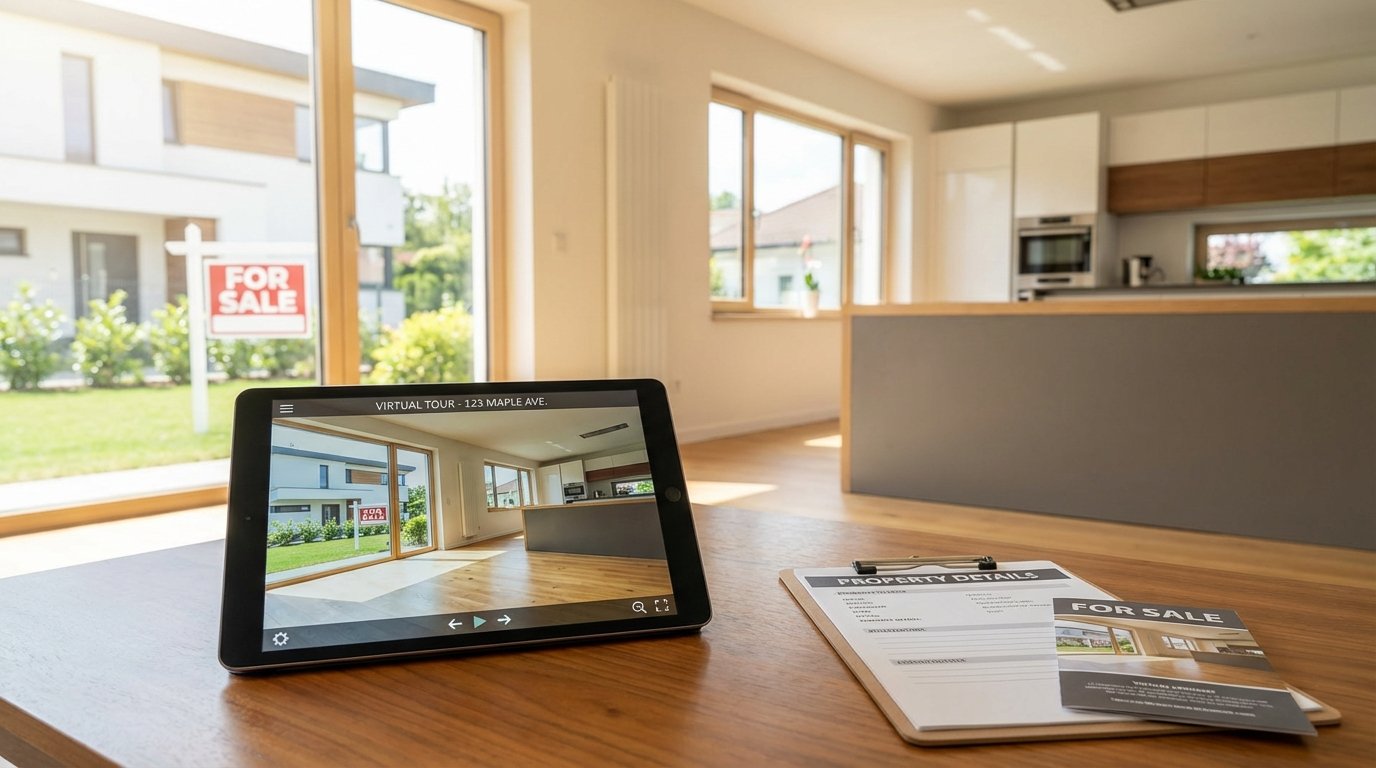
Benefits of Virtual Tours for Home Sellers
Beyond speed and price, virtual tours bring a whole set of practical advantages that most sellers don’t think about until they’ve used one.
Fewer Wasted Showings, More Serious Buyers
One thing sellers hate is strangers walking through their home five times and still not making an offer. Virtual tours fix that. Research shows they cut down on wasted in-person viewings by 40%. Why? Because buyers who schedule a showing after already taking a virtual tour are pre-qualified by their own interest. They’ve already “walked” the home and liked it enough to come see it for real. Those are the buyers who make offers.
Honestly, this alone makes virtual tours worth it for most sellers. Less disruption to your daily life, fewer pointless showings, and more time to focus on the buyers who are actually serious.
Your Home Is Open 24/7 to Buyers Everywhere
A virtual tour works around the clock. While you’re sleeping, a buyer in another city — or another country — can be exploring your home in full detail. This is especially powerful if your home appeals to relocation buyers, out-of-state investors, or buyers who simply can’t visit during traditional showing hours.
In today’s market, especially in high-growth states, a large portion of buyers are relocating from elsewhere. Understanding real estate market trends in your area can help you see exactly who your buyer pool is — and virtual tours make you accessible to all of them.
Virtual Tours vs. Traditional Photos: A Direct Comparison
A lot of sellers ask me: “Can’t I just use really good photos?” You can, and you absolutely should. But photos and virtual tours do different jobs. Here’s how they compare side by side:
| Feature | Professional Photos | Virtual Tour |
|---|---|---|
| Shows layout & flow | Partially | Yes — fully interactive |
| Keeps buyers on page longer | 2–3 minutes avg. | 5–10x longer than photos alone |
| Works for remote / out-of-state buyers | Somewhat | Fully — replicates in-person visit |
| Reduces wasted showings | No | Yes — by up to 40% |
| Buyer trust & confidence | Good | Excellent — buyers feel inside the home |
| Listing views boost | Solid | 87% more views than photo-only listings |
| Cost to add | $150–$400 | $200–$600 (Matterport or similar) |
The takeaway? Photos get buyers to stop scrolling. Virtual tours get buyers to fall in love. You need both — but the virtual tour is what converts interest into action.
How to Get a Virtual Tour Made for Your Home
Getting a virtual tour done is easier than most sellers think. Here’s a simple process you can follow:
- Step 1 — Choose your tour type: Decide between a 3D Matterport scan, 360-degree photos, or a video walkthrough based on your budget and home size.
- Step 2 — Hire a real estate photographer: Many professional real estate photographers now offer virtual tours as part of their packages. Ask for a quote that includes both photos and a tour.
- Step 3 — Prepare your home: Clean and declutter every room before the photographer arrives. The tour will capture everything — the good and the messy.
- Step 4 — Add the tour to all your listings: Embed it directly on your MLS listing, Zillow, Realtor.com, and your agent’s website. Share it on social media too.
- Step 5 — Promote the tour link actively: Include it in your listing description, email outreach, and any paid ads you’re running. Make it easy for buyers to find and click.
What Makes a Great Virtual Tour: Tips to Stand Out
Not all virtual tours are equal. I’ve seen some that were so dark or poorly shot that they actually hurt the listing. A great virtual tour needs good lighting, a logical room-by-room flow, and enough detail that buyers feel genuinely informed — not confused.
A few tips that make a real difference: open all curtains and blinds to maximize natural light. Turn on every lamp and overhead light. Remove personal photos and clutter. Make each room look as clean and spacious as possible. If your home has a great view or a standout feature like a fireplace or kitchen island, make sure the tour lingers there. And always shoot the exterior too — buyers want to see the front, back, and yard before they commit to visiting.
If you’re planning to sell fast and want a stress-free process, our cash home buying team in Los Angeles can make you a fair offer quickly — no virtual tour required, no showings, no repairs. And if you’d like to talk through your options first, we’re always happy to chat. Contact us here and we’ll get back to you fast.
Conclusion
Virtual tours are no longer a bonus feature — they’re expected by today’s buyers. They help your home sell faster, attract more serious inquiries, reduce wasted showings, and reach buyers who could never visit in person. The data is clear: listings with virtual tours close up to 31% faster and get 87% more views than those without. If you’re serious about selling your home quickly and for the best price, adding a virtual tour to your listing is one of the smartest moves you can make.
Frequently Asked Questions
How much does a virtual tour cost for a home listing?
A basic 360-degree photo tour can cost as little as $100–$200. A full 3D Matterport tour typically runs between $200–$600, depending on the size of your home and the photographer you hire. Many real estate photographers include a tour as part of a bundled photography package, which can make it very affordable.
Do virtual tours really help homes sell faster?
Yes — multiple studies confirm it. Research shows homes with virtual tours close up to 31% faster than those without, and a peer-reviewed study from 2025 found they can reduce time on market from an average of 34 days to just 19 days. The difference is real and measurable.
Can I create a virtual tour myself without hiring someone?
Yes, to some extent. Apps like iStat and Kuula let you create basic 360-degree tours using a smartphone. However, the quality won’t match a professionally shot Matterport tour. For a home sale, professional quality matters — a poorly made tour can actually turn buyers away rather than attract them.
Will a virtual tour replace the need for in-person showings?
Not entirely — but it reduces unnecessary ones. Most serious buyers will still want to visit in person before making an offer. However, the buyers who show up after seeing a virtual tour are much more committed, which means fewer wasted showings and a higher chance of receiving an offer from each visit.
Is a virtual tour worth it for a smaller or older home?
Absolutely. Virtual tours work for homes of all sizes and ages. In fact, for a smaller home, a well-made tour can make the space feel more open and help buyers mentally map out how they’d use each room — which builds confidence and speeds up their decision. For an older home, a tour lets buyers see exactly what they’re getting before visiting, reducing surprises and last-minute objections.