
When my uncle passed away last year, I got a call from my cousin Sarah. She sounded lost. “They’re talking about probate,” she said. “What even is that? Do I need a lawyer? How long will this take?”
I remember feeling the same way when my grandmother died. The word probate sounds scary. It feels like something only lawyers understand.
But here’s the truth: probate is just a legal way to make sure a person’s things go to the right people after they die. Yes, it takes time. Yes, there are steps. But once you know what to expect, it gets easier.
What Is Probate and Why Does It Matter?
Probate is what happens when someone dies, and the court helps sort out their stuff. The court makes sure debts get paid. It makes sure the will is real. And it makes sure the right people get what they should.
In Los Angeles County, this happens at the Superior Court. Most cases go through the Stanley Mosk Courthouse in downtown LA.
Not every family needs probate. But if your loved one owned a house, had money in the bank, or had things worth more than $184,500, you probably do.
Do You Really Need Probate?
Here’s when you need it:
If the person who died had assets worth more than $184,500 in their name only, you need probate. This includes houses, cars, bank accounts, and other property.
If they had a will, probate makes sure it’s followed. If they didn’t have a will, probate follows California law to decide who gets what.
Here’s when you don’t need it:
If everything were in a living trust, it would skip probate. If bank accounts had a payable-on-death name on them, those go straight to that person. If life insurance or retirement accounts had a named person, they would get it without a court.
I wish more people knew this. My friend’s dad had everything in a trust. When he died, there was no probate. It saved them months of waiting and thousands of dollars.
Step 1: Filing the Petition
The first step is filing a paper with the court. This paper is called a Petition for Probate.
Someone has to do this. Usually, it’s the person named in the will as executor. If there’s no will, a family member can do it.
You file this at the Los Angeles County Probate Court. The filing fee is around $435 to $465. Once you file, the court sets a hearing date. This usually happens about 4 to 6 weeks later.
The court needs to know who the heirs are. It needs to know what assets the person had. And it needs a copy of the will if there is one.
This step can feel overwhelming. My cousin Sarah hired a probate attorney right away. She said it was the best money she spent. He handled all the forms and made sure everything was right.
Step 2: Notifying Everyone
Once you file the petition, you have to tell people. This is the law in California.
You have to mail a notice to every person named in the will. You also send it to all legal heirs even if they’re not in the will.
And here’s the weird part: you have to put a notice in the newspaper. It has to run three times. This lets creditors know that the person died. They get a chance to ask for money the person owed them.
I know it sounds old-fashioned. But that’s how it works. The notice tells everyone there’s a court hearing coming up.
Step 3: The First Court Hearing
At the first hearing, the judge looks at everything you filed. If it all looks good, the judge appoints someone to handle the estate.
This person is called the personal representative. If there’s a will, they’re called the executor. If there’s no will, they’re called the administrator.
The judge gives them special papers called Letters Testamentary or Letters of Administration. These papers let them act for the estate. They can open bank accounts, sell property, and pay bills.
Most of the time, this hearing goes smooth. But if someone objects to the will or doesn’t want that person in charge, things can get messy. That’s when you really need a lawyer.
Step 4: Making a List of Everything
Now the real work starts. The personal representative has to find every single thing the person owned.
This means houses, cars, jewelry, bank accounts, stocks, and even things like tools or furniture. Everything gets listed.
Then someone has to figure out what it’s all worth. California uses special people called probate referees for this. The court appoints them. They look at the property and decide the value.
This has to be done within 4 months of getting those Letters. The list gets filed with the court. It’s called an Inventory and Appraisal.
When my grandmother died, this step took forever. We found bank accounts we didn’t know existed. We found stock certificates in a drawer. It was like a treasure hunt, except sad.
Step 5: Paying Bills and Debts
Here’s something people don’t always know: the estate has to pay what the person owed.
Creditors get four months to file claims. That means credit card companies, hospitals, or anyone else who’s owed money can ask to be paid.
The personal representative looks at each claim. If it’s real, they pay it from the estate money. If it’s not real, they can say no.
Some bills come first. Funeral expenses get paid before credit cards. Taxes have to be paid, too. The order matters under California law.
I’ve seen families fight about this. Someone wants their money right away. But you can’t hand out money to heirs until all the bills are paid. That’s the law.
Dealing with Property and Real Estate
If the person owned a house, this gets more complex. Houses in Los Angeles are worth a lot. So selling one is a big deal.
The personal representative has to get court approval to sell real estate. They can’t just put it on the market.
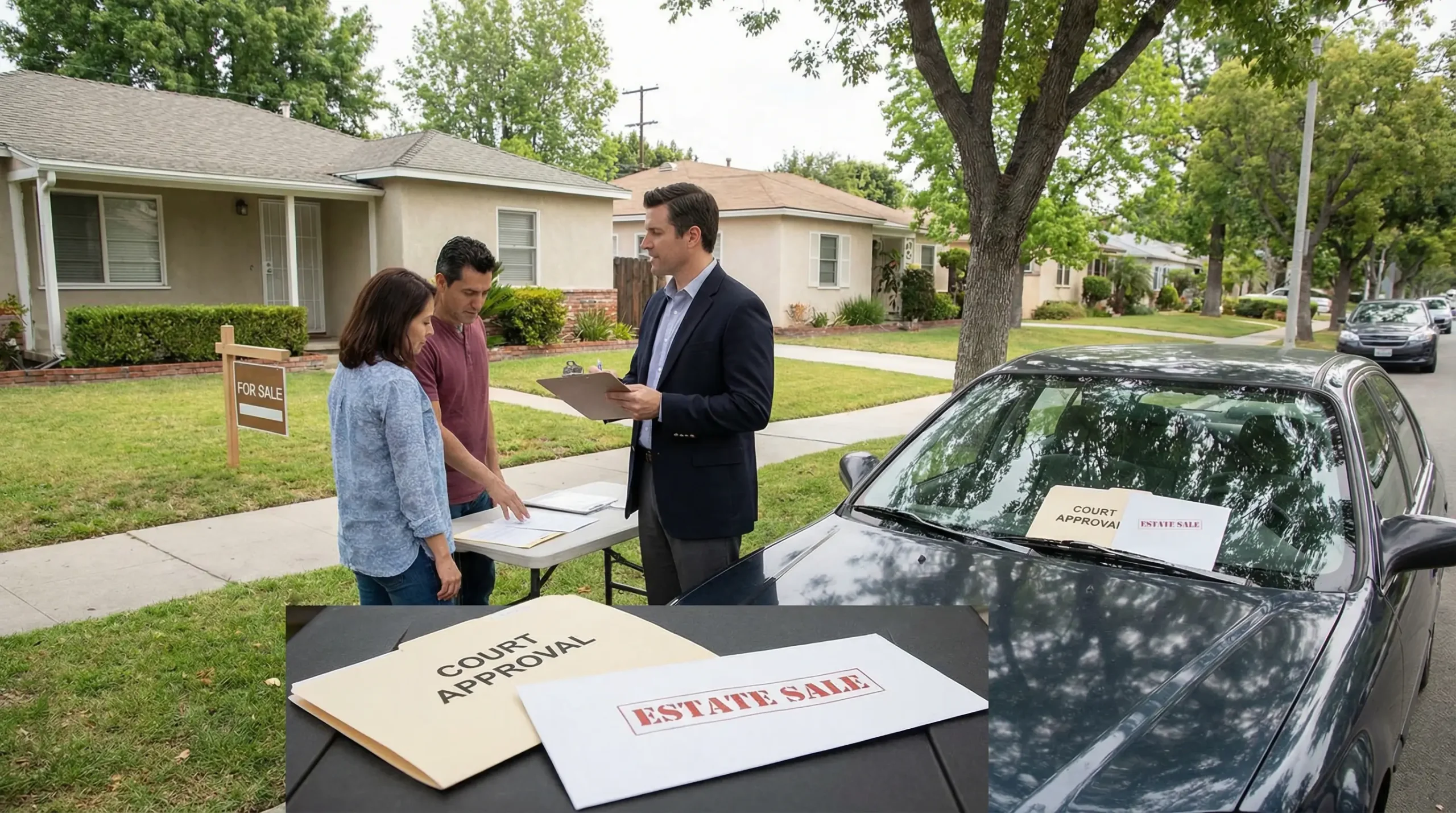
First, they get offers. Then they file a petition asking the court to approve the sale. The court sets a confirmation hearing.
Here’s where it gets interesting. At that hearing, other people can show up and bid higher. It’s like an auction. The court wants to make sure the estate gets the best price.
My uncle’s house in Burbank was sold this way. Someone offered $780,000. At the hearing, another buyer bid $820,000. The family was happy, but it added two more months to the process.
How Long Does Probate Take?
People always ask me this. The answer is: it depends.
A simple case with no fights and no property to sell might take 9 to 12 months. That’s if everything goes smoothly.
But if there are problems, it can take 18 months or even longer. Family disputes, missing paperwork, or tax issues all slow things down.
In Los Angeles County, the courts are busy. Really busy. This means more waiting.
I tell people to be patient. I know it’s hard when you’re waiting for money or you want to close a chapter. But rushing makes mistakes. Mistakes cause delays.
What Does Probate Cost?
This is the part nobody likes. Probate costs money.
There are court filing fees. There are fees for publishing the notice in the newspaper. The probate referee charges 0.1% of the value of what they appraise.
But the big costs are the attorney fees and the executor fees. California law sets these based on how much the estate is worth.
For example, on an estate worth $500,000, the attorney gets about $13,000. The executor gets about $13,000 too. That’s $26,000 total just in those two fees.
On a $1 million estate, those fees go up to about $23,000 each.
Some people think that’s too much. But probate takes work. Real work. And attorneys who know what they’re doing save you time and mistakes.
Common Problems Heirs Face
I’ve seen families go through this. Here are the problems that come up most:
- Family fights. Brothers and sisters who got along fine suddenly can’t agree on anything. One wants to sell the house fast. Another wants to keep it. Someone thinks they deserve more. It gets ugly.
- Missing assets. Sometimes things disappear. Maybe someone took jewelry before the estate was settled. Maybe there are accounts nobody knew about. Finding everything is hard.
- Executor problems. The person running the estate might not do a good job. They might take too long. They might make bad choices. Or worse, they might help themselves to estate money.
- Creditor disputes. Old bills show up. Some are real. Some aren’t. Figuring out what to pay takes time.
The best advice I ever got was this: communicate. Talk to your family. Be honest. Get help when you need it.
Do You Need a Lawyer?
Technically, you can do probate yourself. But should you?
If the estate is small and simple, maybe you can. But most of the time, I say get a lawyer.
Here’s why: the court has strict rules. Forms have to be perfect. Deadlines matter. Miss something and you start over.
A good probate attorney in Los Angeles knows the courts. They know the judges. They know what forms to file and when to file them.
They also protect you. If you’re the executor, you can be held responsible for mistakes. A lawyer makes sure you don’t mess up.
My cousin Sarah’s attorney saved her thousands. He caught an error on the inventory that would have delayed things by months. He negotiated with a creditor and got a bill reduced. He was worth every penny.
What Happens If There’s No Will?
According to California Courts Self Help, when someone dies without a will, it’s called dying intestate. California law decides who gets what.
Usually, it goes like this: the surviving spouse or partner gets some or all. If there’s no spouse, it goes to children. If no children, then parents. Then siblings.
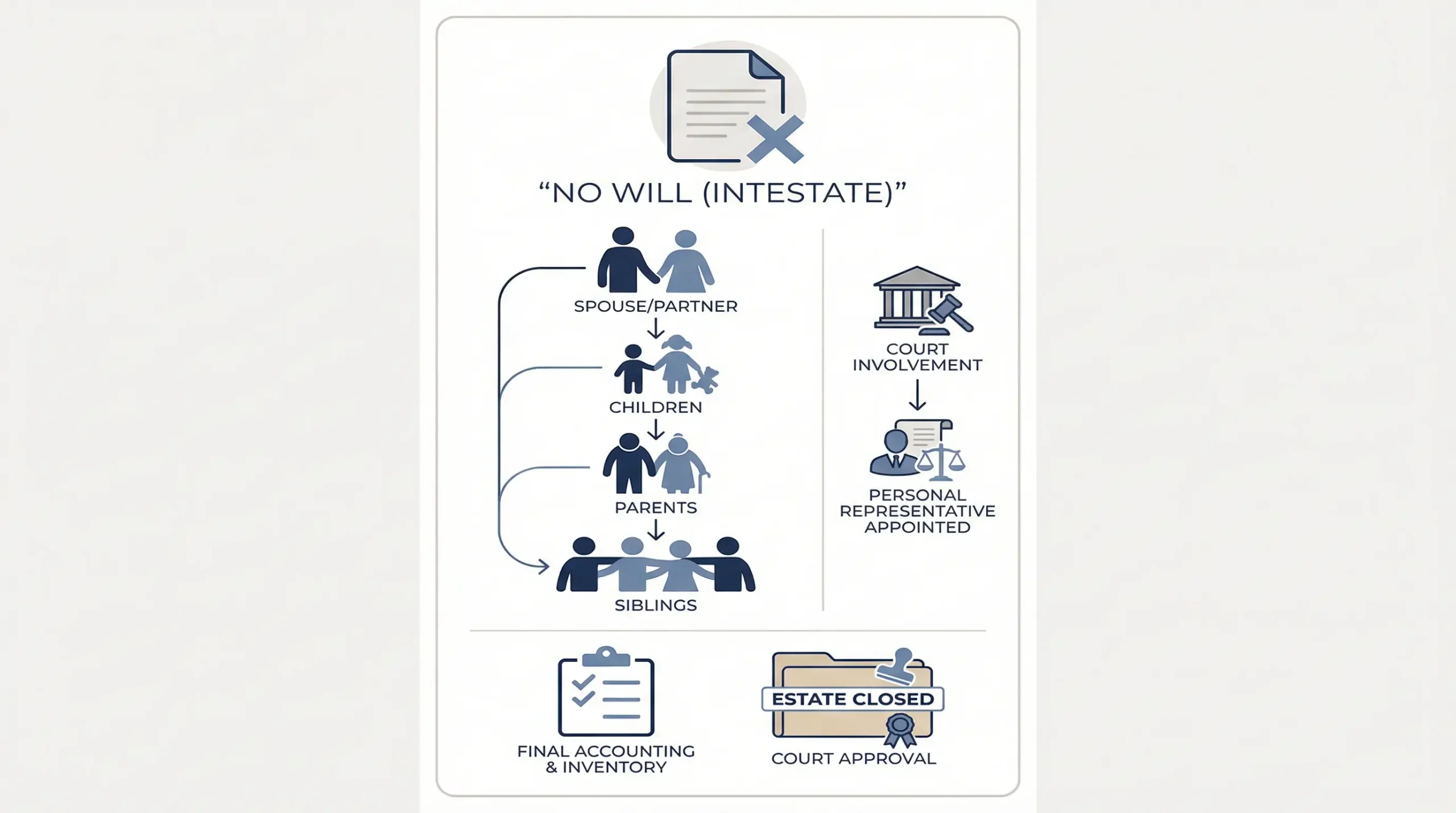
The court still has to appoint someone to handle things. That person files the petition and follows all the same steps.
Without a will, there can be more fighting. People might disagree about who should be in charge. Or they might think the law isn’t fair.
This is why everyone should have a will. Even a simple one. It makes everything easier for the people left behind.
Closing the Estate
After all the debts are paid and all the issues are settled, it’s time to close.
- The personal representative files a final accounting with the court. This shows every dollar that came in and every dollar that went out.
- The court reviews it. If there are no problems, the judge approves it.
- Then the personal representative hands out what’s left to the heirs. Everyone signs papers saying they got their share.
- Finally, the court issues an order closing the estate. It’s done.
I remember when my grandmother’s estate finally closed. It took 14 months. We were all tired. But we also felt relief. It was over.
Tips for Making Probate Easier
Based on what I’ve learned, here’s what helps:
- Start early. Don’t wait weeks to file the petition. The sooner you start, the sooner you finish.
- Stay organized. Keep every paper. Make copies. Track every expense. You’ll need it all later.
- Communicate with family. Tell everyone what’s happening. Answer questions. It prevents fights.
- Hire help when you need it. A good attorney or accountant can save you time and money.
- Be patient. Probate takes time. Trying to rush it just makes it worse.
Feeling overwhelmed? A probate attorney can help you take the next step with confidence. Contact us today.
Conclusion
The Los Angeles probate process doesn’t have to be a nightmare. Yes, it’s work. Yes, it takes time. But thousands of families go through it every year.
Know the steps. Get help when you need it. Be honest with your family. And remember: this process exists to make sure everything gets handled the right way.
When my cousin Sarah finally got through it, she called me. “It wasn’t as bad as I thought,” she said. “I mean, it wasn’t fun. But we got through it.”
You will too.
Frequently Asked Questions
How much does probate cost in Los Angeles?
The cost depends on how much the estate is worth. For a $500,000 estate, expect to pay around $26,000 in attorney and executor fees combined, plus court costs. Larger estates cost more because fees are based on value.
Can I avoid probate in California?
Yes. If you put assets in a living trust, they skip probate. You can also use payable-on-death accounts or name beneficiaries on retirement accounts and life insurance. Estates under $184,500 may use a simpler process.
What if someone contests the will?
If someone believes the will was made under pressure or isn’t valid, they can contest it. This starts a court case. It takes longer and costs more. A probate attorney can help you defend the will or challenge it if needed.
Do I have to sell the house during probate?
Not always. If the heirs agree and can afford to keep it, the house can be transferred to them. But if it needs to be sold to pay debts or if the will says to sell it, then yes. The personal representative gets court approval first.
What happens if there’s not enough money to pay all the debts?
If the estate doesn’t have enough to pay everyone, California law sets a priority order. Some debts get paid first, like funeral expenses and taxes. Others might not get paid at all. Heirs don’t have to pay the debts from their own money.