
What Termite Tenting Actually Costs Homeowners in Southern California
A neighbor of mine in the San Gabriel Valley called me a couple of years ago in a panic. She had just gotten a termite inspection report and the company was telling her she needed a full tent fumigation before she could list the house. The quote was $3,200. She had no idea it would cost that much and had not budgeted for it at all.
If you are in a similar spot right now, you are not alone. Termite tenting in Southern California is one of the most common surprise costs sellers face right before listing. And depending on the size of your home and the severity of the infestation, it can run anywhere from $1,500 on the low end to well over $8,000 for larger properties.
According to data from Angi, the national average for termite tenting is around $3,000, with most homeowners paying between $2,000 and $5,000. But in California, where the cost of living and labor costs are higher, you should expect to pay on the upper end of that range.
Why SoCal Homes Get Hit So Hard by Termites
Southern California has one of the highest drywood termite infestation rates in the entire country. The warm, dry climate is perfect for termites to thrive year-round. Unlike colder states where termite seasons slow down in winter, SoCal termites are pretty much active all the time.
An article from the Los Angeles Times pointed out that somewhere between 60 and 80 percent of homes in Southern California show signs of termite activity. That is not a typo. Most homes here have them. The only question is how bad the infestation is and what kind of treatment it needs.
The two main types you will deal with in SoCal are drywood termites, which live inside the wood of your walls and attic, and subterranean termites, which live underground and tunnel up into your foundation. Drywood termites almost always require fumigation when the infestation is widespread. Subterranean termites typically need a different approach involving soil treatment or trenching around the perimeter.
Breaking Down the Cost of a Full House Fumigation
The price for tent fumigation in California is calculated in one of two ways. Some companies charge by the linear foot of your home’s perimeter, typically ranging from $3.36 to $18.40 per linear foot. Others charge by the cubic footage of gas needed to fill the structure. The bigger the house, the more product, and the higher the cost.
Here is a general cost range for termite tenting in Southern California based on home size, based on data from Pest Control California:
- Small home around 1,000 sq ft: approximately $1,200 to $1,800
- Average home around 1,500 sq ft: approximately $1,800 to $2,500
- Mid-size home around 2,000 sq ft: approximately $2,500 to $3,500
- Larger home around 2,500 sq ft or more: approximately $3,500 to $8,000 or higher
But here is the thing most people do not think about. The fumigation cost is just the beginning. Once the tent comes down, you still have to deal with any wood damage the termites left behind. Those repairs can add another $600 to $6,000 depending on how much structural damage was done. And you also need to factor in hotel costs for you and your family because you cannot be in the house for at least 2 to 3 days while the sulfuryl fluoride gas does its job.
Hidden Costs That Most Sellers Do Not Plan For
The sticker price on the fumigation quote is never the full story. There are extra costs that pile on top that pest control companies do not always highlight upfront. I have talked to a lot of sellers who got surprised by these.
The Extras That Show Up After You Sign the Contract
Here are some of the costs that often catch sellers off guard during the termite treatment process:
- Hotel and boarding fees for 2 to 3 days. If you have pets, add pet boarding costs on top of that.
- Food disposal or special bagging. California law requires all open food, medications, and pet food to be placed in special Nylofume bags or removed from the house before fumigation.
- Roof tile damage. Tenting crews have to walk on your roof to set the tarps. If you have Spanish clay or older fragile roof tiles, some breakage is common and most liability waivers exclude that damage.
- Wood repair costs for damaged eaves, rafter tails, fascia boards, and exterior trim that termites destroyed before treatment.
- Post-treatment inspection fees to confirm the fumigation worked, which can run $75 to $150.
- Annual maintenance warranties if you want the company to re-tent for free if termites return, typically $150 to $300 per year.
When you add all of this up, the real cost of getting a SoCal home tented and ready to sell can easily climb from a $2,500 quote to $5,000 or more once wood repairs and logistics are included. For a lot of sellers, that is a serious chunk of money right before a home sale.
What Happens When the Buyer Requests a WDO Inspection
In California, when you sell a home, the lender often requires what is called a Wood Destroying Organism (WDO) inspection report. This is especially common with FHA and VA loans. The WDO inspector goes through the whole house and reports any active termite activity, past damage, and conditions that could lead to future infestation.
If the report comes back with Section 1 items, which are signs of active termite activity, most buyers and lenders will require those to be cleared before the sale can close. That means you as the seller either pay for treatment before closing, negotiate a credit, or risk losing the buyer altogether.
This is where the math starts to get interesting. Because in some cases, paying for full fumigation is not necessarily the smartest financial move. Especially if the house has other issues too and you are already stretched thin.
Selling As-Is vs Completing the Tent Fumigation First
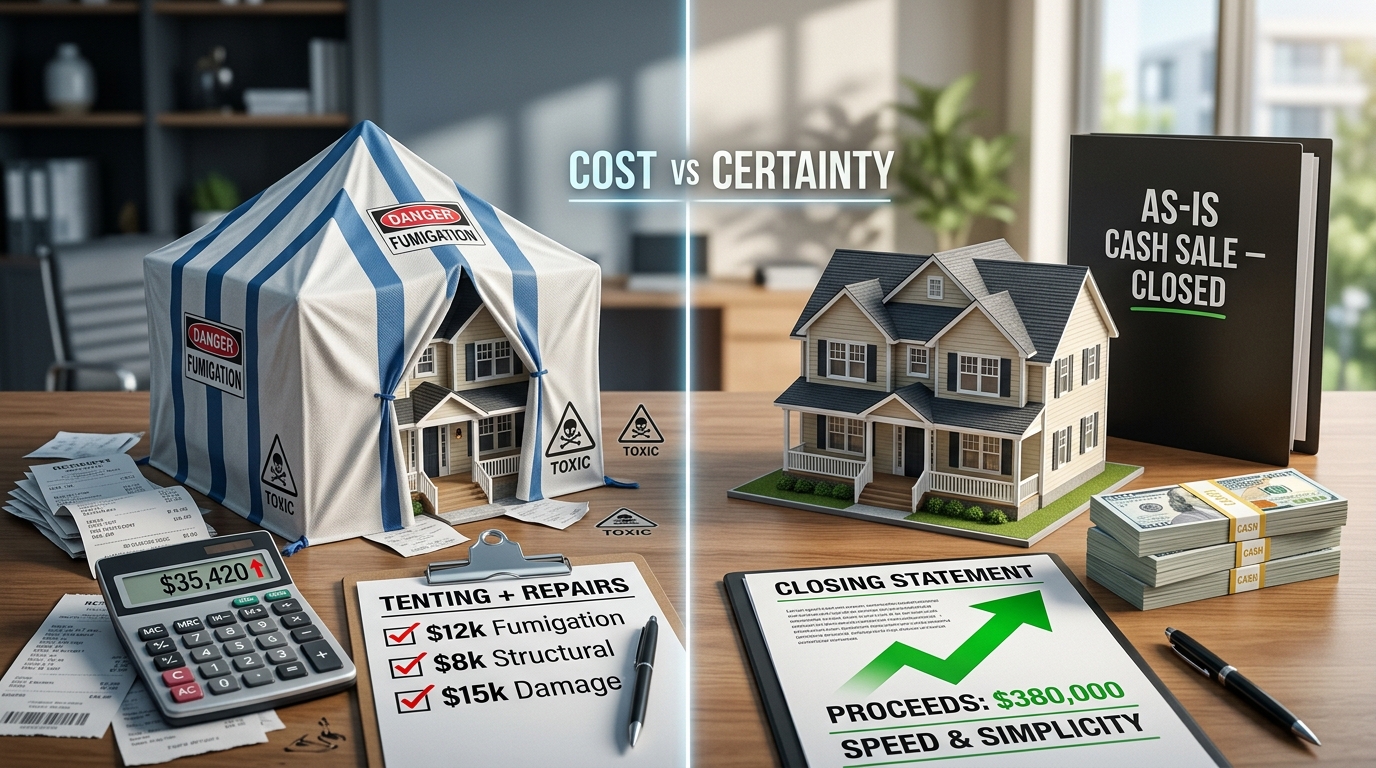
This is the real decision most SoCal sellers face. Do you spend $3,000 to $8,000 getting the house tented, repaired, and inspected clean? Or do you price the house to reflect the termite issue, disclose it properly, and let the buyer handle it after closing?
The Case for Completing Tenting Before You List
If your home is otherwise in solid shape, completing the termite fumigation before listing can make sense. A clean WDO report opens the door to a wider pool of buyers, including those using FHA or VA financing. You can list at full market value without the stigma of an active termite problem hanging over the sale.
Buyers who see a recently completed termite clearance feel more confident. They know the issue has been handled and they are not walking into an unknown situation. That confidence can keep offers competitive and prevent last-minute renegotiations at closing.
The downside is that it costs money you may not want to spend, takes time, and disrupts your life for several days. And even after all of that, tenting does not prevent future infestations. You are essentially resetting the clock, not solving the problem permanently.
The Case for Selling As-Is With Termite Disclosure
Selling your home as-is in California does not mean hiding anything. You are still legally required to disclose known termite activity to any potential buyer. The difference is that instead of fixing the problem yourself, you price the home to reflect it and let the buyer take on the treatment after closing.
This path works best when you are selling to a cash buyer or an investor. Cash buyers do not have lender requirements for a clean WDO report. They are used to buying homes with known pest issues, they factor the treatment cost into their offer, and they close fast without the delays of fumigation scheduling, wood repairs, and re-inspection.
For many sellers, especially those already dealing with time pressure or financial stress, this is the smarter move. You skip months of waiting and thousands of dollars in treatment costs. You just need to price the home honestly and work with the right buyer.
If you are thinking about going the as-is route, our team buys homes in exactly this kind of situation. You can get started by visiting our Contact Us page for a no-obligation cash offer, termite issues and all.
Side-by-Side Comparison of Both Options
If you are weighing your options and trying to figure out which path makes more financial sense, here is a simple side-by-side breakdown.
| Factor | Complete Tenting First | Sell As-Is to Cash Buyer |
|---|---|---|
| Upfront Cost to Seller | $1,500 to $8,000 or more | $0 |
| Time Added to Sale | Weeks to months | None |
| Buyer Pool | Wide (all financing types) | Narrower (investors, cash buyers) |
| Sale Price | Near full market value | Discounted to reflect condition |
| Risk of Deal Falling Apart | Lower after clean WDO report | Very low with cash buyer |
| Life Disruption | High (hotel, food prep, repairs) | None |
The right choice really does depend on your personal situation. If your home is mostly in good shape and you have time, tenting first can recover the cost in a higher sale price. But if you are dealing with other issues on top of the termites, or if you just want to be done and move on, selling as-is to a cash buyer is often the cleaner solution.
If you have been dealing with more than just pest issues, our article on how to remove a cloud on your title before selling your LA home might also be useful, since title issues and termite issues sometimes show up together on older properties.
How to Make the Smartest Decision for Your Property
Before you do anything, get a proper termite inspection from a licensed pest control company. Some companies will do this free if they are bidding for the treatment job. The inspection report tells you exactly what type of termite you are dealing with, how widespread the infestation is, and what treatment they recommend.
When Spot Treatment Might Be Enough
Not every termite situation requires a full tent fumigation. If the inspector finds a small, localized infestation that has been caught early, a spot treatment using orange oil or borate injections might be sufficient. These treatments are far cheaper, ranging from $300 to $900, and they do not require you to leave the house.
However, be careful here. Some pest control companies push spot treatments to save the customer money, but spot treatments only work if the inspector can confirm with certainty that the entire colony has been found and treated. If there are termites elsewhere in the structure that were missed, the spot treatment buys you maybe a year before the problem is back. Full fumigation has a much higher success rate for widespread drywood termite infestations.
Getting Multiple Quotes Before Committing
Termite treatment pricing varies wildly between companies. I have heard of sellers getting quotes that were $1,500 apart for the exact same job. An honest inspector focused on actually solving your problem may suggest a far cheaper option than a sales-focused rep at a big company who pushes full fumigation for every job.
Always get at least two or three quotes. Ask each company to explain exactly why they are recommending their specific treatment. Ask if a spot treatment is an option. If three different companies all say you need full fumigation, then you probably need full fumigation. But if only one is recommending it, it is worth asking why.
If you are selling a home in the LA area and want to avoid all of this altogether, check out what properties we buy through our Locations page to see if your area is covered.
You might also find it helpful to read about other common selling situations like selling real estate during Chapter 7 vs Chapter 13 bankruptcy, since financial pressure is often part of why sellers are weighing options like these in the first place.
Conclusion
Termite tenting in SoCal is expensive, inconvenient, and not always the right call before selling. The real question is whether the money you spend on fumigation actually comes back to you in a higher sale price, or whether it just costs you time and cash with little benefit.
For some sellers, especially those with otherwise clean, well-maintained homes in strong markets, completing the treatment first makes sense. For others, especially those dealing with multiple issues or tight timelines, selling as-is to a cash buyer is the smarter, faster, and less stressful path.
Either way, the worst thing you can do is ignore the termite issue. It will come up in every buyer’s inspection report, and pretending it is not there will only cost you more at the negotiating table later.
Frequently Asked Questions
Do I have to get termite tenting done before selling my home in California?
Not always. California law does not require sellers to complete termite treatment before selling. However, many lenders require a clean WDO inspection report before they will fund a buyer’s loan. If your buyer is using FHA or VA financing, active termite activity will likely need to be cleared before the lender approves the loan. If you are selling to a cash buyer, there is no lender requirement, so you can sell as-is and let the buyer handle treatment after closing.
How long does termite tenting take in Southern California?
A full tent fumigation typically takes 2 to 3 days from start to finish. The tent goes up, the sulfuryl fluoride gas is pumped in, the structure is sealed for the required time, and then the tent is removed and the home is ventilated. Homeowners cannot return until the pest control company confirms gas levels are safe, usually 24 hours after the tent is removed. Factor in scheduling, wood repairs, and a follow-up inspection and the full process can take 2 to 4 weeks total.
Can I negotiate termite treatment costs with the buyer instead of doing it myself?
Yes, and this is a common approach in California real estate. Rather than completing the fumigation before closing, some sellers offer the buyer a credit at closing to cover the cost of treatment. This works best when both parties agree on the estimated cost and the buyer is willing to manage the process themselves. It does not work well with lenders that require a clean WDO report before funding, so it is mostly practical in cash or conventional loan transactions where the lender does not have that requirement.
Will homeowners insurance cover termite tenting costs in California?
No. Standard homeowners insurance policies in California do not cover termite treatment or termite damage. Insurance companies classify termite infestations as a maintenance issue that homeowners are expected to prevent and manage, not as a sudden or accidental event like a fire or storm. All treatment and repair costs come out of pocket. This is one reason why many sellers factor the treatment cost into the sale price rather than paying for it themselves before listing.
What is the difference between tenting and spot treatment for termites?
Tenting, also called tent fumigation, covers the entire structure with a sealed tent and uses gas to kill all termites inside the home at once. It is effective for widespread drywood termite infestations. Spot treatment targets specific areas where termites have been identified and uses contact treatments like orange oil or borate foam. Spot treatment is cheaper but only works when the infestation is small and fully localized. If any part of the colony is missed, the infestation continues. For homes with widespread activity, full fumigation is almost always recommended by pest professionals.