
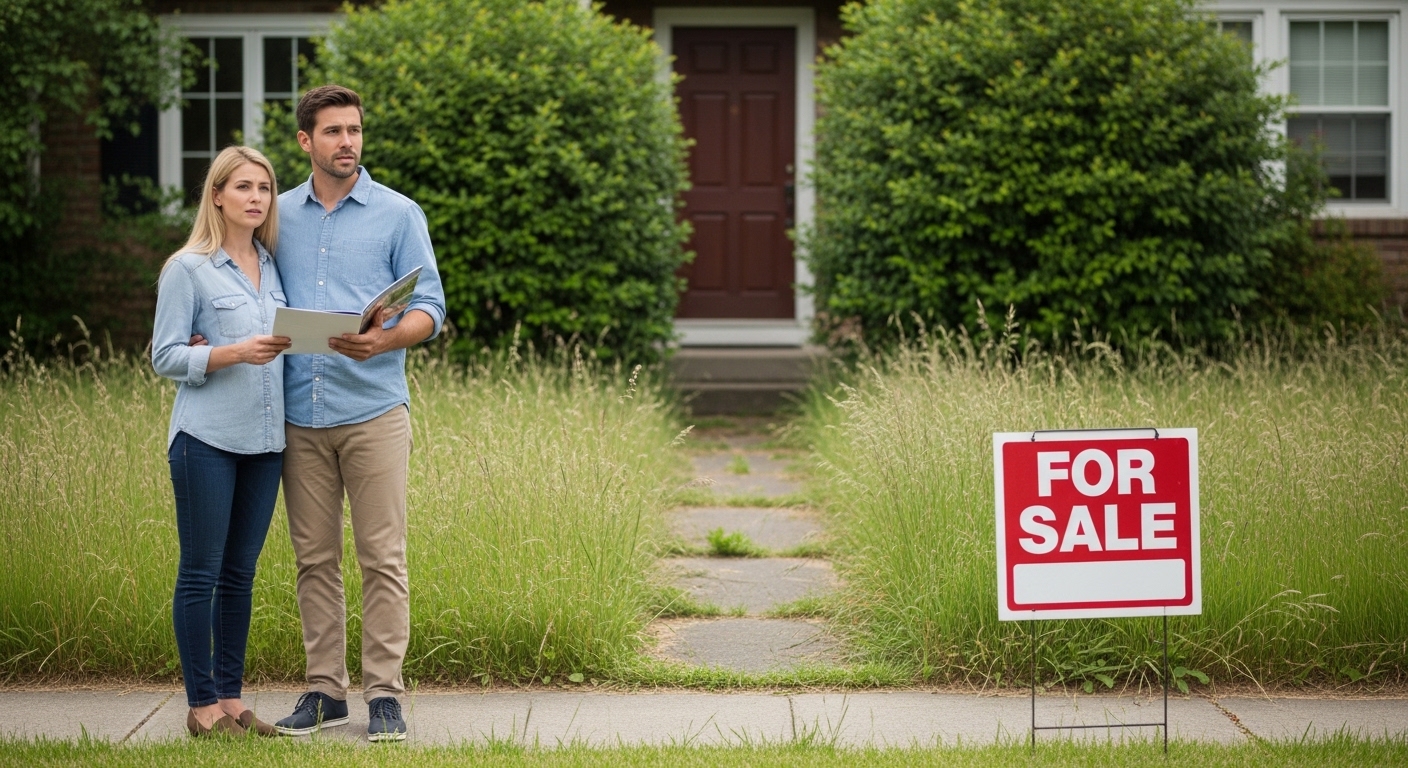
Overgrown bushes, a front yard that looks like a jungle, and trees that have not been trimmed in years. If you are trying to sell a house with serious landscaping neglect, you are probably wondering how bad the situation really is. The answer depends on what you do next, and knowing your options changes everything.
The Real Numbers Behind Curb Appeal
Most buyers make up their minds about a home within seconds of seeing it from the street. That first impression is built entirely on the exterior, which means landscaping neglect directly affects how a buyer feels before they ever walk through the front door.
Research published through the Michigan State University Extension found that homes with high curb appeal sell for 5% to 11% more than comparable homes with poor exterior presentation. On a $300,000 home, that gap could mean up to $33,000 in lost value from the outside appearance alone. Honestly, that number surprised me the first time I came across it. I had always assumed buyers focused mostly on the interior. But people cannot get excited about what is inside if the outside puts them off before they even open the car door. (Source: Michigan State University Extension)
According to the National Association of Realtors, standard landscaping upgrades can return over 100% of their cost when a home is sold. On the flip side, properties with poor curb appeal consistently sell for less and sit on the market longer. (Source: NAR Remodeling Impact Report)
What Counts as Severe Landscaping Neglect
Not all messy yards are the same. There is a real difference between a lawn that needs a mow and a yard that has been left completely unmanaged for years. Severe landscaping neglect typically includes several visible and sometimes structural problems that go beyond simple cosmetic fixes.
Similar to how a broken sewer line can affect your sale before buyers even walk in, landscaping problems can hide deeper issues beneath the surface. Check out our guide on selling a house with a broken sewer line for perspective on how buyers handle major property condition issues.
Should You Fix It or Sell As-Is
What Cleaning It Up Actually Costs
The cost of addressing severe landscaping neglect varies widely depending on how far gone the property is. Basic cleanup including mowing, trimming, and hauling debris typically runs between $500 and $2,000 for a standard lot. More serious work like tree removal, stump grinding, and foundation vine removal can cost $5,000 to $15,000 or more.
Here is a rough breakdown of common landscaping tasks and what they typically cost:
| Landscaping Issue | Estimated Cost to Fix |
|---|---|
| Basic mowing and cleanup | $200 to $500 |
| Shrub and hedge trimming | $300 to $1,000 |
| Tree removal (per tree) | $500 to $2,000 |
| Stump grinding | $150 to $400 per stump |
| Foundation vine removal | $500 to $1,500 |
| Full yard restoration | $3,000 to $15,000 |
Whether it makes financial sense to fix the landscaping before selling depends on your timeline, your budget, and what you expect to get out of the sale. If you are already stretched thin or under time pressure, spending $10,000 on landscaping to maybe get $12,000 more in return might not be the right move.
When Selling As-Is Makes More Sense
Selling as-is means you are not fixing anything. You list the property or sell it directly, and the buyer takes it in whatever condition it is in. The sale price reflects the current state of the property, including the landscaping.
For properties with severe landscaping neglect, selling as-is is often the smarter choice when the cost to fix the issue is close to or greater than the value it would add. It also makes sense when you need to sell fast, do not have the cash for cleanup upfront, or the property has other significant issues alongside the landscaping problems.
A cash buyer who specializes in as-is purchases will evaluate the property based on its current condition and make an offer accordingly. You skip the work, the expense, and the uncertainty. The offer might be lower than full retail, but the simplicity and speed often more than make up for it.
If you are also dealing with time pressure around relocating, our guide on how to sell a property fast when moving internationally covers overlapping challenges that many sellers in this situation face.
Fire Risk and Hidden Hazards in Overgrown Properties
The Safety Angle Sellers Often Miss
This is one that does not get talked about enough. Severe overgrowth, especially in dry climates, creates real fire risk. Dry brush, dead wood, and dense overgrowth close to the home can dramatically speed up the spread of a fire and put both the structure and neighboring properties at risk.
The U.S. Fire Administration recommends maintaining a defensible space around a home, typically at least 30 feet of cleared, managed vegetation, to slow fire spread and protect both the structure and emergency responders. In states like California, Arizona, and Nevada, overgrown properties can also trigger code violations and local government cleanup orders that must be disclosed at sale. (Source: U.S. Fire Administration Home Fire Prevention)
If you receive a notice from your local municipality about vegetation or fire hazard code violations, that becomes a disclosure item when you sell. It does not necessarily kill the sale, but buyers will factor it into their offers, sometimes aggressively.
Pest and Structural Damage That Hides in Overgrowth
Overgrown properties are also inviting environments for pests. Termites, rodents, and insects love the cover that dense vegetation provides, especially when it is close to or touching the structure. Root systems from trees and large shrubs that have been allowed to grow unchecked can crack foundations, lift driveways, and damage underground pipes over time.
These are not always visible from the outside, which is exactly why buyers with experience often lowball on overgrown properties. They are factoring in the unknown. Being upfront about what you know and getting an inspection before listing can actually help you control that narrative rather than letting buyers assume the worst.
How to Sell a Property With Landscaping Neglect
Step-by-Step for Sellers Ready to Move
Here are the practical steps to take if you are ready to sell a property with severe landscaping issues:
- Get a professional assessment of the landscaping problems and a cost estimate for cleanup before making any decisions.
- Decide whether the cleanup cost is worth the likely increase in sale price for your specific situation and timeline.
- If not, price the home accordingly and be upfront with buyers about the current condition of the yard and any related issues.
- Consider selling directly to a cash buyer who buys in as-is condition and does not require cleanup or repairs before closing.
- Check with your local municipality about any active code violations related to overgrowth or fire hazard on the property.
- Disclose any known issues, including root damage to the foundation, fire hazard notices, or pest infestations tied to the overgrowth.
- Ask a real estate attorney whether specific landscaping issues require formal disclosure under your state’s laws.
We buy homes in as-is condition in many markets. Check out our locations page to see if we serve your area, or contact us directly for a no-commitment conversation about your situation.
Conclusion
Selling a property with severe landscaping neglect is absolutely doable. The key is being realistic about what it costs to fix, what buyers will expect, and whether the investment in cleanup actually makes financial sense for your situation.
For many sellers, the fastest and most straightforward path is a direct cash sale in as-is condition. You avoid the expense, the delay, and the stress of managing a major landscaping project before listing. You set a timeline that works for you and walk away without all the hassle.
If you are not sure where to start, reach out to our team and we can walk you through your options with no pressure and no obligation.
Frequently Asked Questions
Does landscaping neglect have to be disclosed when selling a house?
Disclosure requirements vary by state, but in general you are required to disclose known material defects that could affect the property’s value or the buyer’s decision to purchase. If overgrowth has caused foundation damage, pest issues, or active code violations, those typically need to be disclosed. The landscaping appearance itself usually does not require formal disclosure.
How much value does bad landscaping take off a home?
Research suggests poor curb appeal can reduce a home’s sale price by 5% to 11% compared to similar homes with clean exteriors. On a $300,000 home, that could mean a $15,000 to $33,000 reduction in your final sale price. The exact impact depends on your market, the severity of the neglect, and how buyers in your area weigh curb appeal against other factors.
Can I sell a house with code violations from overgrowth?
Yes, but you need to handle it correctly. Buyers need to know about active code violations. Some cash buyers and investors are comfortable purchasing properties with open violations, taking responsibility for resolving them after closing. A traditional buyer using a mortgage may require violations to be resolved before closing is allowed to proceed.
What is the cheapest way to clean up severe landscaping before selling?
The most cost-effective approach is to focus on what buyers see first. Mow the lawn, remove dead plants, trim hedges enough to expose the home’s front face, and clear any debris from pathways and the driveway. You do not need to restore the yard to magazine quality. Just making it not look abandoned is often enough to remove the biggest discount buyers would otherwise apply.
Should I sell as-is or fix the landscaping first?
It depends on the numbers. If cleanup costs $5,000 and will add $10,000 to your sale price, doing the work probably makes sense. If cleanup costs $10,000 but might only add $8,000 in value, selling as-is and pricing accordingly is the smarter financial decision. A quick consultation with a real estate professional or cash buyer can help you run those numbers for your specific property.