
Selling a home near a freeway is one of those situations where you need to go in with your eyes open. The noise is real. Some buyers will be put off by it. But here is the thing that most sellers do not know: with the right approach to pricing, disclosure, and noise mitigation, a freeway-adjacent property can absolutely sell well. And in some markets, proximity to a freeway actually helps certain buyers.
How Freeway Noise Affects Property Values
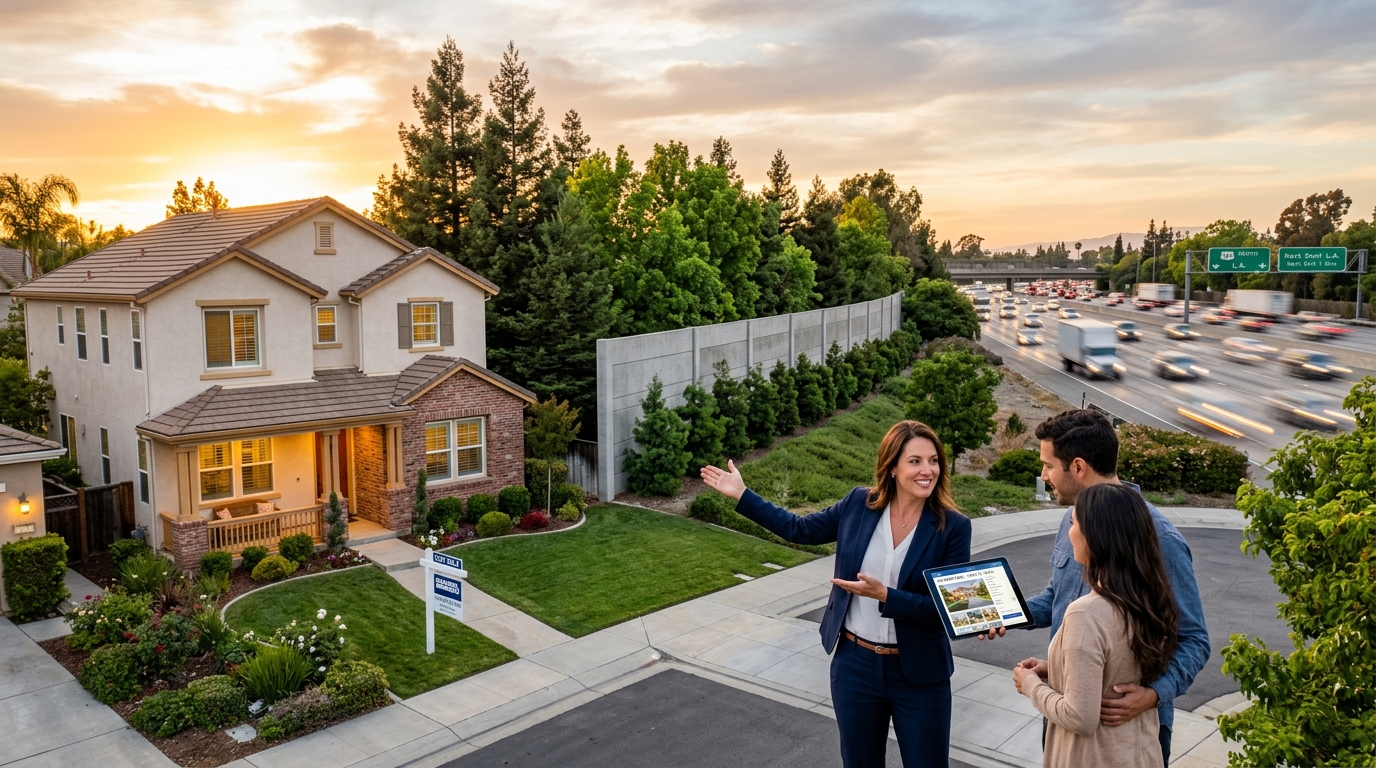
What the Numbers Actually Show
The impact of freeway noise on home values is real but varies more than most people think. Research published in the Journal of Real Estate Finance and Economics analyzed over 100,000 home sales and found that the impact of traffic noise on property prices typically averages around 5%, but can reach up to 12% in a rising market. That is meaningful, but it is also not the end of the world, especially when you factor in that homes near freeways often already carry lower asking prices that reflect the noise issue.
Closer proximity matters more than you might expect. Homes directly next to the freeway take the biggest hit. Homes a block or two back experience less impact. And according to real estate pricing analysis shared by HomeLight, sellers located about one block from a freeway can see their home valued 10% to 20% less than comparable homes several blocks away. Knowing that number going in helps you price correctly from day one rather than chasing the market down after weeks of sitting unsold.
Not All Freeway Proximity Is Equal
Here is something I find most sellers do not realize until they start talking to buyers. The type of freeway and how it is built matters a lot. Research from the Transportation Research Board found that homes located near a depressed freeway, one where the freeway sits below the level of surrounding properties, tend to sell at a higher value than homes near at-grade or elevated freeways. The below-grade design naturally limits how far sound and headlights travel into nearby neighborhoods.
Speed also matters. A four-lane highway with fast-moving traffic creates more constant noise than a surface street with stop-and-go cars. Some buyers actually find the steady hum of a freeway less disruptive than the random stop and start of a busy surface road. Every buyer is different, and that buyer variety is something you can use to your advantage when you are positioning your listing.
Noise Mitigation That Actually Makes a Difference
Inside the Home: Soundproofing Options That Work
Before you decide what mitigation improvements to make, be honest about your market. In a buyer’s market where homes are sitting, spending $15,000 on noise mitigation may not return enough value to justify the cost. In a competitive market where buyers have options but still want a specific neighborhood, smart improvements can make a real difference in both sale speed and price.
Inside the home, the most effective upgrades for reducing freeway noise include:
- Replacing standard windows with double or triple-pane soundproof windows, which can significantly reduce noise levels coming through the glass
- Adding acoustic insulation to exterior walls, which helps block sound before it enters the living space
- Installing solid-core exterior doors, which seal better than hollow-core doors and reduce sound transmission
- Using heavy window treatments like blackout curtains or cellular shades that absorb sound inside rooms
- Applying acoustic caulk around windows and door frames to seal gaps where noise enters
These improvements work. They are not magic, but they are measurable. A home with upgraded windows near a freeway will feel noticeably quieter inside than a home without them. And in a listing, you can call out those improvements specifically, which tells buyers you have addressed the issue rather than ignored it.
Outside the Home: Barriers, Walls, and Landscaping
Outdoor mitigation matters too, especially for buyers who value outdoor living space. In Los Angeles, where people use their yards year-round, a noisy backyard can be a bigger deal than a noisy bedroom. There are a few things that genuinely help.
A concrete noise barrier wall around the backyard is one of the most effective solutions. Contractors who specialize in noise-canceling walls can build concrete or masonry walls to a height that meaningfully blocks freeway noise from the yard. It does not eliminate the noise entirely, but it can take it from being annoying to being manageable. Many LA homeowners near the 405, the 5, and other busy freeways have done exactly this and found it changed how they used their outdoor space.
Dense landscaping, specifically mature trees and tall shrubs, can also help by absorbing some sound and creating a visual barrier that makes the freeway feel farther away. The key word there is mature. Small young plants do not do much. Trees large enough to actually absorb sound cost $2,000 to $3,000 each, according to information referenced by HomeLight, so this approach works best when the landscaping is already in place rather than as a last-minute pre-sale investment.
| Mitigation Option | Effectiveness | Approximate Cost Range | Best For |
|---|---|---|---|
| Double-pane soundproof windows | High for interior noise | $5,000 to $15,000+ | Homes where interior noise is the main concern |
| Concrete backyard barrier wall | High for outdoor spaces | $8,000 to $20,000+ | Properties with outdoor living areas |
| Acoustic wall insulation | Moderate | $3,000 to $8,000 | Older homes without good exterior insulation |
| Mature tree landscaping | Moderate visual and sound | $6,000 to $20,000+ | Properties with space for dense planting |
| Acoustic caulk and door seals | Low to moderate | $200 to $1,000 | Quick pre-listing improvement |
How to Price and Market a Freeway-Adjacent Property
Pricing the Discount Correctly From the Start
Here is the honest truth about pricing a home near a freeway. The market already knows about the noise. Buyers who come through your listing have looked at the map and seen the freeway. If your price does not reflect the location reality, buyers will simply move on to other options. But if you price it correctly from the start, you actually attract motivated buyers who are specifically willing to accept the trade-off in exchange for a lower price in a location they otherwise like.
Working with a real estate agent who has experience with comparable sales near freeways in your specific neighborhood is the best way to calibrate this. According to the HomeLight guide on selling homes with road noise, price adjustments typically range from 1% to 10% depending on the market conditions and the type of road involved, with freeway proximity generally requiring a larger adjustment than a busy surface street.
Who Your Best Buyers Actually Are
Freeway-adjacent properties attract buyers who value access over quiet. Commuters who drive a freeway every day love the idea of being one minute from the on-ramp. People who work odd hours and are not home during peak traffic times care less about daytime noise. Investors who plan to rent the property to tenants value the easy commute access more than they care about the freeway hum. And buyers who have already looked at every other option in a neighborhood and want to stay in a specific school district or area will often accept a freeway location to get the price down.
According to Opendoor’s analysis of busy road home values, the exact impact depends heavily on how much traffic the road carries, how close the home sits to the road, and whether the home faces or backs to the street. Homes that back to a freeway typically fare better than homes that directly face it, because the house itself acts as a partial buffer.
If you are dealing with other property challenges alongside the freeway location, our post on selling a property with code violations covers how to disclose and handle layered challenges. And for context on how buyers evaluate properties with visible drawbacks, our guide on selling a fire-damaged property and other as-is scenarios gives useful perspective. When you are ready to discuss your property’s specific situation, contact us here and we will help you map out the best path forward.
Conclusion
Selling a home near a freeway is not the dealbreaker it might feel like at first. With honest pricing that reflects the noise discount, targeted mitigation improvements that show buyers you have addressed the issue, and marketing that focuses on the right buyer profile, a freeway-adjacent property can sell successfully. The key is going into the process with clear eyes about what the noise does and does not affect, and positioning your home to the buyers for whom easy freeway access and a lower price point are actually selling points, not obstacles.
Frequently Asked Questions
How much does freeway proximity reduce a home’s value?
Research shows that traffic noise typically reduces home values by an average of around 5%, but the range can be 1% to 12% or more depending on how close the home is, how much traffic the freeway carries, and local market conditions. Homes directly adjacent to the freeway see the largest impact, while homes a few blocks away see a smaller effect.
What is the most effective way to reduce freeway noise inside a home?
Double or triple-pane soundproof windows are generally the most effective interior upgrade. They directly address where most of the noise enters the home. Adding acoustic insulation to exterior walls and sealing gaps around doors and windows with acoustic caulk also makes a meaningful difference.
Should I invest in noise mitigation before selling?
It depends on your market. In a competitive market where buyers have options, noise mitigation improvements can help your home stand out and justify a higher price. In a slower buyer’s market, a simple price adjustment is often more cost-effective than spending thousands on improvements that may not return their full cost in the sale price.
Who are the best buyers for a home near a freeway?
Commuters who use the freeway daily, investors who plan to rent the property, and buyers who want a specific neighborhood or school district but need a lower price point are typically the most motivated buyers for freeway-adjacent homes. These buyers see the trade-off as acceptable given what they are getting in return.
Do I have to disclose freeway noise to buyers?
Yes. In California, sellers are required to disclose known conditions that could materially affect the value or desirability of the property. Freeway noise is absolutely something buyers need to know about. Being upfront about it builds trust and actually filters in buyers who are genuinely okay with the trade-off rather than wasting time with buyers who will back out after inspection.