
Selling Multi-Generational Compound Estates in the Valley
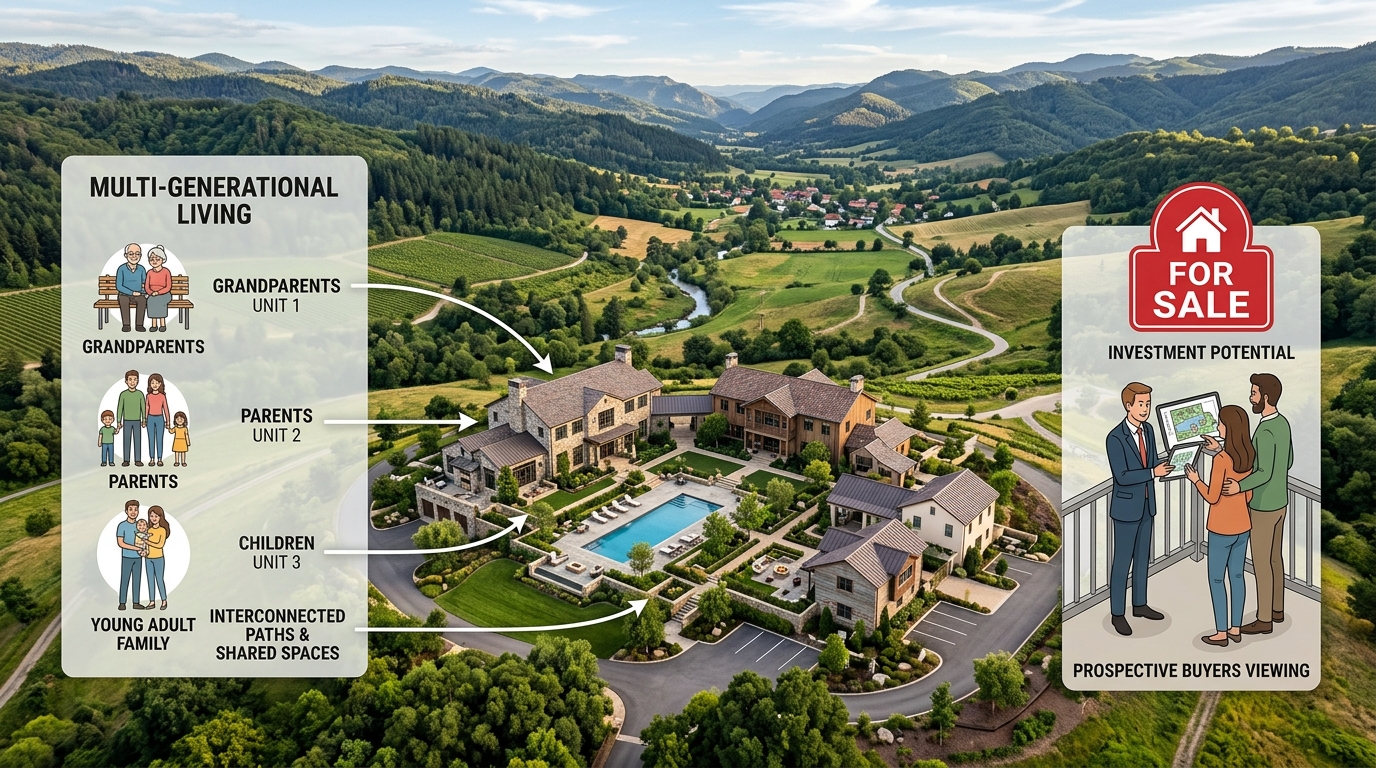
The San Fernando Valley has always been a place where families put down roots and stay for generations. Big lots. Quiet streets. Room to grow. And right now, a specific kind of property is getting more attention than ever before. Multi-generational compound estates are in demand, and if you own one, you are sitting on something a lot of buyers are actively searching for.
What Makes a Compound Estate Different From a Regular Home
Multiple Living Units Under One Ownership
A compound estate is not just a big house. It is a property that has two or more livable structures on the same lot or address. Think a main house plus a guest house. Or a main house with a fully permitted ADU in the back. Maybe there is a separate cottage, a studio, or a converted garage apartment that family members have been using for years.
The key feature is that multiple generations can live close together while still having their own front door, their own kitchen, and their own sense of private space. That combination is exactly what today’s buyers are looking for, and the numbers show it clearly. According to the National Association of Realtors’ 2025 report on multigenerational trends, 17% of all home buyers purchased a multigenerational home between July 2023 and June 2024, up from 14% the year before. That is a meaningful jump, and it reflects a real shift in how families want to live.
Why the San Fernando Valley Is the Right Market for These Sales
The Valley has something that most of Los Angeles does not have a lot of anymore: space. Larger lots in neighborhoods like Northridge, West Hills, Granada Hills, and Chatsworth give compound estates room to exist. You are not going to find a detached guest house on a 4,000-square-foot lot in Brentwood. But in the Valley, that kind of setup is much more common.
On top of that, the Valley has historically been a family destination. Long-term homeowners here are more likely to have spent decades building out their property, adding a guesthouse for a parent, or building a studio for an adult child. Those additions, when properly permitted, are now among the most valued features in the market.
Who Is Buying These Properties Right Now
The Sandwich Generation Is Leading Demand
The buyers most actively seeking compound properties are what researchers call the sandwich generation. These are people in their 40s and 50s who are simultaneously supporting their aging parents and their own children. They need a property where Mom or Dad can live safely with the family but still have independence. And they need space for a college-age kid who may come back home for a while too.
According to the NAR’s 2025 generational trends report, Gen X buyers aged 45 to 59 led the multigenerational home market with 21% of them purchasing this type of property. That is the highest percentage of any generation. These buyers are organized, often paying cash or having strong financing, and they know exactly what they want. When they find the right compound, they move quickly.
The top reasons buyers gave for choosing a multigenerational setup were cost savings (36%), accommodating aging relatives, and caring for family members who need extra support. That tells you the demand is practical as much as it is emotional. These buyers are solving real problems, and a well-configured compound estate solves them better than anything else on the market.
How to Price and Market a Compound Estate Correctly
The Income Angle Changes the Buyer Math
One of the things I find most interesting about selling compound estates is that the pricing conversation is completely different from a regular home sale. When you have a main house plus a permitted guest house or ADU, the buyer is not just buying a place to live. They are also buying the option to rent one of the units for income. That completely changes the calculation.
A buyer who might hesitate at a $1.4 million price tag for a regular home may feel very differently about the same number when they know the ADU can generate $2,400 to $3,500 per month in rental income. That income offsets their mortgage cost significantly. When you market the property, you should present that income potential clearly and honestly, because for many buyers, it is the thing that tips them toward making an offer.
| Property Feature | Why Buyers Value It | How to Highlight It |
|---|---|---|
| Permitted ADU or guest house | Rental income and family housing | Include current rent or market rent estimate |
| Separate entrances | Privacy for each generation | Show in photos and floor plan |
| Multiple kitchens | Full independence for each unit | Feature in listing description prominently |
| Large lot size | Room for outdoor living and future use | Emphasize in aerial photography |
| Multiple parking spaces | Practical for multi-unit living | Count and show clearly in photos |
Disclosure and Permits Are Everything
The one thing that can make or break a compound estate sale is the permit status of each structure on the property. A main house plus a fully permitted ADU is worth significantly more than a main house plus an unpermitted structure that a buyer would need to deal with after closing. Buyers today are savvy. Their agents are going to ask about permits immediately.
Before you list, pull your permits. Get clarity on the legal status of every structure. If something was built without permits, talk to a real estate attorney or contractor about your options for retroactive permitting, which in some cases is straightforward and adds real value to the property. Coming to market with clean documentation speeds up your sale and reduces the chance of a deal falling apart in escrow.
If you have tenant complications in any of the units, our guide on how to sell with non-paying tenants covers exactly how to navigate that. And for sellers thinking about the income side of a compound estate, our post on selling a rental property when the numbers are not working gives helpful context. When you are ready to explore your compound estate’s value, contact us here and we will walk through the specifics with you.
According to RiskWire’s 2025 analysis of multigenerational housing trends, the number of people living in multigenerational households reached 59.7 million by 2021, representing 18% of the U.S. population. That base of people who are already living this way represents the core buyer pool for compound estates. They are not guessing at whether it works for them. They have been doing it and they are now looking to buy into something built for the way they already live.
Conclusion
Selling a multi-generational compound estate in the San Fernando Valley is one of those sales where the right presentation to the right buyer pool makes all the difference. These properties are more valuable than they appear in a standard listing, and they attract buyers who are motivated, practical, and ready to act when they find what they need. Know your permits, understand the income angle, and market to the sandwich generation buyers who are actively searching. The demand is real and it is growing.
Frequently Asked Questions
What is a multi-generational compound estate?
A multi-generational compound estate is a property with two or more livable structures on the same lot, such as a main house plus a guest house or ADU. It allows different generations of a family to live together while each having their own private space, kitchen, and entrance.
Why is demand for compound estates growing?
According to the National Association of Realtors, 17% of home buyers purchased a multigenerational home in the period from July 2023 to June 2024, up from 14% the prior year. Rising housing costs, aging parents needing care, and adult children returning home are all driving this demand upward.
Do permits matter when selling a compound estate?
Yes, they matter a great deal. Buyers and their lenders will ask about the permit status of every structure on the property. Fully permitted structures add clear, measurable value. Unpermitted structures can complicate financing and create liability after the sale.
Who are the best buyers for a compound estate in the Valley?
Gen X buyers in their 40s and 50s who need housing for both aging parents and adult children are the most active buyers in this category. They are often well-funded, decisive, and specifically searching for properties that accommodate multiple generations without sacrificing privacy.
How should I price a compound estate?
Price it based on comparable sales of similar multi-unit properties, not standard single-family homes. Factor in the rental income potential of any secondary structures, the legal status of all permits, and the total livable square footage across all units. An agent experienced with income properties will give you the most accurate picture.