
What Mold in Your Home Actually Means for the Sale
Finding mold in your home right before you plan to sell is genuinely stressful. I have talked to sellers who discovered it behind a bathroom wall, in the attic, under a kitchen sink, and the first thing most of them said was the same thing: is the sale over?
The honest answer is no. Selling a home with mold damage in California is completely legal. There is no law that prevents a property transfer just because mold exists. What the law does require is that you handle it the right way, starting with proper disclosure to any potential buyer.
The real decision you face is not whether you can sell. It is whether you remediate the mold first and try to recover full market value, or whether you disclose it and sell the house as-is, either through a traditional listing or directly to a cash buyer who handles it after closing.
The Types of Mold That Affect Home Sales the Most
Not all mold is the same, and the type you have matters a lot in terms of how buyers and lenders will react. Surface mold on a bathroom ceiling from poor ventilation is a very different situation from black mold spreading behind drywall from a long-standing roof leak.
Here are the most common mold types found in California homes and how they tend to affect the sale:
- Stachybotrys chartarum (black mold) is the most feared variety. It thrives in areas with chronic moisture and can cause serious health problems. When buyers or their inspectors find it, deals fall apart fast. Lenders using FHA or VA financing will almost always require full remediation before they fund.
- Cladosporium is often found on painted surfaces, window frames, and fabrics. It can trigger asthma and sinus problems. It is common in older California homes and usually easier to remediate than black mold.
- Penicillium spreads quickly through water-damaged materials like insulation, carpet, and drywall. It has a distinctive musty smell and is a common allergen.
- Aspergillus grows in high-oxygen environments and some species produce mycotoxins that affect respiratory health. It is particularly risky for elderly people and those with compromised immune systems.
According to the California Department of Public Health (CDPH), mold thrives in moist, poorly ventilated spaces and is a known contributor to respiratory illness, especially in vulnerable populations. The state takes mold disclosure seriously because of this direct link to public health.
How Mold Gets Discovered During a Sale
Mold does not always announce itself. Some sellers genuinely do not know they have a problem until a buyer’s home inspector walks through and finds it. It shows up in attics after roof leaks that were patched but never fully dried. It hides under flooring after a water heater leak that seemed minor. It grows inside walls near windows that were not properly sealed years ago.
If you have had any kind of water intrusion in the last several years, a musty smell in certain rooms, or visible discoloration on walls or ceilings, it is worth getting a professional mold inspection before you list. Finding it yourself gives you control over how to handle it. Having a buyer’s inspector find it at the worst possible moment puts you on the defensive.
California’s Mold Disclosure Laws and What They Require
California has some of the strictest mold disclosure requirements in the country. There is no gray area here. If you know mold exists, or has existed, or has been remediated in the past, you are required to tell the buyer before the sale closes.
The Transfer Disclosure Statement and Senate Bill 655
California requires every residential seller to complete a Transfer Disclosure Statement (TDS) under Civil Code Section 1102. The TDS has specific questions about known defects, water damage, environmental hazards, and health concerns. Mold falls under several categories on that form. You must disclose any known mold, any past mold remediation, any ongoing moisture problems, and any mold test results you have in your possession.
On top of the TDS, Senate Bill 655, codified in California Health and Safety Code Sections 26147 and 26148, specifically requires sellers and landlords to provide written disclosure of known mold to buyers and tenants. The state has directed the California Department of Public Health to develop exposure and remediation guidelines under this law.
One of the most important things to understand about California disclosure law is that selling a home as-is does not remove your obligation to disclose. An as-is clause means the buyer accepts the property in its current condition. It does not mean the seller can hide what they know. According to Nolo’s legal guide on California home sales, if a seller conceals a known defect like mold and the buyer discovers it after closing, the buyer has legal grounds to sue for fraud or misrepresentation. California courts have ruled on this consistently.
What Happens If You Do Not Disclose Mold
The consequences of hiding mold from a buyer are serious. The buyer can come after you even years after the sale closes. California law gives buyers multiple legal avenues to recover damages, including the cost of remediation, loss of property value, relocation costs during remediation, and in some cases, additional damages for concealment.
I have heard of sales closing successfully where everything looked fine, and then a year later the new owners found mold behind walls that the seller had painted over. Those situations almost always end in litigation. The risk is simply not worth it, and it is not ethical either. The right move is always full, accurate disclosure.
Your Three Main Selling Options When Mold Is Present
Once you know mold exists and you understand your disclosure obligations, the practical question becomes which selling path is right for your situation. There is no single answer. It depends on the severity of the mold, your financial situation, and how quickly you need to sell.
Option 1: Remediate First and Sell at Full Market Value
If the mold is localized and the remediation cost is manageable, fixing it before listing can make financial sense. Professional mold remediation for a moderate problem typically costs between $1,500 and $5,000 for surface-level issues. More serious problems involving structural elements, HVAC systems, or extensive drywall replacement can push costs to $10,000 or more.
The payoff is that a remediated home opens up to the full buyer pool, including those using conventional, FHA, and VA financing. FHA and VA lenders will not fund a purchase when visible mold is present. Completing the remediation and getting a clean clearance report removes that financing barrier and keeps your listing competitive.
The risk is that remediation can reveal bigger problems. Sometimes contractors start pulling drywall and find mold has spread much further than expected. Costs escalate, timelines stretch, and by the time the work is done, you have spent far more than anticipated. This is why getting a professional mold inspection before committing to remediation is so important. Know exactly what you are dealing with before you start writing checks.
Option 2: Disclose and Sell As-Is on the Open Market
You can list the home on the open market, disclose the mold issue fully on the Transfer Disclosure Statement, and let buyers decide if they want to move forward. Many experienced buyers and investors are comfortable with disclosed mold problems, especially when the price reflects the condition.
In practice, this path usually results in a sale price that is 15 to 25 percent below market value to account for the remediation cost and the risk the buyer is taking on. It also tends to slow the sale down because financed buyers often get knocked out by lender requirements, and you end up negotiating with a smaller pool of investors and cash-heavy buyers anyway.
This path works fine when you are not in a hurry and you want to try the open market first. Just be prepared for a longer process and more negotiation. Having a detailed mold inspection report ready to share with serious buyers builds trust and usually leads to smoother conversations.
Option 3: Sell Directly to a Cash Buyer
Selling directly to a cash buyer who specializes in buying homes as-is is often the fastest and least stressful option, especially when the mold problem is serious or when you need to move quickly. Cash buyers do not have lender requirements. They do not need a mold clearance report. They buy the property knowing about the issue, factor the remediation cost into their offer, and close on your timeline.
You still disclose everything. That part does not change. But instead of fixing it, negotiating through it, or waiting for the right buyer to show up on the market, you get a direct offer and a fast close. For sellers dealing with significant mold problems, financial pressure, or just not wanting to manage a construction project before a sale, this path removes a lot of pain.
If that sounds like where you are right now, you can reach out to our team through the Contact Us page for a no-obligation cash offer on your home, regardless of mold or other condition issues.
Comparing Your Options Side by Side
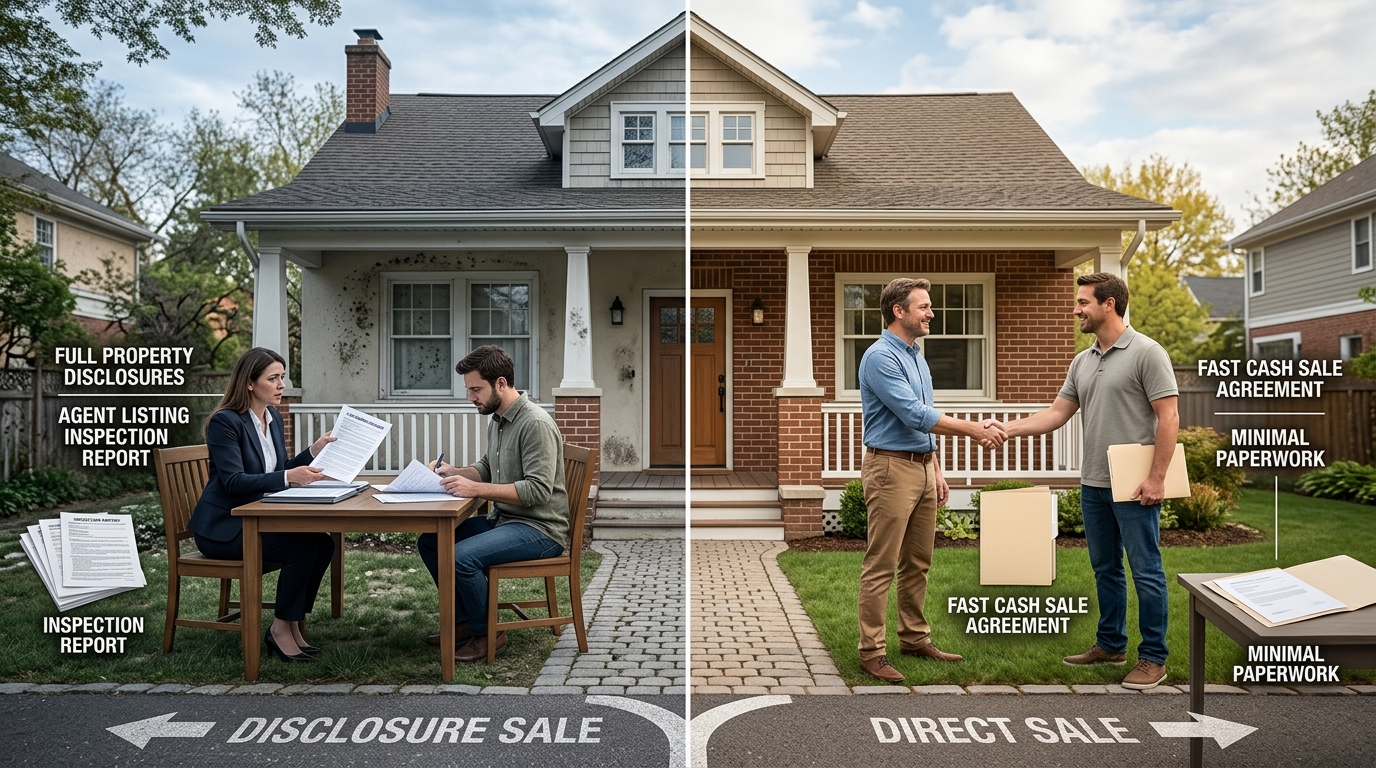
To make this easier to think through, here is a straightforward comparison of all three paths based on the factors that matter most to sellers.
| Factor | Remediate First | Disclose and List As-Is | Sell to Cash Buyer |
|---|---|---|---|
| Upfront Cost | $1,500 to $10,000 or more | $0 | $0 |
| Sale Price | Full market value | 15 to 25 percent below market | Discounted but fast |
| Time to Close | Months (remediation plus listing) | Weeks to months | Days to weeks |
| FHA and VA Buyers | Yes, after clean clearance | Usually no | Not applicable |
| Risk of Deal Falling Apart | Low after remediation | Moderate | Very low |
| Stress Level | High (construction, delays) | Moderate | Low |
Most people I have talked to who chose the cash buyer path said the same thing afterward. They wished they had done it sooner instead of spending months trying to fix things or negotiate through the open market. That does not mean it is always the right answer. But for serious mold problems or for sellers with tight timelines, it usually is.
If you are dealing with other property complications at the same time, our blog on selling a house with a Notice of Default filed in LA County covers another common situation where speed matters and traditional listing is not always practical.
Practical Steps to Take Before You Decide
Before you pick a path, there are a few things worth doing regardless of which direction you end up going. These steps will protect you legally and help you make a smarter financial decision.
Get a Professional Mold Inspection First
A professional mold inspection from a certified inspector gives you a clear picture of the type of mold, where it is, how far it has spread, and what remediation would involve. This is not the same as a general home inspection. A mold inspector uses moisture meters, thermal imaging, and air sampling to find mold that is not visible to the naked eye.
Knowing the full scope of the problem before you decide what to do is the smartest move you can make. If the inspection comes back with a limited, surface-level problem that can be remediated for $1,500, that is a very different situation from discovering widespread contamination behind walls throughout the house. Do not make a financial decision about your sale without this information.
Document Everything for Disclosure Purposes
Whatever you decide to do, keep records of everything. Save your inspection reports, remediation estimates, contractor invoices, and clearance certificates. This documentation serves two purposes. First, it shows buyers exactly what you know and what has been done, which builds trust and reduces the chance of post-sale disputes. Second, it protects you legally by proving you disclosed everything accurately and completely.
According to the Law Firm of Melinda J. Helbock in San Diego, sellers who provide thorough documentation of mold history, including past remediation, are in a far stronger legal position than those who disclose verbally or minimally. Written records are what protect you if a buyer comes back later claiming they were not properly informed.
You might also find it useful to read our blog on selling a house in a living trust in Los Angeles, since estate-related sales often involve deferred maintenance issues like mold that were never addressed by the previous owner.
If you want to see what areas our team actively buys in, visit our Locations page to check if your property falls within our service area.
Conclusion
Mold in a home is a problem, but it is a solvable one. The key is facing it directly instead of hoping it stays hidden until after closing. California law is clear that disclosure is required, and the consequences of not disclosing are worse than the discomfort of having the conversation upfront.
Your best path depends on how serious the mold is, how much you can afford to spend on remediation, and how fast you need to close. For some sellers, remediating first and listing at full value makes the most sense. For others, especially those with significant mold problems or tight timelines, selling directly to a cash buyer is the smarter, cleaner, faster way out.
Either way, start with a professional inspection, document everything, and make your decision based on real numbers, not fear or guesswork.
Frequently Asked Questions
Can I sell my house as-is without disclosing mold in California?
No. Selling a home as-is in California does not remove your obligation to disclose known mold. An as-is clause means the buyer accepts the current condition of the property. It does not mean the seller can conceal known defects. California Civil Code Section 1102 and Senate Bill 655 both require sellers to disclose known mold on the Transfer Disclosure Statement. Failing to do so can result in a lawsuit years after the sale closes.
Will FHA or VA lenders approve a home with mold?
No. FHA and VA lenders will not fund a purchase when visible mold is present. Both loan programs require the home to meet minimum property standards, and active mold is considered a health and safety issue that disqualifies the property until it is remediated and cleared. This is one of the primary reasons why financed buyers often cannot purchase homes with disclosed mold unless the seller completes remediation first.
How much does mold remediation typically cost in California?
Costs vary significantly depending on the type, location, and extent of the mold. Surface-level or localized problems typically run between $1,500 and $5,000. More serious situations involving mold inside walls, under flooring, in HVAC systems, or spanning large areas can cost $10,000 or more. Always get at least two or three estimates from licensed remediation contractors before committing, and make sure the estimate includes a post-remediation clearance inspection.
Can a buyer back out of a sale if mold is found during inspection?
Yes. If a buyer’s home inspector finds mold during the inspection contingency period, the buyer has the right to cancel the contract or renegotiate the terms. In California, buyers typically have 17 days to complete inspections and remove contingencies. If mold is discovered during that window, they can walk away without losing their deposit. This is another reason why disclosing known mold upfront and pricing accordingly is smarter than hoping it goes undetected.
What is the difference between mold remediation and mold removal?
These terms are often used interchangeably, but they mean slightly different things. Mold removal refers to physically removing mold from surfaces. Mold remediation is the full process of identifying the source of moisture, containing the affected area, removing the mold, treating surfaces to prevent regrowth, and confirming through clearance testing that the problem has been resolved. True remediation addresses the root cause. Simple removal without fixing the moisture source typically leads to the mold coming back within months.