
Receiving a Notice of Default in Los Angeles feels like the walls are closing in. Your mortgage is behind, the lender has filed with the county recorder, and suddenly the situation is public record. But here is what many homeowners in this position do not realize: a Notice of Default is the beginning of a timeline, not the end of your options. California law actually gives you significant time and meaningful choices after an NOD is filed, and selling the property is one of the most powerful tools available to you. This post explains exactly what a Notice of Default means, what the law requires at each stage, and how selling to a cash buyer can stop the foreclosure clock and preserve whatever equity you have built.
What a Notice of Default Actually Is
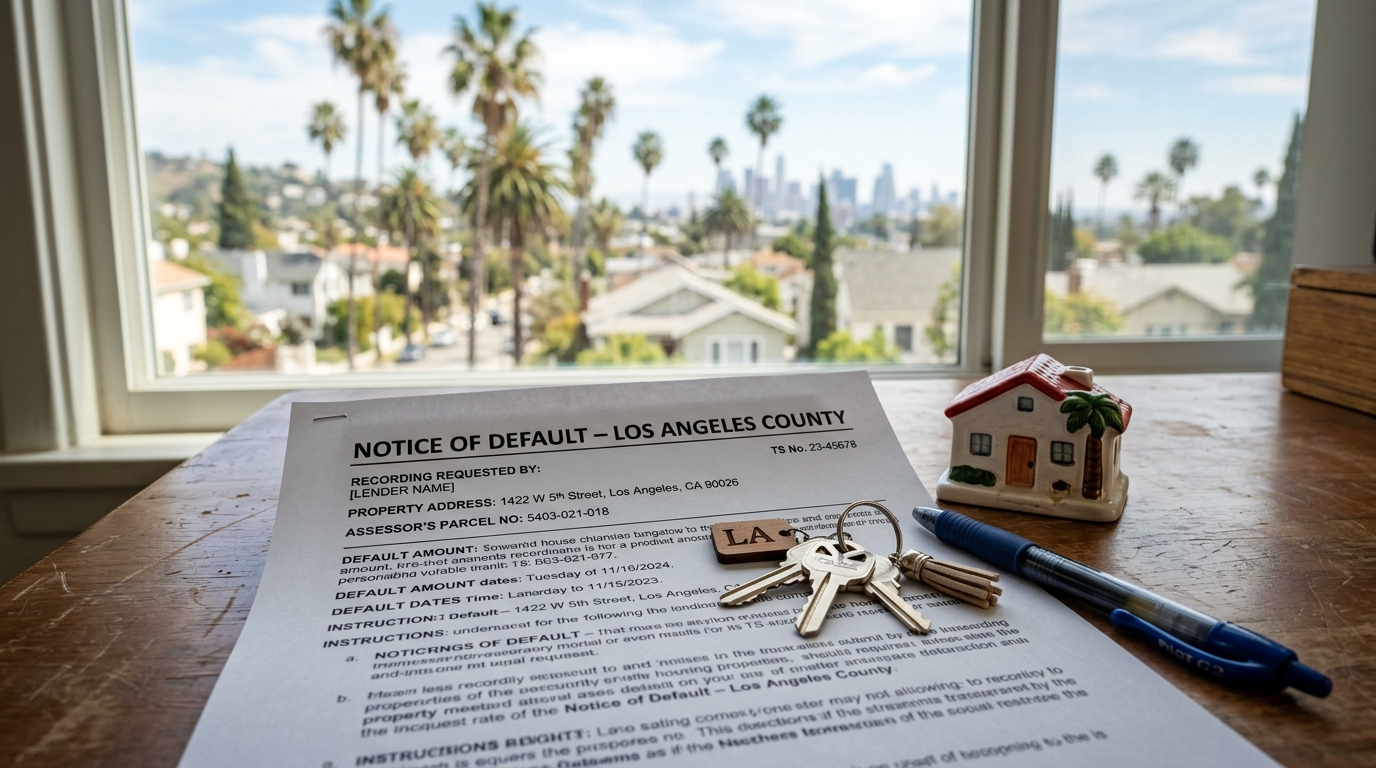
The First Formal Step in California’s Nonjudicial Foreclosure Process
California uses what is called a nonjudicial foreclosure process for most home loans. This means the lender does not need to take you to court to foreclose. Instead, when you fall behind on mortgage payments, the lender or their trustee records a Notice of Default (NOD) with the county recorder’s office, which in Los Angeles County is the Registrar-Recorder. The NOD is a public document that formally declares you are in default on your loan and starts a legal clock running on your property.
The NOD must include the total amount you owe to cure the default, including past-due payments, late fees, and foreclosure costs. California law also requires that a declaration be attached to the notice confirming that the lender attempted to contact you before filing to discuss your options. From the date the NOD is recorded, you have 90 days to resolve the situation before the lender can take the next step and file a Notice of Trustee Sale.
The Full Foreclosure Timeline After an NOD Is Recorded
Here is how the California foreclosure process unfolds after a Notice of Default is recorded:
| Stage | What Happens | Your Window to Act |
|---|---|---|
| Notice of Default recorded | Lender files NOD with LA County Recorder. Becomes public record. Sent to you by mail. | Day 1 of 90-day reinstatement period |
| 90-day reinstatement period | You can pay all past-due amounts plus fees to cure the default and stop foreclosure entirely. | Days 1 through 90 |
| Notice of Trustee Sale recorded | If default is not cured, lender records a NOTS setting an auction date. Must be recorded at least 20 days before the scheduled sale. | Still time to sell or reinstate before sale |
| Right of reinstatement | You can still pay the past-due amount up to 5 business days before the auction date. | Up to 5 days before auction |
| Trustee sale (auction) | Property is sold at public auction to highest bidder. You lose ownership. | After this point options are extremely limited |
From NOD to auction, the full process takes a minimum of around 110 to 120 days and often much longer. Under Assembly Bill 2424, which took effect January 1, 2025, homeowners now have additional tools to extend that timeline. If you submit a valid MLS listing agreement, you can trigger a 45-day postponement of the trustee sale. If you later present a bona fide purchase agreement, you can add further postponement. These AB 2424 protections apply to owner-occupied one to four unit residential properties with NODs filed after January 1, 2025.
Yes, You Can Sell a Home After an NOD Is Filed
The NOD Does Not Transfer or Cloud Your Ownership
Filing a Notice of Default does not change who owns the property. You remain the legal owner with the full right to sell, right up until the moment the gavel falls at the trustee sale and a Trustee’s Deed Upon Sale is recorded transferring ownership to the auction winner. That means the entire period between the NOD and the trustee sale is a window during which you can negotiate and close a sale, pay off the mortgage balance from the proceeds, and walk away with whatever equity remains rather than losing it at auction.
This is one of the most important things homeowners facing foreclosure in Los Angeles do not know. A foreclosure auction does not protect your equity. The opening bid at a trustee sale is typically set at the loan balance plus fees and costs. If no one bids above that, the lender takes the property. If someone does bid higher, any excess above what is owed goes to the homeowner, but the amount and timing are completely outside your control. Selling before the auction puts you in control of the price, the timeline, and the outcome.
How the Sale Process Works When an NOD Is Active
Selling a property with an active NOD works similarly to any other sale, with a few important differences. At closing, the mortgage payoff, all past-due amounts, accumulated late fees, and any foreclosure-related costs recorded by the lender must be paid from the sale proceeds before you receive anything. The escrow company handles these payoffs directly from the buyer’s funds. You receive whatever is left after all debts and closing costs are settled.
The title company will surface the NOD and any related liens when they run the preliminary title report. This is standard. They will require that all payoffs be handled through escrow before they will insure the transaction and record the deed. Our post on how we handle liens and judgments during a sale explains how the escrow officer coordinates those payoffs and what the process looks like in a transaction where multiple obligations need to be resolved at closing.
Why a Cash Buyer Is the Most Practical Option Under Foreclosure Pressure
Speed Is Everything When the Clock Is Running
When a Notice of Default is active, time is the most valuable resource a seller has. A traditional open market listing can take 30 to 60 days just to get an accepted offer, then another 30 to 45 days for the buyer’s financing to close. That is potentially 90 or more days total, which may not leave enough runway before the trustee sale date. And if the financed buyer’s loan falls through at the last minute, you are back to square one with potentially days left on the foreclosure clock.
A cash buyer eliminates the lender from the equation. There is no loan approval waiting period, no appraisal that could come in short, and no financing contingency that could collapse the deal. A cash sale can close in as little as seven to twenty-one days depending on title clearance, which is exactly the kind of certainty a homeowner facing foreclosure needs. The proceeds pay off the mortgage and all past-due amounts at closing, the NOD is satisfied, and the foreclosure process ends.
What Happens When the Sale Price Is Less Than What Is Owed
If your home’s current value is less than the total amount owed on the mortgage plus foreclosure costs, a standard sale will not cover the full payoff. In that situation, selling the property requires the lender’s agreement to accept less than the full amount owed, which is called a short sale. Short sales are more complex and require the lender’s written approval before closing. They take longer than a standard sale and require a different kind of negotiation, but they can still prevent foreclosure from going to auction and may result in the lender forgiving the remaining balance.
Our post on whether you can sell a house if you owe more than it is worth covers the short sale process in detail, including when lenders tend to approve them and how a cash buyer can sometimes move through that process faster than a financed offer.
What Sellers Should Do Immediately After Receiving an NOD
Here is the immediate action list for Los Angeles homeowners who have received a Notice of Default:
- Confirm the exact date the NOD was recorded with LA County so you know precisely where you are in the 90-day reinstatement window
- Contact your lender directly to understand the full reinstatement amount and whether a loan modification, forbearance, or repayment plan is available
- Get a realistic estimate of your home’s current market value and compare it to what you owe to understand whether a standard sale or short sale is needed
- If selling, contact a cash buyer who can assess the property and make an offer quickly without requiring repairs or staging
- If you plan to list on the MLS, be aware of the AB 2424 listing postponement option, which can give you additional time before the trustee sale is scheduled
- Contact the Los Angeles County Department of Consumer and Business Affairs, which offers free foreclosure counseling and can help you understand all options including lender-negotiated solutions
- Keep all written communications with your lender documented and dated
If you are in this situation and want to understand what a cash offer looks like for your specific property, visit our cash home buyers Los Angeles page for an overview of how we work. And if you want to talk through your timeline and options directly, reach out to our team today. When a Notice of Default is active, the sooner you start exploring your options the more of them you will have.
Conclusion
A Notice of Default in Los Angeles does not mean you have lost your home. It means a legal clock has started and the window for action is open. California law gives you at least 90 days from the NOD before a trustee sale can even be scheduled, and AB 2424 gives homeowners who list or sign a purchase agreement additional time beyond that. Selling before the auction is almost always the better outcome compared to losing the property at foreclosure, because it preserves your equity and puts you in control of the result. The key is acting quickly, understanding your numbers, and choosing a buyer who can close on a timeline that works with your foreclosure clock rather than against it.
Frequently Asked Questions
How long do I have to sell my home after a Notice of Default is filed in Los Angeles?
From the date the NOD is recorded, you have at least 90 days before the lender can record a Notice of Trustee Sale. After the NOTS is recorded, you have at least 20 more days before the auction. In total, the minimum timeline from NOD to auction is around 110 days. With AB 2424 postponement protections available for listings and purchase agreements filed after January 1, 2025, the window can extend significantly further. Acting within the first 90 days gives you the most options and the most time.
Will selling my home stop the foreclosure process?
Yes. Once escrow closes and the mortgage is paid off from the sale proceeds, the lender’s debt is satisfied and the foreclosure process ends. The escrow company will pay the full mortgage balance, all past-due amounts, and any foreclosure fees directly to the lender at closing. Once the lender receives full payoff, they are required to record a Notice of Rescission confirming the default has been resolved and the foreclosure is canceled.
What is AB 2424 and how does it help homeowners facing foreclosure?
Assembly Bill 2424, effective January 1, 2025, gives homeowners with owner-occupied one to four unit properties the ability to trigger automatic postponements of the trustee sale by taking active steps to sell. Submitting a valid MLS listing agreement can postpone the sale by up to 45 days. Presenting a bona fide purchase agreement can add further postponement. These protections do not require court approval and are designed to give homeowners the breathing room to actually close a sale rather than being overtaken by the auction timeline.
Can I sell for less than I owe after a Notice of Default?
You can, but it requires the lender’s written approval through a short sale process. A short sale allows the lender to accept less than the full payoff amount and release the lien, letting the sale close. Short sales require lender negotiation, take longer than standard sales, and are not guaranteed to be approved. However, they are a legitimate path when you owe more than the home is worth, and some lenders will agree to them as a better alternative to the cost and timeline of a full foreclosure.
Will a Notice of Default affect my credit?
Yes. An NOD is a matter of public record and will be reflected in your credit history. However, a completed sale that pays off the mortgage in full is significantly less damaging to your credit than a completed foreclosure or trustee sale. Resolving the default through a sale before the auction is the outcome that minimizes long-term credit damage, even if the NOD itself has already been reported. Consulting a credit counselor alongside your real estate options will give you the most complete picture of your financial recovery path.