
If you own a home in Boston or the surrounding area and it has code violations, you might feel stuck. Maybe you got a notice from the city. Maybe an inspector flagged something. Or maybe you just know the house has issues you never fixed. The good news is you do not have to figure this out alone, and you do not have to spend thousands fixing everything before you can sell.
What It Really Means to Have Code Violations on Your Boston Property
A building code violation happens when your property does not meet the standards set by your local government. In the Greater Boston Area, the Massachusetts Board of Building Regulations and Standards (BBRS) sets the rules for construction and safety. The city of Boston also has its own Inspectional Services Department (ISD) that handles inspections and citations at the local level.
A violation can be something small, like a missing handrail. Or it can be something big, like outdated electrical wiring or a cracked foundation. The key thing to understand is that violations do not automatically stop you from selling. But they do affect how you sell and who will buy.
The Most Common Code Violations Boston Homeowners Face
In working with homeowners across the Greater Boston Area, certain violations come up again and again. Here are the ones that come up most often:
- Electrical problems including outdated wiring like knob-and-tube systems or overloaded circuits
- Unpermitted additions like a finished basement or a new room that was never approved
- Plumbing issues such as old pipes or improper drainage systems
- Structural concerns including cracked foundations, rotting wood, or compromised load-bearing walls
- Fire safety issues such as missing smoke detectors, blocked exits, or improper egress windows
- Heating and HVAC problems that do not meet current energy or safety standards
- Egress problems meaning windows or doors that do not allow for safe emergency exits
According to the City of Boston, the Inspectional Services Department treats each day a violation goes unaddressed as a separate offense. That means fines can add up fast if you ignore the issue.
Why Code Violations Make Traditional Selling So Hard
Selling through a traditional real estate agent when you have code violations is not impossible. But it is much harder than most people realize going in.
Most buyers who use a mortgage need their lender to approve the property. And most lenders will not finance a home with serious code violations. That alone cuts out a huge portion of potential buyers before you even start.
Then there are the inspections. A buyer’s home inspector is going to find things. When they do, the buyer may ask you to fix everything before closing. That can cost you tens of thousands of dollars you may not have right now. And many buyers will simply walk away instead of dealing with the hassle.
Your Options When Selling a House With Code Violations in the Greater Boston Area
You basically have three paths forward, and the right one depends on your situation, your timeline, and your budget.
Fix the Violations Before You List
This is the most common advice you will hear from real estate agents. Fix the violations, get the permits signed off, and then list the house on the MLS for full market value.
If you have the money and time, this can help you get a higher sale price. But here is the reality for a lot of homeowners. Fixing code violations can cost anywhere from a few hundred dollars for a small fix to over $15,000 or more for major electrical or structural work. For older Boston homes, those numbers often climb even higher. And the work usually takes longer than expected.
In many cases, sellers spend a lot on repairs and still do not come out ahead once you factor in agent fees and carrying costs during the wait. It is worth running the actual numbers before you commit to this path.
Sell Your Boston Home As-Is to a Cash Buyer
This is the option that makes the most sense for a lot of homeowners. You skip the repairs, skip the agent fees, and skip the long waiting period.
A cash buyer purchases your home in its current condition. They do not need a lender to approve the property. That means code violations are not a dealbreaker for them. You get a fair offer based on the current condition of the house, and you can often close in as little as 7 to 14 days.
Want to know what this process looks like? Check out how other Boston homeowners have done it in our blog on Downsizing in Boston: The Easiest Way to Sell Your House for Cash.
If you are not sure which path is right for you, we are happy to talk through your options. Visit our Contact Us page and we will answer your questions with no pressure at all.
What Massachusetts Law Says About Selling With Code Violations
Before you sell, you need to understand your legal obligations as a property owner in Massachusetts. This part matters a lot, and a lot of sellers skip over it.
Disclosure Rules You Need to Know
Massachusetts law requires sellers to disclose known material defects, including code violations, that could affect a buyer’s decision to purchase. This is not optional. It is the law.
Failing to disclose known violations can lead to serious legal trouble after the sale. The buyer could sue you for repair costs, and you would likely pay far more than if you had just been upfront in the first place. The Mass.gov website has clear information on how to respond to a building code infraction ticket in Massachusetts.
When you sell to a cash buyer, all of this is handled as part of the sale process. You disclose what you know, they factor it into their offer, and everyone moves forward with full clarity.
What Happens If You Do Not Disclose Code Violations
If you hide a known violation and the buyer finds out after closing, you are in serious legal trouble. They can take you to court and demand you pay for the repairs. In some cases, the sale itself can be challenged.
The honest approach is always the better one. And when you sell to a cash buyer, you do not have to hide anything. They buy the house knowing exactly what it is, violations and all.
How the Cash Home Buying Process Works for Boston Sellers
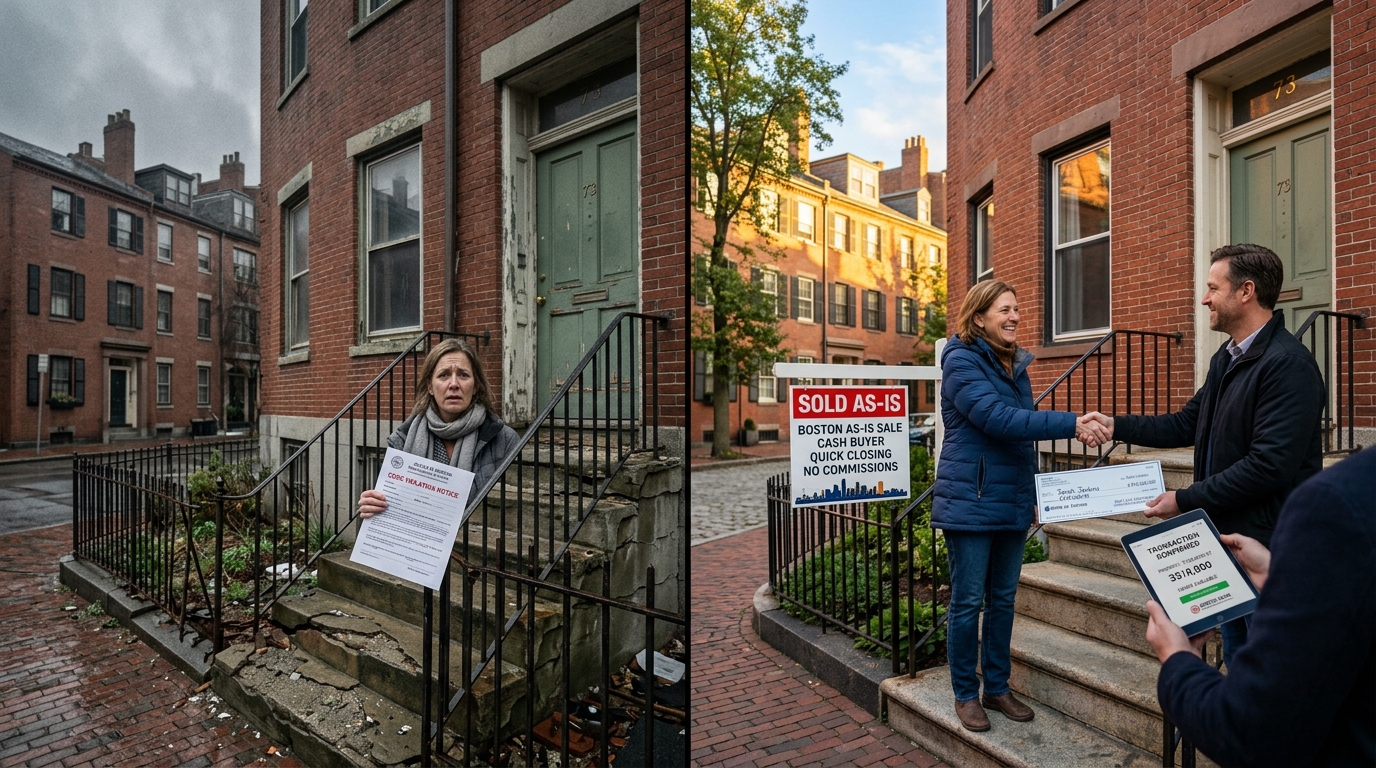
If you have never sold to a cash buyer before, the process is simpler than you might expect. Here is how it typically works from start to finish.
Steps to Sell Your Boston House Without Repairs
The process usually comes down to five simple steps. You reach out and share basic information about your property and your situation. The buyer schedules a quick walkthrough to see the home in person. You receive a fair cash offer within 24 to 48 hours. You accept the offer and choose your own closing date. Then you close on your schedule and receive your payment with no surprises.
There are no agent commissions, no repair costs, and no drawn-out negotiations. For answers to common questions about the process, visit our FAQs page.
You might also find it helpful to read our post on how to sell an older home without making costly updates, which covers a lot of the same themes around selling a home that needs work.
What to Expect at Closing
When you close with a cash buyer, the process is much simpler than a traditional sale. There is no waiting for a lender to approve anything. The title company handles the paperwork. Any outstanding property taxes or liens are paid off at closing so you walk away clean.
According to the Massachusetts Board of Building Regulations and Standards, sellers and buyers can agree on how to handle open permits and violations as part of the purchase terms. An experienced cash buyer in the Greater Boston Area already knows how to handle all of this.
How Much Less Will You Get for a House With Code Violations
This is one of the first questions most homeowners ask, and it is a fair one. The honest answer is that it depends on the type and severity of the violations. Here is a general comparison to help you understand the impact:
| Sale Method | Time to Sell | Repair Costs | Agent Fees | Net Result |
|---|---|---|---|---|
| Traditional listing after repairs | 60 to 120 days | $10,000 to $50,000+ | 5% to 6% | Higher price, lower net |
| Traditional listing as-is | 30 to 90 days | None | 5% to 6% | Lower price, still pay agent |
| Cash sale as-is | 7 to 21 days | None | None | Fastest and lowest hassle |
Even if a cash offer is somewhat below the top market price, you save on repairs, agent fees, and months of carrying costs. In many cases, the math actually works out in your favor when you add everything up.
Conclusion
Selling a house with code violations in the Greater Boston Area does not have to be a nightmare. Yes, the violations are real and they do affect how you can sell. But there is a clear path forward that works for you.
You do not have to spend a fortune fixing everything. You do not have to wait months for the right buyer to come along. You can sell your house as-is, get a fair cash offer, and move on with your life on your own timeline. If you are ready to explore your options, reach out to us at Buy Your Properties and we will help you figure out the best next step.
Frequently Asked Questions
Can I sell my house with code violations in Boston?
Yes, you can sell a property even if it has code violations. The key is to disclose what you know and work with the right buyer. Cash buyers in the Greater Boston Area regularly purchase homes with violations and handle the repairs themselves after closing.
Do I have to fix code violations before selling in Massachusetts?
No, you are not legally required to fix code violations before you sell. However, you do have to disclose them to potential buyers. When you sell to a cash buyer, they purchase the home in its current condition and take on the repairs themselves.
Will a bank finance a house with code violations?
In most cases, no. Most lenders will not approve a mortgage on a property with serious building code violations. That is one of the main reasons why selling to a cash buyer is often the best option for homeowners in this situation.
How fast can I sell a house with code violations in Boston?
When you work with a cash buyer, you can often close in as little as 7 to 21 days. That is significantly faster than the traditional route, which can take 60 to 120 days or more.
What is the biggest risk of not disclosing code violations when selling?
The biggest risk is a lawsuit after the sale. If the buyer discovers violations you knew about but did not disclose, they can take legal action and demand you pay for repairs. Being upfront about your property’s condition protects you legally and helps the sale close smoothly.