
Having an active eviction case on your property does not mean you are stuck waiting for the legal process to finish before you can sell. A lot of property owners in Southern California do not realize this. They assume the eviction has to be resolved first. But in practice, you can sell an eviction-pending property, and there are cash buyers in this region who purchase them regularly without making you wait.
What an Eviction-Pending Property Is and How It Affects a Sale
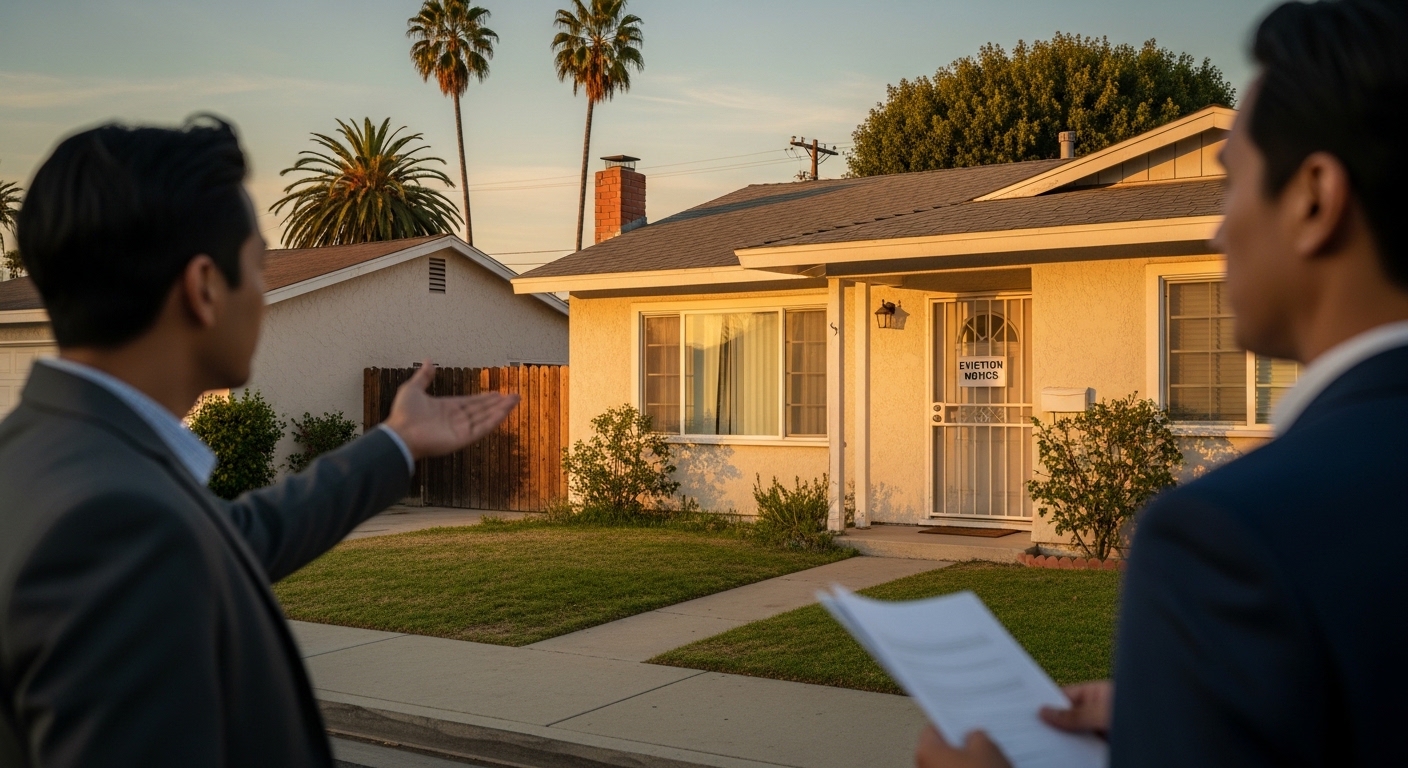
An eviction-pending property is one where an unlawful detainer lawsuit has been filed in court but has not yet been resolved. The tenant is still in the property during this period, and the outcome of the case, whether it results in a court-ordered move-out or some kind of settlement, is still unknown.
This situation creates real complications for traditional buyers. Most people using mortgage financing to purchase a home are not equipped to take on an active court case as part of the transaction. Lenders may also refuse to approve a loan on a property with an ongoing eviction because the property’s occupancy status is uncertain. That combination makes traditional buyers a very small pool for this type of property.
Why Traditional Buyers Avoid Eviction-Pending Properties
The risks from a traditional buyer’s perspective are real. If they purchase the property and the court rules in the tenant’s favor, or if the case gets delayed due to procedural issues, they are left managing a legal situation they were not prepared for. And if they are planning to move in, they may not be able to do so on any predictable schedule.
Banks are also cautious because a property with an active eviction represents uncertain occupancy, which makes it harder to appraise accurately and creates title risk in some situations. All of this reduces the buyer pool dramatically for anyone trying to sell through a traditional listing.
Why Cash Buyers Are the Most Realistic Option for Eviction-Pending Properties
Experienced cash buyers and real estate investors in Southern California deal with eviction-pending properties on a regular basis. They understand the unlawful detainer process, they know how to evaluate the risk based on where the case stands, and they can step in as the owner and continue the eviction after closing without starting from scratch.
When a property sells during an active unlawful detainer case, the new owner typically substitutes in as the plaintiff in the case. The case continues under the new ownership. The original seller walks away from the legal process entirely. That is one of the key reasons selling to a cash buyer during an active eviction is so attractive for property owners who are tired of dealing with the situation.
How to Sell an Eviction-Pending Property in Southern California
The process of selling to a cash buyer while an eviction is pending is similar to any cash sale, but with a few extra steps involving the legal case. Here is how it typically works.
You reach out to a cash buyer and share the details of the property along with the current status of the eviction case. The buyer reviews where the case stands, what type of eviction it is, whether it involves a non-payment of rent or a more complex just-cause eviction, and how far along the court process is. Based on all of that, they make a cash offer.
If you accept, escrow opens and the title company works through the details. The eviction case is disclosed as part of the transaction. After closing, the buyer substitutes in as the property owner and the plaintiff in the case. You collect your proceeds and exit the situation entirely.
What Affects the Offer Price on an Eviction-Pending Property
Several factors affect how a cash buyer prices an eviction-pending property. The further along the court process is, the less time and money the buyer expects to spend resolving it, which typically means a stronger offer. A case that just got filed is more uncertain than one that is near a scheduled hearing.
- Type of eviction: Non-payment of rent cases tend to move faster and have more predictable outcomes than just-cause evictions, which can be more complex.
- Tenant’s history in the case: A tenant who has filed responses, requested delays, or used legal defenses will extend the timeline, which affects the buyer’s cost estimate.
- Property condition: A tenant in a prolonged dispute situation may not be maintaining the property well. Buyers factor in likely repair costs alongside the legal costs.
- Stage of the court process: If a court date is already scheduled or a default judgment is close to being entered, the case is valued more favorably than one with no hearing date yet set.
- Whether the tenant has an attorney: Represented tenants are more likely to use every available legal mechanism to slow the process, which increases the buyer’s cost estimates.
| Eviction Status | Impact on Cash Offer | Likely Timeline to Resolution |
|---|---|---|
| Case Just Filed, No Response Yet | Moderate discount | 4 to 8 weeks if uncontested |
| Tenant Has Responded, Hearing Scheduled | Lower discount than early stage | 2 to 6 weeks to hearing |
| Default Judgment Already Entered | Minimal discount | Days to weeks for lockout |
| Contested Case With Multiple Hearings | Higher discount due to uncertainty | Several months potentially |
| Settlement Being Negotiated | Varies by settlement terms | Depends on agreement |
What Documents You Need to Share With a Cash Buyer During an Active Eviction
Being organized about the eviction documentation speeds up the sale process significantly. Before reaching out to buyers, gather the following if you can:
The unlawful detainer summons and complaint that you filed with the court, the original notice to quit or pay that was served on the tenant, any responses the tenant has filed, the current court hearing schedule if one has been set, and any correspondence between your attorney and the tenant’s attorney if applicable. You do not need all of this to get started, but having it ready helps the buyer evaluate the situation accurately and quickly.
Protecting Your Interests When You Sell During an Active Eviction
Selling during an eviction does not mean giving up your rights or accepting whatever offer comes first. You still have full rights as the property owner up until closing, including the right to continue the legal case and the right to collect any rent owed if the tenant is paying.
According to the California Courts Self-Help Center, the unlawful detainer process in California has strict procedural requirements and timelines. Understanding where your case stands gives you more leverage when negotiating with a buyer because a case that is nearly resolved is worth more to an investor than one that is just getting started.
If you are facing financial hardship on top of the eviction situation, the U.S. Department of Housing and Urban Development maintains a resource center for homeowners and landlords navigating financial difficulty, including HUD-approved counselors who can help you assess your options.
Finding a Cash Buyer Who Understands Southern California Evictions
Not every cash buyer has experience with active eviction cases. You want someone who has done this before, understands how to substitute into an unlawful detainer case, and can give you a realistic assessment of the property’s value based on where the eviction stands.
Ask the buyer how many eviction-pending properties they have purchased, how they handle the legal substitution process, and whether they work with an attorney who specializes in unlawful detainer cases. A buyer who can answer those questions clearly is one who knows what they are doing.
Our post on selling a house as-is in East Los Angeles gives a detailed look at the as-is sale process for properties in complex situations. And our guide on Studio City home sales without high fees or open houses is worth reading for any seller who wants to understand the no-agent, no-fee selling approach in practice.
Our team at Buy Your Properties has experience purchasing eviction-pending properties throughout Southern California. Reach out through our contact page and we will get back to you the same day to discuss your specific situation.
According to the National Association of Realtors, investor and cash buyer activity in the residential property market has remained strong even in challenging conditions, which reflects the consistent demand for properties in complicated situations among experienced buyers who know how to navigate them.
Conclusion
Selling an eviction-pending property in Southern California is not a process you have to manage alone or wait months to complete. A cash buyer who understands the unlawful detainer process can step in, purchase the property, and take over the legal case from you. You get your proceeds and walk away from a situation that has likely been costing you time, money, and stress for months.
If you are in this situation and ready to explore your options, the best first step is to get a no-obligation offer from a buyer who has real experience with eviction-pending transactions. Find out what your property is worth as it stands today, and go from there.
Frequently Asked Questions
Can I sell a property in Southern California while an eviction case is still active in court?
Yes. You can sell a property at any point during the unlawful detainer process. The buyer takes over as the property owner and typically substitutes in as the plaintiff in the eviction case after closing. You walk away from the legal situation entirely once the sale closes.
Does selling during an eviction affect the outcome of the court case?
Not necessarily. The case continues under the new owner’s name after the ownership transfer. The tenant’s rights and the court’s process remain the same. The new owner steps into the same legal position you were in, and the case proceeds based on where it stood at the time of sale.
How much less will I get for my Southern California property if an eviction is in progress?
The discount varies depending on the stage and complexity of the eviction. A case that is nearly resolved will result in a smaller discount than one that just got started. Providing detailed information about the case upfront helps the buyer give you an accurate offer rather than pricing in a larger uncertainty buffer than necessary.
Do I need to tell potential buyers about the active eviction in Southern California?
Yes. California law requires sellers to disclose known material facts about a property, which includes an active eviction case involving a current occupant. Failing to disclose this information can create serious legal liability after the sale closes. Reputable cash buyers expect this disclosure and will factor it into their offer rather than using it to back out.
What type of eviction cases are hardest to sell around in Southern California?
Contested eviction cases with multiple hearings, tenants who are represented by attorneys, and cases involving complex just-cause eviction grounds tend to be the most challenging. These situations create more uncertainty about the timeline and cost of resolution, which results in larger discounts from buyers. Non-payment of rent cases that are early in the process and uncontested are generally easier to sell around.