
Do Prefab Homes Hold Their Value? The Answer May Surprise You
For years, people assumed that prefab homes — also called manufactured homes or mobile homes — were a losing investment. Buy one, and you’d lose money the moment the keys hit your hand. Like a new car, right?
Well, the data tells a very different story in 2025. And honestly, it surprised me too when I first looked into it.
The truth is: resale value trends for prefab homes have shifted dramatically over the past decade. If you own one — or are thinking about buying one — this guide is for you.
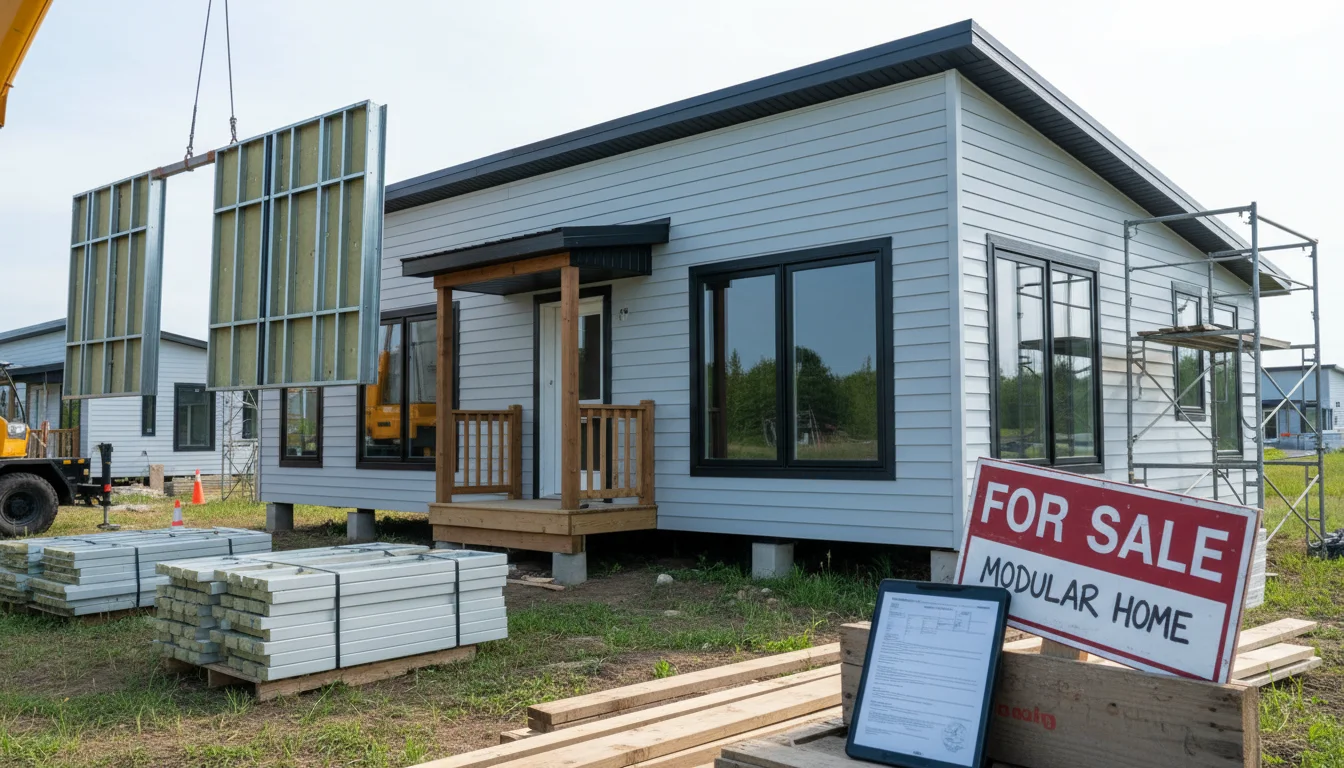
What Are Prefab Homes and Why Does Resale Get Complicated?
The word “prefab” covers a few different home types. It includes manufactured homes (built entirely in a factory to HUD Code standards), modular homes (built in factory sections but assembled on a permanent foundation to local building codes), and panelized homes (wall panels built off-site, assembled on location).
Each type behaves differently when it comes to resale. A modular home on a permanent foundation is often treated just like a site-built home by lenders and appraisers. A manufactured home in a land-lease community is a different story entirely.
That difference in real property vs. personal property classification is the key factor that drives resale value. If you want to understand the full difference, our breakdown of mobile home vs modular home differences explains it well.
The Old Myth vs. The New Reality
The old belief was simple: manufactured homes depreciate like cars. You buy one, it drops in value year after year, and you’re stuck with a depreciating asset.
That was largely true for homes built before the 1976 HUD Code standards came into effect. Older units had real quality problems. But modern manufactured housing is a completely different product — better materials, better construction, better energy efficiency.
And the appreciation data now reflects that shift.
What the Data Actually Shows About Prefab Home Appreciation
This is where things get really interesting. And this data completely changed how I think about prefab homes as an investment.
Manufactured Homes Now Appreciate at Nearly the Same Rate as Site-Built Homes
According to research by the Urban Institute, manufactured homes with mortgages appreciated by 211.8% between 2000 and 2024. Site-built homes? They appreciated 212.6% over the same period.
That’s nearly identical. Around 5% annual appreciation for both types of homes. The old idea that manufactured homes automatically lose value is simply not backed by the data anymore.
Even more interesting: since 2014, manufactured homes have actually outpaced site-built homes in year-over-year price growth in most quarters. That’s a complete reversal from the previous decade.
Fannie Mae data shows the average price of new manufactured homes rose from $82,400 in 2018 to $123,200 in 2024 — a 49.5% increase in just six years. Demand has pushed prices up significantly.
The Critical Factor: Land Ownership
Here’s the thing, though — all that good appreciation data comes with a big asterisk. It applies to homes where the owner also owns the land.
When a manufactured home sits on land you own and is titled as real property, it can appreciate like a traditional home. The land value is a huge part of that — American Enterprise Institute data shows land prices rose 261% between 2012 and 2023, while structure prices rose only 49%.
When a home sits in a land-lease community where you rent the lot but own only the structure, appreciation is much harder to achieve. You don’t control the land underneath you, and lenders offer fewer financing options, which limits your buyer pool at resale time.
Key Factors That Drive Prefab Home Resale Value
Not all prefab homes hold their value equally. I’ve seen people buy similar homes in the same region — one appreciates, one depreciates. Here’s what separates them.
What Makes a Prefab Home Go Up in Value
Location is still king. States like Texas, Florida, and North Carolina have the highest manufactured housing demand. According to MHInsider, these three states account for over 32% of all manufactured home shipments in 2024. More demand generally means better resale prospects.
Here are the factors that have the strongest influence on resale value:
| Factor | Impact on Resale Value | Notes |
|---|---|---|
| Land ownership (real property) | Very High (positive) | Biggest single factor |
| Location and local demand | High (positive) | Urban/suburban areas outperform rural |
| Home age (post-1976 HUD Code) | High (positive) | Modern HUD homes hold value better |
| Condition and maintenance | High (positive) | Roof, HVAC, siding matter most |
| Community management quality | Medium (positive) | Well-run parks boost value |
| Land-lease vs. land ownership | High (negative if leasing) | Limits buyer pool and financing |
| Older pre-1976 construction | High (negative) | Hard to finance, limited buyers |
Maintenance and Upgrades That Actually Pay Off
I once visited a 15-year-old double-wide that looked brand new inside. The owner had replaced the roof, updated the kitchen, and kept the HVAC in top shape. She got nearly 40% more than comparable homes in her area when she sold.
That’s not luck — that’s smart maintenance. Here’s what actually moves the needle at resale time:
- Roof replacement or regular maintenance — buyers and inspectors check this first
- Kitchen and bathroom updates — high ROI, even simple cabinet and fixture swaps
- HVAC servicing and upgrades — energy efficiency is a selling point in 2025
- Siding and exterior upkeep — first impressions drive buyer interest
- Foundation improvements — converting to a permanent foundation opens more financing options
- Deck or porch additions — low cost, high visual appeal
Good documentation helps too. Keep records of every upgrade and inspection. Appraisers take notice, and it often supports a higher valuation at sale time.
Resale Challenges That Buyers and Sellers Face
To be fair, prefab homes do still face some real hurdles at resale time. Knowing these upfront saves you from surprises.
Financing Barriers for Buyers
One of the biggest resale problems isn’t the home — it’s the financing. When a buyer can’t get a loan, your pool of potential purchasers shrinks. That drives down what people will actually pay.
Manufactured homes on owned land can often qualify for conventional mortgages, FHA loans, or VA loans. But homes in land-lease parks are typically limited to chattel loans (personal property loans), which carry higher interest rates and shorter terms. That math discourages buyers, which caps your resale price.
This is exactly why clearing any property title issues before selling is so important. Our post on property lien searches is a practical guide to making sure your title is clean before you list.
Stigma, Perception, and Market Education
Honestly, this one still matters more than it should. A lot of buyers still picture old, rundown trailer parks when they hear “mobile home” or “manufactured home.” That perception gap is slowly changing, but it hasn’t fully closed.
Modern manufactured homes are far from those stereotypes. Today’s units have open floor plans, energy-efficient windows, modern kitchens, and smart home features. The U.S. Census Bureau reports that manufactured homes cost roughly half the price per square foot of site-built homes — that’s a value proposition that’s increasingly hard to ignore.
As a seller, marketing matters. Use the term “manufactured home” or “modern prefab” rather than “mobile home.” Show recent upgrades prominently. And choose a real estate agent who has sold these homes before and understands how to position them.
The Market Outlook for Prefab Home Resale in 2025 and Beyond
The big picture trends all point in a positive direction for prefab home values over the next few years.
Affordability Crisis Driving Demand Higher
With the average traditional home at $356,000+ and mortgage rates still elevated, millions of Americans are being priced out of conventional homeownership. The average new manufactured home costs around $109,400 — less than a third of the price of a site-built home.
That affordability gap is not going to close anytime soon. As more people turn to prefab housing as their only realistic path to homeownership, demand rises — and so do resale prices.
According to MHInsider’s 2025 report, 103,314 units were shipped in 2024, up from 89,169 in 2023. More demand, growing supply — and existing homes benefit from that momentum in active markets.
Zoning Changes Opening New Markets
Several states have been changing their zoning laws to allow manufactured homes in more residential zones. North Carolina passed legislation in 2025 supporting broader placement rights. These changes expand the number of viable locations for prefab homes, which also boosts resale potential over time.
If you’re thinking about buying land for a prefab home or want to understand the full purchase and closing process, our guide on the escrow process step by step is a great starting point. And if you’re ready to take the next step, reach out to our team and we can walk you through your options.
Conclusion: Prefab Home Resale Value Is Better Than You Think
The story of prefab home resale value has changed. The data is clear: modern manufactured homes on owned land appreciate at nearly the same rate as site-built homes. The old “it depreciates like a car” narrative is outdated.
Yes, challenges remain — financing barriers, perception issues, and the land ownership question are all real. But for homeowners who buy smart — choose the right location, own the land, maintain the home, and understand the market — prefab homes can absolutely build equity.
In a housing market this expensive, that matters more than ever. I’d love to hear your thoughts — do you own a prefab home, or are you considering buying one? Drop a comment below.
Frequently Asked Questions
Do prefab homes increase in value over time?
Yes, they can. Research from the Urban Institute using FHFA data shows that manufactured homes appreciated 211.8% between 2000 and 2024 — nearly identical to the 212.6% appreciation seen in site-built homes. The key factor is land ownership. Homes on owned land tend to appreciate; homes in land-lease communities face more challenges building equity.
What is the average resale value of a manufactured home?
The average existing manufactured home sold for $71,629 in 2023, up 2.65% from the year before, according to MHInsider data. New manufactured homes averaged $109,400 in 2024. Values vary widely based on size, condition, location, and whether the land is included. Homes in high-demand states like Florida, Texas, and North Carolina typically command higher resale prices.
How can I increase the resale value of my prefab home?
Focus on roof maintenance, kitchen and bathroom updates, HVAC upgrades, and exterior upkeep. If possible, convert to a permanent foundation, which opens more financing options for future buyers. Keep detailed records of all improvements. Location matters too — a well-maintained home in a desirable area or a well-managed community will always outperform one that isn’t.
Does owning the land make a big difference in resale value?
Absolutely. It’s probably the single biggest factor. When you own the land and the home is titled as real property, you get access to conventional mortgage financing, and buyers have more options. Land appreciation (which has been stronger than structure appreciation in recent years) also adds to your total equity. In land-lease communities, you miss out on all of this.
Are prefab homes harder to sell than traditional homes?
They can be in certain situations — mainly when financing options are limited or when buyers are unfamiliar with modern manufactured housing quality. Working with an experienced agent, pricing accurately, and highlighting recent upgrades all help. In markets with high affordability pressure (which is most of the U.S. right now), well-priced prefab homes move relatively quickly.