
I remember the first time someone asked me to explain the difference between a mobile home and a modular home. I thought I knew the answer. I was wrong.
These two types of homes get mixed up all the time — even by real estate agents. And that confusion can cost you thousands of dollars if you buy the wrong one for your situation. In this guide, I’ll walk you through everything you need to know so you can make the right call.
What Is a Mobile Home?
The term “mobile home” technically refers to factory-built homes constructed before June 15, 1976. That’s the day the U.S. Department of Housing and Urban Development (HUD) stepped in with a new federal standard called the HUD Code.
Before that date, there were no national rules for how these homes had to be built. After that date, homes built in factories are officially called manufactured homes — not mobile homes. But most people still use “mobile home” as a catch-all term, and that’s fine for casual conversation.
These homes are built on a permanent steel chassis with wheels and axles. They can technically be moved, though most never are after the first placement. They sit on pier and beam foundations or tie-down systems rather than a full concrete foundation.
What Is a Manufactured Home?
A manufactured home is the modern version of the mobile home. It’s built entirely in a factory, transported to a site on its own chassis, and placed on a foundation. It must meet the HUD Code, which covers design, construction, strength, energy efficiency, fire resistance, and more.
According to the Manufactured Housing Institute, the average cost of a new manufactured home was around $124,000 in 2024, making it one of the most affordable housing options in the country. Over 17.5 million Americans currently live in manufactured homes.
Manufactured homes come in three sizes:
- Single-wide: Typically 14–18 feet wide and 52–80 feet long (about 600–1,300 sq ft)
- Double-wide: Two sections joined together, usually 20–36 feet wide (1,000–2,300 sq ft)
- Triple-wide: Three sections, offering the most space (usually over 2,500 sq ft)
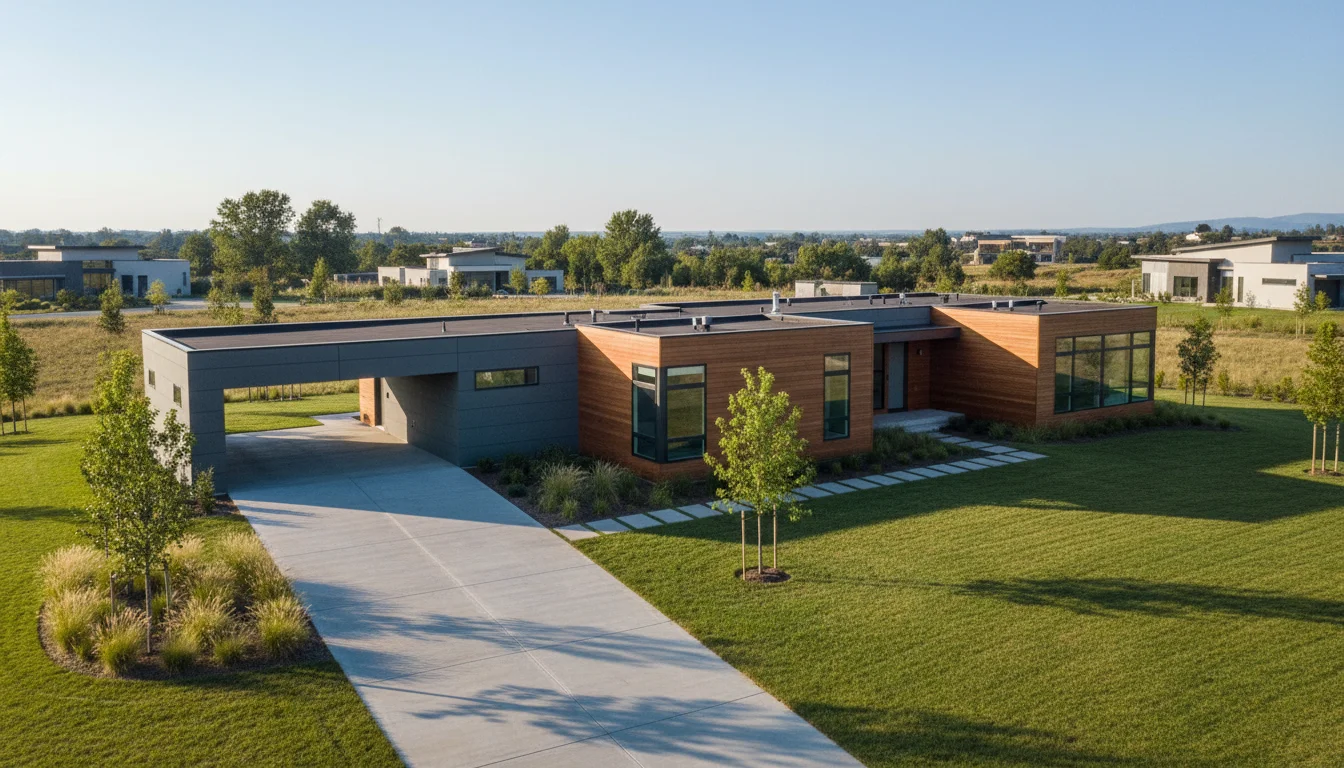
What Is a Modular Home?
A modular home is also built in a factory, but that’s where the similarity ends. Instead of being governed by the HUD Code, modular homes must meet the International Residential Code (IRC) — the same code that applies to traditional stick-built homes.
Here’s what makes this a big deal: modular homes are treated legally like site-built homes. They’re placed on a permanent foundation, titled as real property, and appraised just like a regular house.
I toured a modular home last year and honestly couldn’t tell it apart from a regular house. The 2×6 framing, the cathedral ceilings, the open floor plan — it looked like any new construction home you’d find in a traditional subdivision.
Modular homes typically cost between $180,000 and $360,000, depending on size, finishes, and location. That’s more than a manufactured home but often less than comparable site-built construction.
Key Differences: Mobile/Manufactured Home vs. Modular Home
Let’s put the main differences side by side so you can see them clearly.
| Feature | Manufactured Home | Modular Home |
|---|---|---|
| Building Code | HUD Code | IRC (same as site-built) |
| Foundation | Chassis/pier system | Permanent foundation |
| Legal Classification | Personal property (unless converted) | Real property |
| Average Cost (2024) | $109,400–$180,000 | $180,000–$360,000 |
| Financing Options | Chattel loans, FHA Title I | Conventional, FHA, VA, USDA |
| Resale Value | Often depreciates | Appreciates like site-built |
| Framing | 2×4 construction | 2×6 construction |
| Zoning Restrictions | More common | Fewer restrictions |
Building Codes: HUD vs. IRC
This is the heart of the difference between these two home types, and it affects everything from how they’re built to how they’re financed and taxed.
The HUD Code for Manufactured Homes
The HUD Code is a federal standard that applies nationwide. Every manufactured home, regardless of where it’s sold, must comply with it. The code covers things like wind resistance zones (Wind Zone I, II, and III), thermal protection, and fire safety.
A red HUD certification label is permanently attached to each section of a manufactured home. This label is your proof that the home meets federal standards. If you’re buying a used manufactured home and the label is missing, that’s a red flag.
The IRC for Modular Homes
Modular homes are built to the International Residential Code (IRC), the same standard used for traditional homes. This means local building inspectors can (and do) inspect them, just like any other new home construction.
Because they meet local building codes, modular homes face far fewer zoning restrictions. Most residential neighborhoods that allow site-built homes will also allow modular homes.
Foundation Differences
One of the most visible differences between these home types is the foundation — and it matters a lot for long-term value.
Manufactured homes are built on a steel chassis. When placed on a site, they typically rest on concrete piers, blocks, or a tie-down system. Some manufactured homes are placed on permanent perimeter foundations, which can help with financing and titling.
Modular homes are placed on a full permanent foundation — either a basement, crawl space, or concrete slab. This is one reason they’re classified as real property and appraised more like traditional homes.
Financing: Which Is Easier to Get a Loan For?
This is where the difference between these home types really hits your wallet. Financing a manufactured home is harder — and often more expensive — than financing a modular home.
A friend of mine tried to get a conventional mortgage on a manufactured home a few years back. The bank turned her down three times before she found a lender who specialized in manufactured housing. She ended up with a chattel loan at a higher interest rate than she expected.
Financing Options for Manufactured Homes
If the manufactured home is classified as personal property (meaning it’s on a rented lot or not attached to land you own), your options are limited:
- Chattel loans: Personal property loans with higher interest rates (often 1–2% higher than mortgages)
- FHA Title I loans: Government-backed loans for manufactured homes on rented land
- FHA Title II loans: Available if the home is on a permanent foundation on land you own
If you own the land and the home is on a permanent foundation, you may be able to get conventional financing, FHA, VA, or USDA loans — but the home must meet specific age and condition requirements.
Financing Options for Modular Homes
Modular homes are treated like site-built homes for lending purposes. That means you have access to:
- Conventional mortgages (Fannie Mae and Freddie Mac)
- FHA loans
- VA loans (for veterans)
- USDA loans (for rural areas)
- Construction-to-permanent loans
This wider access to financing — at better interest rates — is one of the biggest practical advantages of modular homes over manufactured homes.
Resale Value: Which Holds Its Value Better?
Here’s something a lot of buyers don’t find out until it’s too late: manufactured homes often depreciate in value, while modular homes tend to appreciate like traditional homes.
Why the difference? It comes down to legal classification and perception.
Manufactured homes are often classified as personal property — similar to a car. Personal property depreciates. When the home isn’t tied to land, its value is harder to track and appraise.
Modular homes are real property. They’re appraised using the same comparable sales method as traditional homes. If home values in your area go up, your modular home’s value tends to go up too.
That said, newer manufactured homes — especially CrossMod homes, which are designed to look and perform more like site-built homes — are starting to hold their value better than older models.
Zoning and Placement Restrictions
Where you want to live plays a big role in which type of home makes sense. Manufactured homes face more zoning restrictions than modular homes.
Many cities and counties restrict where manufactured homes can be placed. In some places, they’re only allowed in designated manufactured home communities or parks. In other areas, they’re banned from certain residential zones altogether.
Modular homes, because they meet the same local building codes as site-built homes, are generally allowed anywhere that traditional homes are permitted. This gives you far more flexibility in choosing where to live.
If you’re buying land and planning to put a home on it, always check local zoning regulations before you commit. Learn how to find property lines for free to understand exactly what you’re working with before making a purchase.
Construction Quality: How They’re Built
Both types are built in factories under controlled conditions, which actually gives them some advantages over site-built homes — no weather delays, consistent quality control, and less material waste.
But there are real construction differences worth knowing:
Manufactured Home Construction
- Built on a steel chassis designed for transport
- Typically uses 2×4 framing (lighter weight for transport)
- Designed to HUD wind zone standards (zones I, II, and III)
- Must meet HUD thermal and fire resistance standards
- May have lower ceiling heights than traditional homes
Modular Home Construction
- Built to local IRC standards (same as site-built)
- Typically uses 2×6 framing for greater strength
- Can be engineered for hurricane resistance up to 180 mph wind speeds
- Must pass local building inspections
- Higher standard of construction overall
Cost Comparison: What Do You Really Get for the Money?
Let’s talk real numbers. Housing costs vary significantly by region, but here are 2024 benchmarks to help you plan:
| Home Type | Typical Price Range (2024) | Notes |
|---|---|---|
| Old mobile home (pre-1976) | $10,000–$50,000 | May have limited financing options |
| New manufactured home | $109,400–$180,000 | Does not include land |
| Modular home | $180,000–$360,000 | Includes full construction on your land |
| Median site-built home | $367,000+ | National median (2024) |
One thing to remember: manufactured home prices typically don’t include land. If you’re buying a lot in a manufactured home community, you’ll pay lot rent — often $300–$1,000 per month depending on location.
With a modular home, you own the land outright. That’s a significant wealth-building advantage over time. If you want help navigating the full home buying process, our escrow process guide walks you through every step from purchase agreement to closing day.
Can You Convert a Manufactured Home to Real Property?
Yes — in most states, you can convert a manufactured home from personal property to real property. The process is called “titling” or “de-titling” and typically involves:
- Placing the home on a permanent foundation
- Retiring the vehicle title with the state DMV
- Recording the home as real property with the county
- Meeting any additional state-specific requirements
Converting to real property can open up better financing options and may improve resale value. If you’re buying a used manufactured home, check whether the seller has already done this conversion — it can affect your title search. Title insurance is especially important with manufactured homes to protect against title defects or liens you may not know about.
Which One Is Right for You?
Here’s my honest take: the right choice depends on your goals, budget, and where you want to live.
Choose a manufactured home if:
- You need the most affordable option possible
- You plan to live in a manufactured home community
- You’re okay with a chattel loan or have cash
- You don’t have land yet and aren’t sure where you’ll settle
Choose a modular home if:
- You own land or plan to buy land
- You want conventional mortgage financing
- Long-term appreciation and resale value matter to you
- You want to build in a standard residential neighborhood
Either way, do your due diligence. A thorough home inspection is critical for both types — factory-built doesn’t mean perfect, and problems with the foundation, HVAC, or plumbing can be expensive to fix after the fact. If you have credit challenges, check out our guide on how to buy a mobile home with bad credit for practical strategies.
Conclusion
Mobile homes, manufactured homes, and modular homes are three very different things — even though people use these terms interchangeably. The differences in building codes, financing, zoning, and resale value are real and they affect your quality of life and your finances for years to come.
Take your time, compare your options, and don’t hesitate to reach out to a professional. If you have questions about finding or buying a property, our team is here to help. Contact us and we’ll point you in the right direction.
Frequently Asked Questions
What is the difference between a mobile home and a manufactured home?
Technically, “mobile home” refers to factory-built homes made before June 15, 1976. Homes built after that date are officially called “manufactured homes” and must meet federal HUD Code standards. In everyday conversation, most people use both terms interchangeably.
Do manufactured homes appreciate or depreciate in value?
Manufactured homes classified as personal property (not tied to land) typically depreciate over time, similar to vehicles. However, manufactured homes on owned land with permanent foundations can appreciate in value, especially in desirable markets. Modular homes generally appreciate like site-built homes.
Can you get a regular mortgage on a manufactured home?
It depends on the home’s classification and foundation. If a manufactured home is on a permanent foundation, titled as real property, and meets lender requirements, you may qualify for FHA, VA, USDA, or even conventional financing. Homes classified as personal property typically require chattel loans, which have higher interest rates.
Are modular homes allowed in all residential neighborhoods?
In most cases, yes. Modular homes meet the same International Residential Code (IRC) as site-built homes and are generally permitted anywhere traditional homes are allowed. Always check local zoning ordinances before purchasing land, as some communities have additional aesthetic or design requirements.
What is a CrossMod home?
CrossMod (or CrossModulation) homes are a newer category of manufactured homes designed to bridge the gap between manufactured and site-built housing. They’re built to HUD Code but feature site-built characteristics like permanent foundations, higher pitches roofs, and upgraded finishes. They may qualify for conventional Fannie Mae and Freddie Mac financing, making them easier to finance than standard manufactured homes.
External Resources: