
Why a Home Inspection Checklist Can Save You Thousands
I still remember the first time I bought a house. I was so excited about the new kitchen and the big backyard that I almost skipped the home inspection. My real estate agent talked me out of it — and thank goodness she did. The inspector found a leaking roof that would have cost me over $12,000 to fix. That one inspection saved me from a very bad surprise.
A home inspection is a visual check of a property done by a certified home inspector. It looks at the structure, systems, and safety of the home. You get a detailed inspection report that tells you the current condition of the house.
If you’re buying a home, having a good home inspection checklist is one of the smartest things you can do. It helps you know what to look for and makes sure nothing important gets missed.
What Does a Home Inspector Actually Do?
The Scope of a Home Inspection
A home inspector walks through the entire property — inside and out. They check what they can see and access. They don’t break walls open or dig underground, but they look at every accessible area.
According to InterNACHI (International Association of Certified Home Inspectors), a standard home inspection covers the roof, foundation, electrical system, plumbing, HVAC system, and much more. It’s one of the most trusted standards in the industry.
The inspection usually takes 2 to 4 hours. After that, you get a full inspection report — usually within 24 to 48 hours.
How to Find a Good Home Inspector
Not all inspectors are created equal. Look for someone who is licensed in your state, bonded, and insured. Ask your real estate agent for a recommendation. You can also check credentials with your local licensing board.
Ask to see sample reports from past inspections. A thorough inspector will have detailed, clear reports — not just a few bullet points. Always make sure your inspector is certified and experienced with the type of home you’re buying.
The Exterior Home Inspection Checklist
Foundation, Roof, and Structure
The outside of a home tells a lot about its health. This is usually where the inspector starts. Here’s what they check on the exterior:
- Foundation — No major cracks or signs of shifting
- Roof — Shingles in good shape, no missing or damaged pieces
- Gutters and downspouts — Properly attached and draining away from the house
- Siding and exterior walls — No rotting, warping, or large gaps
- Chimney — Mortar in good shape, no loose bricks
- Windows and doors — Frames sealed properly, no broken glass
- Driveway and walkways — No major cracks or uneven surfaces
- Deck, porch, and steps — Structurally sound with no rotted wood
- Detached garage or shed — No termite damage or structural issues
One thing inspectors really focus on is drainage. Water pooling near the foundation is a red flag. It can lead to serious basement water damage over time.
Yard, Grading, and Landscaping
The yard might seem unimportant, but it’s not. Grading — how the land slopes around the house — affects whether water flows toward or away from the home. Good grading keeps water away from your foundation.
Inspectors also check for signs of a septic tank leak, large trees too close to the house, and whether the landscaping could cause future problems. These might seem small now, but they can turn into big expenses later.
The Interior Home Inspection Checklist
Walls, Ceilings, Floors, and Windows
Once inside, the inspector looks at every room carefully. Honestly, this part surprised me when I watched my inspector during my first home purchase. He noticed a small water stain on a bedroom ceiling that led to finding a slow roof leak.
Here’s what gets checked inside:
- Ceilings and walls — Level, no stains, cracks, or signs of moisture
- Floors — No soft spots, warping, or squeaking in unusual places
- Windows — Open and close easily, no broken seals or fogging between panes
- Doors — Latch properly, no sticking or gaps
- Staircase — Handrails secure, steps in good condition
- Attic — Adequate insulation, no signs of leaks or pests
- Basement or crawl space — Dry, no cracks, no evidence of water intrusion
Kitchen and Bathroom Areas
Kitchens and bathrooms get a lot of wear. They also have the most plumbing, which means more chances for things to go wrong. The inspector will run faucets, check under sinks for leaks, and test the exhaust fans.
They look at caulking around tubs and showers, check tile grout, and test all the appliances that come with the home. If the dishwasher or garbage disposal is included in the sale, it gets tested too.
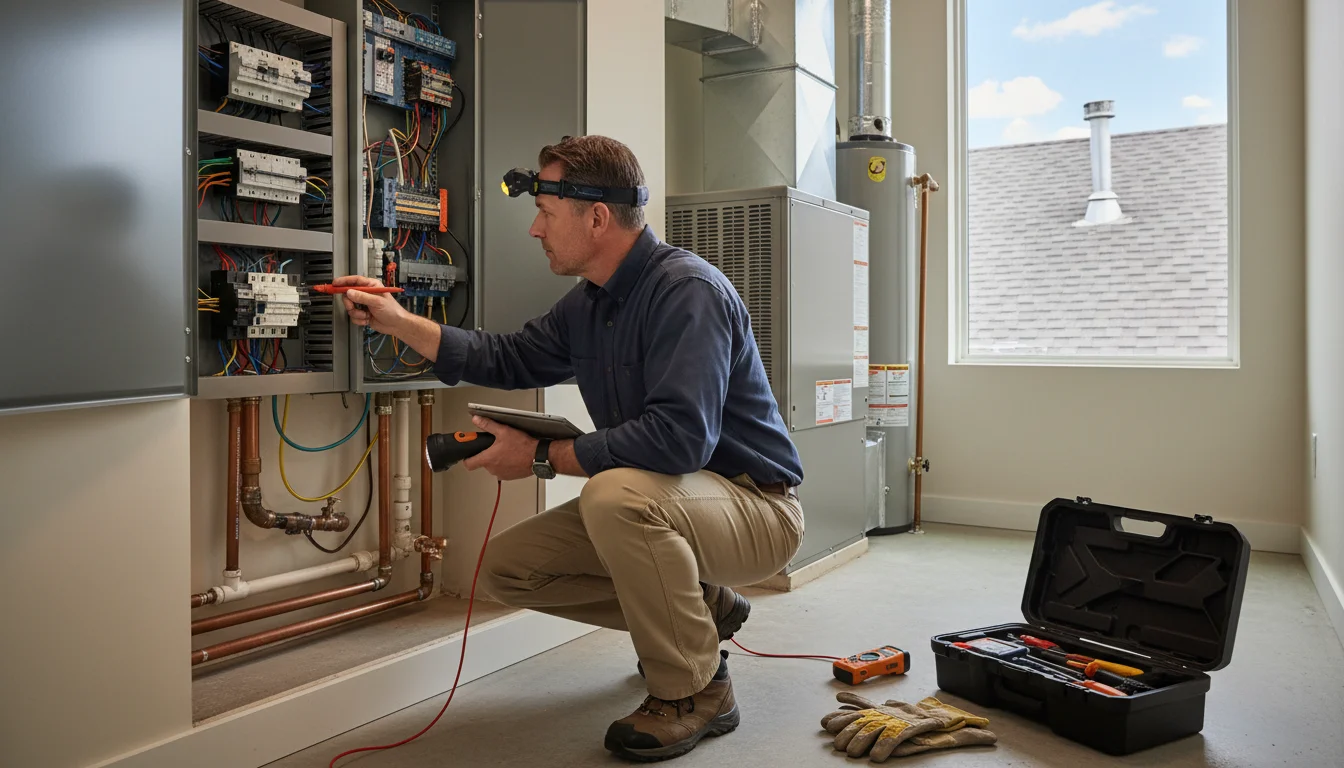
Major Systems: What the Inspector Checks in Detail
HVAC, Plumbing, and Electrical Systems
This is the most important part of any home inspection checklist. These are the big-ticket items that cost the most to repair or replace. Here’s a summary:
| System | What Inspector Checks | Common Issues Found |
|---|---|---|
| HVAC | Heating and cooling units, filters, ductwork | Old units, dirty filters, duct leaks |
| Plumbing | Water pressure, pipe condition, water heater | Old pipes, slow drains, water heater age |
| Electrical | Panel, wiring, outlets, GFCI | Outdated panels, faulty wiring, missing GFCIs |
| Roof | Shingles, flashing, gutters | Age, missing shingles, poor flashing |
| Foundation | Visible cracks, settling, water intrusion | Cracks, bowing walls, moisture |
According to the U.S. Department of Housing and Urban Development (HUD), healthy home standards include safe electrical systems, proper ventilation, and freedom from moisture — all items covered in a standard home inspection.
Water Heater and Appliances
The water heater is one item many buyers overlook. But a water heater that’s 10 to 15 years old may need replacing soon — and that can cost $800 to $1,500 or more. Your inspector will check the age, condition, and whether it’s properly strapped and vented.
For homes with a gas water heater, they’ll also check for carbon monoxide risks. This is a safety issue that should never be ignored.
Safety Items Every Buyer Must Check
Smoke Detectors, Carbon Monoxide, and Radon
Safety checks are non-negotiable. A home should have working smoke detectors on every floor and outside each bedroom. Carbon monoxide detectors are required near sleeping areas in most states.
Radon is a naturally occurring gas that can build up in homes — and it’s a leading cause of lung cancer in the U.S. According to the U.S. Environmental Protection Agency (EPA), nearly 1 in 15 homes in the U.S. has elevated radon levels. Radon testing is not always included in a standard inspection, but it’s worth the extra cost.
Older homes may also have lead-based paint or asbestos. These aren’t always visible, but they’re serious health hazards. If the home was built before 1978, ask specifically about these.
Pest and Mold Inspections
Standard home inspections don’t always cover pest inspections or mold testing. These are often separate services. But they’re worth getting, especially in older homes or humid climates.
Termites can cause serious structural damage that’s hard to see from the outside. Mold can grow inside walls or under floors from past water damage. Both can be expensive to remediate.
If you’re buying a multi-family property, these checks become even more important. Check out our guide on multi-family home investing for beginners to understand what additional checks are needed.
How to Use Your Home Inspection Report
Reading and Prioritizing the Report
Once the inspection is done, you’ll get a detailed report. It can be 30 to 100 pages long. Don’t let that scare you — most of what’s in it is routine. Focus on the items flagged as major issues or safety concerns.
Prioritize problems this way: safety issues first, then structural problems, then major system issues, then everything else. Small cosmetic issues — like peeling paint or a sticky door — are usually not worth negotiating over.
If you’re a first-time buyer, this can feel overwhelming. Our first-time home buyer guide for 2026 walks you through the entire purchase process, including how to handle inspection results.
Using the Report to Negotiate with the Seller
Here’s something most buyers don’t realize: the inspection report is a negotiating tool. If the inspector finds a major issue — like an old HVAC system or a leaky roof — you can ask the seller to fix it, lower the price, or give you a credit at closing.
Sellers are not required by law to make repairs, but they usually want the deal to close. In most cases, both sides can find a solution. A good home inspection contingency in your contract protects your right to walk away if you can’t reach an agreement.
If you’re also thinking about selling your current home, visit our sell your property page for helpful guidance.
Conclusion
A home inspection checklist is one of the most powerful tools you have as a buyer. It helps you understand exactly what you’re buying before you sign anything. From the foundation to the roof, from the electrical panel to the water heater — everything matters.
Don’t skip the inspection to save a few hundred dollars. That money can save you tens of thousands. And don’t be afraid to ask your inspector questions — that’s what they’re there for.
If you want help figuring out your next steps after a home inspection, reach out to our team here. We’re happy to help.
Frequently Asked Questions
What is included in a home inspection checklist?
A home inspection checklist covers the exterior (roof, foundation, siding), interior (walls, floors, ceilings), major systems (HVAC, plumbing, electrical), safety items (smoke detectors, radon), and appliances. It’s a full look at the property’s condition before you buy.
How long does a home inspection take?
Most home inspections take 2 to 4 hours. Larger homes or older properties may take longer. Plan to be present the entire time so you can ask questions as the inspector works.
Who pays for the home inspection?
In most cases, the buyer pays for the home inspection. The cost typically ranges from $296 to $424, depending on the size and location of the home. Some sellers offer a pre-listing inspection, but buyers usually prefer to hire their own inspector.
Can I skip the home inspection?
You can, but it’s not a good idea. Skipping a home inspection means you’re taking on all the risk. If serious problems show up after closing, you’re responsible for fixing them. In most cases, the cost of the inspection is well worth the peace of mind.
What happens if the inspection finds major problems?
If the inspection reveals major issues, you have options. You can ask the seller to fix the problems, request a price reduction, ask for a credit at closing, or walk away from the deal — especially if you have a home inspection contingency in your contract. Talk to your real estate agent about the best approach based on current market conditions.