
Selling a commercial property in Los Angeles sounds exciting until you open the lease file. I’ve seen deals that looked perfect on paper fall apart in escrow, not because of the property itself, but because of what was buried deep inside a tenant’s lease agreement. If you own commercial real estate in LA and you’re thinking about selling, you need to know this stuff before you list.
Los Angeles has over 700,000 commercial properties. That’s a lot of buildings, a lot of tenants, and a lot of lease clauses that can slow down, or completely block, a sale. In this guide, I’ll walk you through the most common lease issues that cause real headaches when you try to sell.
What Makes Commercial Leases Different from Residential Ones?
Before we jump in, let’s make one thing clear. A commercial lease agreement is not like a home rental. It’s a much bigger deal.
In California, commercial tenants don’t get the same legal protections as people who rent homes. Both the landlord and tenant are expected to understand what they’re signing. This means the lease terms carry a lot more weight, and a lot more risk.
These leases can run 5, 10, or even 15 years. They have complex clauses around rent increases, permitted use, assignment, and subletting. And when you try to sell the building, every single one of those clauses becomes the buyer’s problem too.
How Existing Leases Affect Property Value and Buyer Interest
Here’s something most sellers don’t think about. When you sell a commercial property in Los Angeles<span style=”font-weight: 400;”>, the buyer doesn’t just buy the building; they buy the leases too.
That means the new owner has to honor every term of every active lease agreement. If a tenant is locked in at a low rent for five more years, the buyer’s return on investment goes down. If the lease has weird restrictions or protections baked in, the buyer might walk.
Honestly, this is where I’ve seen sellers get surprised the most. They think a long-term tenant is an asset. Sometimes it is. But sometimes it’s a ball and chain.

The Lease Clauses That Cause the Most Problems During a Sale
Right of First Refusal and Right of First Offer
This is one of the biggest deal-slowers in commercial real estate. Some commercial leases include a Right of First Refusal (ROFR). This means if you decide to sell, you must first offer the property to the current tenant on the same terms as any outside buyer.
So let’s say you get a great offer. Before you can accept it, you have to go back to your tenant, share those terms, and give them a chance to match it. This can take weeks. Some buyers won’t wait. Deals fall apart because of this clause more often than people expect.
A Right of First Offer (ROFO) is a little different; you have to offer the property to the tenant before you even put it on the market. Both of these clauses seriously slow down your property sale timeline.
Tenant Options to Purchase
Even trickier is the option to purchase clause. This gives the tenant the legal right to buy the property at a set price, usually defined when the lease was signed.
In a hot Los Angeles real estate market, that locked-in price might be way below today’s market value. If the tenant chooses to exercise their option, you could end up selling your building for much less than its worth today.
According to California real estate law experts, lenders often object to purchase options because the tenant could theoretically take over the property free of the lender’s mortgage. This makes it complicated not just for the seller, but for buyers who are financing the purchase.
Assignment and Subletting: A Mess Waiting to Happen
Why Assignment Clauses Complicate Ownership Transfers
When a commercial property sells, the new owner technically “steps into” the landlord’s shoes. This is called assignment and assumption. The buyer takes on the rights AND the duties under every existing lease.
But here’s where it gets messy. Some leases give tenants the right to approve new landlords, or they include clauses that let tenants terminate the lease if the building is sold. The buyer could end up with empty space the moment they close escrow.
I once spoke with a property owner in Culver City who was shocked to find out her anchor tenant had the right to cancel their lease with 60 days notice if the property changed hands. That tenant was 40% of her rental income. The sale nearly collapsed.
Subletting and the Hidden Liability It Creates
Subletting is when a tenant rents part of their space to someone else. In California, unless the lease says otherwise, tenants may have the right to sublet. And this creates another layer of complication when you sell.
The new buyer has to deal with not just the main tenant, but possibly a subtenant they didn’t even know about. Who’s responsible if the subtenant damages the property? Who pays rent if the subtenant stops? These questions don’t have easy answers.
California courts have held that landlords generally cannot unreasonably withhold consent to an assignment or sublet, but the definition of “reasonable” is often argued in court.
Long-Term Leases and Below-Market Rents
How Long Lease Terms Scare Away Buyers
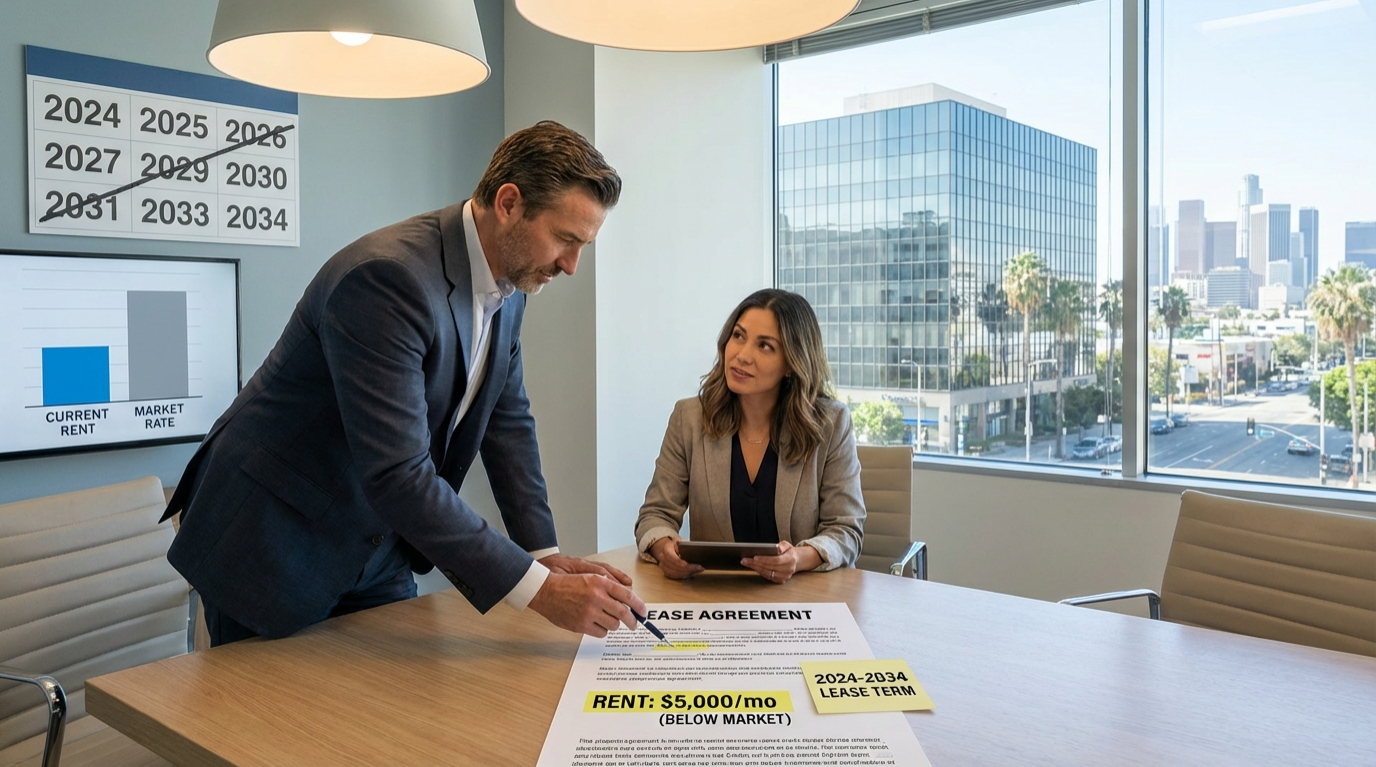
Imagine you’re buying a commercial building in Los Angeles and you find out the anchor tenant is paying 30% below the current market rent, locked in for eight more years. That changes everything about how you value the property.
Buyers use rental income to calculate what a building is worth. If the rents are stuck low because of an old lease agreement, the building’s value goes down in the buyer’s eyes. This is especially true for triple net leases (NNN), where the buyer is counting on high, stable income.
According to the California Department of Real Estate, commercial property transactions require full disclosure of all lease terms that could materially affect a buyer’s decision. Failing to disclose long-term below-market leases can expose sellers to legal liability.
Rent Control Doesn’t Apply, But That Doesn’t Mean Rent Is Flexible
Here’s something people often get wrong. Commercial properties in Los Angeles are NOT covered by rent control. Commercial landlords have the freedom to raise rents based on the market. BUT, and this is important, they can only raise rent according to what the lease agreement says.
If the lease has no rent increase clause or if it caps increases at 2% per year, the landlord is stuck. The tenant can pay well below market for years, and there’s nothing the seller (or a future buyer) can do about it until the lease expires.
This limits what buyers are willing to pay. It also affects how quickly you can sell and at what price.
Estoppel Certificates and What Happens When Tenants Won’t Sign
Why Buyers Require Estoppel Certificates
Here’s a document that doesn’t get enough attention: the estoppel certificate. This is a legally binding statement signed by the tenant that confirms the current terms of the lease, rent amount, lease start and end date, any outstanding defaults, and whether there are side agreements outside the written lease.
Buyers need this. Lenders require it. Without it, the buyer is taking on an unknown risk.
The problem? Tenants don’t always cooperate. A tenant who knows the building is being sold might delay signing, or refuse to sign at all. Some tenants use it as leverage to renegotiate their lease terms. This can hold up escrow for weeks.
SNDA Agreements and Lender Complications
Another layer of complexity comes from the Subordination, Non-Disturbance, and Attornment (SNDA) agreement. This is a three-part deal that protects both the tenant and the lender.
- Subordination means the tenant agrees that their lease is secondary to the landlord’s mortgage.
- Non-disturbance means that if the lender forecloses, the tenant won’t be evicted.
- Attornment means the tenant agrees to recognize the new owner as landlord.
Many buyers and their lenders require SNDA agreements before closing. If existing leases don’t address these issues, or if tenants refuse to sign a new SNDA, the sale can stall.
Common Lease Issues in a Quick-Reference Table
Here’s a summary of the most common lease issues that affect commercial property sales in Los Angeles, and how serious each one is:
| Lease Issue | What It Does | Risk Level |
| Right of First Refusal (ROFR) | Tenant can match any sale offer first | High |
| Option to Purchase | Tenant can buy at a fixed (old) price | High |
| Below-Market Long-Term Lease | Reduces property income and value | High |
| Assignment Restrictions | May prevent lease transfer to a new owner | Medium-High |
| SNDA Agreement Missing | Complicates financing for the buyer | Medium |
| Tenant Refuses Estoppel Certificate | Blocks due diligence and escrow | Medium-High |
| Early Termination on Sale Clause | The tenant can walk when the building sells | High |
| Subletting Without Approval | Creates unknown third-party liability | Medium |
Steps Sellers Should Take Before Listing a Commercial Property
Before you put a “For Sale” sign on your Los Angeles commercial property, here’s what smart sellers do:
- Review every active lease carefully for ROFR, ROFO, and purchase option clauses
- Talk to a commercial real estate attorney who knows California law
- Check tenant’s payment history, unpaid rent, or disputes will scare buyers
- Request estoppel certificates early, so you’re not scrambling during escrow
- Work with the Los Angeles Department of City Planning to confirm zoning compliance.
- Disclose all lease terms that could affect the buyer’s decision; California law requires it
These steps won’t eliminate every problem. But they’ll help you spot issues early, when you still have time to fix them.
Need to buy or sell a property in Los Angeles? Buy Your Properties helps homeowners and commercial owners explore fast, hassle-free selling options with no pressure.
👉 Contact us today to discuss your situation and see what your property may be worth.
Conclusion
Selling a commercial property in Los Angeles<span style=”font-weight: 400;”> with active tenants is never a straight line. The lease agreements that seemed fine when you signed them years ago can create real obstacles when it’s time to sell. From right of first refusal clauses and purchase options, to SNDA agreements and uncooperative tenants holding up estoppel certificates, every one of these issues has the power to delay, reduce, or kill a deal.
The good news? Most of these problems can be managed if you catch them early. Work with a qualified commercial real estate attorney, get your lease documents organized before listing, and be upfront with buyers about what they’re taking on. In my experience, transparency moves deals faster than trying to hide the messy parts.
Have you dealt with lease issues when selling or buying a commercial property in LA? I’d love to hear your experience in the comments.
Frequently Asked Questions
1. Can a buyer refuse to honor an existing lease when they purchase a commercial property in Los Angeles?
Generally, no. When a commercial property is sold, the buyer steps into the seller’s position as landlord and must honor all active lease agreements. Tenants cannot be evicted or have their terms changed simply because the property changes hands. The only exception would be if the lease itself contains a clause that allows termination upon sale.
2. What is a Right of First Refusal, and how does it slow down a property sale?
A Right of First Refusal (ROFR) is a lease clause that gives the current tenant the right to buy the property before any outside buyer can. When a seller receives an outside offer, they must present that offer to the tenant, who then has a set period of time to match it or decline. This process can take weeks and often causes outside buyers to walk away, slowing or ending the sale.
3. What is an estoppel certificate,e and why do buyers need it?
An estoppel certificate is a document signed by the tenant that confirms the current, accurate terms of their lease. It verifies rent amounts, lease dates, whether there are any defaults, and whether any side agreements exist outside the written lease. Buyers and lenders rely on it to make sure there are no hidden surprises after closing.
4. Are commercial properties in Los Angeles covered by rent control?
No. Commercial properties in Los Angeles are currently exempt from rent control laws. However, a landlord can only increase rent according to what the existing lease agreement specifies. If the lease doesn’t allow for increases or caps them at a low rate, the landlord has no legal way to raise rent until the lease expires, regardless of market conditions.
5. Do I need a lawyer to review commercial leases before selling my property?
Yes, strongly recommended. California commercial real estate law is complex, and lease documents often contain clauses, like ROFR, SNDA requirements, or assignment restrictions, that can seriously affect your sale. A qualified commercial real estate attorney can identify these issues before you list the property and help you plan around them, saving you significant time and money.