
You found a buyer for your older LA home. Things are moving. And then the inspection report comes back with words nobody wants to see: lead paint, asbestos-containing materials, possible hazardous substances in the walls or ceiling. Just like that, everything slows down and the stress starts climbing.
This happens a lot in Los Angeles. The city has thousands of homes built before 1978, and many of them have materials inside the walls that were completely normal when they were installed. The problem is what we know about those materials now.
What Lead Paint and Asbestos Actually Are and Why They Matter
Lead paint was used in American homes until the federal government banned it for residential use in 1978. Before that, it was everywhere. It was cheap, durable, and held color well. The problem is that lead is toxic. It builds up in the body over time and causes serious health problems, especially in young children. When lead paint starts peeling, chipping, or turning into dust, it becomes a real hazard.
Asbestos is a naturally occurring mineral that was used heavily in construction through the late 1970s. It was mixed into insulation, floor tiles, ceiling tiles, pipe wrapping, and roof shingles because it was fireproof and durable. Once researchers confirmed that asbestos fibers cause lung cancer and mesothelioma, its use in construction was phased out. But the material itself is still inside millions of older homes across the country.
If you own a home in Los Angeles that was built before 1980, there is a real chance it has one or both of these materials somewhere. That does not mean the home is unsafe to live in. It does mean you have legal obligations when you go to sell it.
Federal and California Disclosure Requirements You Need to Know
Federal law requires sellers of homes built before 1978 to disclose the presence of known lead-based paint or lead-based paint hazards to buyers. This is not optional, and it applies to every pre-1978 home in the country.
According to the U.S. Environmental Protection Agency, sellers of pre-1978 homes must give buyers an EPA-approved pamphlet about lead hazards, disclose any known lead paint or hazards in writing, provide any available reports or inspection records, include a Lead Warning Statement in the sales contract, and give buyers a 10-day window to conduct their own lead inspection if they choose.
California goes further than federal law. The state requires sellers to complete a Transfer Disclosure Statement, or TDS, which must include all known environmental hazards. According to the California Department of Real Estate, the TDS must specify known hazardous substances including lead-based paint, asbestos, radon gas, formaldehyde, and contaminated soil or water. If you know the hazard exists, you have to disclose it.
Asbestos disclosure in California is slightly different from lead paint. Federal law does not require sellers to specifically test for or disclose asbestos, but California’s TDS requires disclosure of any known asbestos-containing materials. The distinction matters: you are not required to test for asbestos before selling, but if you already know it is there, you have to say so.
What Happens if You Do Not Disclose
Some sellers try to sidestep this by claiming ignorance. That can backfire badly. A buyer who discovers undisclosed lead paint or asbestos after closing can sue for the full cost of remediation, any related health damages, and legal fees. California courts take non-disclosure in real estate seriously, and the penalties can be severe.
Honest disclosure is always the smarter move. It protects you legally, sets realistic buyer expectations, and means there are no unpleasant surprises after the sale closes.
How Lead Paint and Asbestos Affect Buyers and Their Lenders
Here is where the sale itself can get complicated. A buyer who is using a mortgage, especially a government-backed FHA or VA loan, is working with a lender that has its own rules about hazardous materials. And those rules are not flexible.
FHA appraisers are trained to look for visible deteriorating paint in homes built before 1978. If the paint is peeling, chipping, or flaking, the appraiser will flag it as a repair condition. The lender will not fund the loan until the deteriorating paint is stabilized or fully removed. This can cost hundreds to several thousand dollars and delays the entire closing timeline.
Asbestos-containing materials that are undisturbed, meaning sealed inside a wall or ceiling and not crumbling, are generally not a lender requirement to fix. But if an inspector notes that asbestos-containing materials are damaged or friable, meaning they are breaking down into airborne fibers, that can trigger additional requirements from FHA and VA lenders.
Conventional loans are less strict about this in most cases, but lenders still have the right to require environmental remediation if they believe the hazard materially affects the property’s value or the buyer’s safety.
Common Places Asbestos and Lead Paint Are Found in Older LA Homes
I have walked through a lot of older homes in LA, and these are the places where hazardous materials tend to show up most often. Knowing what to look for, and where, can help you prepare before you list.
- Lead paint on window sills, door frames, baseboards, and exterior surfaces, especially in homes built before 1960
- Asbestos insulation wrapped around pipes in the basement or utility areas
- Asbestos in ceiling tiles, especially those textured drop ceilings common in 1960s and 1970s homes
- Asbestos in the backer material under vinyl floor tiles, particularly the 9×9 inch tiles common before 1980
- Asbestos in roofing shingles and exterior siding on older homes
- Asbestos in the joint compound and texture material on walls and ceilings
- Lead paint underneath newer layers of paint, which becomes a problem when the top layers start peeling
Just because these materials are present does not automatically mean your sale is in trouble. The condition matters more than the presence. Intact, undisturbed asbestos is generally not considered an immediate health risk. Lead paint that is well covered and not deteriorating is less of a concern than paint that is visibly peeling or chipping.
The Cost of Remediation and Whether It Makes Sense Before Selling
One of the first questions sellers ask is whether they should pay for lead paint or asbestos remediation before listing the home. The answer depends on the condition of the materials, your budget, and what kind of buyer you want to attract.
Here is a quick look at what remediation typically costs in the Los Angeles area:
| Type of Hazard | Typical LA Remediation Cost | Key Consideration |
|---|---|---|
| Lead paint stabilization (sealing) | $500 to $3,000 | Required if paint is visibly deteriorating for FHA/VA |
| Full lead paint removal | $3,000 to $15,000+ | Cost varies by square footage and paint location |
| Asbestos encapsulation (sealing in place) | $500 to $2,500 | Acceptable if material is non-friable |
| Asbestos abatement (full removal) | $1,500 to $30,000+ | Required if material is damaged or friable |
| Asbestos floor tile removal | $2,000 to $8,000 | Often required before renovation work |
Remediation before listing makes more sense if the hazardous materials are visibly deteriorating and would definitely trigger a repair condition from a lender. If the asbestos is intact and well-sealed, and the lead paint is in good condition, you might be able to move forward with an as-is sale while making full disclosures.
What Sellers in This Situation Usually Do Wrong
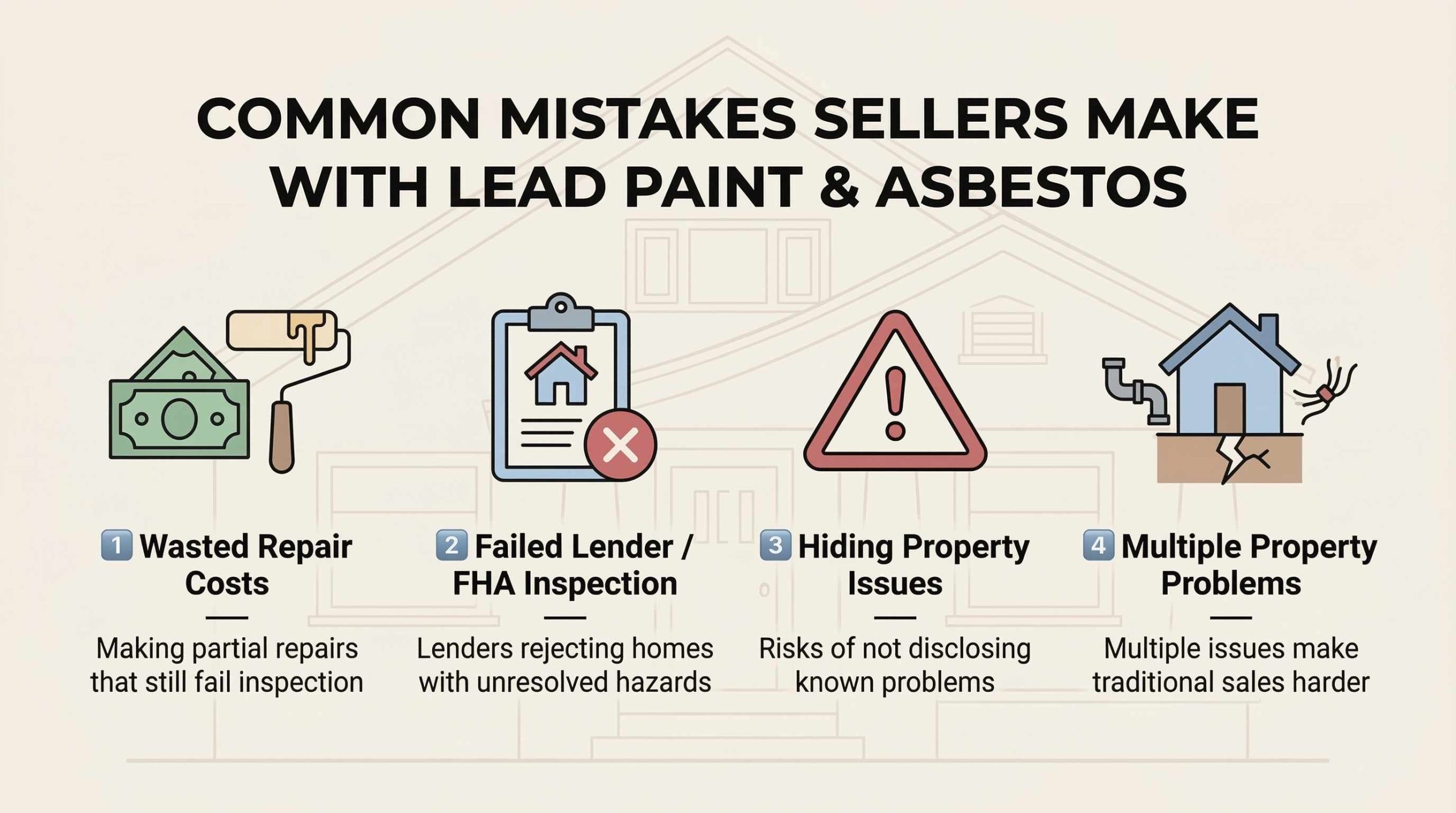
The biggest mistake I see sellers make is spending a lot of money on partial remediation that still does not satisfy the lender. They pay $4,000 to stabilize the lead paint in a few rooms, then the FHA appraiser finds more deteriorating paint in a closet they missed. Now they are back to square one, and they have already spent money they are not getting back.
The other common mistake is not disclosing what they know and hoping nobody notices. In older LA homes, experienced inspectors know exactly where to look. They find it almost every time. And when they do, sellers who have been less than honest face serious legal exposure.
For sellers who are dealing with foundation issues on top of lead paint and asbestos concerns, our post on how foundation issues kill a traditional sale in SoCal explains how multiple condition problems compound each other when a lender is involved.
And if you are also dealing with old plumbing or electrical in your older LA home, our guide on selling a house with old plumbing and electrical problems covers the disclosure requirements and your options there as well.
Can You Sell an Older LA Home With Lead Paint or Asbestos Without Remediating?
Yes. But the path forward depends on who is buying your home and how they are paying for it.
If your buyer is using an FHA or VA loan and there is visible deteriorating lead paint, you will need to stabilize it before the loan will fund. That is a firm requirement, not a negotiation point. If the asbestos-containing materials are intact and the buyer is using a conventional mortgage, remediation may not be required at all, as long as you have made the proper disclosures.
If your buyer is paying cash, none of the lender requirements apply. There is no appraisal condition, no government safety checklist, and no inspector’s report that can stop the closing. You disclose what you know in writing, the buyer accepts the condition of the home, and you close. That is why so many sellers of older LA homes with hazardous material concerns end up selling to cash buyers instead of going through the traditional mortgage process.
We buy homes throughout Los Angeles regardless of their age or condition. Old lead paint, asbestos floor tiles, original galvanized plumbing, we have seen it all. We factor the condition into our offer and take care of remediation on our end after closing. You do not have to spend $10,000 to $30,000 before we can make you an offer.
To understand how cash sales work and whether one makes sense for your situation, visit our page on how to sell your house fast in Los Angeles.
And when you are ready to get a real, no-pressure offer on your older LA home, reach out through our contact page. We will give you a straight answer and a fair price based on the home as it actually is.
Conclusion
Lead paint and asbestos are real issues in older LA homes, but they do not have to be the end of your sale. Federal and California law require you to disclose what you know. And if the hazardous materials are in poor condition, lenders may require remediation before they will fund a mortgage-backed purchase.
Your best path forward depends on the condition of the materials, your budget, and how much time you have. If spending $5,000 to $30,000 on remediation before listing does not make sense for you, selling to a cash buyer is the most reliable way to move forward without the lender requirements getting in the way.
The key in every case is honest disclosure. California law is clear on this. Tell buyers what you know, price the home accordingly, and choose the selling path that gives you the most certainty.
Frequently Asked Questions
Am I required to disclose lead paint when selling a home in Los Angeles?
Yes. Federal law requires sellers of homes built before 1978 to disclose known lead paint and lead paint hazards to buyers. You must also provide an EPA-approved lead hazard information pamphlet and include a Lead Warning Statement in the sales contract. California’s Transfer Disclosure Statement requires the same information as part of state law. Failure to disclose can result in lawsuits from the buyer after closing.
Do I have to remove asbestos before selling my LA home?
Not always. If the asbestos-containing materials are intact and not deteriorating, removal is often not required, especially for conventional mortgage sales. However, if the materials are damaged or crumbling, a lender may require remediation before funding the loan. For FHA and VA loans, the appraiser’s report drives whether remediation becomes a condition of closing. A cash buyer does not require remediation before making or closing on an offer.
How much does asbestos removal cost in Los Angeles?
Asbestos abatement in LA typically costs $1,500 to $30,000 or more depending on how much material needs to be removed and where it is located. Encapsulation, which seals the asbestos in place rather than removing it, can cost $500 to $2,500 and is sometimes an acceptable alternative when the material is non-friable and not in a high-traffic area.
Can a buyer refuse to purchase a home with lead paint in California?
Buyers have a 10-day period to conduct a lead paint inspection after receiving the required disclosures, and they have the right to negotiate or walk away based on what they find. However, many buyers, especially investors and cash buyers, accept the condition of older homes with proper disclosures in place. The key is making accurate, complete disclosures so there are no surprises after the sale.
What is the fastest way to sell an older LA home with lead paint or asbestos?
Selling to a cash buyer is the fastest option. Cash buyers do not require a lender appraisal, so there are no government safety checklists to satisfy and no repair conditions tied to hazardous materials. You make complete disclosures in writing, the cash buyer prices the condition into their offer, and closing can happen in as little as 7 to 21 days without remediation work delaying the process.