
If you own an older home in Los Angeles, there is a good chance the walls are hiding things buyers and lenders do not like to see. Old galvanized pipes. Knob and tube wiring. A panel box that was built when nobody owned a microwave. These are the kinds of old growth problems that can quietly kill a home sale before you ever get to closing.
I have talked with sellers across LA who had no idea their plumbing or electric was going to be a problem until the inspector showed up. And by then, the deal was already on thin ice.
Why Old Plumbing and Electrical Systems Are Such Big Deal Killers
Homes built before 1960 in Los Angeles often still have their original plumbing and electrical systems. That sounds like a character feature, but lenders and buyers see it differently. Banks have strict requirements about the condition of a home before they will approve a mortgage. Old systems that do not meet modern safety or code standards can stop a financed sale cold.
This is not just about looks. Old wiring and old pipes carry real safety risks. And when an appraiser or inspector flags them, the seller usually ends up stuck choosing between a costly fix or a dead deal.
The Problem With Galvanized Pipes
Galvanized steel pipes were the standard choice for home plumbing in the early 1900s through the 1960s. They were strong when they were new. But galvanized pipes are coated in zinc, and that zinc wears off over time. Once it does, the steel underneath rusts from the inside out.
You might not notice anything for a long time. But the signs eventually show up: low water pressure, rusty or discolored water, pinhole leaks in the walls. By the time a buyer’s inspector finds it, the pipe damage is usually advanced enough to be a serious problem.
According to data published by HomeGuide, the cost to replace galvanized pipes in a home ranges from $2,000 to $15,000 depending on the size of the house and the type of new pipes being installed. For homes over 80 years old in Los Angeles, where accessing pipes through old plaster walls is more difficult, that number can climb past $20,000.
What Knob and Tube Wiring Means for Your Sale
Knob and tube wiring was the standard electrical system used in homes from the 1880s through roughly the 1950s. It is the wiring you find in bungalows, craftsmans, and other older LA homes that buyers love for their style but lenders worry about for their safety.
The problem with knob and tube wiring is not just that it is old. It is that it has no ground wire. Modern appliances and electronics need a grounded circuit. Without it, the risk of electrical fire goes up. Insurance companies know this, which is why many will not cover a home with active knob and tube wiring at standard rates, or at all.
According to HomeGuide, the cost to replace knob and tube wiring in a home ranges from $12,000 to $35,000, or roughly $8 to $17 per square foot, depending on the home size and how accessible the wiring is. In an older LA home with lath and plaster walls, you can count on being toward the high end of that range.
The U.S. Fire Administration has reported that electrical problems cause tens of thousands of house fires every year. Buyers and their lenders take that seriously, and inspectors are trained to look for outdated systems during every inspection.
How These Systems Affect a Mortgage-Backed Sale
Here is where things get really difficult for sellers. When a buyer is using a mortgage, especially an FHA or VA loan, the lender orders an appraisal. That appraiser is not just checking the value of the home. They are also checking the condition. Certain problems, including active knob and tube wiring and badly corroded galvanized pipes, can trigger what lenders call a repair condition.
A repair condition means the lender will not release the money until the problem is fixed. That is not a negotiation. That is a requirement. The seller has to either complete the repair and get it certified, or the buyer walks and the deal dies.
| System Issue | Typical Repair Cost (LA) | Likely Loan Impact |
|---|---|---|
| Galvanized pipe replacement | $5,000 to $20,000+ | May trigger FHA/VA repair condition |
| Knob and tube wiring replacement | $12,000 to $35,000 | Often blocks conventional and FHA loans |
| Electrical panel upgrade (60A to 200A) | $1,300 to $3,000 | Required in many lender guidelines |
| Lead pipe replacement | $2,000 to $15,000 | Required before FHA/VA funding |
| Full house re-pipe | $8,000 to $20,000+ | Deal may stall until complete |
Conventional loans can be more flexible than government-backed ones, but they still require an appraisal. And appraisers who see obvious problems with electrical or plumbing systems can flag them for further review, which slows everything down.
What California Law Says About Disclosing These Problems
California has some of the most detailed seller disclosure requirements in the country. Sellers are legally required to complete a Transfer Disclosure Statement, or TDS, which must include known problems with plumbing and electrical systems. This is not optional, and it is not something you can skip by selling as-is.
According to the California Department of Real Estate, sellers must specify environmental hazards and known defects, including problems with plumbing, sewers, and electrical systems, on the required disclosure form. If you know your home has galvanized pipes or knob and tube wiring, you have to say so. Failing to disclose can expose you to a lawsuit from the buyer after closing.
California also signed a new law in 2024, called SB 382, which takes effect in 2026 and requires sellers of single-family homes to complete a professional electrical safety inspection as part of the standard disclosure package. If you are selling in 2026 or planning to soon, this is something you need to know about.
The good news is that disclosing a problem and solving a problem are two different things. You can sell a home with old plumbing or old wiring. You just have to be honest about what is there.
What Happens When You Try to Hide It
Some sellers try to avoid the whole issue by not mentioning known problems on the disclosure form. That is a serious mistake in California. Real estate attorneys see these cases regularly. A buyer who discovers after closing that you knew about corroded pipes and did not disclose them can sue for the full cost of repairs, legal fees, and in some cases push for rescission of the sale.
The simplest approach is always honest disclosure. You tell the buyer what you know, you price the home to reflect its condition, and you let the chips fall. That protects you legally and sets clear expectations for whoever buys the property.
Your Real Options as a Seller With Old Systems
When you are facing old plumbing or electrical issues in a home you want to sell, you have three real paths forward. Each one comes with trade-offs, and which one makes sense depends on your timeline, your budget, and how much uncertainty you can handle.
- Fix the systems before listing. This removes the buyer’s concern and opens the door to FHA and VA buyers. But it is expensive, takes time, and you may not recover every dollar you spent at closing.
- List as-is and price lower. Some buyers, especially investors, are looking for exactly this kind of property. You disclose everything honestly and price the home to reflect the work it needs. The buyer pool gets smaller, but the deals that come in tend to be more serious.
- Sell directly to a cash buyer. A cash buyer does not need a lender’s approval. There is no appraisal, no repair condition, and no waiting for a bank to sign off. You disclose the condition honestly, the buyer prices it into their offer, and you close on a timeline that works for you.
I have seen sellers spend $25,000 fixing plumbing and wiring before listing, only to get offers that were $10,000 higher than they would have gotten with an as-is sale. The math did not work out. Every situation is different, but those are the kinds of numbers that are worth thinking through before you start swinging hammers.
Why Cash Buyers Handle These Problems Without the Drama
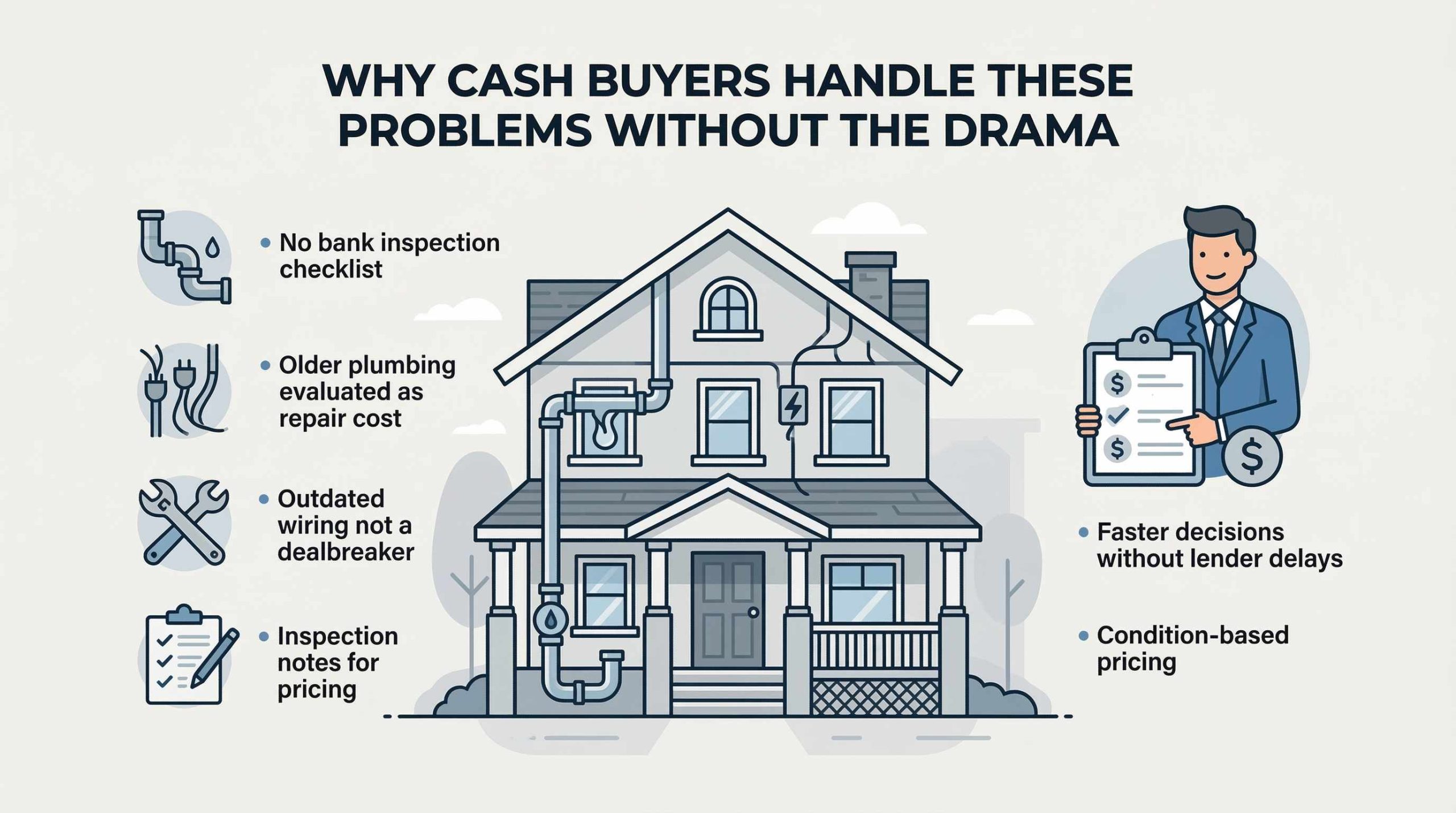
When a cash buyer evaluates your home, they are not running it through a bank’s checklist. They look at the home’s overall condition, the cost of the work it needs, and whether the deal makes sense at a given price. Galvanized pipes and knob and tube wiring are not dealbreakers. They are just line items in the repair budget.
This is how sellers with older LA homes move forward without spending months waiting for a buyer whose lender ultimately says no. If you have a home with old growth plumbing or electrical issues, a cash sale removes the biggest source of uncertainty in the entire process.
You can learn more about how the full process of selling an older LA home works in our guide on how foundation issues kill a traditional sale in SoCal. Many of the same dynamics apply to plumbing and electrical problems.
And if you want to understand how roof problems work the same way with lenders, our post on why roof issues stop bank loans but do not stop cash buyers is worth reading before you decide how to move forward.
For a broader look at how cash sales compare to listing traditionally in LA, check out our page on how to sell your house fast in Los Angeles.
When you are ready to talk about your specific situation, reach out through our contact page. We buy homes in LA with old plumbing, old wiring, and everything in between, and we give you a straight, no-pressure offer based on the real condition of the home.
Conclusion
Old plumbing and electrical systems are among the most common deal-killers in LA home sales. Galvanized pipes, knob and tube wiring, and undersized electrical panels can block FHA and VA loans, trigger expensive repair conditions from lenders, and scare off buyers who cannot afford to take on the work themselves.
California law requires you to disclose these issues. You cannot hide them, and trying to do so can lead to lawsuits after closing. But disclosure is not the same as disaster. You can sell a home with these problems. The key is understanding your options and choosing the path that makes the most sense for your situation.
If spending $15,000 to $35,000 on repairs before listing does not sound appealing, a cash buyer is worth a serious look. No lender. No appraisal. No repair conditions. Just a real offer on the home the way it is today.
Frequently Asked Questions
Can I sell my LA home if it still has knob and tube wiring?
Yes, you can. But you are legally required to disclose the wiring on your Transfer Disclosure Statement in California. Many mortgage lenders, especially FHA and VA, will not approve a loan on a home with active knob and tube wiring until it is replaced. You can still sell as-is to a cash buyer who does not need lender approval.
Do galvanized pipes affect a home sale in California?
They can, significantly. Galvanized pipes rust from the inside over time, causing low water pressure, discolored water, and eventual leaks. FHA and VA lenders may flag these as a condition requiring repair before funding. Cash buyers factor the cost of re-piping into their offer and still close without a lender’s involvement.
How much does it cost to fix old plumbing in an LA home?
Replacing galvanized pipes in a typical LA home costs $5,000 to $20,000 or more, depending on the home’s size, the type of new pipes used, and how accessible the old pipes are. Homes with concrete slab foundations or old plaster walls tend to cost more because accessing the pipes is harder.
Am I legally required to disclose electrical problems when selling in California?
Yes. California’s Transfer Disclosure Statement requires sellers to disclose known problems with electrical systems, including old or potentially unsafe wiring. Under a new California law signed in 2024 (SB 382), sellers of single-family homes will also be required to provide a professional electrical safety inspection report as part of their standard disclosure package starting in 2026.
What is the fastest way to sell an older LA home with plumbing or electrical problems?
Selling to a cash buyer is the fastest and most reliable path. Cash buyers do not use mortgage financing, so there is no lender appraisal, no repair conditions, and no waiting on bank approval. You disclose the condition of the plumbing and electrical systems honestly, agree on a price that reflects the home’s real condition, and close in as little as 7 to 21 days.