
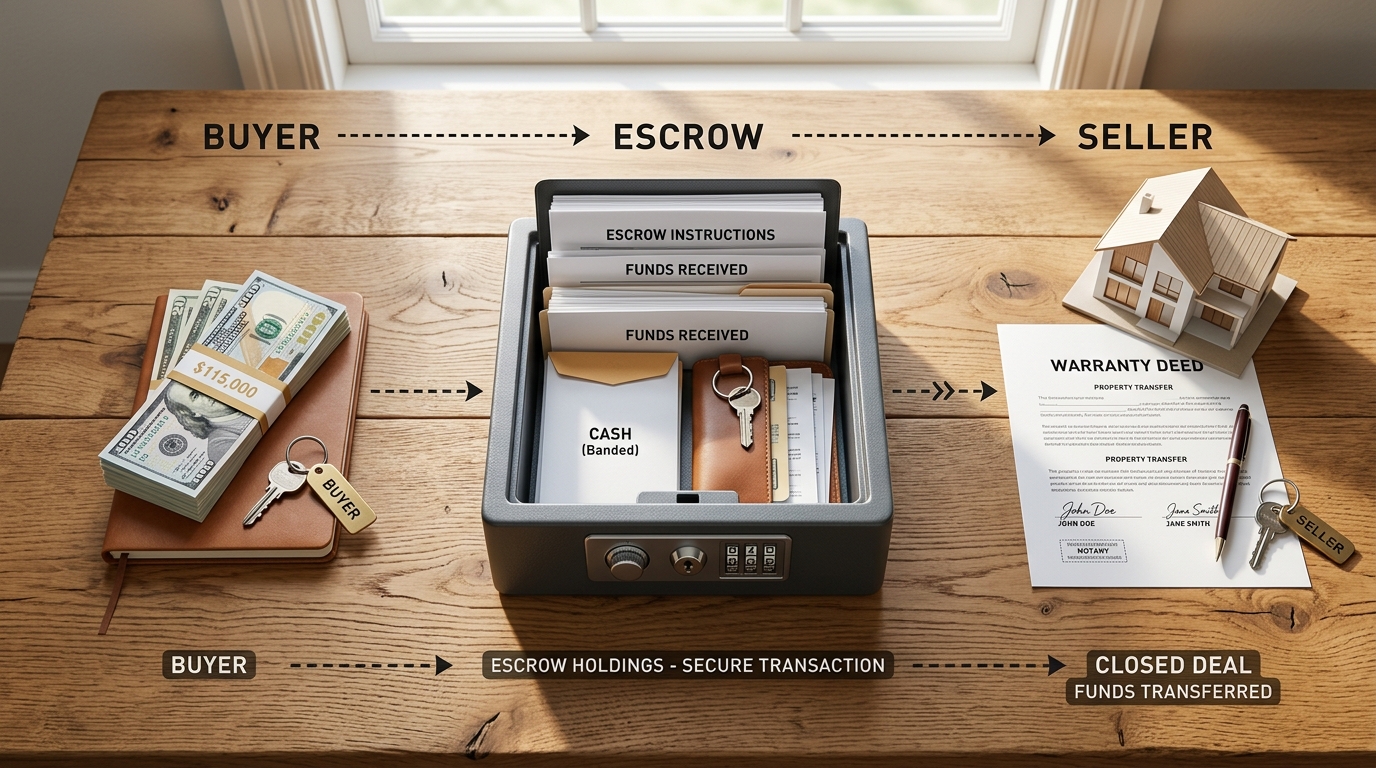
A lot of sellers hear the word escrow and picture a pile of paperwork they will deal with at the end. The reality is that escrow does far more than collect signatures at the finish line. In a cash home sale, the independent escrow company is the neutral third party that holds your money, verifies the title, coordinates every document, and makes sure that not a single dollar moves until everything in the contract has been properly satisfied. Understanding what they actually do and why they matter can help you feel a lot more confident about every step of your transaction.
Why an Independent Escrow Company Exists in the First Place
The Problem Escrow Was Created to Solve
Think about what a real estate transaction actually involves. A buyer is being asked to hand over a large amount of money to someone they may have met once or twice. A seller is being asked to give up their property before the money clears. Neither side should simply trust the other to follow through. Escrow exists because both parties need a neutral, licensed third party to hold everything securely while all the conditions of the sale are verified and met.
According to the California Department of Financial Protection and Innovation, the Escrow Law in California exists specifically to protect members of the public who entrust their money or other assets to independent escrow agents. Every independent escrow company in California must be licensed by the DFPI and must follow strict legal standards about how funds are held, handled, and disbursed.
What Makes an Escrow Company Independent
The word independent matters. An independent escrow company has no financial interest in whether the deal closes or what price it closes at. They are not the buyer’s company. They are not the seller’s company. They work for both parties equally, following the written escrow instructions that both sides agreed to. That neutrality is what makes the whole system work.
Some cash buyers will try to use an escrow company they have a relationship with or, in some cases, try to avoid using a licensed escrow company altogether. That is a serious red flag. In California, all residential real estate transactions are required to go through a licensed escrow holder. If a buyer suggests otherwise, that is a reason to pause the conversation and ask more questions.
What the Escrow Company Actually Does From Open to Close
Opening Escrow and Receiving the Earnest Money
Once both the buyer and seller sign the purchase agreement, escrow is opened. The buyer deposits their earnest money, typically 1 to 3 percent of the purchase price, into a secure trust account held by the escrow company. That money sits there, not with the buyer, not with the seller, until the conditions of the sale are fully met.
The escrow officer then sends both parties a set of escrow instructions that spell out exactly what needs to happen for the transaction to close. Both sides review and sign those instructions. Once that happens, neither party can unilaterally change the terms. According to the California escrow process guide from Accredited Schools, the escrow company coordinates the buyer, seller, agents, title company, and any other parties under one structured system to ensure ownership and money change hands at exactly the same time.
Ordering the Title Report and Clearing Any Issues
One of the first things the escrow company does after opening is order a preliminary title report. This document shows the current legal ownership of the property, any outstanding liens, easements, or other encumbrances attached to it. If anything on that report needs to be resolved before the sale can close, the escrow officer works with all parties to get it cleared.
Common issues that come up in a title report include an unpaid mortgage that needs to be paid off from the proceeds, old mechanic’s liens from contractors, property tax arrears, or HOA balances. The escrow company calculates the payoff amounts for each of these, collects the funds, and makes sure every lienholder is paid in the correct order before the seller receives their net proceeds. Our post on why we request a title report immediately and why it protects you goes deeper into what the report reveals and why getting it early matters so much.
How Escrow Protects the Seller Specifically
Your Money Does Not Move Until Everything Is in Order
This is the most important thing for sellers to understand. The escrow company does not release your sale proceeds until every condition in the escrow instructions has been satisfied. The buyer’s funds must be verified and confirmed in the escrow trust account. The title must be clear. All required documents must be signed. Only then does the escrow officer authorize the release of funds and record the deed.
That sequence protects you from a buyer who claims to have money but has not actually deposited it yet. It protects you from a situation where the deed transfers before you receive payment. And it creates a documented paper trail of every step so that if any dispute arises after closing, there is a clear record of what happened and when.
How Escrow Is Different in a Cash Sale Versus a Financed Sale
In a financed sale, the escrow company also has to coordinate with the buyer’s lender, which adds time and complexity. The lender needs to approve the loan, order an appraisal, underwrite the file, and fund the loan before escrow can close. That process typically takes 30 to 45 days in California.
In a cash sale, there is no lender involved. The buyer deposits their funds directly into escrow. Once the title is clear and all documents are signed, the escrow company can close much faster. According to the California escrow process breakdown from Citrus Heritage Escrow, a cash sale escrow in California can often be completed in as little as 7 to 10 days, compared to the typical 30 to 45 days for a financed transaction.
Here is a side by side look at how the two processes compare:
| Step in the Process | Cash Sale | Financed Sale |
|---|---|---|
| Earnest money deposited | Day 1 to 2 | Day 1 to 2 |
| Title report ordered | Day 1 to 2 | Day 1 to 2 |
| Loan approval needed | Not required | Can take 2 to 4 weeks |
| Appraisal required | Usually not required | Required by lender |
| Inspection period | Often shorter or waived | Standard 17 days in California |
| Typical time to close | 7 to 14 days | 30 to 45 days |
| Risk of deal falling apart | Lower | Higher due to financing |
What the Escrow Officer Does Day to Day Until Closing
Coordinating All the Moving Parts So You Do Not Have To
The escrow officer is the person who keeps the transaction moving. They follow up with the title company to make sure the preliminary report comes back clean. They collect and review all required disclosures from the seller. They prepare the final closing statement, which shows every dollar coming in and going out of escrow. They arrange the signing appointment and coordinate with the county recorder to make sure the deed is recorded on the correct date.
As the seller, you will interact with the escrow officer more than almost anyone else in the transaction. They will contact you to collect your disclosure documents, get your instructions on how you want the funds disbursed, and walk you through the closing statement before you sign. If at any point something in the instructions does not match what you agreed to, that is the moment to raise it.
What Sellers Should Know Before and During Escrow
Here are the things every seller should keep in mind once escrow opens:
- Respond to the escrow officer promptly when they ask for documents or signatures. Delays from the seller’s side are one of the most common reasons escrow misses its closing date
- Review your closing statement carefully before you sign it. It shows every payoff, every fee, and the exact amount you will receive at closing
- Make sure all liens, mortgages, and HOA balances reflected on the title report are accurate. If anything looks wrong, tell your escrow officer immediately
- Never wire money or change your disbursement instructions based on an email alone. Call your escrow officer directly to verify any last minute changes to payment details, as wire fraud is a real risk in real estate transactions
- Understand that once escrow instructions are signed by both parties, changes require written agreement from both sides
- Keep all escrow documents after closing, including the closing statement, for tax purposes and your own records
Our post on the paperwork involved in a cash sale covers each document you will encounter during escrow and explains what each one means before you sign it. And if you want to see how we handle the escrow process on our end, our sell your property page explains what sellers can expect from us at every stage. If you have questions about a specific transaction, reach out to our team and we can walk you through it directly.
Conclusion
The independent escrow company is not just a middleman collecting paperwork. It is the institution that holds your money securely, verifies the title, pays off your liens, coordinates every document, and makes sure ownership and payment transfer at exactly the same time. In a cash sale, escrow often closes faster because there is no lender involved, but the protection it provides is exactly the same. Knowing what the escrow officer does and staying responsive throughout the process puts you in the best possible position to close cleanly and on time.
Frequently Asked Questions
Is escrow required for a cash home sale in California?
Yes. In California, all residential real estate transactions must go through a licensed escrow holder. This applies to cash sales as well as financed sales. The escrow company holds the funds and documents until all conditions of the sale are met and protects both the buyer and seller throughout the process.
Who pays the escrow fees in a California cash sale?
Escrow fees in California are typically split between the buyer and seller, though this is negotiable and specified in the purchase agreement. In many cash sales with buyers like Buy Your Properties, the buyer covers the escrow fees as part of the no-commission, no-hidden-fees promise to the seller.
How long does escrow take on a cash sale in California?
A cash sale escrow in California can typically close in 7 to 14 days because there is no lender involved. The main steps that take time are the title search, which usually takes a few days, and the coordination of all required documents. If any title issues come up, resolving them may extend the timeline, which is one reason requesting the title report early is so important.
Can the buyer choose the escrow company in California?
Either party can propose an escrow company, and the choice is typically negotiated as part of the purchase agreement. California Civil Code prohibits a seller from being forced to use an escrow company in which the developer or buyer has a financial interest of 5 percent or more. As the seller, you have the right to agree on or negotiate the choice of escrow company.
What happens to my earnest money if the deal falls through?
It depends on why the deal falls through and what the purchase agreement says. If the buyer cancels within an active contingency period, the earnest money is typically returned to them. If the buyer backs out after all contingencies are removed, the seller may be entitled to keep the earnest money, provided the liquidated damages clause was properly initialed by both parties. The escrow company holds the funds in a trust account and only releases them according to the written instructions both parties agreed to.