
One of the first things we do after agreeing on terms with a seller is request a title report. Not at the end of the process. Not after inspections. Right away. Some sellers wonder why we move on this so quickly. The honest answer is that the title report protects everyone involved, and the sooner it is in hand, the sooner we can catch problems that could otherwise blow up a deal at the worst possible moment.
What a Title Report Actually Is
A Snapshot of Everything Attached to Your Property
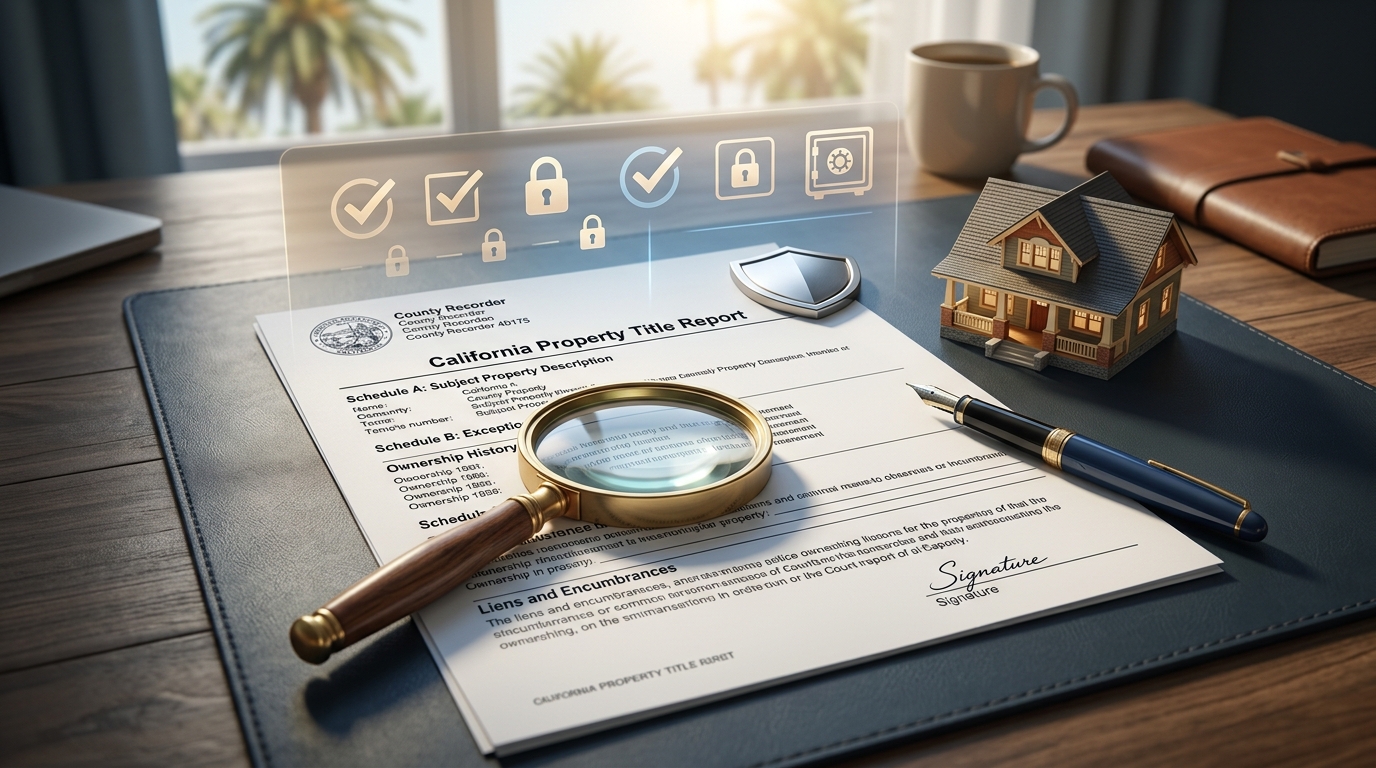
A preliminary title report is a document prepared by a title company after searching public records related to a property. It shows the current legal owner, any outstanding liens, easements, restrictions, HOA rules, and any other claims that could affect the transfer of ownership. Think of it as a complete legal history of everything attached to your property right now.
According to Schorr Law’s guide on preliminary title reports in California, the report provides a snapshot of the property’s title history, including current ownership, outstanding liens, easements, and encumbrances that could affect the property’s title. This is important because the buyer usually takes title subject to the items listed in the report, meaning they do not get insurance against claims that appear on it unless those items are resolved first.
The Difference Between a Title Report and Title Insurance
A lot of sellers confuse these two. The preliminary title report is the document that shows what is currently on the record. It is not an insurance policy. Title insurance is a separate product that is issued after the report is reviewed and any issues are cleared. The title report is the roadmap. Title insurance is the protection you get once that roadmap has been reviewed and the path is clear.
You cannot get title insurance without first going through the preliminary report process. This is why requesting it immediately matters so much. The earlier you know what is on the report, the more time you have to resolve anything that needs to be fixed before the closing deadline.
What the Title Report Can Reveal
Liens That You May Not Know About
This is where a lot of sellers get surprised. A lien is a legal claim against a property for an unpaid debt. The most common types are mortgage liens, property tax liens, HOA liens, judgment liens from lawsuits, and mechanic’s liens from unpaid contractors. All of these show up in the title report.
The surprising part is that some sellers do not know all of the liens on their property. A contractor who was never paid years ago may have filed a mechanic’s lien and you simply forgot about it. A judgment from an old lawsuit may have attached to your property without you realizing it. The title report brings all of this to the surface so it can be addressed before it derails the closing.
According to Consumer’s Title Company’s guide on preliminary title reports, common liens and encumbrances found in a California title search include mortgages, property tax liens, HOA liens, judgment liens, and mechanic’s liens from unpaid contractors. All of these must be resolved before the title can transfer cleanly to the buyer.
Easements and Restrictions That Affect the Property
The title report also shows easements. An easement gives someone else the right to use part of your property for a specific purpose. A utility company may have an easement to access a power line that runs through your backyard. A neighboring property may have a shared driveway easement across your land. These are legal rights that survive the sale and transfer to the new owner.
The report also shows CC and Rs, which are rules set by homeowner associations or prior developers that restrict what can be done with the property. These could limit what the buyer can build, how the property can be used, and even what colors they can paint the exterior. Buyers need to know about these before they close, and sellers need to disclose them. Our post on the paperwork involved in a cash sale covers how these types of disclosures fit into the closing process.
How Title Issues Can Delay or Kill a Deal
What Happens When a Title Issue Shows Up Late
I have seen deals fall apart in the final week of escrow because a title issue nobody knew about showed up at the last minute. A lien that had not been paid off. An ownership dispute that had never been resolved. A deed that was never properly recorded after a previous sale. Each of these can stop a closing cold.
When title issues show up late, there is not enough time to fix them before the closing date. That forces a postponement or, in some cases, a cancellation of the sale entirely. For sellers who are counting on closing on a specific date, whether to fund a new purchase, pay off a debt, or simply move on, that kind of delay is painful.
Requesting the title report immediately is what prevents this from happening. Problems that surface in the first week can usually be resolved before closing. The same problems discovered in the final days often cannot.
Common Title Problems and How They Get Resolved
Here is a look at the most common title issues that show up in California real estate transactions and how they typically get handled:
| Title Issue | What It Means | How It Gets Resolved |
|---|---|---|
| Unpaid mortgage lien | Existing loan balance still attached to property | Paid off at closing from sale proceeds |
| Property tax lien | Back taxes owed to the county or state | Paid at or before closing |
| Mechanic’s lien | Contractor filed a claim for unpaid work | Paid off or disputed before closing |
| HOA lien | Unpaid association dues attached to title | Paid at closing |
| Judgment lien | Court judgment attached to property by creditor | Paid off or negotiated before closing |
| Ownership dispute | Multiple parties claim ownership rights | Resolved through legal process or quit claim deed |
| Unreleased prior mortgage | Old paid-off loan still shows on title | Lender issues a release document |
Why This Protects Sellers, Not Just Buyers
The Title Report Is a Protection Tool for Sellers
A lot of sellers think the title report is something the buyer needs. And yes, the buyer needs it. But the seller benefits just as much. When you share a clean title report with your disclosure packet, you are showing the buyer you have nothing to hide. That builds trust and often speeds up the process.
More importantly, the title report protects you legally. If there is a lien or restriction on the property that you were not aware of, discovering it before the sale means you cannot be accused of failing to disclose it. The report does your due diligence for you. According to Homeward’s guide on preliminary title reports, a title report will also help protect sellers by revealing if there is an easement or restriction that could be a deal-breaker, ensuring the buyer is properly informed before proceeding.
What Sellers Should Know Before Opening Escrow
Before you open escrow on any California property sale, here are the things worth understanding about the title process so you are not caught off guard:
- The title report is typically ordered and paid for as part of the escrow process, usually within a few days of escrow opening
- Sellers do not need to do anything to request the report, the escrow or title company handles this automatically
- You should review the report when it comes in and flag anything that looks unfamiliar, even if you think it is already resolved
- Any liens that appear on the report must be paid off or released before the title can transfer, even ones you thought were closed years ago
- Easements that appear on the report are typically permanent and will transfer to the new owner, so buyers need to accept them or the deal does not move forward
- If there is an ownership dispute or a cloud on the title, the title company may require it to be resolved before they will issue title insurance
- In California, all residential transactions are required to go through a licensed escrow company, which manages the title process on your behalf
If you are selling a property where you owe more than it is worth, a title report can also surface issues that affect how a short sale or payoff gets handled. Our post on whether you can sell a house when you owe more than it is worth covers what happens to liens and payoffs when you are in that situation.
How We Handle the Title Process at Buy Your Properties
Why We Move Fast on This Step
When we make an offer on a property and both parties agree on terms, the title report is one of the first things we move on. This is not about being suspicious of the seller. It is about protecting the deal. We have been in situations where a title issue surfaced late and we had to scramble to get it resolved in time. Now we build the title report into the very beginning of our process so there are no surprises at the finish line.
We work with licensed California escrow and title companies on every transaction. They are neutral third parties who manage the funds, confirm the title is clear, and only release money to the seller once everything is verified and in order. That is the standard California requires, and it is the standard we hold ourselves to on every deal.
What Happens If a Title Issue Shows Up
If the title report comes back with a lien, an unresolved claim, or any other issue, we do not walk away. We work through it. Most title problems can be resolved if there is enough time and the right people involved. Our team communicates with the title company, the seller, and any relevant parties to get the issue cleared and keep the closing on track.
This is one of the advantages of working with a cash buyer who has done this many times before. We know what normal looks like, we know what can be fixed, and we know when something is a real problem versus something that just needs a little paperwork to resolve. If you want to understand what the full process looks like when you sell your property directly, our cash home buyers Los Angeles page walks through how the transaction works from offer to close.
And if you have a specific situation you want to talk through, our team is always available. Reach out through our contact page and we can take a look at your property and walk you through what to expect.
Conclusion
Requesting a title report immediately is not a formality. It is one of the most protective steps in any real estate transaction. For sellers, it surfaces issues you may not know about, gives you time to fix them, and ensures the buyer is fully informed about the property’s legal status. For buyers, it confirms they are getting what they paid for. When we move on the title report right away, we are doing what every serious buyer and seller should do: getting the full picture early so there are no surprises when it matters most.
Frequently Asked Questions
What is a preliminary title report in California?
A preliminary title report is a document prepared by a title company that shows the current ownership of a property, any outstanding liens, easements, restrictions, and other claims that could affect the transfer of ownership. It is produced after a search of public records and is a standard part of the escrow process in California.
Who pays for the title report in a California sale?
In most California transactions, the seller pays for the owner’s title insurance policy, which includes the preliminary title report. However, this is negotiable and the purchase agreement will specify who covers which costs. In a cash sale with a company like Buy Your Properties, we typically cover the title and escrow costs as part of our process.
What happens if a lien shows up on the title report?
Most liens are resolved at closing using the proceeds from the sale. The escrow company calculates the payoff amount and sends payment directly to the lienholder on your behalf. If the lien is disputed or the amount is unclear, it may need to be resolved before closing can proceed. Getting the title report early gives everyone enough time to handle this properly.
Can a sale close if there are easements on the title?
Yes, in most cases. Easements are typically disclosed and the buyer accepts them as part of the purchase. Standard utility easements, shared driveway easements, and similar rights usually do not prevent a sale from closing. The buyer needs to be made aware of them and agree to take title subject to those easements, which is why the title report exists in the first place.
How long does it take to get a preliminary title report in California?
Typically, a title company can produce a preliminary title report within a few days of escrow opening, sometimes within 24 to 48 hours. The timeline can vary depending on the complexity of the property’s history and how quickly public records can be accessed. This is another reason to request it immediately rather than waiting.