
You found a beat-up house at a great price. You know you can fix it and sell it for a profit. But you don’t have the cash — and the bank is too slow. This is where a hard money loan can save the day. It’s one of the fastest ways to fund a house flip, and once you understand how it works, it actually makes a lot of sense.
I’ve talked to many investors who were scared of hard money loans at first. They thought the high interest rates were a dealbreaker. But when they saw how fast they could close and start making money, the math changed completely.
What Is a Hard Money Loan?
A hard money loan is a short-term loan from a private lender. It’s not from a bank. Instead of looking at your credit score, the lender looks at the value of the property you want to buy.
These loans are called “hard” because they’re backed by a hard asset — the real estate itself. This is great news if your credit is less than perfect but the deal looks solid.
According to the Consumer Financial Protection Bureau (CFPB), hard money loans are typically short-term and asset-based, making them fundamentally different from traditional mortgage products.
Why House Flippers Love Hard Money Loans
Speed is the biggest reason. A regular bank loan can take 30 to 60 days to close. A hard money lender can often close in 5 to 10 business days. In a competitive market, that speed wins deals.
Think about it — if two buyers make the same offer but one can close in 7 days and the other needs 45 days, who does the seller pick? The fast one, almost every time.
Here are the top reasons flippers use hard money loans:
- Fast approval — often within 24 to 48 hours
- Less focus on credit score — the property value matters more
- Short-term structure — usually 6 to 18 months, perfect for flips
- Interest-only payments — keeps monthly costs low while renovating
- Up to 85% of rehab costs covered — depending on the lender
- Flexible terms — private lenders can work around your situation
How Hard Money Loan Terms Work
Let’s break down the basic numbers so you’re not surprised. Hard money loans are more expensive than traditional loans — but that’s the trade-off for speed and flexibility.
Here’s a simple comparison table to help you understand what to expect:
| Feature | Hard Money Loan | Traditional Bank Loan |
|---|---|---|
| Interest Rate | 9.5% – 15% | 6% – 8% |
| Loan Term | 6 – 18 months | 15 – 30 years |
| Approval Time | 1 – 5 business days | 30 – 60 days |
| Based On | Property value (ARV) | Credit score & income |
| Down Payment | 10% – 30% | 3% – 20% |
| Best For | Fix-and-flip investors | Primary home buyers |
The key number lenders use is the After Repair Value (ARV) — what the home will be worth after your renovations. Most lenders will loan you up to 65% to 75% of the ARV.
Step-by-Step: How to Use a Hard Money Loan to Flip a House
I want to walk you through this simply so it’s easy to picture. The process isn’t as complicated as it sounds.
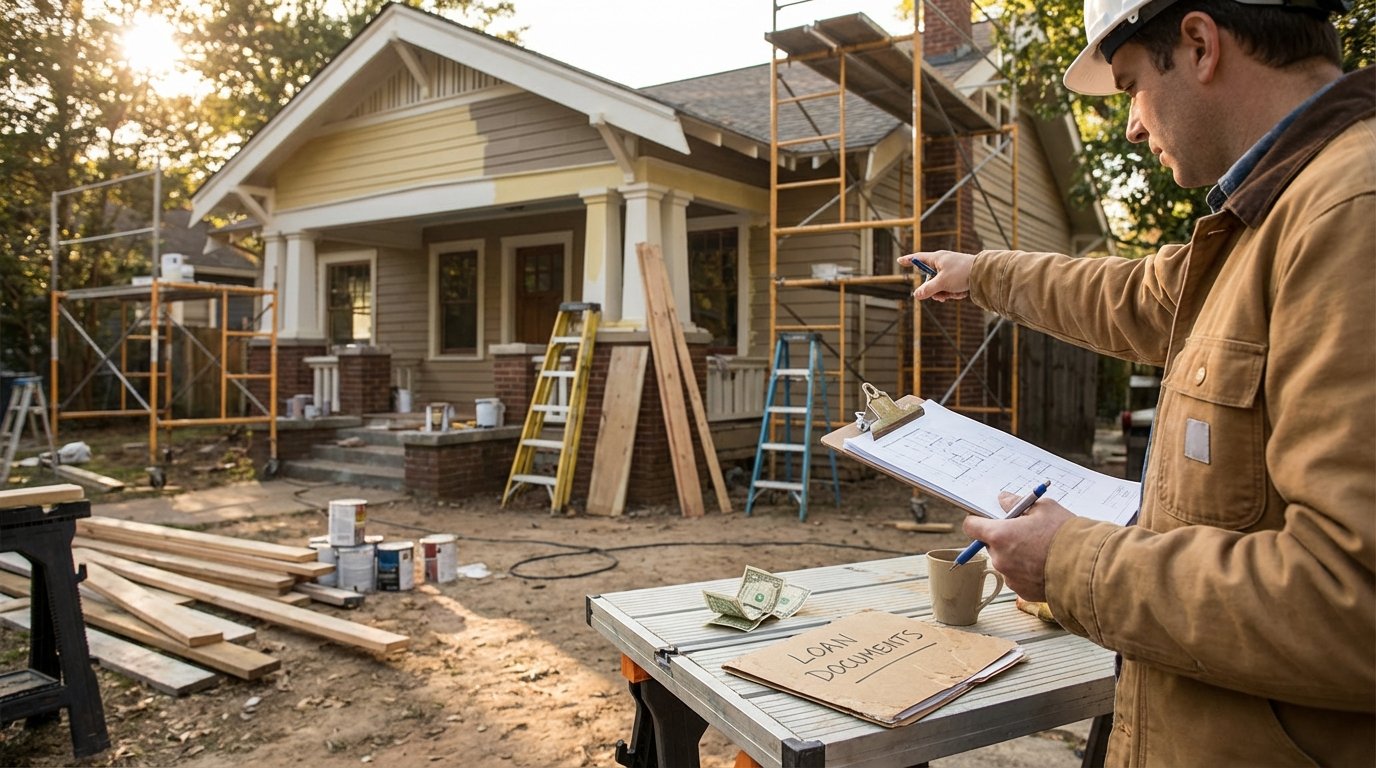
First, you find a distressed property below market value. Let’s say you find a house for $150,000 that needs $50,000 in work. After repairs, comparable homes sell for $275,000. That $275,000 is your ARV.
You apply to a hard money lender. They review the property, not just you. They approve the loan based on the deal looking profitable. You close fast — sometimes in a week — and begin renovations right away.
Once the work is done and the house sells, you pay off the loan plus interest and keep the profit. According to data from ATTOM Data Solutions, the median gross profit from house flipping in the U.S. was $65,300 in Q2 2025, showing that flipping can still be very profitable with the right deal and financing.
Risks to Watch Out For
Hard money loans are powerful tools, but they can hurt you if things go wrong. The high interest rate adds up fast. If your flip takes longer than expected — due to contractor delays, permit issues, or a slow market — those extra months eat into your profit.
Honest advice from my experience talking to flippers: always add a 30% buffer to your renovation budget and timeline. Things almost always take longer than planned. That gives you a cushion so you’re not panicking when month 7 rolls around and the house still isn’t sold.
Also, never go into a hard money deal without a clear exit strategy. Either you sell the property, or you refinance into a long-term loan. Have both options ready before you sign anything.
For a deeper understanding of smart property investment strategies, read our guide on factors that drive property value appreciation so you know what makes your flipped home more valuable. You should also check out our post on best states to buy investment property in 2026 to find the right markets for your flip.
If you’re thinking about expanding your investment strategy beyond flipping, also explore our page on how to find profitable Airbnb investment properties — sometimes renting beats selling.
According to the National Association of Realtors, approximately 18% of investment property buyers used some form of private or partnership financing in 2024 — and that number keeps growing as more investors discover the power of flexible, fast capital.
Is a Hard Money Loan Right for You?
If you have a strong deal, a clear renovation plan, and a solid exit strategy, a hard money loan can be an excellent tool. It’s not for everyone. If you’re buying a home to live in, don’t use one. But for house flipping, the speed and flexibility are hard to beat.
Think about your timeline. If you can flip the house in 6 to 9 months, the higher interest rate won’t kill your profit. The key is to move fast and stay on budget.
Have questions about funding your next flip? Our team is here to help — reach out to us on our Contact Us page and we’ll walk you through your options.
Conclusion
Hard money loans are not scary once you understand them. They’re simply a fast, flexible funding tool built for real estate investors. The higher cost is the price you pay for speed — and in house flipping, speed is everything.
Find a good deal, work with a reputable lender, plan your renovation carefully, and always know your exit. Do that, and a hard money loan can be the key that unlocks your first — or next — successful house flip.
Frequently Asked Questions
What credit score do I need for a hard money loan?
Most hard money lenders don’t have a strict minimum credit score. They care more about the property’s value and your renovation plan. That said, a score of 600 or above helps you get better terms.
How much can I borrow with a hard money loan for flipping?
Most lenders offer between 65% and 75% of the After Repair Value (ARV). Some lenders can go up to 90% of the purchase price and cover up to 85% or more of rehab costs, depending on your experience and the deal.
How long does it take to get approved for a hard money loan?
Approval can happen in as little as 24 hours. Full closing usually takes 5 to 10 business days, which is much faster than a traditional bank loan.
What happens if my flip takes longer than the loan term?
Talk to your lender before the term ends. Many hard money lenders offer extensions, though you may pay extra fees. Always build extra time into your plan from the start to avoid this situation.
Can a first-time flipper get a hard money loan?
Yes, many lenders work with first-time flippers. They may require a larger down payment or charge a slightly higher rate, but it’s very possible. Having a solid business plan and a clearly profitable deal helps a lot.