
A big number on paper does not always mean a better deal in real life. I know that sounds strange, but hear me out. A seller once told me she turned down a cash offer and went with a higher contingent offer instead. Three months later, the deal fell apart and she had to start all over again. By then, the cash buyer was gone.
That story sticks with me because it is more common than most people think. Today I want to walk you through exactly why a fair cash offer often puts more money in your pocket, with a lot less stress, than a high contingent offer that sounds amazing but comes with a bunch of conditions attached.
What Is a Contingent Offer and Why Is It Risky?
A contingent offer is when a buyer makes an offer on your home but says the deal can only go through if certain things happen first. The most common ones are getting approved for a mortgage loan, the home passing an appraisal, and sometimes the buyer selling their own home first.
Each one of those conditions is a door that can close on you at any time. If the buyer does not get approved for the loan, the deal is gone. If the appraiser says your home is worth less than the agreed price, you either lower your price or lose the buyer. And if the buyer has to sell their own home first, you could be waiting for months with no guarantee.
According to the National Association of Realtors, appraisal issues are one of the most common reasons home sales fall through. And financing contingencies can delay or cancel a sale even after everything feels settled.
What Makes a Cash Offer Different
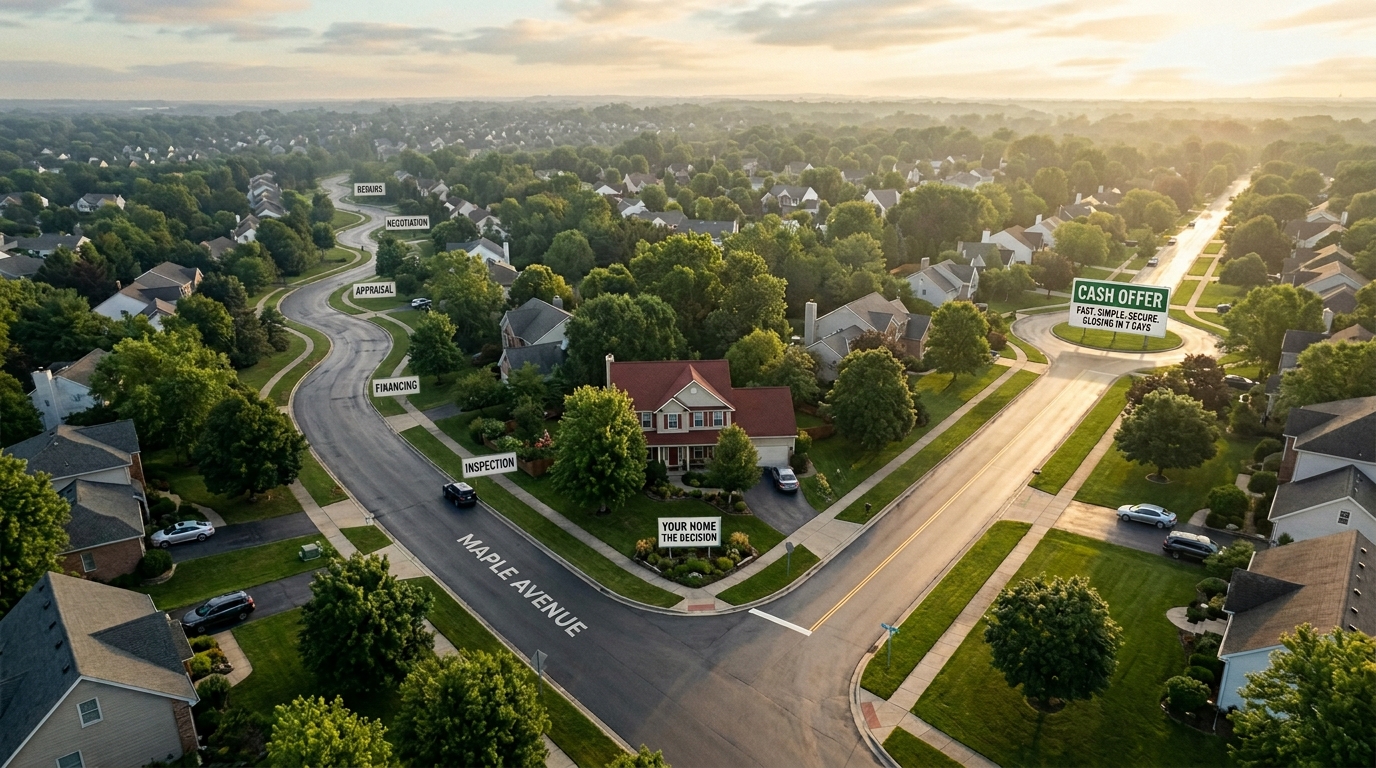
A cash offer removes all of that uncertainty. The buyer does not need a bank. There is no lender telling them the home is worth less than they offered. There is no loan officer that has to sign off before the deal can move forward.
When a buyer pays in cash, the sale can close in as little as 7 to 14 days instead of the typical 30 to 45 days with a financed buyer. That speed matters more than most sellers realize when they are sitting on a home and counting the months.
According to Bankrate, just under one-third of U.S. home purchases were made in cash in 2024. That tells you cash buyers are a real part of the market, not some rare thing.
The Hidden Costs of a High Contingent Offer
Here is where sellers often trip themselves up. They see a higher number and assume that means more money. But they forget to count all the costs that come along for the ride when a deal drags on or falls apart.
Carrying Costs That Quietly Drain Your Profit
Every month your home sits waiting for a contingent deal to close, you are paying for it. Mortgage payments, property taxes, utilities, homeowner’s insurance, and any HOA fees all keep adding up. If a financed deal takes three to four months from offer to closing, those carrying costs can easily eat up several thousand dollars of your profit.
Here are the costs that many sellers forget to count when comparing offers.
- Monthly mortgage payment while waiting on the buyer to close
- Utility bills for a home you may no longer be living in
- Property taxes prorated to the closing date
- Homeowner’s insurance that keeps running
- Any repairs the buyer demands after the inspection
- Price reductions if the buyer’s appraisal comes in low
- The cost of relisting and remarking if the deal falls through
None of those costs show up in the offer number. They only show up when the deal is done and you are counting what you actually kept.
The Real Risk When a Contingent Deal Falls Apart
Honestly, the financial loss is not even the worst part. The real pain is starting over. You took your home off the market, you turned down other buyers, you waited and planned around a specific closing date, and then the deal is gone.
Now you have to relist. And buyers see that your home sat on the market and went through a deal that fell apart. That can make them nervous, and it often pushes the final sale price lower than it would have been if you had just accepted the cash offer to begin with.
For more on how the selling process works and what to expect at closing, our guide on the escrow process step by step walks you through everything in plain language.
Fair Cash Offer vs High Contingent Offer: A Real Comparison
Let me show you what the math actually looks like. Suppose your home is worth $380,000. You get two offers. One is a cash offer for $355,000. The other is a contingent offer for $385,000 with a mortgage and appraisal condition attached.
| Factor | Cash Offer at $355,000 | Contingent Offer at $385,000 |
|---|---|---|
| Offer Price | $355,000 | $385,000 |
| Time to Close | 7 to 14 days | 45 to 90 days |
| Carrying Costs | Near zero | $3,000 to $6,000 |
| Repair Demands | Usually none | Often $2,000 to $8,000 |
| Appraisal Risk | None | Can lower price by thousands |
| Deal Fall-Through Risk | Very low | 15% to 20% chance |
| Estimated Money You Keep | Around $343,000 to $348,000 | Around $340,000 to $358,000 (if it closes) |
See how close those numbers get once you add in the real costs? And that bottom row for the contingent offer assumes the deal actually goes through. If it does not, you spent months waiting and kept nothing.
Why Certainty Has Real Dollar Value
One thing I do not think sellers appreciate enough is how much the certainty of a cash deal is actually worth. When you accept a cash offer, you can plan your move. You know your closing date. You know what you are walking away with. You can buy your next home with confidence.
With a contingent offer, you are living in a state of maybe. And that uncertainty has a cost even when the deal eventually does close. It costs you sleep, planning time, and sometimes opportunities you had to pass on while waiting.
If you are thinking about selling and want to understand all your options, check out our post on how to use a cash sale to fund your next 1031 exchange for some smart ways investors make the most of a clean cash deal.
When a Contingent Offer Might Still Make Sense
To be fair, there are times when a contingent offer is worth waiting on. If your home is in great condition, in a competitive neighborhood, and buyers are actively competing for it, a higher financed offer can legitimately beat out a cash offer once all the numbers settle.
If you have plenty of time, no carrying costs, and the buyer is very well-qualified with a large down payment and a strong pre-approval letter, the risk goes down. But even then, you are still betting on conditions going right. And conditions do not always go right.
We work with sellers every day and can help you figure out which offer actually puts the most money in your pocket. If you want to talk through your specific situation, reach out through our Contact Us page or visit our residential property page to learn how we buy homes directly.
Conclusion
A higher number on an offer sheet does not always mean more money in your pocket. A fair cash offer closes fast, skips the contingencies, and eliminates the risk that the deal falls apart right when you need it to close. Once you count the carrying costs, repair demands, and the real chance of a contingent deal falling through, the gap between the two offers often gets much smaller or even disappears.
When you are selling your home, certainty has real value. A cash buyer gives you that. A contingent buyer, no matter how high their offer looks on paper, makes you wait and hope. Those are two very different things.
Frequently Asked Questions
What is a contingent offer in real estate?
A contingent offer is when a buyer makes an offer to buy your home but the deal can only go through if certain conditions are met first. Common conditions include getting approved for a mortgage, passing an appraisal, and sometimes selling the buyer’s current home.
How much can carrying costs hurt my profit on a contingent sale?
Carrying costs like mortgage payments, utilities, and insurance can add up to several thousand dollars for every month a sale drags on. If a financed deal takes 60 to 90 days to close, those costs can reduce your net profit by $3,000 to $8,000 or more depending on your situation.
Do cash buyers always offer less than market value?
Not always. A fair cash buyer should offer a price that reflects your home’s condition and the local market. While some cash buyers do offer below market value, the savings on commissions, repairs, and carrying costs often close the gap significantly compared to a high contingent offer.
How often do contingent home sales fall through?
According to industry data, roughly 15% to 20% of real estate transactions fall through before closing. Financing issues and appraisal problems are among the most common reasons. A cash sale removes both of those risks entirely.
What is the fastest a cash sale can close?
A cash sale can typically close in 7 to 14 days once both parties agree on the terms. A financed sale usually takes 30 to 45 days or longer depending on the lender’s process and any contingency timelines that have to be worked through first.