
A lot of LA homeowners are stuck. They have an older property that probably needs earthquake retrofitting, and they are not sure if it is worth spending the money before selling, or if they should just sell the home the way it is. It is a real dilemma, and the honest answer is that it depends on your specific situation. Let me walk you through the real numbers and what actually makes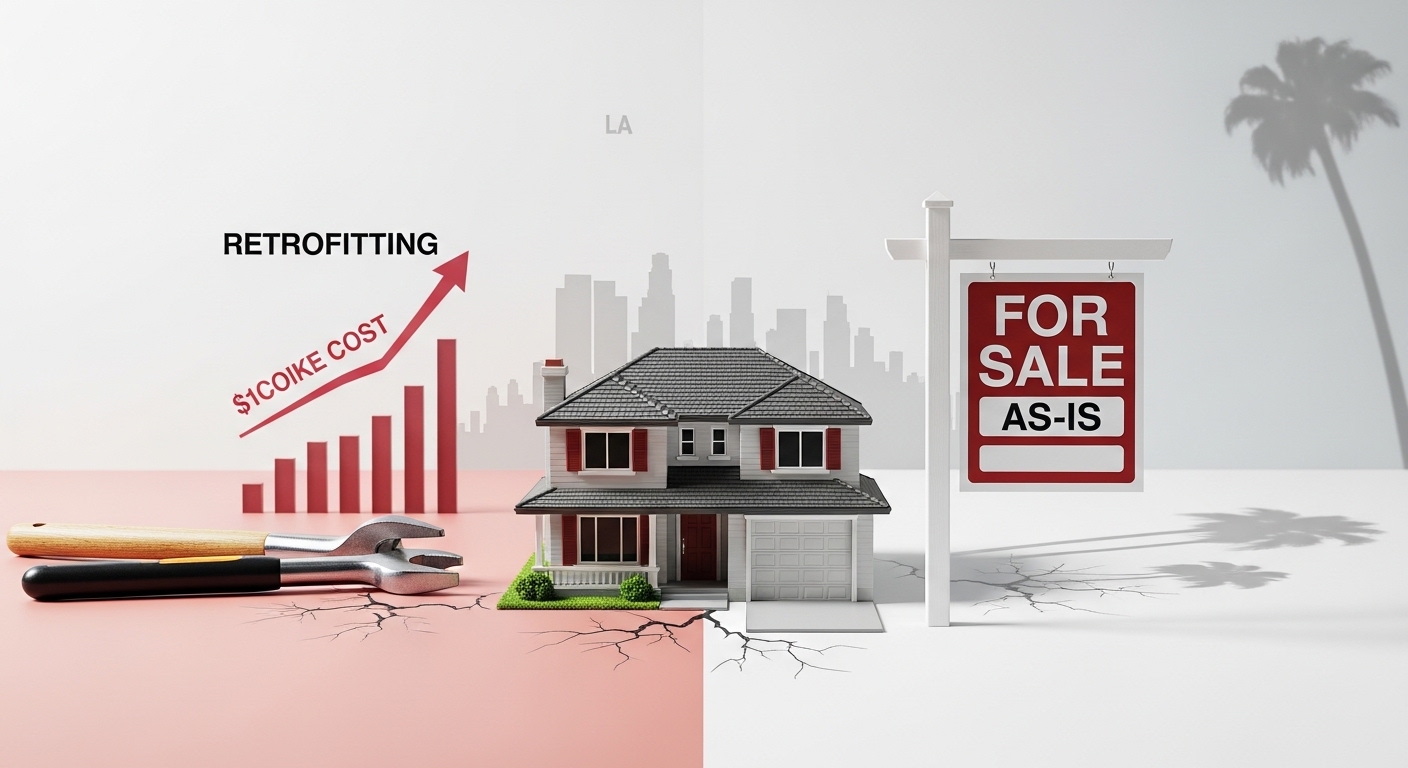 sense for most sellers.
Understanding Earthquake Retrofitting Requirements in Los Angeles
Los Angeles has been pushing hard to get older buildings up to seismic safety standards. In 2015, the city passed Ordinance 183893, which created a mandatory earthquake retrofit program for certain types of buildings. According to the Los Angeles Department of Building and Safety, about 13,500 buildings fell within the scope of this law.
These are mostly wood-frame buildings with two or more stories, built before 1978, that have open ground floors like tuck-under parking. If your building matches that description, you may have already received a compliance order, or you might receive one soon if you have not yet.
What Types of Properties Need Retrofitting in LA
Not every older home in LA is required to retrofit. Single-family homes are generally not covered by the mandatory ordinance, but they are strongly encouraged to retrofit voluntarily if they were built before 1980 and are not bolted to their foundation.
The mandatory program mainly targets multi-unit residential buildings with soft-story conditions. Here is a breakdown of common property types and whether retrofitting is typically required.
| Property Type | Retrofit Required? | Typical Cost Range | Notes |
|---|---|---|---|
| Soft-story apartment building (pre-1978) | Yes, mandatory | $60,000 to $200,000+ | Covered under LA Ordinance 183893 |
| Single-family home (pre-1980) | No, voluntary | $3,000 to $15,000 | Foundation bolting and cripple wall bracing |
| Non-ductile concrete building (pre-1980) | Yes, mandatory | Varies widely | Higher engineering costs involved |
| Post-1980 wood-frame construction | Generally no | N/A | Built under improved seismic codes |
How Much Does Earthquake Retrofitting Actually Cost in LA
This is where a lot of sellers get surprised. The costs vary a lot depending on what type of building you have and how much work is needed.
For a single-family home, foundation bolting typically runs $3,000 to $8,000. Adding cripple wall bracing can bring that up to $5,000 to $12,000. A full seismic upgrade for an older home can cost anywhere from $15,000 to $40,000 depending on the scope of work.
For multi-family soft-story buildings, the numbers are much higher. The Los Angeles Housing Department notes that soft-story retrofits can run into the tens or even hundreds of thousands of dollars depending on building size. There is some financial help available. The California Earthquake Brace and Bolt program offers rebates of up to $3,000 for qualifying single-family homes. The California Earthquake Authority has also offered grant programs of up to $13,000 for eligible soft-story homeowners through its Earthquake Soft-Story program.
The Real Cost of Selling As-Is Without Retrofitting
Selling as-is sounds simple, but it comes with its own costs that sellers sometimes underestimate. I want to be honest about that.
How Retrofitting Status Affects Your Home’s Sale Price
Buyers and their agents will always ask about retrofitting status for older LA properties. If your building was subject to a mandatory retrofit order and you have not complied, that can seriously hurt your sale. Non-compliance gets flagged on property records through LADBS, and buildings in violation can face penalties and even vacate orders.
For single-family homes, the impact is softer but still real. A buyer who sees that a pre-1980 home has not been bolted to its foundation will either walk away or ask for a price reduction. In my experience, buyers typically ask for more in reductions than the actual repair would have cost, so a $10,000 retrofit could cost you $15,000 to $20,000 in negotiated reductions if you do not address it.
When Selling As-Is Makes More Sense Than Retrofitting
There are real situations where skipping the retrofit and selling as-is is the smarter move. If your property is a large multi-unit building with a retrofit cost of $150,000 or more, spending that money right before selling rarely makes financial sense. The increase in sale price rarely equals the full cost of the work.
In those cases, selling to a cash buyer or an investor who will handle the retrofit themselves is often the better path. Investors know how to price these properties and are often less scared of the compliance issue than a typical buyer might be.
Cash buyers take a similar approach to other types of property issues in LA. If you are dealing with other kinds of property problems, see how sellers handle situations like homes with red-tagged or unmaintained pools in Los Angeles. The general approach is often very similar.
Comparing the Financial Numbers Side by Side
Let me lay this out simply. Say you have a single-family home worth about $800,000 in today’s market, and it needs about $12,000 in earthquake retrofitting work. Here is how the three main paths play out.
- If you do the retrofit before selling, you may list at full value and reduce buyer negotiation significantly
- If you sell as-is without the retrofit, buyers will typically negotiate a $15,000 to $25,000 discount on the asking price
- If you sell to a cash buyer, you accept a lower overall price but save 5 to 6 percent on agent commissions plus repair and inspection costs
- Every month a home sits unsold in LA can cost $5,000 to $15,000 in mortgage, taxes, and maintenance
- The gap between retrofitting and selling as-is is often smaller than most sellers expect when all costs are factored in
The real question is how much time you have, what your carrying costs are, and whether you want certainty or maximum price. Those three factors almost always point you toward one of these paths more clearly than the others.
What Sellers With Older LA Homes Usually Do
From what I have seen in the LA market, sellers with single-family pre-1980 homes often do the basic foundation bolting before listing. It is relatively affordable, it shows buyers the home has been cared for, and it can help with insurance and financing approval.
Sellers with multi-unit soft-story buildings under a mandatory order tend to take one of two paths. Either they get the retrofit done and then sell at a higher price, or they disclose the non-compliance and sell at a discount to someone who will handle it. Both paths can work depending on your goals and timeline.
If you are also dealing with earthquake damage on your property, it may be helpful to read about selling a red-tagged house with earthquake damage in California to understand your full range of options.
If you want to talk through what makes sense for your property specifically, reach out to our team for a no-pressure conversation about your situation.
How to Prepare Your Property for Sale Regardless of Your Choice
Whether you choose to retrofit or sell as-is, there are steps that make the sale go more smoothly in either case.
- Get a licensed structural engineer or contractor to assess your retrofitting needs in writing
- Check with LADBS to see if your property has any open compliance orders on record
- Gather documentation of any retrofit work already done on the property
- Get multiple contractor bids if you plan to retrofit before listing, so you are not overcharged
- Talk to a local real estate agent who knows how to price properties with seismic compliance issues
Having all of this documented before the sale starts gives buyers confidence and reduces the chances of deals falling apart during escrow over unresolved questions about the property’s condition.
For more guidance on selling your LA home in any condition, visit our Los Angeles cash home buyers page to learn how we work with sellers every day.
Conclusion
There is no single right answer between retrofitting and selling as-is in LA. It comes down to the type of property you have, the cost of the work, how long you are willing to wait, and what kind of buyer you are targeting. For smaller single-family homes, doing the basics usually pays off. For larger multi-unit buildings with major compliance costs, selling as-is to a cash buyer often makes more financial sense.
The most important thing is to get real numbers on paper before you make a decision. Talk to a licensed contractor for a retrofit estimate, and talk to a local real estate professional about what similar properties are selling for with and without the work done. That gives you the information you need to make the right call.
Frequently Asked Questions
Is earthquake retrofitting required before selling a home in Los Angeles?
It depends on the type of property. Single-family homes are generally not required to retrofit by law before selling. However, multi-unit soft-story buildings that received a mandatory compliance order under LA Ordinance 183893 must comply. Non-compliance is flagged on property records and can affect your sale.
How much does a soft-story earthquake retrofit cost in LA?
Soft-story retrofits for multi-family buildings in LA typically cost between $60,000 and $200,000 or more depending on the building size and required engineering. Single-family foundation bolting and cripple wall bracing usually runs between $3,000 and $15,000.
Can I sell my LA home as-is if it has not been earthquake retrofitted?
Yes, you can. Buyers will factor the cost of the work into their offer and you may need to accept a lower price. Selling to a cash buyer or investor is often the fastest and least complicated path for non-retrofitted properties.
Do I need to disclose earthquake retrofit non-compliance to buyers in California?
Yes. If your property has received a mandatory compliance order and you have not completed the work, you are required to disclose that to buyers as part of California’s seller disclosure obligations. Hiding it can lead to legal liability after the sale.
Are there any government programs to help cover the cost of earthquake retrofitting in LA?
Yes. The California Earthquake Brace and Bolt program offers rebates up to $3,000 for qualifying single-family homes. The Earthquake Soft-Story program has offered grants up to $13,000 for eligible homeowners in cities including Los Angeles. These programs have limited availability and not all properties qualify.