
You have probably seen the ads. Enter your address. Answer a few questions. Get a cash offer in 24 hours. iBuyer companies like Opendoor and Offerpad built their entire model on the promise of instant, algorithm-driven offers. On the surface it sounds appealing. But when you dig into what that algorithm actually knows about your home and your neighborhood, the picture gets a lot less comfortable. Here is how our offer process compares to what an iBuyer algorithm produces and why local knowledge consistently gives sellers a better result.
What an iBuyer Algorithm Actually Does
How the Technology Builds Your Offer
When you submit your address to an iBuyer, their system runs what is called an Automated Valuation Model, or AVM. It pulls public records data, recent comparable sales from the county, broad market trends for the zip code, and whatever information you provide about the condition of the property. Within hours, it produces a preliminary offer.
That preliminary number sounds official and final. It is not. According to a data analysis by Clever Real Estate’s iBuyer research team, which reviewed over 530 properties bought and sold by Opendoor and Offerpad between May 2023 and June 2025, iBuyers paid sellers an average of 9 to 14 percent less than the eventual resale price of the home. On a $500,000 property, that gap represents between $45,000 and $70,000 in money the seller left on the table. And that is before iBuyer service fees of 5 to 8 percent are added on top.
What the Algorithm Cannot See About Your Home
An algorithm is only as good as the data it has access to. And there is a long list of things that affect your home’s value that simply do not show up in public records or zip-code-level data.
A lot of the things that make your street or block different from the street two blocks over are invisible to a national data model. Which side of the freeway you are on. Whether the block has been improving or declining over the past two years. How a recent commercial development nearby has changed what buyers are willing to pay. The specific school boundary your address falls inside. The micro-market dynamics of one neighborhood versus another that look the same on paper but command very different prices from buyers who actually live there.
Zillow learned this the hard way. The company shut down its entire iBuying division in November 2021 after its algorithm systematically overpaid for properties at scale. CEO Richard Barton acknowledged publicly that Zillow was unintentionally purchasing homes at prices above their actual value because the model could not account for real-world market nuance. The losses ran into hundreds of millions of dollars before they pulled the plug.
How We Build Our Offer Differently
We Start With the Street, Not the Zip Code
When we make an offer on a property in the Los Angeles area, we are not running a national algorithm against your address. We are pulling comparable sales from the specific streets and blocks that most closely match yours. We know which neighborhoods in the San Fernando Valley are seeing buyer demand right now versus which ones have cooled. We know which pockets of South LA are getting investor interest and which are sitting longer. We know which parts of the Westside have micro-market dynamics that algorithms cannot capture.
That hyperlocal knowledge changes the number we put in front of you. It means our offer reflects what your home is actually worth to an informed buyer in today’s local market, not what a dataset from three months ago says homes in your zip code are going for.
We Walk the Property, Not Just the Photos
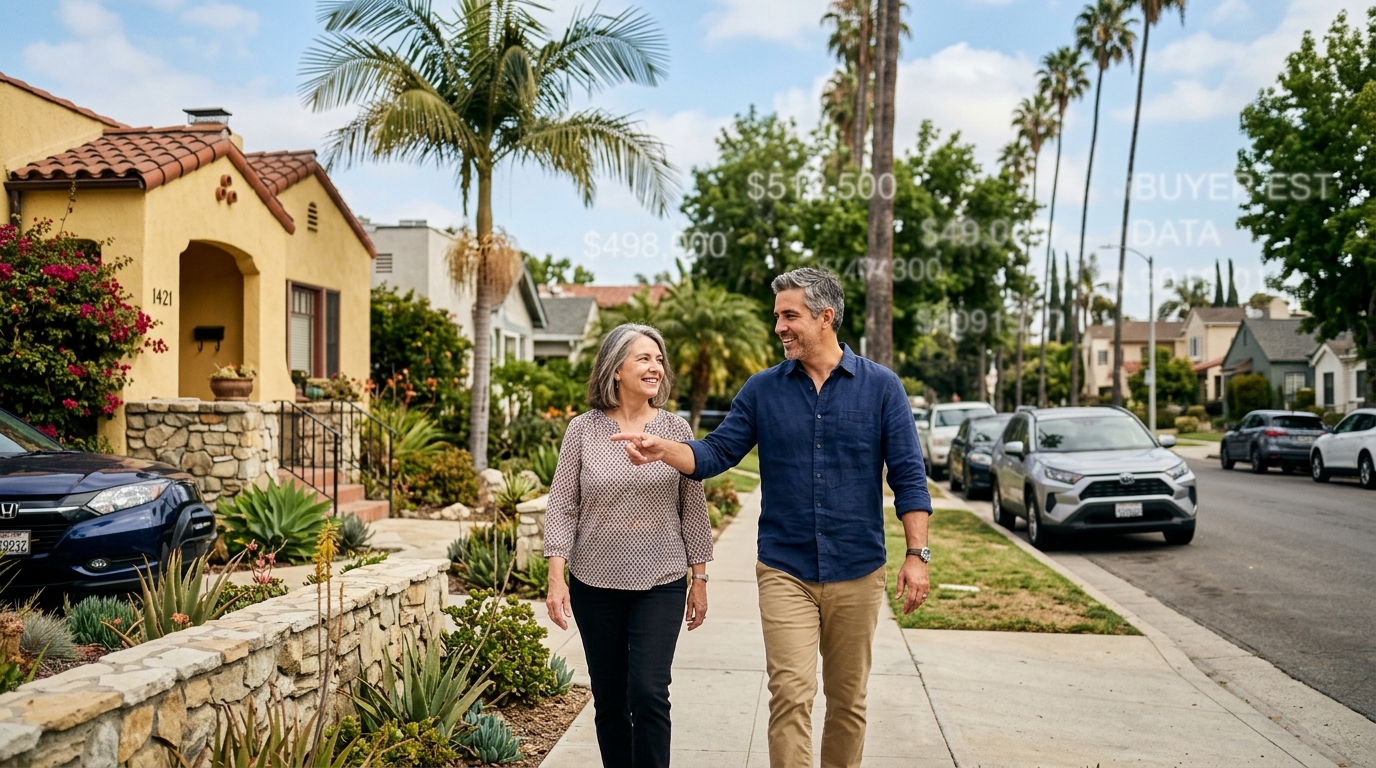
iBuyers often conduct a virtual walkthrough or a brief video call to assess condition. Their inspection is designed to check boxes, not to understand the property. After that virtual visit, many iBuyers revise their initial offer downward with repair deductions that sellers did not see coming. You were told your offer was one thing, and then it quietly becomes something lower after the inspection.
We walk the property in person. We look at it honestly. We ask the seller what they know and we factor condition into our number before we make the offer, not after. Our offer is based on what the property actually is, not a figure we inflate to get you interested and then reduce once you are committed. That transparency matters and it is one of the biggest differences sellers notice when they compare us to an iBuyer experience.
The Real Cost of Selling to an iBuyer
Fees That Eat Into What You Take Home
The iBuyer offer might look clean and simple, but the fees attached to it are significant. The standard service fee from Opendoor is 5 percent of the sale price. Offerpad has charged fees reported at up to 8 percent in recent conversations with their support team. On top of those fees, repair deductions are applied after the inspection. Closing costs are charged on top of that. By the time you add everything up, the net proceeds a seller walks away with after an iBuyer transaction can be substantially lower than the headline offer suggested.
When we buy your home, we cover the closing costs. We do not charge a service fee. The number in our offer is the number you receive when escrow closes. There is no list of deductions applied after a virtual inspection lowers your net.
A Side by Side Look at How the Two Compare
Here is a direct comparison of how a typical iBuyer process stacks up against how we work:
| Factor | iBuyer Algorithm | Buy Your Properties |
|---|---|---|
| Offer basis | National AVM and zip-code data | Hyperlocal comps and in-person walkthrough |
| Offer accuracy | Paid 9 to 14 percent below resale value on average | Based on true local market conditions |
| Service fee | 5 to 8 percent of sale price | None |
| Repair deductions after inspection | Very common, often lowers the initial offer | Condition factored in before offer is made |
| Closing costs | Charged to seller | We cover them |
| Coverage area | Select metros, strict eligibility criteria | Los Angeles and surrounding Southern California |
| Who you work with | Online platform and call center | Local team you can actually reach |
Why Local Knowledge Is Not Just a Tagline
The Los Angeles Market Does Not Behave Like a Spreadsheet
Los Angeles is not one housing market. It is dozens of distinct neighborhoods with their own price movements, buyer pools, and demand drivers. Compton and Culver City are 10 miles apart and perform nothing alike. Eagle Rock and Silver Lake share a border but attract different buyers. The San Fernando Valley has corridors where prices have jumped significantly and pockets where they have stayed flat for years. None of that nuance lives inside a national algorithm.
When we build an offer, we are drawing on active knowledge of what is actually moving in the specific part of Los Angeles where your property sits. That is not something we can automate. It comes from being in the market every day, talking to buyers, tracking what sells and what does not, and understanding why two properties one block apart can have meaningfully different values.
What Sellers Should Ask Before Accepting Any Offer
Whether you are comparing offers from us, from an iBuyer, or from anyone else, these are the questions worth asking before you accept:
- Is this the final offer or will it be revised downward after an inspection?
- What fees or deductions will be subtracted from this number before I receive my proceeds?
- Who pays closing costs and how much are they estimated to be?
- Does the buyer have local knowledge of my specific neighborhood or are they working from national data?
- Can the buyer explain how they arrived at this number and show me the comparable sales they used?
- Can the buyer provide verifiable proof of funds before I sign anything?
Our post on how to verify a we buy houses company proof of funds in California walks through how to check a buyer’s legitimacy before you commit to anything. And if you want to understand what red flags look like in any cash buyer offer, our post on red flags of scam cash buyers operating in Southern California covers the warning signs in detail.
When you are ready to see what a locally informed offer actually looks like for your property, our cash home buyers Los Angeles page explains how we work, and you can reach out to our team directly to start a conversation with no pressure or obligation.
Conclusion
An iBuyer algorithm can generate a number fast. But fast and accurate are not the same thing. The data shows that iBuyers consistently pay sellers less than what their homes are actually worth, then add fees and repair deductions that reduce the net even further. A locally grounded offer, built by someone who knows the specific neighborhood your property is in, starts from a more honest place. That is not just a preference. For most sellers, it translates directly into more money at the closing table.
Frequently Asked Questions
What is an iBuyer and how does their offer process work?
An iBuyer is a technology-driven company that uses an Automated Valuation Model to generate fast cash offers on homes. You enter your address and property details online, and the algorithm produces a preliminary offer usually within 24 to 48 hours. After that, an inspection is conducted and the offer is often revised downward based on repair deductions. The company then charges a service fee of 5 to 8 percent on top of any repair costs before you receive your net proceeds.
Are iBuyers available in Los Angeles?
Opendoor and Offerpad operate in parts of the Los Angeles metro area, but their eligibility criteria can be strict. They typically focus on owner-occupied homes in good condition that fall within specific price ranges. Properties with significant issues, non-standard configurations, or outside their target profile may not qualify at all.
Why did Zillow shut down its iBuying program?
Zillow closed its iBuying division in November 2021 after its pricing algorithm systematically overpaid for homes at scale, leading to massive losses. The company bought thousands of homes at prices above their market value because the algorithm could not accurately account for local market conditions. The failure became one of the most cited examples of the limits of automated real estate valuation.
How much less do iBuyers typically pay compared to market value?
Based on analysis of over 530 Opendoor and Offerpad transactions from May 2023 to June 2025, iBuyers paid an average of 9 to 14 percent below the eventual resale price of the homes they bought. Before service fees and repair deductions are added, that gap on a $500,000 home represents roughly $45,000 to $70,000 in potential lost proceeds for the seller.
Does Buy Your Properties charge a service fee like iBuyers do?
No. We do not charge a service fee, commission, or any equivalent deduction. We also cover closing costs on our end. The offer we make is the amount you receive when escrow closes. There are no fees subtracted after the fact and no surprise repair deductions after a walkthrough revises your number downward.