
Owning a small apartment building can be rewarding, but getting out of it can feel overwhelming if you have never done it before. The tenant situations, the existing leases, the maintenance backlog, and the question of whether buyers will even look at a property with deferred maintenance can all make the process feel more complicated than it needs to be. Selling directly to cash investors cuts through most of that complexity and gets you to the finish line faster than you probably expect.
What Makes Small Apartment Buildings Different From Single-Family Sales
A small apartment building is typically defined as a property with 2 to 20 units. These properties sit in a category between single-family homes and large commercial apartment complexes, which means they attract a different kind of buyer. They are too large for most owner-occupant buyers and often too small for institutional commercial investors. This creates a narrower buyer pool than most sellers realize when they first start thinking about selling.
According to the National Association of Realtors, small multifamily properties are one of the most active segments for private real estate investors and cash buyers, particularly because they offer the income potential of commercial real estate with the size and financing structure closer to residential properties.
Why Traditional Listings Take So Long for Small Multifamily Properties
When a small apartment building goes through a traditional listing, the seller is waiting on a specific type of buyer, usually a small investor who needs to secure a commercial or multifamily mortgage. Those loans take longer to process than residential mortgages, require higher down payments, and are more sensitive to the property’s financial performance. If your building has any vacancies, below-market rents, or deferred maintenance, traditional buyers using financing may struggle to qualify for the loan or decide to walk away when their lender requires repairs before closing.
The Advantages of Selling to Cash Investors Specifically
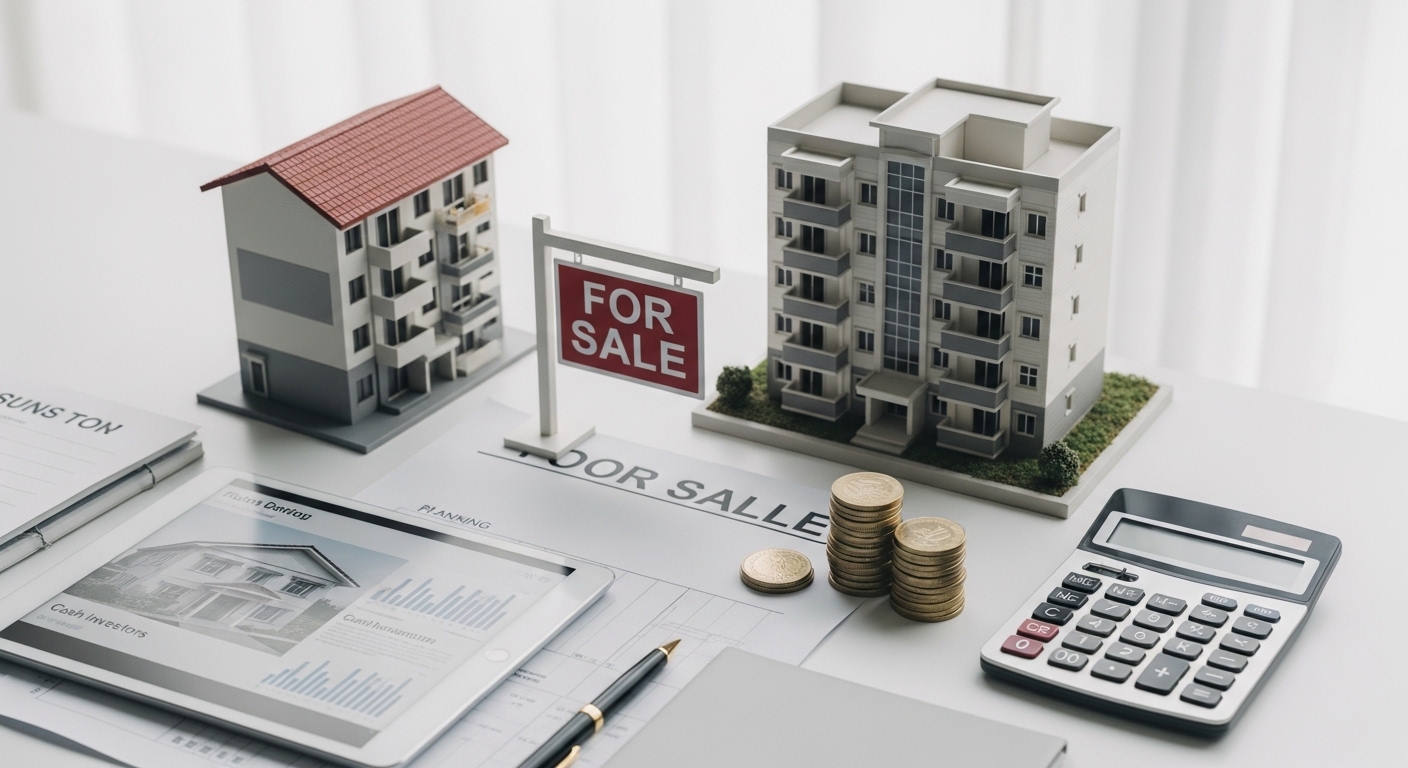
Cash investors who specialize in small multifamily properties are built for exactly the kind of deal that trips up traditional buyers. They do not have a lender waiting to approve the transaction. They evaluate the property on their own terms and move at their own pace, which is usually much faster than any financing-dependent buyer can match.
Selling As-Is Without Tenant Disruption
One of the biggest advantages of selling to a cash investor is that you do not have to empty the building or fix it up first. Cash investors buy the property with tenants in place. The existing leases transfer to the new owner at closing, and the tenants keep living there without any disruption. This protects you from the legal and practical complications of trying to vacate a building just to make it easier to sell.
From my experience, the sellers who try to fix up and empty a small apartment building before selling usually spend more time and money than they planned and sometimes end up worse off than if they had just sold it in its current state. The carrying costs of an empty building with no rental income add up fast.
A Faster Timeline From Offer to Closing
Here is what a realistic timeline looks like for a small apartment building sale to a cash investor compared to a traditional financed sale:
| Stage | Traditional Financed Sale | Cash Investor Sale |
|---|---|---|
| Finding a qualified buyer | 2 to 6 months | Days to weeks |
| Loan approval and underwriting | 30 to 60 days | Not required |
| Inspection and repair negotiation | 2 to 4 weeks | Minimal, as-is |
| Closing timeline after offer | 45 to 90 days | 21 to 45 days |
| Broker commission | 4 to 6 percent | None if direct sale |
What Cash Investors Look at When Evaluating a Small Apartment Building
Understanding what drives a cash investor’s offer helps you set realistic expectations and prepare the right information before you reach out. The evaluation is simpler than most sellers expect, but it is focused on actual numbers rather than emotional appeal.
Income, Expenses, and Cap Rate Are the Starting Point
Cash investors look at how much income the property generates, what it costs to operate, and what rate of return that represents at a given purchase price. This is the same cap rate calculation that applies to any income property. A 10-unit building generating $8,000 per month in gross rent with $3,000 per month in operating expenses has an annual net operating income of $60,000. At a purchase price of $750,000, that produces a cap rate of 8 percent.
The cap rate tells the investor how competitive the return is compared to other opportunities in the same market. Higher cap rates typically mean more upside potential but also more risk, usually from vacancies, deferred maintenance, or below-market rents that will take time to bring up.
What Sellers Can Do to Get a Stronger Offer
The most impactful thing you can do before approaching cash investors is to organize your financial documentation. Pull together the last 12 months of rent receipts and bank deposits, your current lease agreements with all expiration dates and rent amounts, your property tax bills, your insurance policies, and any documentation of major repairs or replacements done in the last few years.
This package tells the investor almost everything they need to know and signals that you are a serious, organized seller. Investors who can evaluate a property quickly without chasing missing documents will almost always offer better terms and move faster to close.
- 12 months of rent receipts or bank deposit records
- All current leases with tenant names, rent amounts, and expiration dates
- Most recent property tax bill
- Insurance policy details and premium amounts
- Documentation of capital improvements with approximate costs and dates
- Any existing service contracts such as pest control, HVAC maintenance, or landscaping
According to the U.S. Department of Housing and Urban Development, rental demand across most major metropolitan markets in the U.S. remains strong, which supports investor appetite for small multifamily properties even in challenging economic conditions.
Research published by the Urban Institute on small multifamily housing markets confirms that private investor activity in the 2 to 20 unit property segment has remained robust, driven by the combination of stable rental income and lower management overhead compared to larger apartment complexes.
If you are already a real estate investor thinking about buying properties like this, our post on the benefits of buying turnkey rental properties from cash buyers covers what to look for before you buy. And if you are an owner thinking about exiting multiple properties at once, our post on how to liquidate an investment property fast walks through the broader strategy.
If you want to get a cash offer on your apartment building, visit our residential property page to learn more about how we work with sellers. Or contact us directly through our contact page and we will get back to you quickly.
Conclusion
Selling a small apartment building fast to cash investors is one of the cleanest exit strategies available for multifamily owners. You do not need to empty the building, make repairs, or wait on a lender to approve a buyer. Cash investors evaluate the property on its income and potential, close quickly, and take the building with tenants in place. Get your financial documentation organized, set realistic price expectations, and connect with buyers who know small multifamily. The right cash investor can close in weeks, not months.
Frequently Asked Questions
Can I sell a small apartment building with existing tenants?
Yes. Cash investors regularly purchase multifamily properties with tenants in place. The leases transfer to the new owner at closing, and tenants are not required to move. This is often preferred by investors because it means rental income from day one.
Do I need to fix up my apartment building before selling to a cash investor?
No. Cash investors typically buy properties as-is and factor any repair costs into their offer price. You do not need to renovate, repaint, or address deferred maintenance before the sale. The investor takes that on as part of their investment plan.
How is the price determined for a small apartment building cash sale?
Cash investors primarily use net operating income and cap rate to determine value. They look at how much income the property generates after expenses and what return that represents at a given price. Physical condition, location, and local market demand also factor into the final offer.
How long does it take to sell a small apartment building to a cash investor?
Most cash sales on small multifamily properties close in 21 to 45 days from the accepted offer. This is significantly faster than traditional sales, which can take 4 to 6 months or longer when financing is involved.
Is selling directly to a cash investor better than using a broker?
For speed and simplicity, yes. A direct sale skips broker commissions of 4 to 6 percent and removes the delay of finding and qualifying a buyer through traditional marketing channels. For sellers who need to maximize every dollar and have time to wait, a broker listing may produce a higher gross price, but the net difference after commissions and carrying costs is often smaller than sellers expect.