
If you have been researching how to sell your home fast, you have probably seen two types of buyers come up constantly: wholesalers and direct cash buyers. A lot of people lump them together because both talk about buying homes quickly and without the usual hassle. But they work very differently, and knowing the difference could save you money and a lot of frustration.
What a Real Estate Wholesaler Actually Does
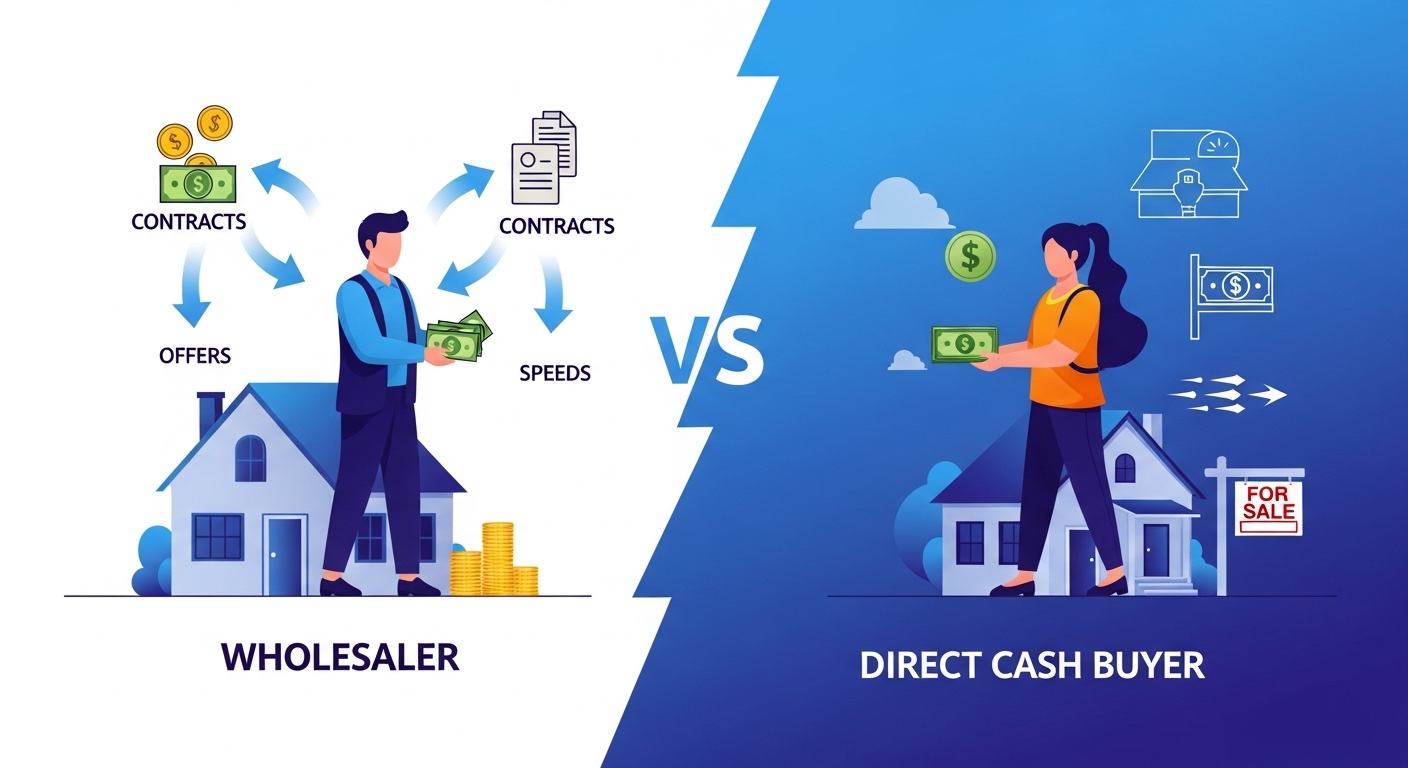
A wholesaler is not buying your home to own it. They are finding it so they can sell the contract to someone else. Here is how it works: a wholesaler contacts you, gets your house under contract at a certain price, and then turns around and finds a third-party investor willing to pay more. The difference between those two prices is their profit.
You might hear phrases like we buy houses or as-is cash offer from wholesalers. These can sound like the same thing as a direct cash buyer, but they are not. The wholesaler may not have any money of their own. They are counting on finding that investor buyer before the contract closes. According to Investopedia, real estate wholesaling involves assigning a contract to an end buyer and collecting a fee, rather than purchasing the property directly.
The Risk That Comes With Working With a Wholesaler
The biggest risk is that the wholesaler might not be able to find an end buyer in time. If that happens, the deal falls through. You are back to square one. Unlike a direct cash buyer who already has funds ready, a wholesaler needs things to line up on their end first before the deal can actually close.
This does not mean every wholesaler is operating dishonestly. Some are very professional. But you need to understand what you are agreeing to. The price you are offered may already be reduced to leave room for the wholesaler’s fee, which means you might be leaving money on the table without even knowing it.
What a Direct Cash Home Buyer Looks Like
A direct cash home buyer is a company or individual that uses their own money to buy your house. There is no middleman. There is no waiting to see if they can find someone else to take the deal. When they make you an offer, they are the one who will actually close on it.
How the Process Differs From Wholesaling
The process is much more straightforward. You contact the buyer, they review the property, and they make you a direct offer. If you agree, you set a closing date. There is no assignment of contract. There is no third party waiting in the background. The buyer who makes the offer is the buyer who shows up at closing.
Here is a side by side look at how the two compare:
| Feature | Wholesaler | Direct Cash Buyer |
|---|---|---|
| Who buys the home | A third-party investor | The buyer you spoke with |
| Funding source | Investor found later | Their own capital |
| Risk of deal falling through | Higher | Lower |
| Offer transparency | May include hidden assignment fees | More transparent |
| Closing timeline | Depends on finding end buyer | Usually fast and set |
| Seller involvement | Limited visibility after contract | Direct communication throughout |
If you are selling your home and want a clear, reliable path, a direct cash buyer gives you more control over what is happening at every stage.
Why the Offer Price Is Not Always the Whole Story
I want to be honest about something people do not always talk about. Sometimes a wholesaler offers a slightly higher number upfront because they know they need room to negotiate. By the time their end buyer is involved, there may be price adjustments, repair credits, or delays. The final outcome might not match the initial offer.
What Sellers Should Watch For
There are a few things worth paying attention to when someone approaches you about buying your home:
- Ask directly if they are the end buyer or if they plan to assign the contract
- Check if they have proof of funds in their own name
- Read the contract carefully for any assignment clauses
- Ask how many properties they have personally closed on in the past year
- Ask for a firm closing date in writing
These questions can tell you a lot about who you are actually dealing with. A direct cash buyer will have no problem answering all of them. A wholesaler may give vague answers, especially about who will be at the closing table.
You can also visit our residential property page to learn more about how we work as a direct cash buyer and what that process looks like for homeowners.
Which Option Is Actually Better for You
It really depends on what you need. If you want the fastest, most certain close with no surprises, a direct cash buyer is the safer choice. The National Association of Realtors has noted that cash sales tend to close faster and with fewer complications compared to financed transactions, and that advantage increases when the buyer is using their own funds directly.
If you are open to more complexity and are comfortable with some uncertainty, working with a wholesaler might still result in a decent outcome. But you should go in with your eyes open.
We also have a post on selling your house as-is in the Phoenix metro area, which covers what sellers can expect when they skip repairs and go straight to a buyer who takes the home in its current condition.
And if you have ever had a deal fall apart and want to know what your rights are, our post about what happens if a cash buyer backs out is a good resource to have in your back pocket.
The U.S. Department of Housing and Urban Development also has information about different types of real estate transactions and buyer roles that can help you understand what questions to ask before signing anything.
Conclusion
Wholesalers and direct cash buyers are not the same thing, even though they often market themselves in similar ways. Knowing the difference can protect you from delays, lower offers, and deals that never make it to closing. When you work with a true direct cash buyer, you are dealing with the person who will actually buy your home, not someone hoping to find someone else to do it for them.
If you have questions about how our process works or want to get a direct cash offer on your home, visit our contact page and we will get back to you quickly.
Frequently Asked Questions
Is a wholesaler a licensed real estate agent?
Not always. Wholesaling is a gray area in many states. Some states require a real estate license to wholesale properties, while others do not. It is always a good idea to ask about their licensing and how they plan to legally transfer the contract.
Can a wholesaler back out of a deal at the last minute?
Yes. If they cannot find an end buyer, the deal may not close. This is why it is important to understand the assignment clause in any contract and ask what happens if they cannot complete the transaction.
Do direct cash buyers buy homes in any condition?
Most do. Direct cash buyers typically purchase homes as-is, which means you do not need to make repairs or updates before selling. This is one of the main reasons sellers choose this route over the traditional market.
How fast can a direct cash buyer close?
Many direct cash buyers can close within 7 to 14 days, sometimes even faster depending on the situation. Because there is no lender involved, there are fewer steps and fewer chances for delays.
What if the offer from a cash buyer is lower than market value?
Cash buyers typically offer below market value in exchange for speed, certainty, and the convenience of selling as-is. Whether that trade-off is worth it depends on your specific situation, your timeline, and how much the home needs in repairs.