
How Climate Change Is Hitting LA Waterfront Property Values
If you own a home along the Los Angeles coast, something has shifted in the last few years that has nothing to do with interest rates or neighborhood trends. Climate change is quietly becoming one of the most talked-about factors shaping how waterfront properties are bought, priced, and insured. In 2026, that conversation is louder than it has ever been.
What Is Actually Happening Along the LA Coastline
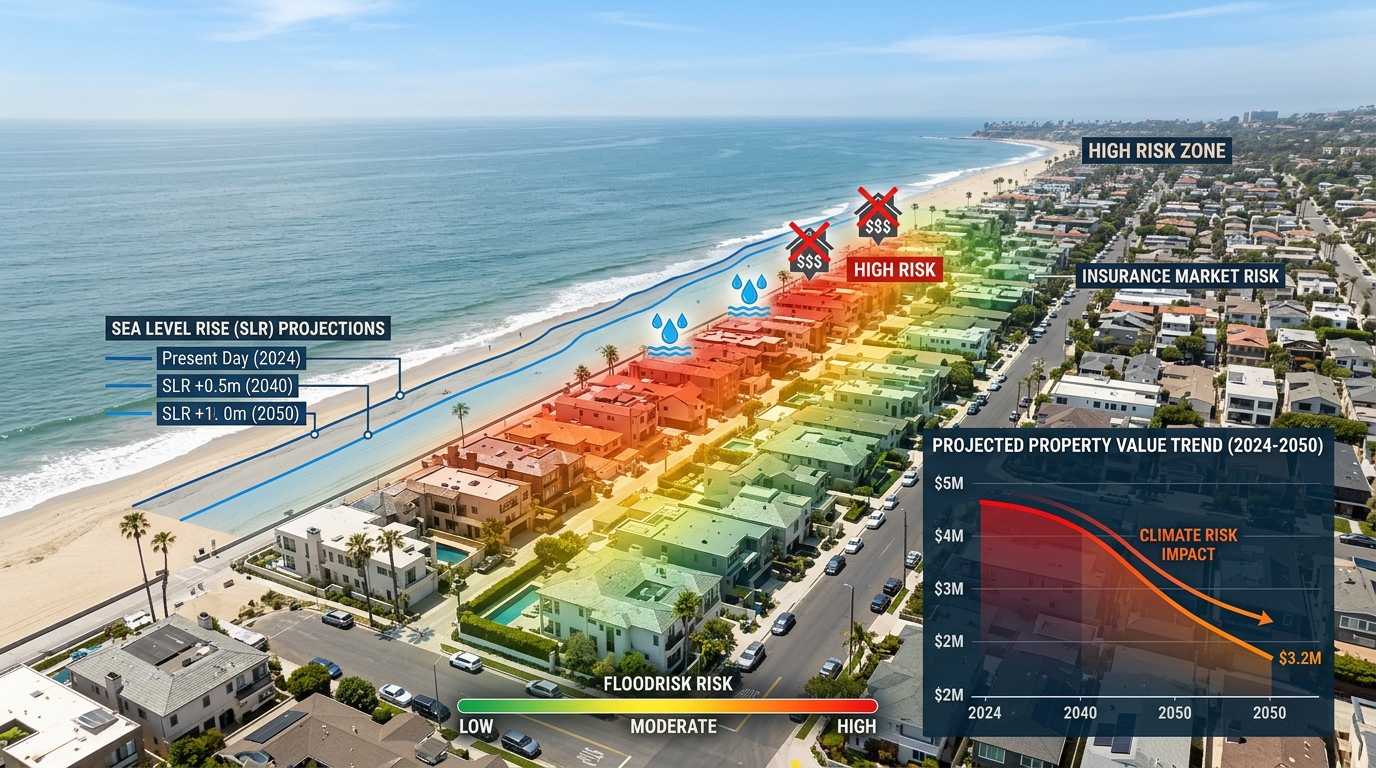
Sea Level Rise Is Real and Already Measurable
According to research published by the National Centers for Environmental Information (NOAA), global sea levels have risen 8 to 9 inches since 1880, and the pace is getting faster. California’s coast is not immune to this, even though parts of the West Coast have seen slight land rise due to tectonic activity. That shift helps a little, but it does not cancel out the broader trend.
What this means practically is that homes sitting in low-lying areas near the water in places like Venice, Seal Beach, and parts of Malibu face a different risk picture than they did when their owners first bought them. Tidal flooding events that used to happen once or twice a decade are happening more often now.
Flood Insurance Costs Are Changing the Math for Buyers
FEMA updated its flood insurance pricing system with a program called Risk Rating 2.0. Under the old system, many LA waterfront homes were paying premiums based on outdated flood maps that did not reflect today’s actual risk. Under the new system, prices are based on the specific flood exposure of each individual property.
For some homes, this has meant annual flood insurance bills jumping by several thousand dollars. According to FEMA’s National Flood Insurance Program, a large share of existing policyholders are now paying higher rates under Risk Rating 2.0 compared to what they paid before. For buyers running the numbers on what they can afford, that extra annual cost changes what the home actually costs to own.
How This Is Affecting Home Values in Coastal LA
Some Properties Are Already Seeing Price Pressure
The effects are not the same across every waterfront property in Los Angeles. A home perched on a high bluff above the water faces different risks than a ground-level home a few feet from the tide line. But researchers have found a pattern worth paying attention to.
A study by researchers at the University of Colorado at Boulder and Penn State found that flood-exposed homes sold for an average of 6.6 percent less than similar unexposed homes nearby. For the most vulnerable properties, those that would flood after just a one-foot sea level rise, the discount reached 14.7 percent. Home prices are not collapsing, but they are not rising as fast as comparable inland properties in many cases. This is sometimes called climate risk repricing, and it is starting to show up in the data for coastal markets across the country, including Southern California.
Buyers Are Asking Harder Questions Before Making Offers
I have spoken with buyers who now specifically request an elevation certificate before they even schedule a second showing. Five years ago that was almost unheard of. Now it is becoming routine for buyers who have done their research.
The California Coastal Commission has expanded its focus on sea level rise planning and disclosure requirements for coastal development and sales. Sellers are now being asked to disclose more about flood history, proximity to the shoreline, and any previous water damage. Buyers are also looking at erosion patterns along the coast, and properties where the beach or bluff has visibly narrowed over time are getting extra scrutiny. It is not just about what the home looks like today. It is about what the risk picture looks like in ten or fifteen years.
What LA Waterfront Homeowners Should Be Thinking About Now
Signs That Selling Sooner May Be the Smarter Call
Here are some of the clearest signs that a waterfront property may face growing headwinds in the market over the next several years:
- The home sits in a FEMA Special Flood Hazard Area and flood insurance premiums have already increased significantly under Risk Rating 2.0
- The property is low-lying with minimal elevation above the base flood elevation shown on current flood maps
- Visible erosion on or near the property line, or a shrinking beach or bluff compared to photos from years past
- A history of water intrusion or storm damage that required repairs or insurance claims in the past decade
- Multiple insurers declining to offer coverage or offering only limited policies at high premiums
- Multiple nearby homes listed simultaneously, which can signal that others in the same risk area are making the same calculation
None of these factors mean a sale is impossible or that a fair price cannot be achieved. But they do mean the window where buyers willingly overlook these concerns may not stay open indefinitely.
Steps That Can Help Your Property Hold Value
Not every waterfront homeowner is in the same position, and some improvements do make a real difference in how buyers see a property. An elevation certificate showing the home sits well above the base flood elevation is one of the most powerful documents you can have when selling. It directly affects insurance costs, and buyers know it.
Flood vents, storm shutters, elevated mechanical systems, and seawall or riprap protection along the water edge all signal to buyers that the property has been prepared for the risks it faces. These are not cheap upgrades, but they can preserve value in a market where buyers are doing serious due diligence.
If you are thinking about your options as a waterfront seller, reach out to our team at Buy Your Properties for a direct conversation about what your specific property is worth right now and what your next step should look like.
It is also worth reviewing how capital gains tax exemptions apply to LA homeowners in 2026 before making a final decision on timing.
The Bigger Picture for LA Coastal Real Estate Going Forward
Is This a Slow Shift or a Sudden Drop
The honest answer is that it looks much more like a slow shift than a sudden drop. Waterfront demand in Los Angeles remains strong because the ocean view, the lifestyle, and the limited supply of coastal property are real draws that do not disappear. But slow shifts compound, and homes in the highest-risk zones may find the pool of willing buyers shrinking gradually as insurance costs rise and climate disclosures expand.
The smartest thing any coastal homeowner can do right now is to understand exactly which risk category their specific property falls into rather than assuming things are fine because a neighbor’s home sold well last year. Every lot is different, and the gap between high-risk and low-risk coastal properties is growing.
What to Consider If You Also Have Property Damage Issues
For homeowners dealing with climate-related property damage alongside the market timing question, the decision about whether to sell or take an insurance payout is a real one worth thinking through carefully. You can read about how selling a damaged property compares to taking an insurance payout if storm or weather damage is part of your situation.
You can also browse our California locations page to explore how the market looks in your specific coastal area.
Conclusion
Climate change is no longer a distant concern for LA waterfront homeowners. It is showing up in flood insurance bills, buyer questions, and in the data on how coastal property values grow compared to less exposed alternatives. The good news is that knowing this now gives you time to make thoughtful decisions. Whether you stay, improve, or sell, understanding your property’s specific climate risk position is the right place to start.
Frequently Asked Questions
How much has sea level rise already affected LA coastal properties?
According to NOAA, global sea levels have risen 8 to 9 inches since 1880. Parts of California’s West Coast have seen some land rise due to tectonic activity, which partially offsets this. But low-lying coastal areas in LA are still seeing more frequent tidal flooding events than they did decades ago, and buyers are paying closer attention to elevation and flood zone status.
Will flood insurance keep getting more expensive for waterfront homes in LA?
Under FEMA’s Risk Rating 2.0 system, premiums are tied to each property’s actual flood risk rather than to older flood map zones. For many coastal properties that were previously underpriced for their real risk level, premiums are rising. This trend is expected to continue as more properties are evaluated under the updated system and as climate-related flood events become more frequent.
Are buyers still paying top dollar for LA waterfront homes despite climate concerns?
Demand for coastal properties remains strong in Los Angeles, particularly for well-located and higher-elevation homes with good flood mitigation in place. However, buyers in 2026 are doing more research before committing, and properties with higher risk profiles or unclear flood history are seeing longer selling times and more negotiation on price.
What is climate risk repricing and is it happening in LA?
Climate risk repricing happens when property markets start factoring real flood and weather exposure into prices rather than ignoring it. Research has found that the most flood-exposed properties in coastal US markets are selling at discounts compared to similar unexposed properties. This pattern is starting to appear in parts of the LA coast, particularly in lower-elevation areas with higher flood insurance burdens.
Should I sell my LA waterfront home now or wait?
The right answer depends on the specific flood zone classification, elevation, and insurance situation of your property. Properties in the highest-risk zones may benefit from selling before buyer awareness grows further and before insurance costs rise more. Speaking with a knowledgeable local professional who understands both the market and the climate risk picture for your specific area is the best starting point.