
Selling a childhood home is not like selling a regular house. It is more like saying goodbye to a chapter of your life. The kitchen where your mom made Sunday dinners. The backyard where you learned to ride a bike. The bedroom that still has the pencil marks on the doorframe from when you measured your height every year. Letting go of all of that is genuinely hard, and anyone who tells you otherwise has probably never done it.
Why Selling a Childhood Home Hits Differently
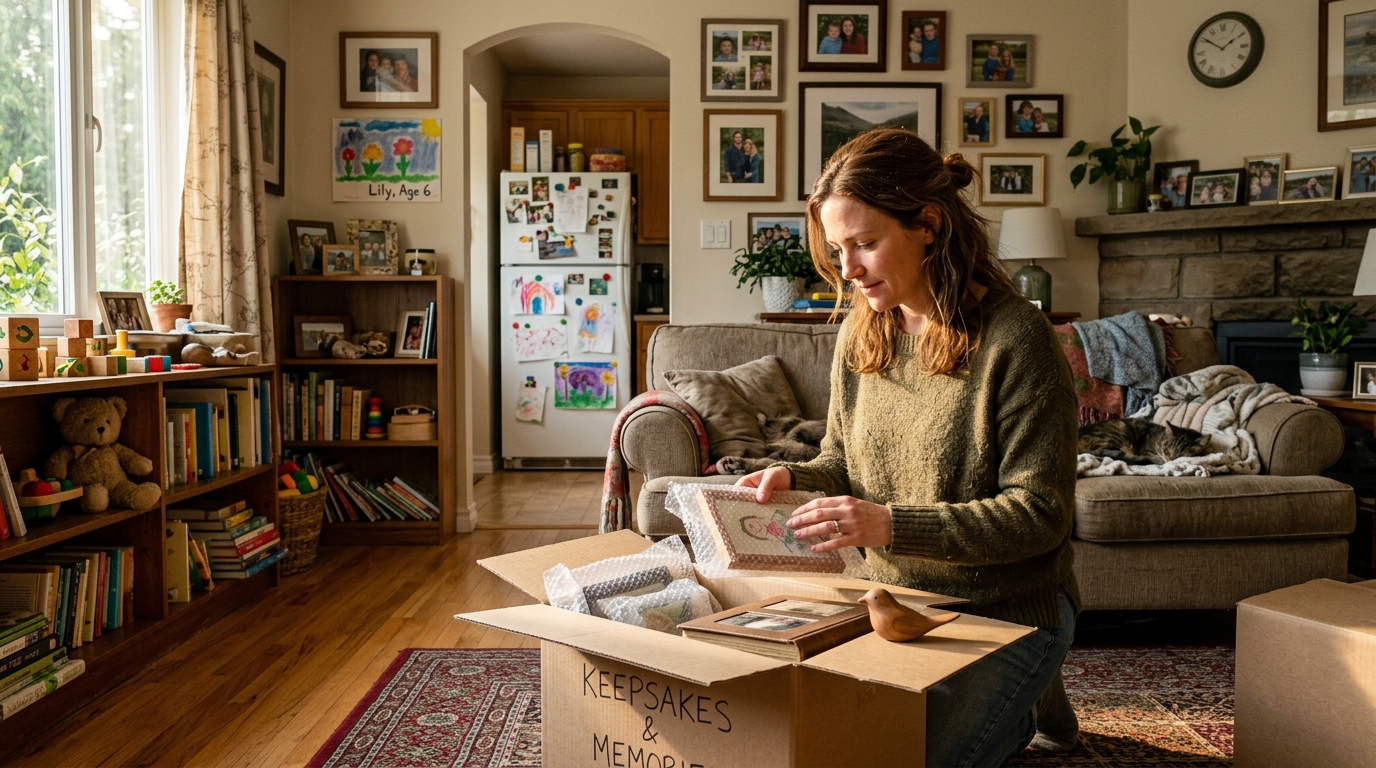
It Is Not Just a House. It Is a Place Full of Who You Were.
Most people expect selling to feel transactional. Sign some papers, collect a check, move on. But when the home carries 20 or 30 or 50 years of memories, the process is anything but simple. Feelings of grief, nostalgia, and even guilt can come up fast and stay for a long time.
According to research published in Qualitative Inquiry and referenced by real estate professionals, a home is not just a physical object. It is an extension of a person’s identity. That is not an exaggeration. It is backed by psychological research. Dr. Karen Lollar described a home as an extension of a person’s physical body and their sense of self. When you sell it, part of that identity shifts. That is why the emotion can feel so overwhelming, and why it catches so many sellers completely off guard.
According to a 2024 survey by Clever Real Estate covering 1,000 American homeowners, 45% of people said they feel sad about leaving their home, 44% feel stressed about the logistics, and 33% feel a sense of loss even when they know the sale is the right decision. These numbers show that emotional difficulty is not rare. It is the norm.
When It Is Your Parents’ Home, the Weight Is Even Greater
For many people, the hardest version of this is selling a parent’s home after they have passed away or moved into assisted living. You are not just clearing out furniture. You are making decisions about things that were precious to someone you love, in a place that holds the weight of your whole childhood.
The decision-making process in this situation can be exhausting. Siblings may disagree. Memories may conflict. And all of it happens while you are also dealing with grief. I have heard from people who said sorting through one room at a time was the only way they could manage it without shutting down completely. That is a completely understandable response, and it tells you something important about why having the right support around you matters so much in this kind of sale.
Practical Ways to Get Through the Process
Work in Stages, Not All at Once
One of the most common mistakes people make when selling a childhood home is trying to do everything in one big push. They clear the house in a weekend, sign the paperwork, and then feel completely hollowed out for weeks afterward. The process works better when it is broken into smaller, manageable steps that give your emotions time to catch up.
Start with the areas that feel least personal, maybe a storage room or a garage. Save the bedrooms and the spaces with the deepest memories for last. Give yourself permission to slow down when something stops you. A photo album in a drawer is worth sitting with for a few minutes. You do not have to rush past it just to stay on schedule.
Here are some approaches that sellers in this situation have found genuinely helpful:
- Work through one room at a time instead of trying to clear everything at once
- Create a small memory box of items to keep, things like photographs, letters, or small objects with real meaning
- Donate or sell larger furniture rather than feeling obligated to keep everything
- Paint over rooms before listing, which both freshens the home for buyers and psychologically creates some distance from the memories
- Say a proper goodbye to the home, whether that is a final meal inside it, a walk through with family, or just a quiet moment alone
- Talk openly with siblings or other family members about what matters to them before decisions are made
Let Pricing Be a Business Decision, Not an Emotional One
This is where a lot of sellers get into trouble. The emotional connection to the home can distort the sense of what it is worth. You remember how much love went into that kitchen renovation 20 years ago, so the number feels wrong when the appraiser comes back lower than expected. You feel like the market does not see what you see.
That feeling is completely human. And it is also the thing that can cost you real money if you let it drive the pricing strategy. According to Opendoor’s guide on coping with selling a family home, emotions can easily cloud judgment when a home has been in a family for many years. Real estate agents who work with sellers in this situation are specifically there to provide that objective perspective, to separate the market value from the memory value, and to help set a realistic price that actually gets the home sold.
How the Right Support Changes the Experience
Choosing an Agent Who Understands the Emotional Side
Not every real estate agent is equipped to handle emotionally sensitive sales. Some are purely transactional. They show up, put up the sign, and push for a quick close. That approach can feel cold and dismissive when you are dealing with something this personal.
The right agent for a childhood home sale is someone who listens before they advise. Who asks how long you have lived there. Who understands that the pace of this sale may need to be slightly different than a standard listing. Who builds in space for you to feel your feelings without letting those feelings derail the transaction.
According to guidance from real estate professionals quoted in HomeLight’s article on selling a house you love, top agents working through emotionally complex sales discuss the emotional weight upfront, which both helps sellers process their feelings and gives the agent context for how to approach the process in a way that serves the client well. That kind of relationship does not happen by accident. You have to specifically look for it and ask the right questions when interviewing agents.
What a Faster, Simpler Sale Can Actually Do for Your Stress Levels
Here is something worth knowing. A faster, more streamlined sale is not just about getting money quickly. For sellers of childhood homes, it can actually reduce the emotional burden significantly. The longer a property sits on the market with showings, open houses, price reductions, and negotiations, the longer the emotional limbo lasts. You are not done grieving. You are not done holding on. And every showing can feel like a stranger walking through something sacred.
A direct sale or a cash offer process eliminates most of that. You close on your timeline. You do not have to stage the home and make it look like nobody has actually lived there. You get to say goodbye on your terms rather than on the market’s terms. For many families selling a home that carries this much weight, that simplicity is genuinely worth something beyond just the financial transaction.
| Sale Method | Emotional Impact | Timeline | Best For |
|---|---|---|---|
| Traditional listing with agent | Showings can feel intrusive | Typically 30 to 90 days or more | Sellers who want maximum exposure and price |
| Direct cash offer | Less exposure, faster closure | Often 7 to 21 days | Sellers who need simplicity and speed |
| Off-market sale to known buyer | Can feel more personal and private | Flexible | Sellers with specific timing needs |
If you are also thinking through broader estate and family decisions, our guide on selling a multi-generational compound estate covers some of the same family dynamics from a different angle. And if the home has some condition issues that add another layer of complexity, our post on selling a property with code violations gives practical guidance. When you are ready to take the first step, contact us here and we will have a real conversation about what timeline and approach makes the most sense for your situation.
Conclusion
Selling a childhood home is one of the most emotionally loaded real estate transactions a person can go through. The feelings are real. The grief is legitimate. And there is no timeline that says you have to move through it faster than you are able to. What helps most is working in stages, being honest about the emotional weight with whoever is helping you, choosing an agent who sees you as a whole person and not just a transaction, and knowing that a simpler sale process is an option when you need it. The house holds your memories. The memories go with you. That is what people who have done this always say they needed to hear.
Frequently Asked Questions
Is it normal to feel sad when selling a childhood home?
Absolutely. According to a 2024 survey by Clever Real Estate, 45% of homeowners reported feeling sad about leaving their home, and 33% experienced a sense of loss even when they knew it was the right decision. These feelings are completely normal and expected.
How do I make the process of selling a parent’s home easier?
Work through the home in stages rather than all at once. Tackle less personal spaces first. Create a memory box of items that truly matter. Talk openly with siblings before making decisions about belongings. Give yourself permission to slow down when the emotion hits, and be realistic about the timeline you need.
Should I try to set the price based on what the home means to me?
No. The market does not price based on memories. Setting a price too high because of emotional attachment is one of the most common and costly mistakes sellers make. Work with an agent who can provide an objective market valuation and help you separate the emotional value from the market value.
Does staging the home help emotionally as well as financially?
It often does. Repainting rooms and rearranging furniture can create psychological distance from the memories tied to specific spaces. It changes the look of a room enough that it no longer feels like the same space, which can actually make the goodbye process a bit easier.
Is a cash or direct sale a good option when selling a childhood home?
For many families, yes. A faster sale means less time in emotional limbo. It eliminates the repeated intrusion of showings and open houses, and it gives you more control over the timeline. If simplicity and privacy matter as much as getting the absolute highest price, a direct sale is worth exploring seriously.