
You put solar panels on your roof a few years back and used a HERO or PACE program to pay for it. At the time it felt like a smart move. Now you want to sell your home and your real estate agent is looking at you with that face that says there might be a problem. The good news is that a PACE or HERO loan does not have to kill your sale. You just need to understand what you are dealing with.
What Is a PACE Loan and How Is HERO Related
PACE stands for Property Assessed Clean Energy. It is a state-backed program that lets homeowners finance energy-efficient improvements like solar panels, new HVAC systems, insulation, and water-saving upgrades without paying anything upfront. The HERO loan, which stands for Home Energy Renovation Opportunity, is essentially a private-label version of the PACE program that became very popular in Southern California.
What makes these loans different from a normal home improvement loan is how they are repaid. Instead of making monthly payments to a lender, you repay the balance through your property tax bill each year. The loan is attached to the property, not to you personally as a borrower. According to the San Diego Treasurer-Tax Collector, the PACE assessment appears on your tax bill under the Tax Distribution section and can be one of the largest charges on that bill.
### Why PACE Loans Cause Problems When You Sell
The way a PACE loan is structured, it acts as what is sometimes called a super-priority lien. That means in the event of a foreclosure or forced sale, the PACE balance gets paid before your mortgage lender does. Mortgage companies do not like that at all, because it increases their risk. Fannie Mae and Freddie Mac actually stopped buying mortgage loans on properties with outstanding PACE balances back in 2010 for this very reason.
When you go to sell your home, the buyer’s lender is going to want that PACE lien dealt with before they approve the loan. In most cases, that means one of two things: you pay it off at closing, or you find a buyer who does not need traditional financing.
Your Options When Selling a Home With a PACE or HERO Balance
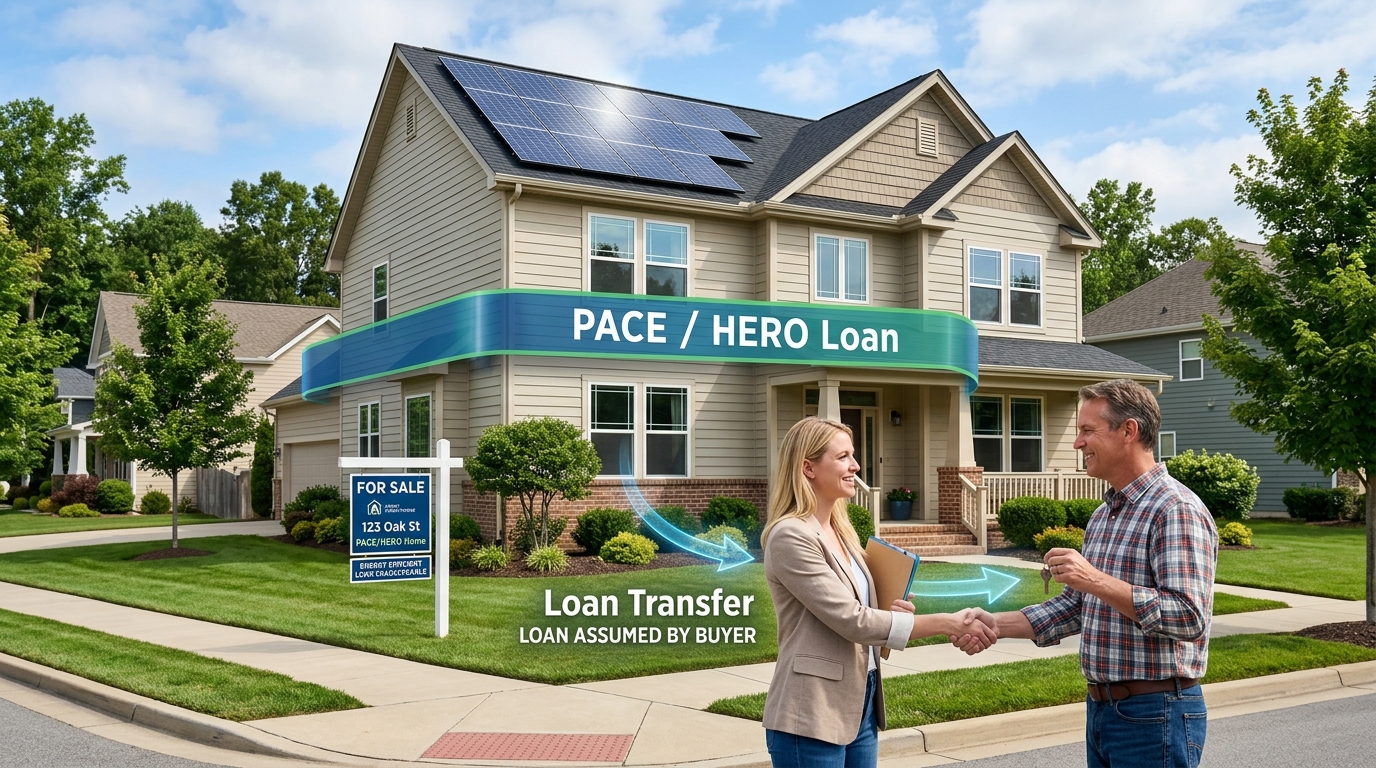
Here is where a lot of homeowners get surprised. They think the buyer can just take over the PACE payments. In theory, PACE loans are designed to be transferable. In practice, most buyers using conventional financing cannot take on that lien because their lender will not allow it. So let’s look at what actually works.
| Option | What Happens | Works for Most Buyers? |
|---|---|---|
| Pay off PACE at closing | Balance is deducted from your sale proceeds | Yes |
| Transfer to buyer | Buyer assumes the remaining balance | Only if buyer uses cash or certain government loans |
| Cash sale to investor | Investor handles or absorbs the PACE balance | Yes, most flexible option |
| List traditionally and hope | Most buyers’ lenders will require payoff anyway | Usually ends in payoff at closing |
I have seen PACE loans derail escrow more times than I can count. A seller thinks everything is fine, gets into contract, and then three weeks before closing the lender comes back and says the PACE balance has to be cleared before they will fund. If the seller does not have enough equity to cover it, the deal falls apart. Preparing for this early saves everyone a lot of pain.
### Can the Buyer Take Over the PACE Loan
This is one of the most common questions I hear. The short answer is: sometimes, but it is harder than it sounds. According to Inside San Francisco Real Estate, the PACE program will not subordinate itself to a new mortgage lender. That means a buyer using a conventional loan from Fannie Mae or Freddie Mac cannot keep the PACE loan attached. It has to be paid off.
FHA loans have somewhat more flexibility, but even they require specific conditions. VA loans can also sometimes work. And cash buyers have the most flexibility of all since they are not subject to lender requirements. This is one of the main reasons that a direct cash sale is often the fastest and cleanest way to sell a home with a PACE or HERO balance still attached.
How to Find Out What You Still Owe on a PACE Loan
A lot of homeowners are not exactly sure how much they still owe on their PACE balance, especially if they have been paying it through property taxes for a few years. Here is how to find out.
- Look at your most recent property tax bill. The PACE assessment shows up as a separate line item in the Tax Distribution section
- Call your PACE administrator directly. Common ones in California include HERO, Ygrene, and CaliforniaFIRST
- Ask your title company to run a preliminary title report. The PACE lien will show up there
- Request a payoff statement from your PACE provider before you list the home
- Check with your county tax collector, since the assessment is tied to your parcel number
Getting that number early gives you time to plan. If the balance is small, paying it off at closing might not be a big deal. If the balance is large and your equity is limited, knowing that early gives you options you would not have if you discovered it at the last minute.
Why a Cash Sale Is the Easiest Path Forward
When you sell to a professional cash buyer, the entire financing issue disappears. Cash buyers do not have lenders telling them what liens they can and cannot accept. They buy the home as-is, PACE loan and all, and figure out the cleanest way to handle the balance at closing.
This is especially helpful when the PACE balance is large, when the home has limited equity, or when you are already dealing with other financial pressure. A professional buyer knows how these situations work and can structure the transaction to get you out without the deal falling apart over a lien that most buyers’ lenders refuse to touch.
If you are also navigating other liens on your property, our article on how to remove a cloud on your title before selling your LA home walks through how to clear title issues before closing. PACE liens are just one type, but the process of identifying and addressing them before you list is always the right move.
For homeowners dealing with multiple financial complications at once, it also helps to understand how a direct sale compares to other exit strategies. Our breakdown of selling real estate during bankruptcy in California shows how a cash sale can cut through complicated financial situations and still get you to the closing table.
What to Disclose to Buyers About Your PACE Loan
In California, you are required to disclose a PACE lien to any potential buyer. This is not optional. The California Association of Realtors has made it clear that PACE liens must be disclosed on the Transfer Disclosure Statement. Failing to disclose can expose you to legal liability after the sale.
Be upfront about the balance, the annual payment amount, the remaining term, and the interest rate. A buyer has the right to know what they are taking on. If you are selling to a cash buyer, that disclosure process is usually simpler because you are not going through a buyer’s lender who will flag the issue on their own.
According to the Sacramento Association of Realtors, PACE loans can be more costly than homeowners realized when they signed up, and both buyers and sellers need to be fully aware of what the loan entails. Hidden PACE liens have caused real problems in California escrows, and proper disclosure protects everyone involved.
If you are ready to explore your options and want someone to walk through the numbers with you, reach out through our Contact Us page. We work with homeowners across California who have PACE and HERO balances and can help you figure out the best path forward.
Conclusion
A PACE or HERO loan does not have to stop you from selling your home. It does complicate things, especially if you are trying to sell to a buyer using conventional financing. The cleanest solution for many homeowners is a direct cash sale, where lender restrictions and lien priority fights do not enter the picture. Know your balance, disclose early, and get ahead of the issue before it becomes a problem at the closing table.
Frequently Asked Questions
Do I have to pay off a PACE loan when I sell my house?
In most cases, yes. If the buyer is using conventional financing backed by Fannie Mae or Freddie Mac, the lender will require the PACE balance to be paid off at closing. Cash buyers and some government-backed loan programs have more flexibility, but payoff at closing is the most common outcome.
Can I transfer my HERO loan to the new buyer?
Technically, PACE loans are designed to stay with the property. But in practice, most buyers using conventional loans cannot accept that lien. Cash buyers and certain FHA or VA borrowers may be able to keep the balance, but you should confirm this before relying on it as your plan.
Where does a PACE loan show up during a home sale?
It will appear on your preliminary title report as a lien and also on your property tax bill as a separate line item. Your title company will flag it during escrow. The best approach is to contact your PACE administrator before listing and get an official payoff statement so there are no surprises.
What is a super-priority lien and why does it matter?
A super-priority lien is one that gets paid before other debts, including your mortgage, in the event of a foreclosure. PACE loans have this status because they are tied to property taxes. This is why mortgage lenders require them to be paid off. It increases lender risk, and they are not willing to take on a lien that is ahead of them in line.
Will a PACE loan affect my home’s value?
The improvements themselves may add value to your home, but the outstanding PACE balance reduces your net equity. If a buyer has to pay it off, they will factor that cost into their offer. In some cases, the payoff obligation actually reduces what buyers are willing to pay since it adds a hidden cost they were not expecting.