
Why Illegal Conversions Hurt Your Home Sale More Than Most Sellers Expect
I talked to a seller in East Los Angeles last year who thought he had done himself a favor by converting his two-car garage into a living unit ten years ago. The conversion looked great. Nice floors, a full bathroom, a small kitchen. His idea was that the extra square footage would add value when he finally decided to sell.
What actually happened was the opposite. When he listed the home, the unpermitted conversion showed up immediately in the title search. His first buyer was using conventional financing and their lender backed out entirely. His second buyer negotiated a $40,000 price reduction to account for the risk and the cost of either legalizing or demolishing the unit. He ended up selling for less than he would have if he had simply left the garage as a garage.
That story is more common than most people realize in Los Angeles and throughout California. Illegal conversions feel like value adds when they are built, but they often create serious complications and real financial losses at the time of sale.
What Counts as an Illegal Conversion in California
An illegal conversion is any modification or addition to a property that was done without the required permits, approvals, or inspections from the local building department. In California, the most common types include:
- Unpermitted garage conversions turned into bedrooms, living spaces, or rental units without permits
- Unpermitted ADUs or junior ADUs built in backyards, above garages, or inside existing structures
- Unpermitted basement conversions turned into bedrooms or rentable units
- Unpermitted room additions that expanded the footprint of the home without a building permit
- Unpermitted second kitchens added to create an unofficial rental unit inside the main home
- Unpermitted electrical, plumbing, or structural work done in connection with any of the above
The key word in all of these is unpermitted. The problem is not that the space was converted. The problem is that no permits were pulled, no inspections were done, and there is no documentation that the work was done safely and in compliance with building codes. That missing documentation is what causes the damage at the time of sale.
How Buyers and Lenders Discover Illegal Conversions
A lot of sellers hope that an unpermitted conversion will go unnoticed during the sale. In practice, that rarely happens. There are several ways these issues get discovered, and once they are found, the conversation changes fast.
The first way is through the title search. When a building department records a permit for work done on a property, it appears in public records. When no permit was ever pulled for a conversion that is clearly visible, that discrepancy is often flagged. A sharp title officer or buyer’s agent will notice that the garage on the assessor’s records does not match the living space they walked through.
The second way is through the home inspection. Any decent home inspector will note when they find living space that does not appear to have proper egress, fire safety, electrical panels wired for a garage, or bathroom plumbing that does not match a permitted floor plan. They do not have to know exactly what permits were pulled to flag the issue for the buyer’s lender.
The third way is through the appraisal. FHA and conventional appraisers are trained to note discrepancies between the appraised square footage and the public record square footage. An unpermitted addition that adds 400 square feet to the home will often show up clearly when the appraiser checks the assessor’s records.
The Real Financial Impact on Resale Value
The financial damage from an illegal conversion comes from multiple directions at once. It is not just that buyers discount the price. It is that the unpermitted work creates legal exposure, financing problems, insurance complications, and ongoing penalty risk that all compound on each other.
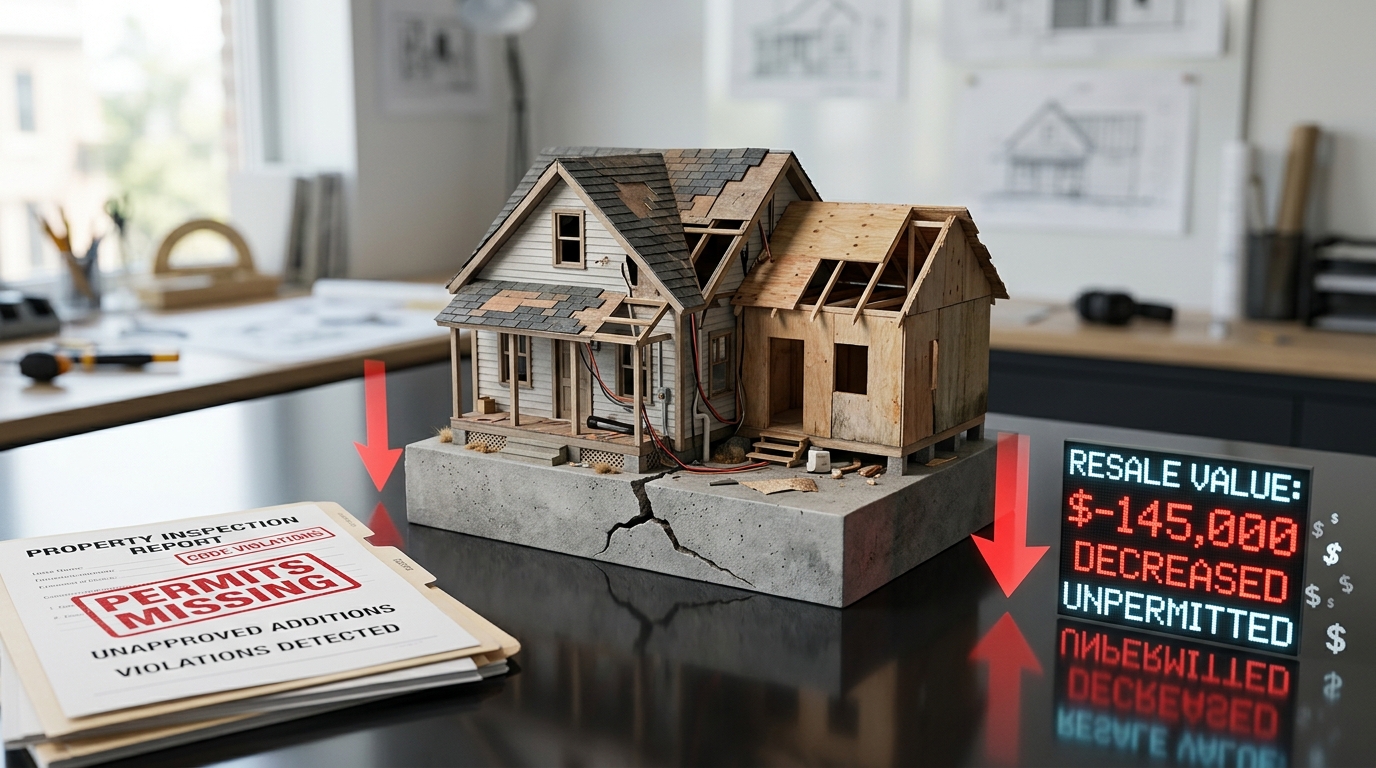
How Much Value an Unpermitted Conversion Can Cost You
When a buyer’s agent discovers an unpermitted conversion, the first thing they want to know is how much it will cost to either legalize or remove it. That estimate becomes the baseline for how hard they negotiate.
Legalizing an unpermitted garage conversion in Los Angeles involves hiring an architect or building designer, having as-built plans drafted, submitting those plans to the city’s building department, pulling the appropriate permits, potentially upgrading electrical, plumbing, insulation, or fire safety components to current code, and passing all required inspections. According to guidance from GreatBuildz, a Los Angeles construction resource, the cost of legalizing an unpermitted garage conversion can vary widely, but homeowners should budget for architectural and engineering services, city permit fees, and any required construction to bring the work up to current code.
If the conversion cannot be legalized, the alternative is often demolition and restoration of the original structure, which carries its own costs and timelines. Either way, the buyer is looking at a significant project and they will want to see the price drop accordingly.
The honest reality is that an unpermitted conversion that cost $20,000 to build can easily cause a $30,000 to $50,000 reduction in the sale price because of the uncertainty and liability it creates for the buyer. In many cases, the conversion ends up costing the seller more in lost value than it ever would have cost to just do it legally from the start.
Insurance Problems That Show Up at the Worst Time
Most homeowners with unpermitted conversions do not think about insurance until something goes wrong. But insurance companies ask about the square footage and use of the property when you apply for coverage. If you have an unpermitted living space that your insurer does not know about and a fire starts in that unit, the insurer may deny the claim on the grounds that you failed to disclose a material change in the property’s use and structure.
When buyers learn that an illegal conversion could affect their homeowner’s insurance coverage, it adds another layer of risk that they will price into their offer. Some buyers will simply walk rather than take on that exposure.
Additionally, code violations run with the land in California, meaning the buyer inherits any outstanding issues when they purchase the property. A buyer purchasing a home with a known unpermitted conversion is essentially buying the potential for fines, enforcement actions, and mandatory repair or demolition orders down the road. That is not a small thing to take on, and experienced buyers price it accordingly.
California Law on Disclosure and What It Requires of Sellers
California requires sellers to disclose all known material facts that could affect a buyer’s decision to purchase or the price they are willing to pay. An illegal conversion clearly falls into this category. Specifically, the Transfer Disclosure Statement under California Civil Code Section 1102 asks sellers directly whether they are aware of any room additions, structural modifications, or other alterations made without permits or not in compliance with building codes.
What Happens If You Do Not Disclose
Some sellers hope that not disclosing an unpermitted conversion will allow them to sell at full price without negotiation. This almost never works and it creates serious legal risk. Under California law, a buyer who discovers an undisclosed building code violation after closing can sue the seller for fraud or misrepresentation, seek to recover the cost of bringing the work into compliance, and in some cases pursue rescission of the entire sale.
According to the JRG Attorneys analysis of California ADU legalization law, code violations in California run with the land. This means a buyer inherits any penalties associated with unpermitted work when they take ownership. The legal exposure for a seller who fails to disclose is significant and can last years after the sale closes.
The safest and smartest approach is always full disclosure. Let the buyer make an informed decision. If the price needs to reflect the conversion issue, price it that way. Transparency protects you and it often keeps deals together that would otherwise fall apart when problems surface at the last minute.
The New California Laws That Make Legalization Easier
If you have an unpermitted ADU or garage conversion built before January 1, 2020, California law has actually made it significantly easier to legalize it. Assembly Bill 2533, which took effect January 1, 2025, requires local building departments to allow permits for these pre-2020 unpermitted units as long as they meet basic health and safety standards. Under AB 2533, local agencies cannot charge impact fees or connection fees for units that do not require new utility connections.
This is genuinely good news for sellers who have been putting off addressing an unpermitted conversion. The cost and complexity of legalization has dropped significantly under these new laws. A conversion that might have cost $30,000 to legalize under the old rules may now be achievable for considerably less if the work was done reasonably well and the unit meets current health and safety standards.
Comparing Your Options as a Seller With an Illegal Conversion
If you have an illegal conversion and you are planning to sell, here is how your main options compare.
| Factor | Legalize Before Listing | Disclose and List As-Is | Sell to Cash Buyer |
|---|---|---|---|
| Upfront Cost | Varies, often $5,000 to $30,000 | Low or none | None |
| Sale Price | Full market value or higher | Reduced, buyer negotiates hard | Discounted but fast and certain |
| Time to Close | Weeks to months | Weeks to months | Days to weeks |
| Buyer Pool | Wide, all financing types | Narrower, mostly investors | Direct, no lender required |
| Legal Exposure After Sale | Very low after permit obtained | Low with proper disclosure | Low with proper disclosure |
For sellers whose conversions were done well and meet health and safety standards, the new California laws make legalization a genuinely attractive option before listing. A permitted ADU or garage conversion can actually increase your home’s value and attract more buyers rather than scare them away.
For sellers who need to move quickly or whose conversions would be too costly or complex to legalize, selling to a cash buyer who understands the situation removes all the complications and gets the deal done without months of back-and-forth.
If you want a direct offer on your property regardless of the conversion situation, reach out through our Contact Us page and our team will get back to you quickly with a no-obligation offer.
If your conversion issue is part of a broader title or code violation situation, our post on how to remove a cloud on your title before selling your LA home walks through how title complications from unpermitted work often need to be addressed alongside any legalization efforts.
You might also want to read our blog on dealing with squatters rights in Los Angeles as a seller, since unpermitted rental units sometimes create additional occupancy complications that sellers discover when they are ready to list.
And to see which areas we actively buy in throughout Los Angeles, check our Locations page for full coverage details.
Conclusion
An illegal conversion is rarely the value add it feels like when it is built. At the time of sale, it almost always creates friction, narrows the buyer pool, triggers lender complications, and leads to price negotiations that cost more than the conversion was worth in the first place.
The smartest move is to deal with it before it deals with you. If legalization is feasible, California’s new laws make it easier and cheaper than ever. If legalization is not practical, full disclosure and correct pricing will keep you out of legal trouble and still get the sale done. And if speed and certainty matter most, a cash buyer who already understands how to handle these situations is your cleanest path forward.
Frequently Asked Questions
Does an illegal conversion always reduce the resale value of a home?
Not necessarily, but it almost always complicates the sale and leads to price negotiation. The actual impact depends on whether the conversion can be legalized, how much that would cost, and what kind of buyer you attract. A well-built unpermitted ADU that can be legalized relatively cheaply may not cause a large price reduction. A poorly built conversion that cannot be brought to code or must be demolished can cause a very significant drop. The uncertainty itself is what buyers price into their offers, even before they know the full scope of the problem.
Can I legalize an unpermitted garage conversion in Los Angeles?
In most cases, yes. California Assembly Bill 2533, which took effect January 1, 2025, requires local building departments to allow permits for unpermitted ADUs and garage conversions built before January 1, 2020, as long as they meet basic health and safety standards. The city of Los Angeles also has its own Unpermitted Dwelling Unit ordinance that allows qualifying illegal units to be legalized if they meet life-safety requirements. The process involves having as-built plans prepared, applying for a retroactive permit, and passing required inspections.
Do I have to disclose an illegal conversion when selling in California?
Yes. California law requires sellers to disclose all known material facts on the Transfer Disclosure Statement, including room additions, structural modifications, or alterations made without permits. An illegal conversion is clearly a material fact. Failing to disclose it can expose you to post-sale lawsuits from the buyer for fraud or misrepresentation. In California, code violations run with the land, so any undisclosed issue becomes the buyer’s inherited problem, and California courts have consistently ruled that sellers are responsible for disclosing what they know.
Will an illegal conversion stop a buyer’s lender from approving the loan?
It can, especially with FHA, VA, and some conventional lenders. If an appraiser notes a discrepancy between the property’s public record square footage and the actual living space, or identifies unpermitted work, the lender’s underwriter may require the issue to be resolved before funding. FHA appraisers are specifically trained to flag unpermitted additions and code violations. This is one reason why sellers with illegal conversions often find that their buyer pool narrows to cash buyers and investors who do not have lender requirements to navigate.
What happens if I just leave an illegal conversion and sell the home without addressing it?
You are still required to disclose it. If you disclose it honestly and price the home accordingly, many buyers will still consider the property, especially investors and cash buyers who are comfortable with the situation. The risk comes from not disclosing it. A buyer who discovers an undisclosed illegal conversion after closing can sue for the cost of legalization, fines, and other damages. In California, those claims can be brought years after the sale closes. The safest and most practical approach is always transparency combined with realistic pricing.