
What a Red Tag Actually Means for Your Property
A few years back a seller I knew was ready to list his duplex in the San Fernando Valley. He had no idea the building department had flagged it six months earlier for an unpermitted garage conversion a previous owner had done. The moment the title company ran its search, that red tag showed up and his conventional buyer walked the same day.
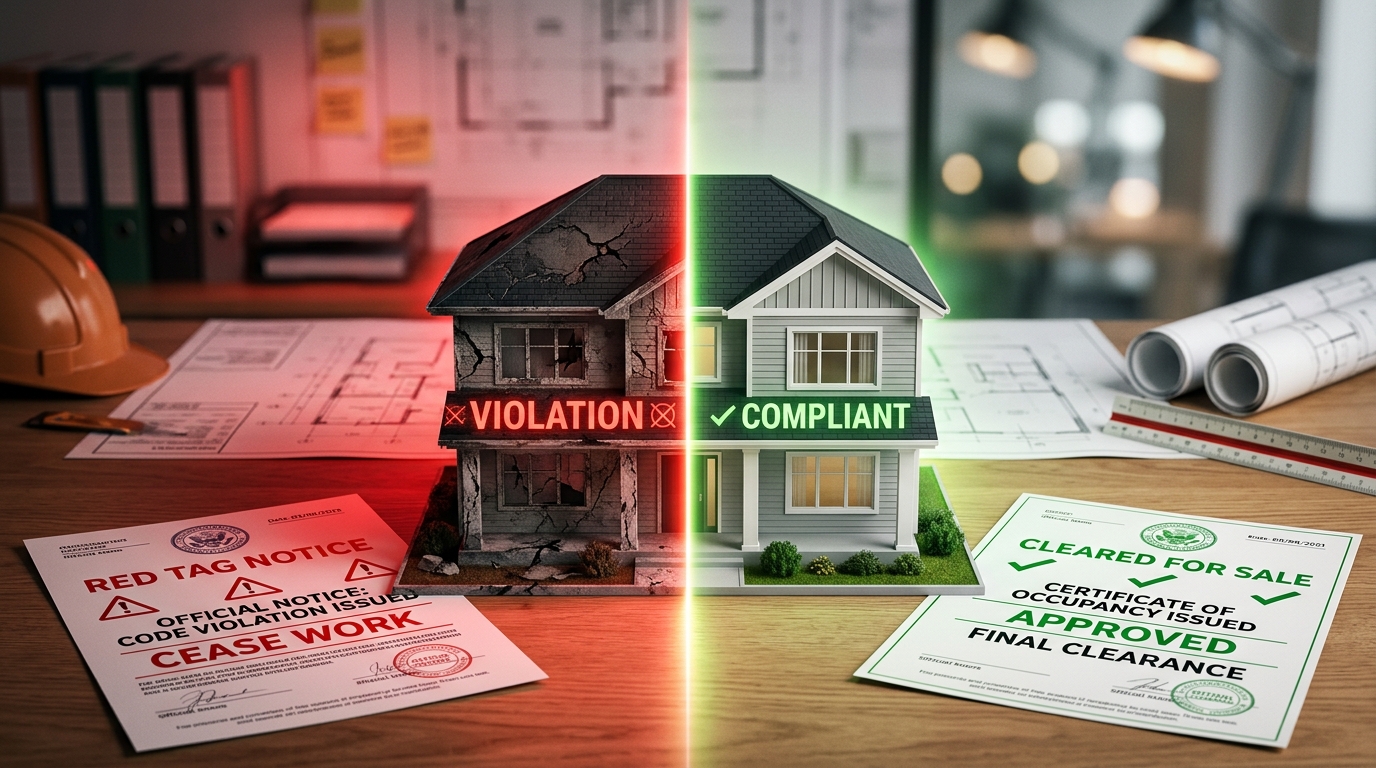
If you are in a similar situation right now, the first thing to understand is what a red tag actually is. It is an official notice from your local building department or code enforcement office stating that a structure or improvement on your property is out of compliance with local or state building codes. It does not mean your property is condemned or unsellable. But it does mean you have a real problem that needs a real plan.
Red tags show up for a variety of reasons. Some are minor and can be cleared up quickly. Others are more serious and take months to resolve. Either way, ignoring them is never an option, especially if you are trying to sell.
Common Reasons a Property Gets Red Tagged
Red tags do not always happen because a homeowner did something wrong on purpose. Sometimes people buy a property not knowing about unpermitted work that a previous owner completed. Other times a neighbor files a complaint, a routine inspection turns up an issue, or a natural event like an earthquake prompts a safety review.
Here are the most common reasons a property ends up with a building code violation and a red tag attached:
- Unpermitted additions or room conversions, such as a garage turned into living space or a bedroom added without permits
- Unpermitted electrical, plumbing, or HVAC work done by unlicensed contractors
- Structural modifications made without engineering approval or building permits
- Zoning violations where the use of the property does not match the zoning designation
- Illegal grading or retaining walls built without proper permits or engineering review
- Hazardous conditions such as exposed wiring, unstable structures, or fire safety violations
- Code violations from a prior owner that were never disclosed or resolved before transfer
Once a red tag is issued, the property owner has a responsibility to respond. In California, if the violation goes unaddressed long enough, it can be recorded against the title of the property. That is when it starts to directly affect your ability to sell or refinance.
How a Recorded Code Violation Changes Everything at Closing
Here is the part most sellers do not realize until it is too late. A red tag is not automatically recorded against your title the day it is issued. There is usually a grace period, often around six months in California, before the violation gets formally recorded. If the violation has not yet been recorded, you may still be able to sell with conventional financing, assuming the appraiser does not flag the underlying issue during their inspection.
But once that violation is recorded on title, it becomes a cloud on title. Conventional lenders will not fund a loan on a property with a recorded code violation. The sale either needs to happen with cash or the buyer needs to use private money, also called a hard money loan. The other option is to resolve the violation during escrow, get the red tag cleared, and then allow the lender to fund.
This is not a simple paperwork fix. Getting a red tag cleared can involve hiring a licensed contractor, pulling retroactive permits, getting as-built drawings prepared by a licensed designer, scheduling inspections, and waiting for the building department to sign off. That process can take weeks or months depending on the jurisdiction and the complexity of the violation.
Your Realistic Options for Selling a Red Tagged Property
The good news is you do have options. Selling a property with a red tag is not impossible. What it requires is being honest about your situation, understanding your timeline, and choosing the path that actually fits your circumstances.
Option 1: Clear the Violation Before You List
If the violation is relatively straightforward, clearing it before listing is often the cleanest move. For example, if an unpermitted room addition was done correctly but just never permitted, the fix might be as simple as hiring a building designer to prepare as-built drawings, submitting them to the building department, pulling a retroactive permit, passing the inspections, and getting the red tag lifted.
Once the red tag is cleared and the violation is removed from title, you can sell to any buyer using any type of financing. Your listing has a clean title and the issue is fully resolved. This path protects your sale price and opens your buyer pool all the way back up.
The downside is cost and time. Depending on the nature of the violation, clearing it could cost anywhere from a few hundred dollars to tens of thousands if significant construction work is required. And in some jurisdictions, the process simply takes a long time regardless of how straightforward the fix is.
According to the California Building Code 2025, all work discovered to be out of compliance must be brought to current code standards before a final inspection can be passed and a permit closed out. This means you cannot just do a partial fix and call it done.
Option 2: Disclose and Sell As-Is With a Price Adjustment
If clearing the violation before closing is not realistic for you financially or timewise, you can still sell the property. You just need to disclose the violation fully to any buyer, adjust the price to reflect the cost of resolution, and accept that your buyer pool is going to be smaller.
California law requires you to disclose known material defects on the Transfer Disclosure Statement. A recorded code violation is absolutely a material defect. Trying to hide it or hoping the buyer does not ask will not work. It will show up in the title search, and if it comes out after closing, you face serious legal exposure.
Selling as-is with full disclosure works best when the violation is not recorded yet or when you are targeting investors and cash buyers who understand what they are buying. Pricing the property honestly is the key. Buyers who take on a red tagged property need to factor in the time and money to resolve the issue themselves.
Option 3: Sell Directly to a Cash Buyer
Selling to a cash buyer is often the fastest and most practical solution when a red tag is involved. Cash buyers do not have lenders requiring clear title before funding. They are experienced with buying properties that have code violations, unpermitted work, and other title complications. They factor the resolution cost into their offer and take on the process after closing.
You still need to disclose everything. That never changes. But instead of spending months trying to fix the violation, wait for inspections, and find a buyer who can handle the complication, you sell directly, close fast, and move on.
For sellers dealing with code violations on top of other pressures, like financial stress, inherited properties, or time-sensitive situations, this is usually the most practical path. If you want to explore this option, our team works with sellers in exactly these kinds of situations. You can reach us anytime through the Contact Us page for a no-obligation cash offer.
Comparing Your Three Options Side by Side
Every seller’s situation is different. To help you think through which path makes the most sense for you, here is a simple comparison of all three options.
| Factor | Clear Violation First | Disclose and List As-Is | Sell to Cash Buyer |
|---|---|---|---|
| Time to Sell | Weeks to months | Weeks to months | Days to weeks |
| Upfront Cost to Seller | Can be high depending on scope | Low or none | None |
| Buyer Pool | Wide, all financing types | Narrower, mostly investors | Direct buyer, no competition needed |
| Sale Price | Full market value | Below market | Discounted but fast and certain |
| Risk of Deal Collapsing | Low after red tag is cleared | Moderate | Very low |
The right path depends on how much time you have, how serious the violation is, and how much you want to spend before the sale. Some violations are worth clearing. Others are simply too costly or time-consuming to make that the smart move.
If you are also dealing with title issues on top of a code violation, our post on how to remove a cloud on your title before selling your LA home covers steps that apply directly to situations like these.
What Disclosure Obligations Look Like in California
California sellers have some of the strictest disclosure obligations in the country, and building code violations fall squarely within those requirements. You cannot sell a home in California and pretend a red tag does not exist.
The Transfer Disclosure Statement and Code Violations
California Civil Code Section 1102 requires residential sellers to complete a Transfer Disclosure Statement. This form directly asks sellers whether they are aware of any violations of building permits, zoning ordinances, or other local, state, or federal laws. A red tag is exactly that kind of violation, and failing to disclose it can result in legal claims from the buyer after closing.
Even if the red tag has not yet been formally recorded on title, if you know it exists, you are required to disclose it. The legal standard in California is based on what you actually know, not just what appears in public records. This protects buyers from being surprised after they take ownership.
According to the California Department of Justice, real estate sellers are legally required to act in good faith and disclose all material facts known to them that could affect a buyer’s decision to purchase or the price they are willing to pay. A known code violation clearly qualifies as a material fact.
Fines and Penalties for Ignoring a Red Tag
Beyond the complications it creates for a sale, ignoring a red tag can get expensive fast. Most California cities and counties charge ongoing fines for unresolved code violations. Those fines accumulate daily in some jurisdictions. On top of that, if the violation goes far enough without resolution, the city or county has the authority to condemn the structure or order it demolished.
I have seen situations where sellers waited too long to deal with a red tag, and by the time they were ready to sell, the fines had grown into a five-figure number attached to the property. That becomes a lien that has to be paid off before any sale can close, which adds another layer of complexity on top of the original violation.
The sooner you deal with a red tag, the better. Whether you resolve it or sell as-is, taking action beats waiting every single time.
If you have an inherited property with red tags or other accumulated issues, our post on selling a house in a living trust in Los Angeles may also be relevant since inherited properties are one of the most common situations where red tags are discovered unexpectedly.
And if you want to see if we buy in your area, check out our Locations page to see where we actively purchase properties across California.
Conclusion
A red tag on your property feels serious, and it is. But it is not the end of the road. You can sell a property with a red tag, as long as you handle it the right way. Disclose it, understand your options, and pick the path that fits your timeline and financial situation.
Clearing the violation first gives you the widest buyer pool and the best sale price. Selling as-is works when the violation is priced into the deal and disclosed properly. Selling to a cash buyer gets you out the fastest with the least amount of friction.
Whatever you do, do not pretend the red tag is not there. It will show up, and dealing with it on your own terms is always better than having it blow up a deal at the worst possible moment.
Frequently Asked Questions
Can you sell a house in California if it has a red tag on it?
Yes, you can sell a property with a red tag in California. However, if the violation has been recorded against the title, conventional lenders will not fund the sale. This means your buyer pool narrows to cash buyers or buyers using private money loans. You also have the option of resolving the violation during escrow so the lender can fund, but that adds time and cost. Full disclosure of the violation to any buyer is required by California law regardless of how you proceed.
How long do you have to fix a red tag in California before it gets recorded on title?
The timeline varies by jurisdiction, but in many California counties the violation can be recorded on title after approximately six months of non-resolution. Some municipalities move faster and some slower. The key is not to assume you have time to spare. Once the violation is recorded, it becomes a formal cloud on title that blocks conventional financing and must be cleared before most buyers can close. The sooner you respond to a red tag, the more options you preserve.
Do you have to fix a red tag before selling the property?
No, you are not legally required to fix a red tag before selling. You are required to disclose it. Many sellers choose to sell as-is with the violation in place, adjusting the price to reflect the cost of resolution. This works best with cash buyers or investors who are comfortable taking on the process of clearing the violation themselves after closing. Just make sure every disclosure is done in writing and documented properly.
What is the difference between a red tag and a stop work order?
A stop work order is issued while work is actively in progress and halts construction until the violation is addressed. A red tag is a broader notice of non-compliance that can be issued even when no active construction is happening, such as when unpermitted work from years ago is discovered. Both require attention, but a stop work order is specifically tied to active construction while a red tag can apply to any existing condition on the property that violates local or state codes.
Can a cash buyer purchase a property with an active red tag?
Yes. Cash buyers are not subject to lender requirements, so a recorded code violation or active red tag does not automatically block the sale. Cash buyers evaluate the property based on its condition and the cost of resolving any issues, then make an offer that reflects those factors. This is one of the primary reasons sellers with red tagged properties often find the cash buyer route to be the cleanest and fastest path to closing.