
What Is a Soft-Story Building and Does Your LA Property Qualify
I talked to a property owner in the San Fernando Valley last year who had no idea her building was on the city’s mandatory retrofit list. She found out when a buyer’s agent pulled the records during escrow. The deal did not fall apart, but it definitely got complicated fast. If you are trying to sell an older multifamily property in Los Angeles, this is something you need to know about before you list.
A soft-story building is a structure where one floor, usually the ground level, is much weaker than the floors above it. This typically happens when the ground floor is open parking, a carport, or a large commercial space with few supporting walls. During an earthquake, that weak floor can collapse while the rest of the building is still standing, which is why it is so dangerous.
The 1994 Northridge earthquake made this problem impossible to ignore. According to the Los Angeles Department of Building and Safety (LADBS), multi-story buildings with weak or open ground-floor wall lines performed poorly and collapsed in that earthquake. That is what pushed the city to create a mandatory retrofit program years later.
Which Buildings Fall Under LA’s Mandatory Retrofit Program
Under Ordinance 183893, the City of Los Angeles requires certain wood-frame buildings to complete a seismic retrofit. Not every older building qualifies, but if yours fits the profile below, it is likely on the city’s radar.
Here is what makes a building subject to the soft-story retrofit requirement in Los Angeles:
- Two or more levels of wood-frame construction
- Built before January 1, 1978
- Has an open or weak ground floor, such as tuck-under parking or a large open wall line
- Contains two or more residential units (single-family homes and buildings with three or fewer units are generally excluded)
If your building received an official Order to Comply from LADBS, the clock has been ticking. The city sorted buildings into priority tiers based on size. Buildings with 16 or more units had a strengthening deadline of April 2024. Buildings with fewer than 16 units have a complete construction deadline of April 2026, according to compliance guidance published by AAA Engineering Design.
How to Check If Your Property Is on the LADBS Retrofit List
You do not have to guess whether your property is subject to this requirement. LADBS keeps a searchable database of all buildings that received an Order to Comply. You can look up your address directly on the LADBS website or through the city’s online permit portal.
The LA Times also published a searchable map of soft-story buildings in the city that is still useful for property owners. If your building is on the list and you have not started the retrofit process, you need to know that before a buyer’s inspector or title company finds it for you.
Honestly, finding out during escrow is the worst time. Finding out now, before you list, gives you options.
How Soft-Story Retrofit Requirements Affect Your Home Sale
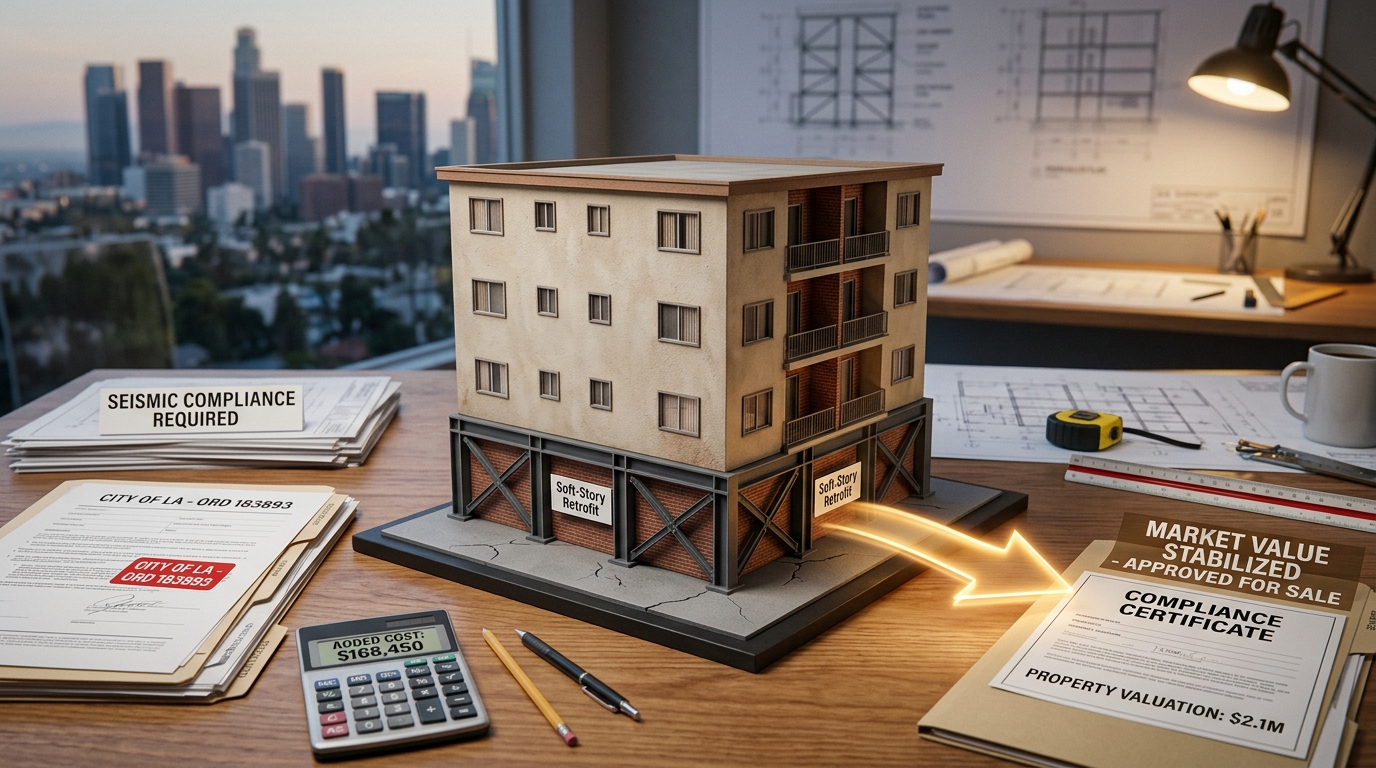
This is where sellers get caught off guard. A soft-story retrofit requirement does not automatically stop a sale. But it does create a serious conversation that every buyer, agent, and lender will want to have. And if the retrofit has not been done, that conversation usually involves money and timelines.
What Buyers and Their Lenders Will Want to Know
When a buyer or their agent discovers an open retrofit order on a property, the first questions they ask are how much will it cost and who is going to pay for it. That is completely fair. Soft-story retrofit costs in Los Angeles can range from roughly $60,000 to well over $130,000 depending on the size of the building and the type of structural reinforcement needed.
Common retrofit methods include:
- Portal frames, which are U-shaped steel frames inserted around garage openings. These are the strongest but also the most expensive option.
- Cantilevered columns, which are steel posts fixed at the base to support the building above. These work well in tighter spaces.
- Plywood shear walls or steel panels, which strengthen existing walls without removing the parking below.
Lenders financing the buyer’s purchase will also want to know the status of any open city orders. If the retrofit has not been completed and there is an outstanding order on the property, some lenders will require the work to be done before they fund the loan, or they will require money to be held in escrow to cover the cost.
Disclosure Requirements for Sellers in California
California law requires sellers to disclose known material facts that could affect the value or desirability of the property. A pending soft-story retrofit order from LADBS is exactly that kind of material fact. You are legally required to tell buyers about it.
This is not just about avoiding legal trouble after the sale closes. Being upfront actually helps the process move faster. Buyers who are told about the requirement upfront can factor it into their offer. Buyers who find out at the last minute tend to panic, renegotiate, or walk away entirely.
If you are dealing with other property complications alongside the retrofit issue, our guide on removing a cloud on your title before selling your LA home walks through how to clean up multiple issues at once before listing.
Your Options for Selling With an Open Retrofit Order
There is no single right answer here. The best path depends on your timeline, your budget, and how much you care about getting top dollar versus getting the sale done quickly. I have seen sellers go all three directions below and each one can work depending on the situation.
Option 1: Complete the Retrofit Before Listing
If you have the time and money to complete the seismic retrofit before you list the property, this is usually the strongest move. A building with a completed retrofit, a final inspection from LADBS, and proper documentation is a much cleaner product for buyers and lenders. You will attract a wider pool of buyers and you are more likely to get full market value.
The downside is the upfront cost and the construction timeline. Getting plans approved, pulling permits, and completing the work can take several months. If you are in a hurry, this path may not be realistic.
It is also worth knowing that in April 2025, FEMA canceled over $30 million in grant funding that had been earmarked for seismic retrofits in California under the Building Resilient Infrastructure and Communities (BRIC) program, according to The Foundation Works. That loss of funding has left many property owners without the financial help they were counting on. If you were waiting on grant money, you may need to find another way to cover costs.
Option 2: Sell As-Is With Full Disclosure and a Price Adjustment
Many sellers in Los Angeles choose to list the property as-is, disclose the open retrofit order, and adjust the asking price to reflect the cost of the work. This is completely legal and it can work well if you price it right and market it to the right buyers.
The key is being realistic about the discount. A buyer who is taking on the retrofit responsibility will want to see the price drop by at least as much as the estimated retrofit cost, and often a bit more to account for the hassle and uncertainty of managing construction after closing.
This approach works best when you are selling to an investor or an experienced buyer who is comfortable with the project. First-time buyers and buyers using conventional financing often struggle with these situations because of lender restrictions.
Option 3: Sell to a Cash Buyer Who Handles It Themselves
If you want to skip the construction, skip the negotiations over who pays for what, and just close fast, selling to a cash buyer is often the cleanest path. Cash buyers do not have lenders breathing down their necks, they are used to buying properties with open orders and unfinished work, and they will handle the retrofit themselves after they take ownership.
Yes, the offer will be lower than what you would get after completing the retrofit. But you also avoid months of construction management, the cost of hiring a structural engineer, and the risk that something unexpected comes up during the work. For many property owners, that trade-off makes a lot of sense.
If this sounds like the direction you want to go, you are welcome to reach out to us directly. Our Contact Us page is the fastest way to get a no-obligation cash offer on your property, open retrofit orders and all.
Comparing Your Selling Options for Soft-Story Properties
Every seller’s situation is different. Here is a simple breakdown to help you compare the three main paths side by side.
| Approach | Timeline | Sale Price Potential | Upfront Cost to Seller |
|---|---|---|---|
| Complete Retrofit First | 3 to 9 months | Full market value | High ($60K to $130K+) |
| Sell As-Is With Disclosure | Standard listing timeline | Below market (negotiated) | Low or none |
| Sell to Cash Buyer | Days to weeks | Discounted but fast | None |
The table above is a general guide. Costs vary based on building size, the type of retrofit required, and the current state of the property. Always get a structural engineering estimate before deciding which path to take.
If you are also navigating other complications with your LA property, our post on dealing with squatters rights in Los Angeles as a seller covers additional challenges that LA property owners often face when trying to sell.
Working With the Right People to Navigate the Process
Selling a property with an open soft-story retrofit order in LA is not something you should try to figure out alone. There are several professionals who can make a real difference depending on which path you choose.
Structural Engineers and Retrofit Contractors
If you decide to complete the retrofit before selling, you will need to hire a licensed structural engineer to design the retrofit solution and a licensed contractor to carry out the work. LADBS requires that plans be stamped by a licensed engineer before permits are issued.
Getting multiple bids is always smart. Retrofit costs can vary significantly depending on the contractor and the chosen method. Ask for references from other LA property owners who have completed similar work, and make sure the contractor is familiar with the LADBS permit process specifically. That familiarity can save you weeks of back-and-forth with the city.
Real Estate Agents Experienced With Distressed LA Properties
Not every real estate agent knows how to handle a sale involving open city orders. You want someone who has done it before, who knows how to price the property correctly, and who has relationships with buyers who are not scared off by a pending retrofit requirement.
An experienced agent will also know how to structure the disclosure properly so that it builds trust with buyers rather than creating panic. The framing matters. There is a big difference between presenting an open retrofit order as a problem and presenting it as a known, quantifiable item that has already been factored into the price.
For related reading on managing complex property sales in LA, check out our blog on Proposition 19 and its impact on inherited property taxes in Los Angeles, which covers another layer of complexity that affects many LA property owners.
Conclusion
Selling a house with a soft-story retrofit requirement in LA is very doable. You just need to know where you stand, be honest with buyers, and pick the path that fits your situation. Whether you complete the retrofit first, list as-is at an adjusted price, or sell to a cash buyer and let them handle it, there is a clear way forward for every type of seller.
The worst thing you can do is hide the issue or hope a buyer does not find out. They will find out. LADBS records are public. Being proactive puts you in control of the conversation instead of being caught off guard during escrow.
If you want to skip the headache entirely and just get a fair offer on your property as it stands today, reach out to our team. We buy properties in Los Angeles with open retrofit orders, city violations, and other complications. No repairs needed, no waiting around.
Frequently Asked Questions
Do I have to disclose a soft-story retrofit order when selling in LA?
Yes. California law requires sellers to disclose known material facts that affect the property’s value or desirability. An open LADBS retrofit order is exactly that. Failing to disclose it can expose you to legal claims after the sale closes. Always disclose it in writing as part of the standard seller disclosures.
Can I sell my soft-story building before the retrofit is done?
Yes, you can sell before the seismic retrofit is completed. Many sellers do this, especially when selling to investors or cash buyers. The retrofit obligation transfers with the property to the new owner. The important thing is that you disclose the open order clearly so the buyer knows what they are taking on.
How much does a soft-story retrofit cost in Los Angeles?
Costs vary based on building size and the type of structural work required. In general, property owners in Los Angeles should expect to spend somewhere between $60,000 and $130,000 or more for a full retrofit. Larger buildings with more complex structural needs will be at the higher end of that range. Always get at least two or three bids from licensed retrofit contractors before committing.
What happens if I miss the soft-story retrofit deadline in LA?
If you miss the compliance deadline set by LADBS, the city can issue fines and additional enforcement actions. In some cases, the city has the authority to place the property in a restricted use category. This can complicate renting, selling, or refinancing the property. The sooner you address the open order, the fewer complications you will face going forward.
Will a buyer’s lender have a problem with an open soft-story retrofit order?
Many conventional lenders will flag an open retrofit order and may require either the work to be completed before funding or that money be placed in escrow to cover the cost. This is one reason why cash buyers are often the easiest path for sellers dealing with open retrofit orders. Cash buyers do not have lender approval requirements and can move forward even with unresolved city orders on the property.