
You Got a Cash Offer on Your Home. Now What?
You filled out a form, a company called you back, and now you are staring at a cash offer for your house. It feels exciting, maybe a little overwhelming. But before you sign anything, one question is probably sitting in the back of your mind: is this thing actually legally binding?
The short answer is yes, but only once the right steps happen. Let me walk you through exactly how it works.
What Makes a Real Estate Contract Legally Binding
An Offer by Itself Is Not a Contract
This trips people up a lot. When a cash buyer sends you an offer letter or a written proposal, that document is not yet a binding contract. It is just a proposal. You can look at it, think it over, counter it, or ignore it entirely. Nothing is locked in yet.
A contract only becomes legally binding when both you and the buyer sign a written purchase agreement and that acceptance is communicated back to the other party. According to the Pennsylvania Association of Realtors, basic contract law requires a written offer, a written acceptance, and delivery of that accepted agreement to the buyer. If any one of those steps is missing, there may not be a valid contract.
So if someone texts you saying they will take your offer, that is probably not enough. It needs to be in writing and signed by both sides.
When Does It Actually Become Binding
The moment a purchase agreement is signed by both the buyer and the seller, the deal becomes a legally binding contract. In California, this document is called the California Residential Purchase Agreement, and it outlines everything including the sale price, closing date, and any conditions that need to be met before the sale can close.
According to Juro’s overview of California real estate purchase agreements, once both parties sign, the agreement is legally binding and enforceable under California Civil Code. California also requires the agreement to be in writing. Verbal agreements to sell real estate are not enforceable in the state.
How Cash Offers Are Different From Financed Offers
Fewer Contingencies Means Fewer Ways Out
Most traditional home sales include multiple contingencies. These are conditions that have to be met before the deal closes. Things like the buyer getting approved for a loan, the home passing inspection, or the property appraising at a certain value. If a contingency is not met, the buyer usually has the right to walk away without losing their earnest money deposit.
Cash offers are different. Since there is no lender involved, cash buyers typically do not need a financing contingency. Many cash buyers also waive the appraisal contingency. This means the contract has fewer built-in exit ramps, which can actually be a good thing for sellers because it reduces the chance the deal falls apart.
Here is a quick comparison of what contingencies typically look like in each type of sale:
| Contingency Type | Traditional Financed Sale | Cash Sale |
|---|---|---|
| Financing Contingency | Almost always included | Not needed, no lender involved |
| Appraisal Contingency | Usually required by lender | Often waived by cash buyer |
| Inspection Contingency | Standard 17 days in California | Sometimes included, sometimes waived |
| Title Contingency | Typically included | Usually still included |
| Sale of Buyer Property | Sometimes included | Not applicable for cash buyers |
With a cash sale, you end up with a cleaner, simpler contract that is less likely to fall through before closing.
What Happens If Someone Tries to Back Out
Once a signed contract exists, backing out is not simple. If a buyer walks away without a valid contingency reason, they risk losing their earnest money deposit, which in California is typically one to three percent of the sale price. If a seller backs out without a legitimate reason, the buyer can potentially sue for specific performance, which is a legal action that forces the seller to complete the sale.
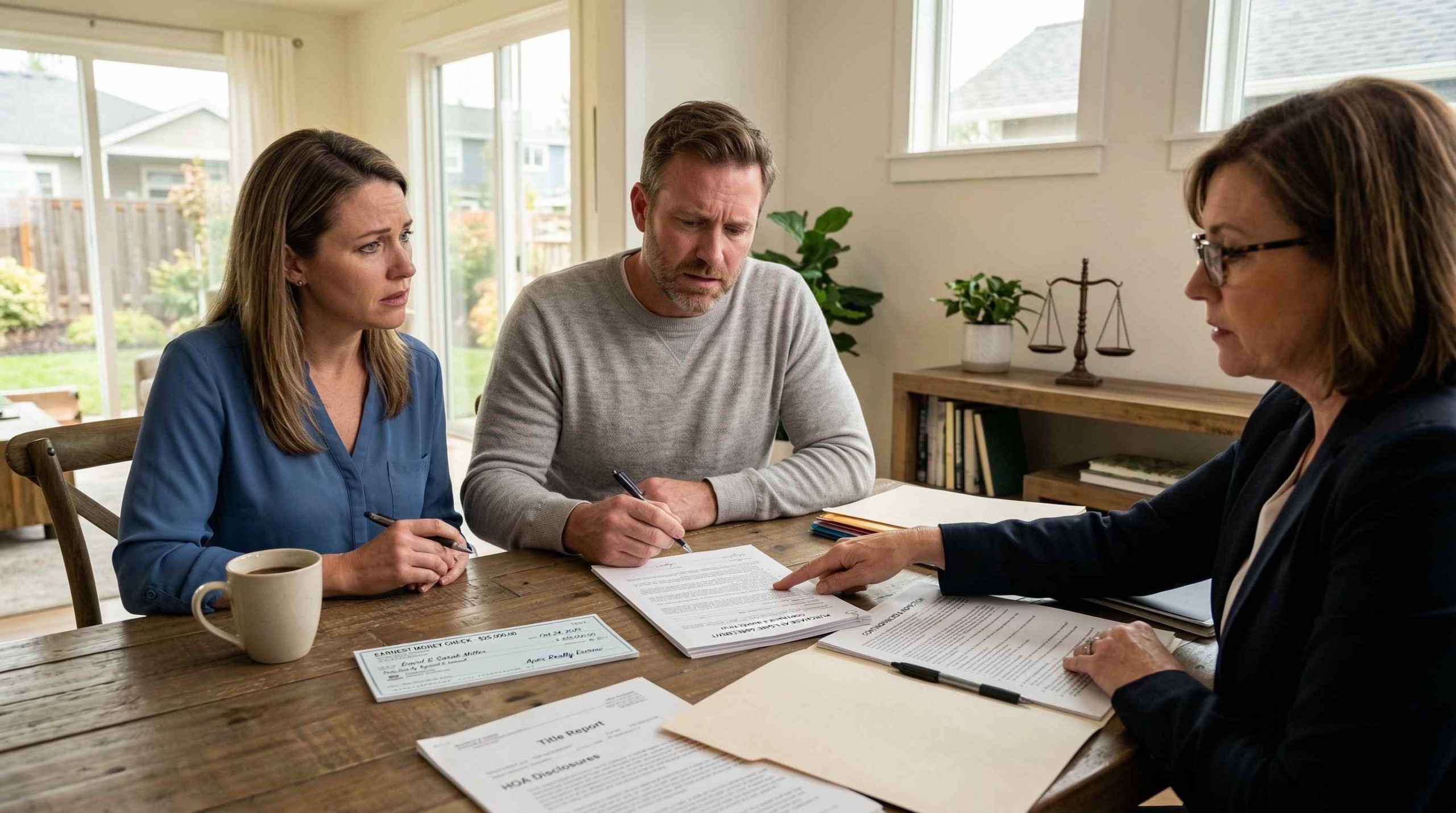
According to LegalMatch’s California Real Estate Contingency guide, contingencies in California must be removed in writing. If a buyer does not formally remove a contingency, it stays active, which means they could still cancel and get their earnest money back even if the deadline technically passed.
For sellers, this is worth understanding. It means you should make sure all contingencies are clearly removed in writing before assuming the deal is truly locked in.
What to Look for Before You Sign a Cash Offer
Read Every Line Before You Put Pen to Paper
Honestly, most people skip this part and that is where problems start. A cash offer contract should clearly state the purchase price, the closing date, which contingencies the buyer is keeping, and who is paying for what at closing.
Here are the things worth paying close attention to before you sign:
- The agreed sale price and whether it matches what was verbally discussed
- Who covers the closing costs, since some buyers cover all of them and some do not
- Whether there is an inspection contingency and what happens if the buyer finds something
- The closing timeline and whether it works for your situation
- The amount of the earnest money deposit and the conditions for keeping or returning it
- Whether the buyer has provided proof of funds to confirm they can actually close
A reputable cash buyer will not pressure you to sign quickly without letting you read through everything. If someone is rushing you or telling you the offer expires in an hour, that is a red flag worth taking seriously.
Ask for Proof of Funds Before Moving Forward
This one is easy to forget but really important. A cash offer is only as good as the buyer’s ability to actually pay. Before you sign anything, ask to see a proof of funds letter or bank statement showing the buyer has the money available to close. Any legitimate cash buyer should be happy to provide this without hesitation.
We provide proof of funds as a standard part of every offer we make. If you want to understand what the full cash sale process looks like, our post on what happens during a 15 minute home walkthrough gives you a clear picture of how it all unfolds.
How We Handle the Contract Process
Transparency From the First Signature to the Last
At Buy Your Properties, we want you to understand exactly what you are signing. Our purchase agreements are straightforward. We go through every section with you, answer your questions, and never pressure you to sign anything you are not comfortable with.
We also cover closing costs in our cash deals, which means the number you see in the contract is the number you walk away with. No hidden fees, no surprises at the closing table.
If you are thinking about a cash sale and want to know how our offer compares to what you might net from a traditional listing, our post on how we provide fair market value while paying cash breaks down the math in plain English.
And if you are ready to get a no-pressure offer and see what we would pay for your home, just reach out through our contact page.
Conclusion
A cash offer by itself is not legally binding. The legally binding moment happens when both parties sign a written purchase agreement. Once that document is signed, the deal is a real contract with real consequences if either side backs out without a valid reason. Cash offers tend to have fewer contingencies than financed deals, which actually makes them more reliable for sellers. Just make sure you read the contract, check for proof of funds, and understand what you are signing before you commit.
If you have questions about how a cash sale contract works or want to see one in action, we are happy to walk you through it.
Frequently Asked Questions
Is a verbal cash offer on a home legally binding?
No. In California and most states, a verbal agreement to sell real estate is not legally enforceable. The offer and acceptance both need to be in writing and signed by both parties for the contract to be valid.
Can a cash buyer back out after signing a purchase agreement?
Yes, but usually only if there is an active contingency that was not met or if the seller breached the contract. If the buyer simply changes their mind after all contingencies are removed, they risk losing their earnest money deposit.
Can a seller back out of a signed cash offer?
Technically yes, but there can be serious legal consequences. The buyer could sue for specific performance, which is a court order requiring the seller to complete the sale. Sellers should not back out without consulting a real estate attorney.
What is earnest money and do cash sales require it?
Earnest money is a good faith deposit that shows the buyer is serious. In California it is typically one to three percent of the purchase price. Most cash sales do include earnest money, though some cash buyers may waive it depending on the situation.
How fast can a cash sale close in California?
Cash sales can close in as little as seven to ten days since there is no lender involved. The main thing that takes time is the title search, which usually needs about seven days. We can often close in seven to ten days depending on your timeline.