
The San Fernando Valley has always had a positioning problem in Los Angeles real estate conversations. Sandwiched between glamorous Westside addresses and the cool-kid credibility of Northeast LA, the Valley gets dismissed as “too suburban,” “too sprawling,” or “just not as exciting.” But here’s what that narrative misses: the Valley is home to more than 1.7 million people, encompasses over 260 square miles, and sits within 15 miles of Downtown Los Angeles for much of its footprint. That proximity — what we call the 15-Mile Edge — is one of the most underappreciated value drivers in all of Southern California real estate.
If you’re a homeowner in Burbank, Glendale, Studio City, Sherman Oaks, North Hollywood, or dozens of other Valley communities, that proximity to the city’s economic core is quietly working in your favor every single day — driving buyer demand, holding prices firm, and creating a steady stream of investors and cash buyers who know the Valley’s long-term fundamentals are impossible to ignore. This guide breaks down the Valley’s market, why your location within the 15-mile radius matters to buyers, and how to decide whether a traditional listing or a direct cash sale is the right path for your situation.
The 15-Mile Edge: What It Means for Valley Sellers
The concept is simple: the closer a Valley neighborhood sits to Downtown Los Angeles and the major employment corridors of Burbank, Glendale, Universal City, and the Westside, the more its real estate is supported by commuter demand, entertainment industry workers, and buyers who want suburban comfort without sacrificing urban access.
The Valley’s eastern neighborhoods — Burbank, Glendale, Studio City, Toluca Lake, North Hollywood — sit 7–13 miles from Downtown LA, making them some of the most commute-friendly suburban markets in the entire metro area. Sherman Oaks and Encino, slightly further west, still clock in at 12–17 miles from the civic center, and enjoy the benefit of direct freeway access via the 101 and 405. Even Woodland Hills and West Hills, at the Valley’s western edge, remain within a 20–25 mile radius while offering dramatically more home for the money than anything closer to the Westside.
This geographic reality has made the Valley a permanent fixture on the shortlist for relocating families, entertainment industry professionals, and out-of-state buyers who need proximity to LA’s job centers but refuse to pay Silver Lake or Brentwood prices to get it.
San Fernando Valley: 2025–2026 Market Snapshot
The Valley is a large and diverse market — price points vary enormously by neighborhood. Here’s a city-by-city breakdown of current conditions:
| Neighborhood/City | Median Price (2025) | Avg. Days on Market | Key Buyer Profile | Distance to DTLA |
|---|---|---|---|---|
| Burbank | ~$1.1M–$1.22M | 48–56 days | Entertainment workers, families | ~9 miles |
| Glendale | ~$1.2M | 40–50 days | Commuters, families, Armenian community | ~8 miles |
| Studio City | ~$1.93M | 40–60 days | Entertainment execs, affluent families | ~9 miles |
| Sherman Oaks | ~$1.5M | 72–79 days | Young professionals, Westside transplants | ~14 miles |
| North Hollywood | ~$845K | 55–60 days | First-time buyers, creatives, investors | ~10 miles |
| Woodland Hills | ~$900K–$1M | 50–65 days | Families, move-up buyers | ~23 miles |
| Encino | ~$1.5M+ | 50–65 days | Luxury buyers, Beverly Hills alternatives | ~15 miles |
| Calabasas | ~$2.4M+ | 50–70 days | Luxury, celebrity adjacent, gated communities | ~27 miles |
Valley-wide, the median home price sat at approximately $900,000 in mid-2025, with inventory up significantly — active listings rose over 30% year-over-year, giving buyers more options and shifting the market toward balance. Still, well-priced, well-presented homes in prime corridors continue attracting multiple offers. The market has moderated from the pandemic frenzy but remains fundamentally strong, backed by persistent demand and limited land availability.
The Valley’s Housing Stock: A Post-WWII Legacy
Understanding the Valley’s housing stock is critical for sellers — because it directly shapes the cash buyer market. The San Fernando Valley underwent its most explosive residential growth between the late 1940s and early 1970s. As returning veterans and their families sought suburban space outside crowded Central LA, the Valley was converted from agricultural land into tract neighborhoods at a breathtaking pace.
The result is that a substantial portion of today’s Valley housing stock is 50 to 80 years old. These homes — classic California ranch homes, post-war bungalows, mid-century moderns, and early tract houses in Burbank, North Hollywood, Van Nuys, and Canoga Park — are often structurally sound but carry the deferred maintenance and dated interiors that make traditional MLS listings challenging and expensive to prepare.
Cash buyers, flippers, and developers have taken notice. For investors, these post-war Valley homes represent a classic opportunity: buy at a discount for condition, renovate to current buyer expectations, and resell or rent at a substantial premium. For sellers who don’t want to manage that renovation process, a direct cash sale sidesteps the entire problem.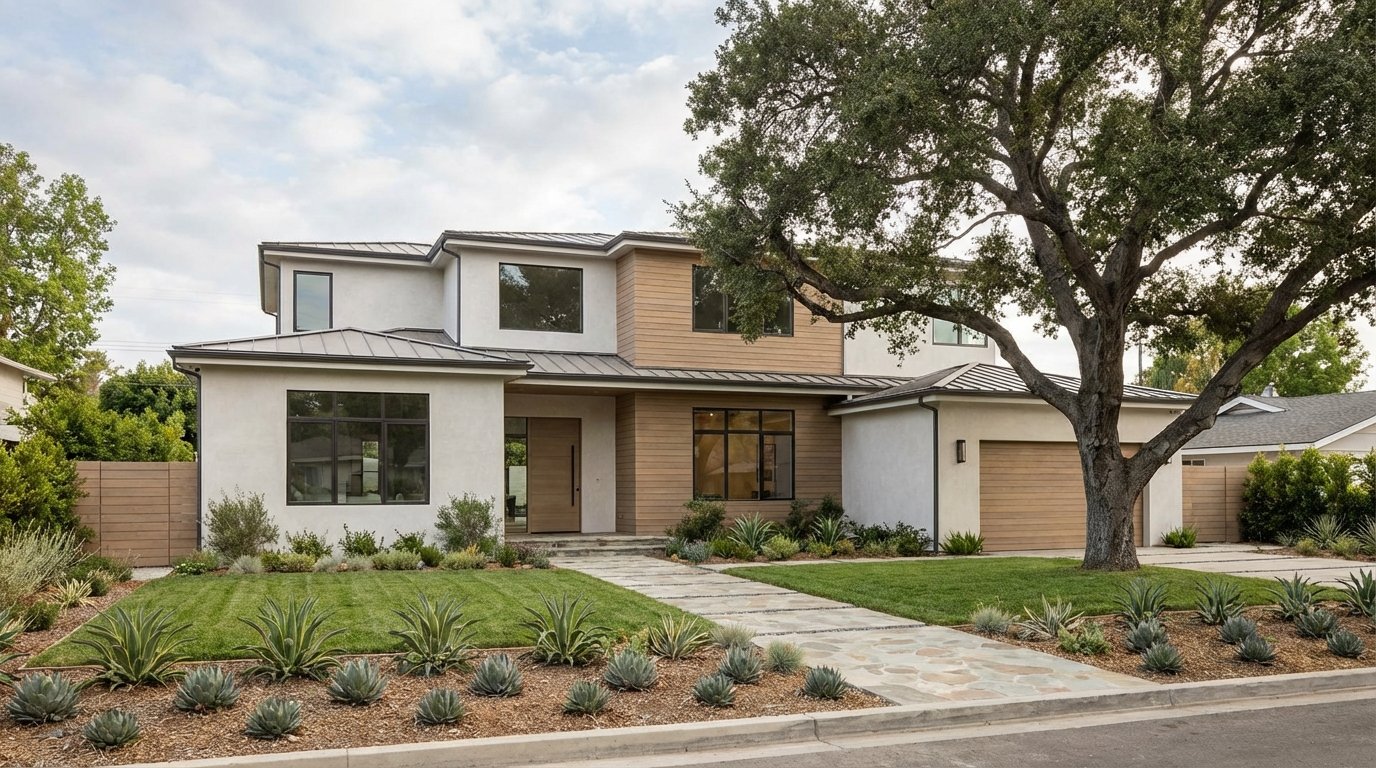
Why Cash Buyers Are Active Across the Valley
Cash buyer activity in the San Fernando Valley is driven by several overlapping forces that create a reliable market for sellers seeking a direct exit:
Entertainment Industry Concentration
Burbank is home to Warner Bros., Walt Disney Studios, and Cartoon Network. Universal City sits just south of the Valley proper. Glendale hosts DreamWorks Animation. This concentration of entertainment industry employers creates sustained housing demand from well-compensated creative professionals — many of whom purchase with cash or large down payments. The Burbank/North Hollywood/Glendale market saw average sales prices of $1.2M–$1.24M in mid-2025, and homes in this corridor remain in consistent demand.
Investor and ADU Development Activity
The Valley’s Q2 2025 multifamily transaction volume reached $586 million — a strong indicator of investor confidence in the rental market. Single-family homes with ADU potential are particularly sought after, as California’s expanded ADU laws make it easier than ever to add a second unit and generate rental income. Cash investors targeting ADU-capable properties can close quickly and begin construction without the delays that financed buyers often encounter.
Westside Buyers Migrating to the Valley
A notable trend documented by multiple Valley real estate teams heading into 2026: buyers priced out of Silver Lake, Echo Park, and the Westside are increasingly choosing Valley communities as their primary market. Sherman Oaks, described as Beverly Hills’ quieter, more accessible sibling, has seen prices climb 7.1% year-over-year to $1.5M. Studio City reached $1.93M average, up 18.5% from the prior year. These buyers often bring significant equity from previous homes and are positioned to move fast with strong offers.
Post-Wildfire Displacement Demand
Early 2025 wildfires removed approximately 16,000 residences from the LA housing supply. While the direct impact on Valley inventory was limited, displacement demand has increased competition in Valley communities that serve as natural relocation destinations for families from Altadena, Pacific Palisades, and other fire-affected areas. This has added a layer of urgency to buyer activity that particularly benefits sellers offering move-in ready or quick-close options.
The Challenges of Selling a Valley Home Through Traditional MLS
While strong demand supports Valley pricing, the traditional listing process carries specific challenges in this market:
- Condition expectations have shifted: The era of “list on Friday, sold by Monday” is largely over for Valley sellers. Today’s buyers have more inventory to compare and higher condition expectations. Homes with dated kitchens, original bathrooms, and deferred maintenance take longer to sell and often require price reductions.
- HOA complications: Valley condo and townhome inventory has surged, largely because of HOA financial issues. Complexes with insufficient insurance or reserve funds cannot qualify for conventional financing — limiting buyers to cash and forcing sellers into either price cuts or prolonged listing periods.
- Insurance challenges: Southern California’s wildfire risk has driven insurance carriers out of many Valley zip codes or dramatically raised premiums. Homes in high fire risk areas face reduced buyer pools as insurance costs make financing difficult and ownership expensive.
- Renovation costs: A post-war Valley ranch needing a full kitchen, bathroom, and systems update can require $60,000–$120,000 in pre-sale investment, with no guarantee of full return in a market where buyers have more options than they did in 2021–22.
- Longer days on market: Valley-wide days on market averaged 58 days in mid-2025 — up from 44 days the prior year. This represents months of carrying costs, mortgage payments, property taxes, and maintenance for sellers who hold while listing.
Traditional MLS vs. Cash Sale: Valley Comparison
| Factor | Traditional MLS Listing | Direct Cash Sale |
|---|---|---|
| Closing Timeline | 60–90 days (Valley avg. ~58 DOM + escrow) | 10–21 days |
| Pre-Sale Preparation | $60K–$120K for post-war Valley homes | None — as-is |
| Agent Commission | 5–6% (~$45K–$60K on $900K median) | $0 |
| HOA Financing Risk | High for condos with troubled HOAs | Not applicable |
| Insurance/Fire Zone Risk | May deter financed buyers | No impact on cash offer |
| Staging & Photography | $3,000–$8,000 | Not required |
| Offer Contingencies | Inspection, appraisal, financing | None |
| Carrying Cost Exposure | Months of mortgage + taxes during listing | Eliminated at close |
When a Cash Sale Makes Sense for Valley Homeowners
A direct cash sale is particularly compelling for Valley sellers in these circumstances:
- Long-term owners with low cost basis: Homeowners who bought in North Hollywood, Van Nuys, or Canoga Park in the 1980s or 1990s for $150,000–$300,000 are now sitting on $600,000–$900,000 in equity. A cash sale converts that wealth quickly, without the renovation investment required to maximize MLS pricing.
- Homes with deferred maintenance or system failures: Post-war Valley homes often have original or aging electrical panels, galvanized plumbing, outdated HVAC, and roofs past their useful life. These issues trigger lender requirements and buyer credits in a traditional sale. Cash buyers absorb them in the offer price.
- Condo sellers with HOA problems: If your condo association has reserve fund shortfalls, pending litigation, or inadequate insurance, conventional buyers cannot finance the purchase. Cash is the only realistic exit. Read more about selling under financial pressure in Los Angeles.
- Sellers facing life transitions: Divorce, estate settlement, job relocation, or downsizing to retirement often benefit from the speed and certainty of a cash sale over the uncertainty of a traditional listing. See our guide on downsizing and retirement home sales in Los Angeles.
- Fire or water damaged properties: Valley homes affected by smoke, water, mold, or structural issues face major financing obstacles. Cash buyers specialize in exactly these situations. Our fire and water damage selling guide covers what to expect.
- Landlords with tenant complications: LA’s rent stabilization ordinances protect tenants in pre-1978 buildings from easy removal. Cash investors buy with tenants in place, allowing landlords to exit without the legal complexity of vacancy-first delivery.
Net Proceeds Example: North Hollywood Ranch Home
Let’s look at a realistic scenario: a 3-bedroom, 1,400 sq ft post-war ranch in North Hollywood with original systems, a dated kitchen, and a roof nearing the end of its useful life. Comparable renovated homes in the neighborhood sell for approximately $950,000.
| Scenario | Traditional MLS Sale | Direct Cash Sale |
|---|---|---|
| Gross Sale Price | $950,000 | $800,000 |
| Pre-Sale Renovation | –$75,000 | $0 |
| Agent Commission (5.5%) | –$52,250 | $0 |
| Staging & Photography | –$4,500 | $0 |
| Carrying Costs (75 days) | –$9,500 | $0 |
| Closing Costs | –$9,500 | –$4,000 |
| Net Proceeds | ~$799,250 | ~$796,000 |
The difference is less than $4,000 — and the traditional seller absorbed $75,000 in renovation costs, 75+ days of market exposure, inspection contingency risk, and financing fallout risk to get there. In a market where homes are sitting longer and buyer contingencies are more aggressive, the math increasingly favors cash for unrenovated Valley homes.
The Valley’s Strongest Markets for Cash Sellers
Not all Valley neighborhoods attract equal cash buyer interest. Here are the areas with the most active investor and cash buyer presence:
North Hollywood & NoHo Arts District
North Hollywood is one of the Valley’s most active cash buyer markets, driven by its combination of relative affordability (~$845K median), entertainment industry proximity, Metro Red Line access, and ongoing neighborhood transformation. The NoHo Arts District has attracted significant investment, and homes with ADU potential on larger lots draw strong cash interest from buy-and-hold investors.
Burbank
Burbank’s studio corridor — with Warner Bros., Disney, and other major employers — creates consistent demand. At $1.1M–$1.22M median, Burbank’s older bungalow stock in neighborhoods like Magnolia Park and near Downtown Burbank draws renovation-focused cash buyers who target the gap between fixer and move-in-ready pricing. Learn more about selling your Burbank home in the entertainment industry market.
Glendale
Glendale’s dual identity — part LA suburb, part city with its own downtown, the Americana at Brand, and a dense residential character — makes it consistently desirable. At approximately $1.2M median, Glendale attracts both end-user buyers and investors, with the eastern foothills commanding premium views. Our Glendale cash sale guide provides market-specific detail.
Van Nuys & Panorama City
With more affordable price points in the $700K–$850K range, Van Nuys and Panorama City attract investors specifically targeting older housing stock for renovation and rental conversion. These neighborhoods offer significant upside potential for buyers willing to take on deferred maintenance, making them ideal for sellers who want to exit quickly and avoid renovation investment.
The 5-Step Cash Sale Process for Valley Sellers
- Request a cash offer. Contact BuyYourProperties.com with your property address, bedroom/bath count, and general condition assessment.
- Single walkthrough. A representative visits once to assess the property. No staging, deep cleaning, or preparation required.
- Review written offer. Receive a firm cash offer within 24–48 hours. Compare this against your estimated net proceeds from an MLS sale using realistic renovation, commission, and carrying cost figures.
- Open escrow. A licensed California escrow company handles all closing documentation, title clearance, and fund disbursement.
- Choose your closing date. Close in as few as 10 days or take more time if your relocation or life circumstances require it. You set the schedule.
5 Selling Tips for San Fernando Valley Homeowners
- Know your post-war era: Homes built in the 1940s–1960s and 1960s–1970s carry distinct renovation profiles. If your home has original knob-and-tube wiring, galvanized pipes, or a flat roof, factor these into your cost-to-list estimate before comparing to a cash offer.
- Check your HOA financials: If you’re selling a condo or townhome, request the HOA reserve fund study and insurance documentation before listing. If there are shortfalls, your buyer pool may be limited to cash — and pricing accordingly upfront saves time.
- Verify your insurance situation: If your property is in a high fire risk zone, verify that your homeowner’s insurance is current and transferable. Gaps in coverage can derail traditional sales at the last minute.
- Get the tax math right: Long-term Valley owners with decades of appreciation face significant capital gains exposure. Consult a CPA before close, particularly if you’re 55 or older and may qualify for Proposition 19 tax base transfer benefits.
- Evaluate net proceeds honestly: Use a realistic renovation estimate — not a best-case scenario — when comparing MLS versus cash sale options. Post-war Valley homes routinely generate $60,000–$120,000 in renovation costs before they’re competitive with renovated comparables.
Frequently Asked Questions
Is the San Fernando Valley a good market for selling as-is in 2026?
Yes. The Valley’s combination of aging housing stock, persistent investor demand, and strong location fundamentals makes it one of Southern California’s most active as-is buyer markets. Homes in Burbank, North Hollywood, Glendale, and even Van Nuys attract cash offers reliably, particularly for properties with deferred maintenance or tenant complications.
Why are cash buyers specifically interested in post-war Valley homes?
Post-war ranch homes and tract houses in the Valley have proven renovation upside: buy at a discount for condition, update kitchen/baths/systems, and resell to the large pool of buyers seeking move-in-ready Valley homes. With Valley prices 30–50% below Westside equivalents, the renovation math pencils out reliably for experienced investors.
I have tenants in my Valley rental property. Can I still sell for cash?
Yes. Cash investors routinely purchase tenant-occupied properties in the Valley without requiring vacant delivery. They factor existing lease terms and rent levels into their offer pricing and assume landlord responsibilities at close. This is especially valuable in communities covered by LA’s Rent Stabilization Ordinance, where formal eviction can take months.
How does Valley pricing compare to other LA markets for cash sales?
The Valley generally offers more square footage per dollar than comparable Westside or NELA markets, which benefits both sellers and buyers in cash transactions. A cash buyer can purchase a 1,400 sq ft Valley ranch for $800,000 where the same investment buys significantly less in Silver Lake or West Hollywood. That value proposition drives a consistent and competitive cash buyer market.
What disclosures am I required to make when selling my Valley home for cash?
California requires a Transfer Disclosure Statement (TDS) and Natural Hazard Disclosure (NHD) regardless of whether the sale is traditional or cash. Cash buyers purchasing as-is still receive these disclosures — the difference is that they waive repair contingencies. Sellers must disclose known material defects honestly in all transaction types.
Ready to Sell Your San Fernando Valley Home?
The San Fernando Valley’s 15-Mile Edge is real — and it’s working for you whether you’re in Burbank’s studio corridor, Glendale’s tree-lined neighborhoods, North Hollywood’s evolving arts district, or the broader bedroom communities that stretch toward Woodland Hills and Chatsworth. Your location, your equity, and your home’s story have real value to a large and active pool of buyers and investors who know exactly what the Valley offers.
At BuyYourProperties.com, we buy homes directly across the San Fernando Valley. No repairs, no commissions, no open houses, no surprises. We close on your timeline and provide written cash offers within 24–48 hours.