
After decades of mortgage payments, school pickups, and weekend maintenance projects, the family home has served its purpose beautifully. But retirement changes the math. The four-bedroom house with the big yard that made perfect sense in your 40s may feel like a burden in your 60s and 70s — too much space to maintain, too expensive to carry on a fixed income, and full of stairs that weren’t a problem fifteen years ago.
For Los Angeles homeowners approaching or entering retirement, downsizing isn’t just about square footage. It’s about unlocking decades of equity, reducing monthly expenses, protecting your financial flexibility, and finding a home that actually fits the life you want to live now. A cash sale is the fastest, simplest way to make that transition happen — and California’s Proposition 19 makes it significantly more financially rewarding than most retirees realize.
The Retirement Downsizing Wave in Los Angeles
Baby Boomers Are Sitting on Enormous LA Equity
The numbers tell a compelling story. In 2025, baby boomers represent approximately 31.1 million homeowners nationally, with a 78% homeownership rate — the highest of any generation. In Los Angeles, where many boomers purchased their homes in the 1980s and 1990s for a fraction of today’s values, the equity accumulated over 30 to 40 years of ownership is extraordinary. A home purchased in Sherman Oaks in 1988 for $280,000 may be worth $1.4 million or more today. That gap — between what’s owed and what the property is worth — represents generational financial security waiting to be activated.
Yet many retirees stay put out of inertia, emotional attachment, or fear of the downsizing process itself. The result: they remain over-housed, over-extended on maintenance and taxes, and under-liquid in the years when financial flexibility matters most.
Why LA Retirees Are Making the Move Now
The primary reasons Los Angeles retirees are choosing to downsize in 2025–2026 include:
- Fixed income pressure: Property taxes, insurance, and maintenance costs on a large LA home can easily run $3,000 to $6,000 per month — unsustainable when income drops at retirement
- Empty nest reality: As of 2022, 16% of U.S. households were “empty nesters” — adults over 55 with no children at home who have at least two extra bedrooms and have lived in the home for over a decade. That’s a massive pool of over-housed retirees
- Physical accessibility: Multi-story homes become harder to navigate as mobility changes. Single-story layouts, elevators, and age-in-place features become priorities
- Desire for simplicity: Smaller homes mean less cleaning, less maintenance, and more time for travel, family, and the activities retirement is actually for
- Portfolio rebalancing: Financial advisors increasingly recommend that retirees not hold a disproportionate share of their net worth in an illiquid asset. Selling and reinvesting equity into income-producing accounts or a smaller home generates diversification and cash flow
The Prop 19 Advantage: Keeping Your Low Property Tax Base
The Tax Problem That Keeps Seniors Stuck
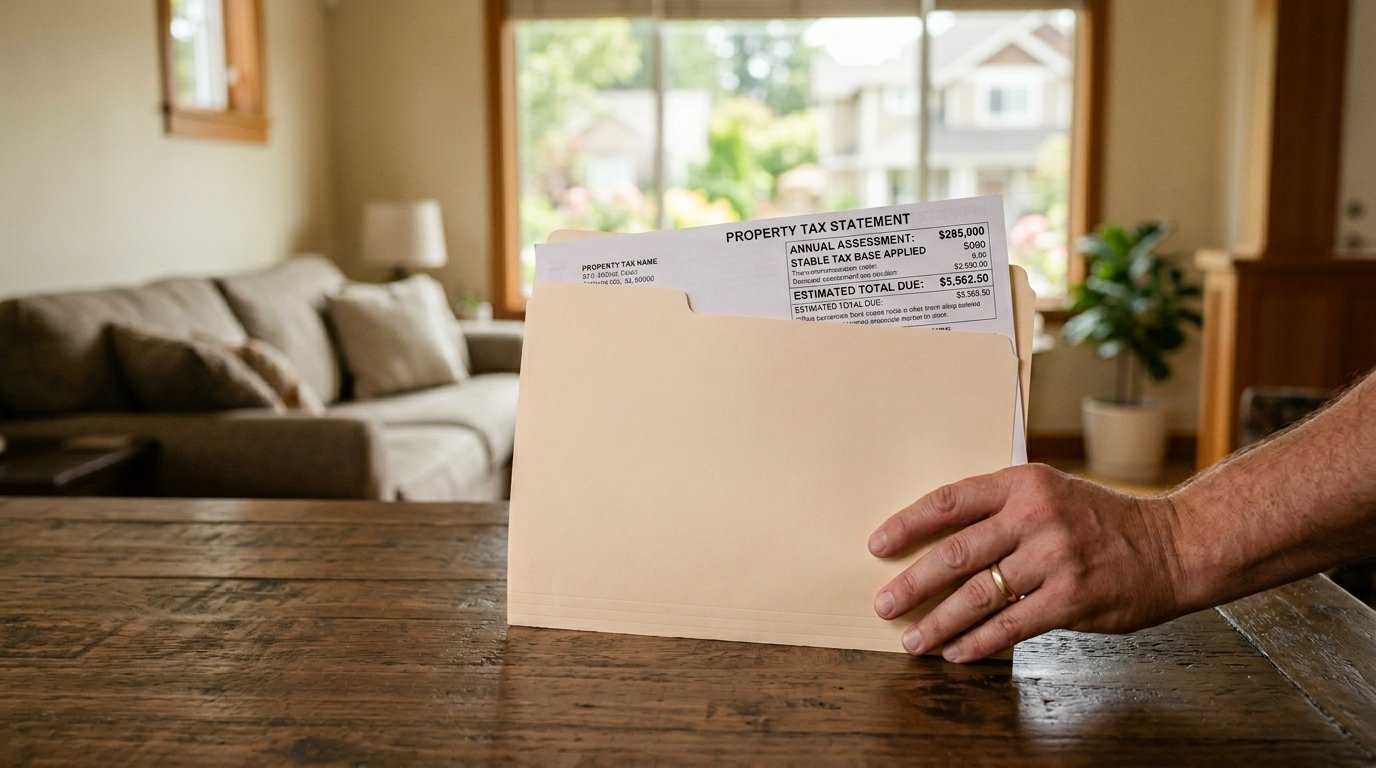
For decades, one of the biggest barriers to downsizing in California was the property tax cliff. Under Proposition 13, long-time homeowners pay property taxes based on their original purchase price, adjusted no more than 2% per year. A retiree who bought in 1990 for $300,000 might pay just $4,500 per year in property taxes — even if the home is now worth $1.3 million. The moment they sell and buy a replacement home at current market prices, their tax bill could triple or quadruple overnight. That “lock-in” effect kept hundreds of thousands of California seniors trapped in homes they’d outgrown.
Proposition 19 — operative since April 1, 2021 — changed everything.
What Proposition 19 Does for LA Retirees
According to the California State Board of Equalization, Proposition 19 allows homeowners who are age 55 or older (or severely and permanently disabled) to transfer the taxable value of their current principal residence to a replacement property up to three times in their lifetime, anywhere in California’s 58 counties. Key provisions include:
- Statewide portability: The replacement home can be anywhere in California — not just the same county. Moving from the Westside to Pasadena, to San Diego, or to Palm Springs all qualify
- Any price replacement: Unlike the old Propositions 60/90, you can now replace with a more expensive home (with a proportional tax base adjustment for the difference). You are no longer limited to “equal or lesser value”
- Three lifetime uses: Under prior law (Props 60/90), the benefit was one-time only. Prop 19 allows the transfer up to three times, giving retirees flexibility across multiple moves
- Two-year window: The replacement home must be purchased within two years of the sale of the original home (in either order)
- Wildfire victims: LA homeowners whose properties were damaged by the January 2025 Eaton Fire or Palisades Fire may also qualify for Prop 19’s disaster victim provisions, which have no age requirement
What This Means in Real Dollars
The savings under Prop 19 can be extraordinary in the LA market, where the gap between long-held assessed values and current market prices is wider than almost anywhere else in California. According to a detailed analysis from LA Homes, a senior paying $3,000 annually in property taxes who moves to a home that would normally generate $12,000 annually in taxes continues to pay close to $3,000 — saving roughly $9,000 per year, or close to $90,000 over a decade.
| Scenario | Without Prop 19 | With Prop 19 | Annual Savings |
|---|---|---|---|
| Downsize to equal-value home | ~$12,000/yr (new assessed value) | ~$3,000/yr (transferred base) | ~$9,000/yr |
| Downsize to slightly more expensive home | ~$14,000/yr | ~$4,200/yr (blended base) | ~$9,800/yr |
| Move to 55+ community in another county | Tax reassessment at market | Low base transfers statewide | Varies by county |
To claim the benefit, file Form BOE-19-B (“Claim for Transfer of Base Year Value to Replacement Primary Residence for Persons at Least Age 55”) with the county assessor of the county where your replacement property is located. The form requires proof of age, proof that the original property was your primary residence, and documentation of both sale and purchase transactions. Filing must occur within three years of the replacement property’s purchase.
Why a Cash Sale Makes the Downsizing Process Simpler
The Traditional Sale Is Emotionally and Logistically Draining
A conventional listing requires weeks of preparation: decluttering decades of accumulated belongings, repainting, landscaping, staging, open houses, strangers walking through bedrooms and closets, inspection negotiations, and an average of 45 to 90 days from listing to close — all while managing the stress of simultaneously finding and securing a replacement property. For retirees, especially those dealing with health changes or the death of a spouse, that process can be genuinely overwhelming.
A cash sale eliminates most of that friction entirely.
No Repairs or Staging Required
Long-time homeowners often have deferred maintenance that would require significant investment before a traditional listing: outdated kitchens, older HVAC systems, aging roofs, cosmetic wear from decades of use. Preparing for the open market might mean $30,000 to $80,000 or more in pre-sale renovation costs — money that comes directly out of your retirement proceeds and months of additional stress. Cash buyers purchase as-is. Whatever condition the home is in — perfectly maintained or in need of updating — no repairs are required before the sale.
You Set the Timeline
One of the most underappreciated advantages for retirees is timing flexibility. With a cash buyer, closing can happen in as few as 7 to 21 days, or it can be extended to 60 or 90 days if you need time to find your next home, move at your own pace, or wait for a specific move-in date at a 55+ community. Unlike a traditional listing, where the buyer’s timeline drives the transaction, a cash sale lets you choose the date that works best for you.
No Open Houses, No Strangers, No Disruption
An off-market cash sale means no MLS listing, no weekend open houses, no strangers evaluating your belongings, and no agents running in and out. The transaction is private, quiet, and controlled — handled between you, the buyer, and the escrow/title company. For retirees who value their privacy and routine, this difference is significant.
No Agent Commission
A traditional sale in LA typically costs the seller 5% to 6% in agent commissions. On a home worth $1.2 million, that’s $60,000 to $72,000 coming off the top of your retirement proceeds before you see a dollar. A direct cash sale eliminates that cost. Our guide on the hidden costs of selling through a realtor in Los Angeles breaks down all the expenses most sellers don’t anticipate until they see the closing statement.
Certainty of Close
For retirees coordinating a move into a 55+ community, a move closer to adult children, or a transition into assisted living, a deal that falls through after 60 days can be devastating — particularly if you’ve already made commitments on the receiving end. Cash offers don’t depend on lender approval or appraisal contingencies. When a cash buyer confirms, they close. That certainty has real financial and emotional value when you’re coordinating a major life transition.
Understanding Your LA Home’s Equity: What You’re Actually Sitting On
Many long-time Los Angeles homeowners are genuinely surprised when they learn what their property is worth in 2025. Values in many LA neighborhoods have increased 3x to 5x or more from what was paid in the 1980s and 1990s. Here’s a simplified picture of what typical downsizing equity looks like:
| Scenario | Purchase Price | Est. 2025 Value | Remaining Mortgage | Approximate Equity |
|---|---|---|---|---|
| Glendale home, bought 1992 | $285,000 | $1,350,000 | $0 (paid off) | ~$1,350,000 |
| Torrance home, bought 1998 | $340,000 | $1,050,000 | $80,000 | ~$970,000 |
| Valley Village home, bought 2002 | $420,000 | $1,100,000 | $175,000 | ~$925,000 |
| Culver City home, bought 1988 | $210,000 | $1,500,000 | $0 (paid off) | ~$1,500,000 |
This equity, once activated through a sale, can fund a smaller paid-off home, a 55+ community, an assisted living deposit, travel, healthcare reserves, grandchildren’s college funds, and a substantial improvement in day-to-day financial comfort. Understanding exactly what your home is worth today is the first step. Read our guide on how we calculate cash offers in the LA market to understand our valuation process.
Capital Gains Considerations for Retiring Homeowners
For long-time LA homeowners, the size of the gain from a sale can be significant enough to trigger federal capital gains taxes. Here’s what to know:
- Primary residence exclusion: Homeowners who have lived in their home for at least 2 of the last 5 years can exclude up to $250,000 in capital gains from federal taxes ($500,000 for married couples filing jointly). This is a critical benefit for retirees who have lived in their home for decades
- Cost basis: Your taxable gain is calculated from your adjusted cost basis — the original purchase price plus the cost of any capital improvements made over the years (new roof, room addition, kitchen remodel, etc.). Keeping records of improvements reduces your taxable gain
- Gains above the exclusion: Any gain above $250,000 / $500,000 is subject to capital gains tax at either 0%, 15%, or 20% depending on total taxable income. For large LA home gains, consulting a CPA before closing is strongly recommended
- California state tax: California taxes capital gains as ordinary income — there is no preferential capital gains rate at the state level. This is an important planning consideration for high-equity sellers
Our earlier blog on selling an inherited property in Los Angeles covers the stepped-up basis rules that apply when a home passes through an estate — a situation relevant to many retirees managing their own planning.
What the Downsizing Path Looks Like With a Cash Buyer
If you’re ready to explore downsizing, here’s what the process looks like when you work with a cash buyer like Buy Your Properties:
- Step 1 — Initial conversation: Share your property address, a rough sense of the home’s condition, and your goals and timeline. No commitment, no pressure — just a clear picture of what’s possible.
- Step 2 — Property assessment: We evaluate the home — either in person or using available property data — to understand its current as-is market value.
- Step 3 — Written cash offer: You receive a written offer within 24 to 48 hours. Read our guide on how to get a cash offer on your LA home in 24 hours to see exactly what that process looks like.
- Step 4 — You choose the closing date: Need 90 days to find a retirement community? Need 30 days because the new condo is ready? You set the date that works for your life.
- Step 5 — Title and escrow: A title company handles all documentation, pays off any remaining mortgage, and wires your equity to you at closing. The process is simple, professional, and thoroughly documented.
- Step 6 — File your Prop 19 claim: After purchasing your replacement home, file Form BOE-19-B with the county assessor within three years to lock in your property tax transfer and preserve your Prop 13 base year value.
Choosing Your Next Chapter: Where Do LA Retirees Go?
One of the advantages of Prop 19’s statewide portability is that retirees are no longer limited to staying in their same county to preserve their tax base. Common next steps for LA retirees include:
- Smaller LA home or condo: Many retirees stay in familiar neighborhoods but move into a single-story home, a condo, or a townhouse with lower maintenance demands. LA condo and townhouse median prices reached approximately $700,000 in early 2025 — often representing significant cost savings from large single-family homes
- 55+ active adult community: Southern California has a substantial supply of age-restricted communities offering maintenance-free living, social programming, and accessible design. National senior housing occupancy reached 88.7% in Q3 2025 — the 17th consecutive quarterly increase — meaning these communities fill up quickly
- Relocation within California: Palm Springs, Santa Barbara, San Diego, the Central Coast, and the Sacramento area are all popular retirement relocations that now qualify for Prop 19 tax base transfers
- Moving closer to adult children: Anywhere in California’s 58 counties qualifies, allowing retirees to follow family without a tax penalty
Start With a Conversation
The biggest mistake retirees make in the downsizing process is waiting too long to explore their options. The home you’ve lived in for 30 years isn’t going to manage itself forever — and the window to make a smooth, well-planned transition is better navigated from a position of choice than from necessity.
Contact us today for a confidential, no-obligation cash offer on your Los Angeles home. We work with retirees and their families throughout LA County, treating every conversation with the patience and respect that a major life decision deserves. No pressure, no rush — just a clear understanding of what your home is worth and what a sale would look like on your timeline.
Conclusion
Downsizing for retirement in Los Angeles is one of the most financially powerful moves a homeowner can make — and Proposition 19 has removed the tax barrier that once made many seniors hesitate. A cash sale puts that equity in your hands quickly, without the disruption of open houses, repair demands, or months of market uncertainty. Whether you’re ready to move next month or just beginning to think seriously about what the next chapter looks like, understanding your options now gives you the freedom to make the right decision when the time comes.
Note: This article is for general informational purposes only and does not constitute legal, tax, or financial advice. Property tax rules and capital gains laws change regularly. Always consult a qualified CPA or attorney for guidance specific to your situation.
Frequently Asked Questions
How does Proposition 19 help seniors who are downsizing?
Proposition 19 allows California homeowners aged 55 or older to transfer their existing Proposition 13 property tax base to a replacement home anywhere in California — up to three times in their lifetime. This means you can sell your long-held home and buy a smaller or different property without triggering a major property tax increase. In LA, where long-held assessed values are far below current market prices, the annual savings can be $5,000 to $10,000 or more.
Can I sell my LA home for cash and still use Prop 19?
Yes. How you sell your original home — through an agent, off-market, or to a cash buyer — has no effect on your Prop 19 eligibility. What matters is that you are 55 or older, that the original home was your principal residence, and that you purchase a replacement principal residence within two years. File Form BOE-19-B with the county assessor of the county where you buy the replacement property.
Do I have to downsize to a cheaper home to qualify for Prop 19?
No. Under Proposition 19, there is no “equal or lesser value” requirement. You can replace with a more expensive home — your transferred tax base will simply be adjusted upward by the amount the replacement’s market value exceeds the original’s. This is a significant improvement over the old Propositions 60/90, which required equal or lesser value replacement properties.
What are the capital gains tax implications of selling a long-held LA home?
The primary residence exclusion allows you to exclude up to $250,000 in gains ($500,000 if married filing jointly) from federal capital gains tax, provided you’ve lived in the home for at least 2 of the last 5 years. For very high-equity LA homes, gains above the exclusion amount are taxable. California taxes gains as ordinary income. A CPA familiar with real estate transactions should review your specific situation before closing.
How quickly can a cash sale close if I need time to find my next home?
A cash sale is completely flexible on timing. If you need 60 to 90 days to identify and secure your replacement home, we can accommodate that closing schedule. Alternatively, if you’ve already found the next property and need to close quickly to meet a move-in date or coordinate a 55+ community reservation, we can close in as few as 7 to 21 days. The timeline is yours to set.