
Buyers today don’t drive around looking for “For Sale” signs. They search online. They scroll through Instagram. They watch virtual tours on YouTube. If your property isn’t showing up where buyers are looking, you’re losing out — plain and simple. I’ve seen beautiful homes sit on the market for months because the seller skipped digital marketing. Don’t make that mistake.
Why Digital Marketing Is Now Essential for Selling Property
The home buying journey has moved online. According to NAR’s Profile of Home Buyers and Sellers, 96% of buyers now use the internet during their home search. That means if your property isn’t online — or isn’t showing up correctly — you’re invisible to nearly every potential buyer out there.
Digital marketing for real estate covers everything from how your listing looks on Zillow to how you run Facebook ads, email campaigns, and even how you handle your Google My Business profile. Done right, it puts your property in front of thousands of qualified buyers fast.
How Buyers Search for Homes in 2025
Most buyers start with a Google search. They type in things like “homes for sale in Los Angeles” or “3-bedroom house near good schools.” Then they move to real estate platforms like Zillow, Redfin, and Realtor.com. From there, they check social media to see if friends or agents are sharing listings.
This means your property needs to show up in multiple places at the same time. A single listing on one website is not enough. Multi-channel marketing — being present across search engines, social platforms, email, and listing sites — is what gets properties sold in today’s market.
The Cost of Skipping Digital Marketing
Sellers who skip digital marketing often sit on the market twice as long. Longer time on market means price reductions. Price reductions mean less money in your pocket. Honestly, spending a few hundred dollars on targeted social media ads or professional real estate photography can return thousands at closing.
The math is simple: more visibility = more buyers = better offers. If you want to understand how current market trends can affect your sale, read about the 2026 Florida real estate market trends and how sellers are adapting their strategies.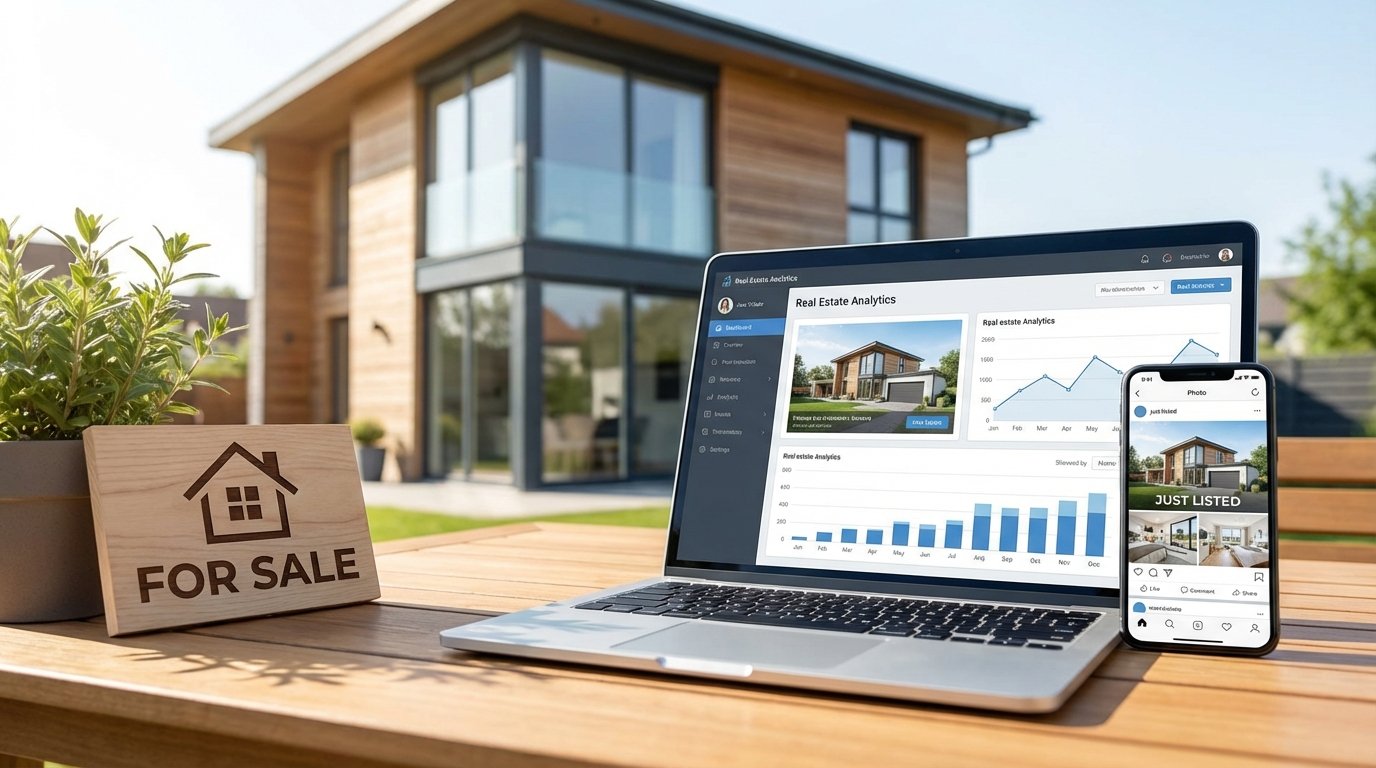
Top Digital Marketing Strategies for Selling Property
Let’s get specific. Here are the most powerful digital marketing tools and strategies sellers can use today.
Professional Photography and Virtual Tours
The first thing buyers see is your listing photos. Bad photos — dark, blurry, or cluttered — make buyers scroll past your home without a second thought. Professional real estate photos can make a dramatic difference. I’ve seen the same home get double the showings just by switching from phone photos to professional shots.
Even better, add a 3D virtual tour or a video walkthrough. Tools like Matterport create interactive tours that let buyers explore your home from their couch. This filters out unserious buyers and brings in people who are genuinely interested before they even visit in person. According to Zillow Research, listings with virtual tours receive significantly more engagement than those without.
Social Media Marketing for Real Estate Listings
Social media is one of the most affordable and powerful tools for property sellers. Facebook and Instagram let you run targeted ads that reach buyers by location, age, income, and even home-buying behavior. You can put your listing in front of exactly the right people for as little as $5–$20 a day.
But paid ads aren’t the only way. Posting your listing organically — with great photos, a short video tour, and a compelling caption — can get shared and reach hundreds or thousands of local buyers for free. Don’t underestimate the power of a well-crafted Instagram post or a Facebook listing in a local neighborhood group.
SEO and Online Listing Optimization
Getting your property found online isn’t just about posting it — it’s about making sure the right people can find it when they search. This is where search engine optimization (SEO) for real estate comes in.
How to Write a Listing Description That Ranks and Converts
Your listing description should include natural keywords buyers search for — things like the neighborhood name, nearby schools, number of bedrooms, and standout features. But don’t just stuff in keywords. Write it like a story. Help the buyer imagine living there.
Use short paragraphs. Highlight the best features first. Mention upgrades, outdoor space, and anything unique about the property. A strong description can push your listing higher in search results and keep buyers reading instead of clicking away.
MLS Optimization and Listing Platform Strategy
Your MLS listing is the backbone of your online presence. Make sure every field is filled out completely and accurately. Don’t skip details like lot size, HOA fees, or parking information — buyers filter by these things. A complete listing ranks better in platform search results and gets more clicks.
Beyond MLS, make sure your listing is on Zillow, Trulia, Realtor.com, and other major platforms. Each one has its own audience. If you’re selling in a specific region, also consider listing on local real estate websites to capture buyers who search locally. Knowing which states attract investors can also help you target the right audience — check out data on the best states to buy investment property in 2026.
Email Marketing and Lead Nurturing for Property Sales
Email isn’t dead — it’s actually one of the highest-return marketing channels out there. For real estate, email marketing lets you stay in front of warm leads who showed interest but haven’t made an offer yet.
Building a Buyer Email List for Your Property
Every person who visits your open house or requests more info is a potential buyer. Collect their email address and follow up. Send them updates about the property, price improvements, or new photos you’ve added. A simple follow-up email saying “We’ve just reduced the price — here’s what your offer could look like” can turn an interested visitor into an actual buyer.
Use simple tools like Mailchimp or even a basic Gmail account to send follow-up emails. Keep them short, friendly, and personal. Nobody wants to read a corporate newsletter — they want to feel like you’re talking directly to them.
Retargeting Ads: Bringing Back Interested Buyers
Retargeting is a powerful tool most sellers don’t know about. It works like this: someone visits your listing page, leaves without contacting you, and then sees your property ad again on Facebook, Instagram, or Google. It’s like a gentle reminder that keeps your home top of mind.
Setting up retargeting ads is easier than it sounds. Facebook Ads Manager and Google Ads both offer simple retargeting tools. Even a small budget of $10–$20 per day can bring warm, interested buyers back to your listing repeatedly until they’re ready to act.
Digital Marketing Tools and Channels at a Glance
Here’s a quick comparison of the most useful digital marketing tools for property sellers:
| Tool / Channel | Best For | Cost Level | Difficulty |
|---|---|---|---|
| Professional Photography | First impressions on all platforms | Low ($150–$400) | Easy — hire a pro |
| 3D Virtual Tour | Remote buyers, serious leads | Medium ($200–$500) | Easy — hire a service |
| Facebook / Instagram Ads | Targeted local buyer reach | Low ($5–$50/day) | Medium |
| MLS + Listing Platforms | Maximum listing exposure | Low (included with agent) | Easy |
| Email Follow-Up | Nurturing warm leads | Very Low (free tools) | Easy |
| Google / Facebook Retargeting | Re-engaging past visitors | Low ($10–$30/day) | Medium |
Key Digital Marketing Tactics for Property Sellers
- Use professional photos for every listing — no exceptions.
- Post on social media with targeted paid ads to reach local buyers.
- Optimize your MLS listing with complete, keyword-rich descriptions.
- Add a 3D virtual tour to filter serious buyers and increase engagement.
- Follow up by email with everyone who shows interest in your property.
- Use retargeting ads to stay visible to buyers who visited your listing online.
- Share your listing in local Facebook groups, Nextdoor, and community forums.
Our team uses all of these strategies to help sellers get results fast. See why sellers choose us — we make the process simple from start to finish. And if you have questions, our team is always ready to help. Contact us today to talk about your property.
Conclusion
Digital marketing isn’t optional anymore — it’s how properties get sold in 2025 and beyond. From professional photos and virtual tours to social media ads and email follow-ups, every tool you use puts you one step closer to a great offer. Start with the basics, stay consistent, and don’t be afraid to invest a little money in getting your property in front of the right buyers. The return is almost always worth it.
Frequently Asked Questions
What is the most effective digital marketing strategy for selling a home?
Professional photography combined with targeted social media ads gives the highest return for most sellers. Great photos drive clicks, and ads put your listing in front of the right buyers based on location, income, and buying intent.
Do I need a website to market my property digitally?
Not necessarily. You can use MLS listing platforms, Zillow, Facebook, and Instagram without a personal website. However, a simple landing page dedicated to your property can improve conversions, especially if you’re running paid ads.
How much should I budget for digital marketing when selling my home?
For most sellers, a budget of $300–$800 for professional photography and $200–$500 for social media ads is a solid starting point. This can easily be recovered in a faster sale or a higher offer price.
Are virtual tours worth the cost for home sellers?
Yes, especially if you have out-of-town buyers or a large property. Virtual tours attract more serious inquiries, reduce wasted in-person showings, and often help listings sell faster by giving buyers confidence before they visit.
Can I do digital marketing for my home sale without an agent?
Yes. Many FSBO (For Sale By Owner) sellers use digital tools successfully. You can list on platforms like Zillow, run your own Facebook ads, and manage email follow-ups. But working with an experienced agent or cash buyer often gets better results with less stress.