
Selling a distressed property can feel like you’re stuck in quicksand. The longer you wait, the worse things get — repairs pile up, bills keep coming, and stress grows every day. But here’s the good news: you can sell a distressed home fast, and you don’t have to lose your shirt doing it.
What Is a Distressed Property?
Common Signs Your Home Is Distressed
A distressed property is simply a home that’s in poor condition or one that the owner needs to sell quickly because of financial trouble. It might have a leaking roof, bad foundation, or just years of deferred maintenance. Or maybe the owner is behind on mortgage payments and facing foreclosure. Either way, the clock is ticking.
Honestly, I’ve talked with dozens of homeowners who didn’t even know their property was “distressed” by real estate standards. They just knew it needed work. Some common signs include:
- Significant structural damage (roof, foundation, plumbing)
- Mold, water damage, or fire damage
- Code violations or unpermitted work
- Owner behind on mortgage payments or taxes
- Property has been vacant for a long time
- Multiple liens or judgments against the property
Why Distressed Properties Are Hard to Sell Traditionally
Most regular buyers use bank loans to purchase homes. And banks are picky — they won’t lend money on a house that’s falling apart. So even if a buyer loves your home, they may not be able to get financing. This knocks out a huge chunk of the market right away.
Add in the cost of repairs, the time to do them, and the uncertainty of whether you’ll even recoup that money, and the traditional listing route starts to look like a very long, very expensive road. According to the National Association of Realtors, the average time to sell a home in the US is around 30–45 days — and that’s for homes in good condition. Distressed homes can take much longer.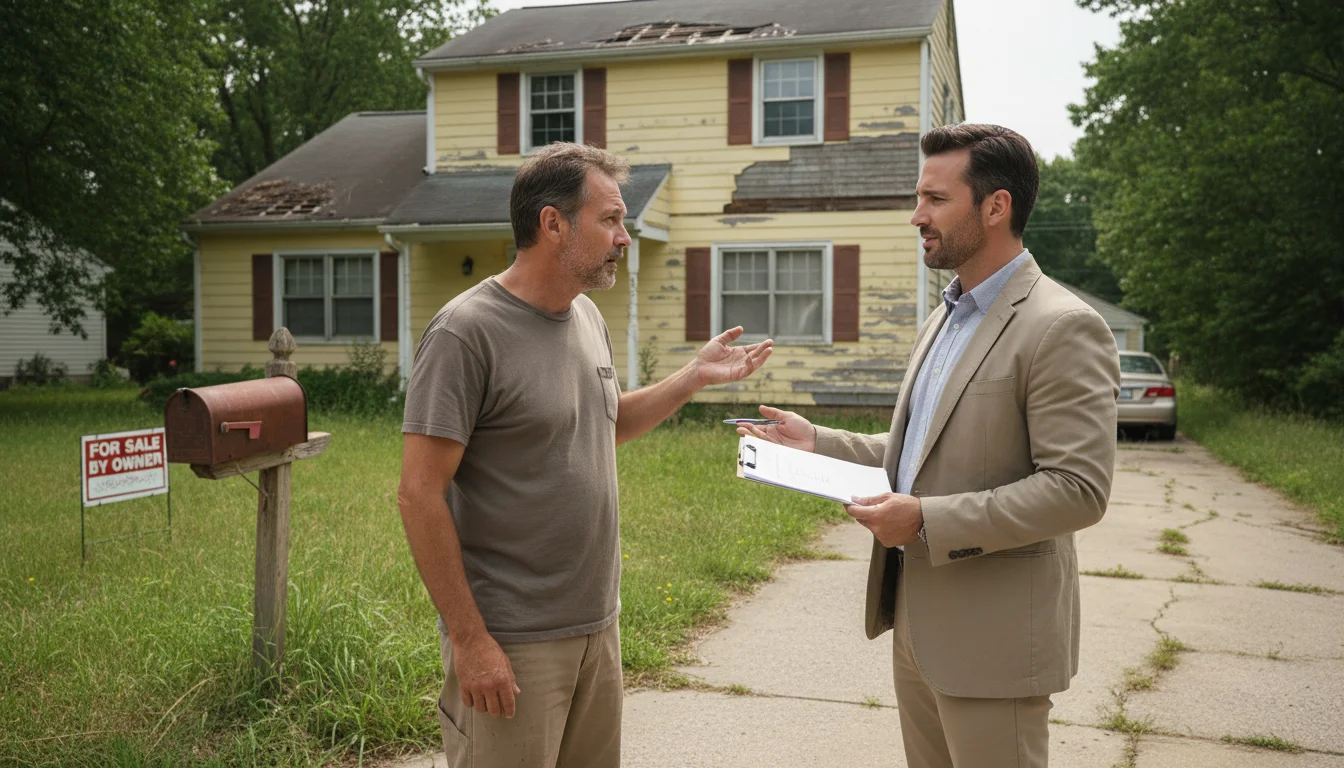
Your Best Options for Selling a Distressed Home Fast
Sell As-Is to a Cash Buyer
This is the fastest and most stress-free option for most people. Cash home buyers — also called real estate investors — buy homes in any condition. No repairs. No staging. No open houses. They look at the property, make an offer, and if you accept, closing can happen in as little as 7–14 days.
At Buy Your Properties, we buy distressed homes exactly like this. You don’t need to fix a single thing. We handle everything, and you walk away with cash in hand. If you’re wondering what that process looks like, check out our FAQs page — we’ve answered the most common questions there.
The trade-off? Cash buyers typically offer below full market value. But when you factor in the cost of repairs, agent commissions, and months of carrying costs, many sellers actually come out ahead by going this route.
List with a Real Estate Agent Who Specializes in Distressed Properties
Some agents specialize in selling homes as-is or know how to market fixer-upper properties to the right buyers. This route takes longer than a cash sale, but it may get you a higher price if the market is hot and buyers are willing to do the work.
The downside is you’ll still pay a 5–6% commission, deal with showings, and wait for the right buyer to come along. For people in urgent situations — like facing foreclosure or going through a divorce — this timeline often doesn’t work.
How to Get the Best Deal on a Distressed Property Sale
Know Your Home’s After-Repair Value (ARV)
Before you accept any offer, it helps to know what your home would be worth if it were fully repaired. This is called the After-Repair Value (ARV). Real estate investors use this number to calculate how much they can offer you.
Knowing the ARV helps you negotiate. If an investor offers you way too low compared to the ARV minus repair costs, you’ll know to shop around. You can get a rough idea of ARV by looking at recent sales of similar homes in your neighborhood using free tools like Zillow or Redfin.
Get Multiple Offers Before You Decide
One mistake I see sellers make is accepting the first offer they get out of desperation. Don’t do that. Even if you’re in a hurry, take a day or two to get two or three different offers. The difference between offers can be thousands of dollars.
Most reputable cash buyers — including us — provide no-obligation offers. That means you can shop around without any pressure. There’s really no reason not to get at least a couple of quotes.
Selling a Distressed Property vs. Traditional Home Sale: A Quick Comparison
| Factor | Cash Sale (As-Is) | Traditional Listing |
|---|---|---|
| Time to Close | 7–14 days | 30–90+ days |
| Repairs Required | None | Often required |
| Agent Commission | None | 5–6% |
| Sale Price | Below market | Closer to market (if repaired) |
| Financing Contingency | None | Common |
| Stress Level | Low | High |
What About Foreclosure? Can You Still Sell?
Selling Before Foreclosure Is Finalized
Yes — in most cases, you can sell your home even if you’ve received a foreclosure notice. As long as the sale closes before the foreclosure is finalized, you keep any equity that’s left. This is actually one of the best reasons to act fast.
According to the Consumer Financial Protection Bureau, homeowners typically have several months from the first missed payment to the actual foreclosure auction. That window gives you time to sell — if you move quickly.
If you’re in this situation, contact us today. We’ve helped many homeowners sell before foreclosure and walk away with something in their pocket rather than losing everything.
Short Sale as an Alternative
A short sale happens when you sell the home for less than what you owe on the mortgage, with the lender’s approval. It’s better for your credit than a full foreclosure, but it’s also a long, complicated process that can take 3–6 months or more. For most people dealing with a distressed property, a direct cash sale is the simpler path.
Want to learn more about your options? You might also find our blog on how to avoid realtor commissions helpful — it covers some overlap with these strategies. And if you’ve inherited a home on top of all this, our guide on selling an inherited home in probate has everything you need.
Tips to Speed Up the Sale Even More
Small Things That Make a Big Difference
Even if you’re selling as-is, there are some quick, cheap things you can do to make a better impression and possibly get a slightly higher offer. You don’t need to spend thousands — just a little effort.
- Clear out clutter and trash from inside and outside
- Mow the lawn or at least trim overgrown bushes
- Fix super obvious things like broken windows or door handles if cost is minimal
- Gather all documents related to the home (permits, warranties, utility bills)
According to the U.S. Department of Housing and Urban Development (HUD), properties that are well-presented — even in rough shape — tend to attract better offers because buyers can see the potential clearly.
Have All Your Paperwork Ready
One thing that slows down even simple cash sales is missing paperwork. If you can have your title documents, any existing mortgage statements, tax records, and HOA info ready to go, you’ll save time. Buyers — especially cash buyers — appreciate sellers who are organized and ready to move.
Conclusion
Selling a distressed property fast is completely possible. The key is knowing your options and choosing the path that fits your timeline and goals. If speed matters most, a cash home buyer is almost always your best bet. You skip repairs, skip commissions, and close on your schedule. If you’re ready to get a no-obligation offer on your home, reach out to us today and we’ll show you how simple the process can be.
Frequently Asked Questions
Can I sell a distressed property without making any repairs?
Yes. Cash home buyers and real estate investors purchase homes in any condition, so you don’t need to fix anything before selling.
How fast can I sell a distressed property?
With a cash buyer, you can close in as little as 7–14 days depending on the title work and your schedule.
Will I get a fair price for my distressed home?
Cash offers are typically below full market value, but when you subtract repair costs, agent fees, and carrying costs, the net amount is often very competitive.
What if my home has liens or code violations?
Many cash buyers can still purchase homes with liens or code violations. These issues are worked out during the closing process, often with proceeds from the sale.
Should I sell a distressed property or try to fix it up first?
It depends on your finances and timeline. If you have cash for repairs and time to wait, fixing up could get you more money. But if you need to sell fast or can’t afford repairs, selling as-is is the smarter choice for most people.