
If you are several months behind on your mortgage payments and wondering whether you can still sell your LA home, the answer is yes, in most situations. Being behind on payments does not strip you of ownership. You still own the home. The question is how much time you have and which path makes the most sense given where you are in the foreclosure process.
What Happens to Your LA Home When You Stop Making Mortgage Payments
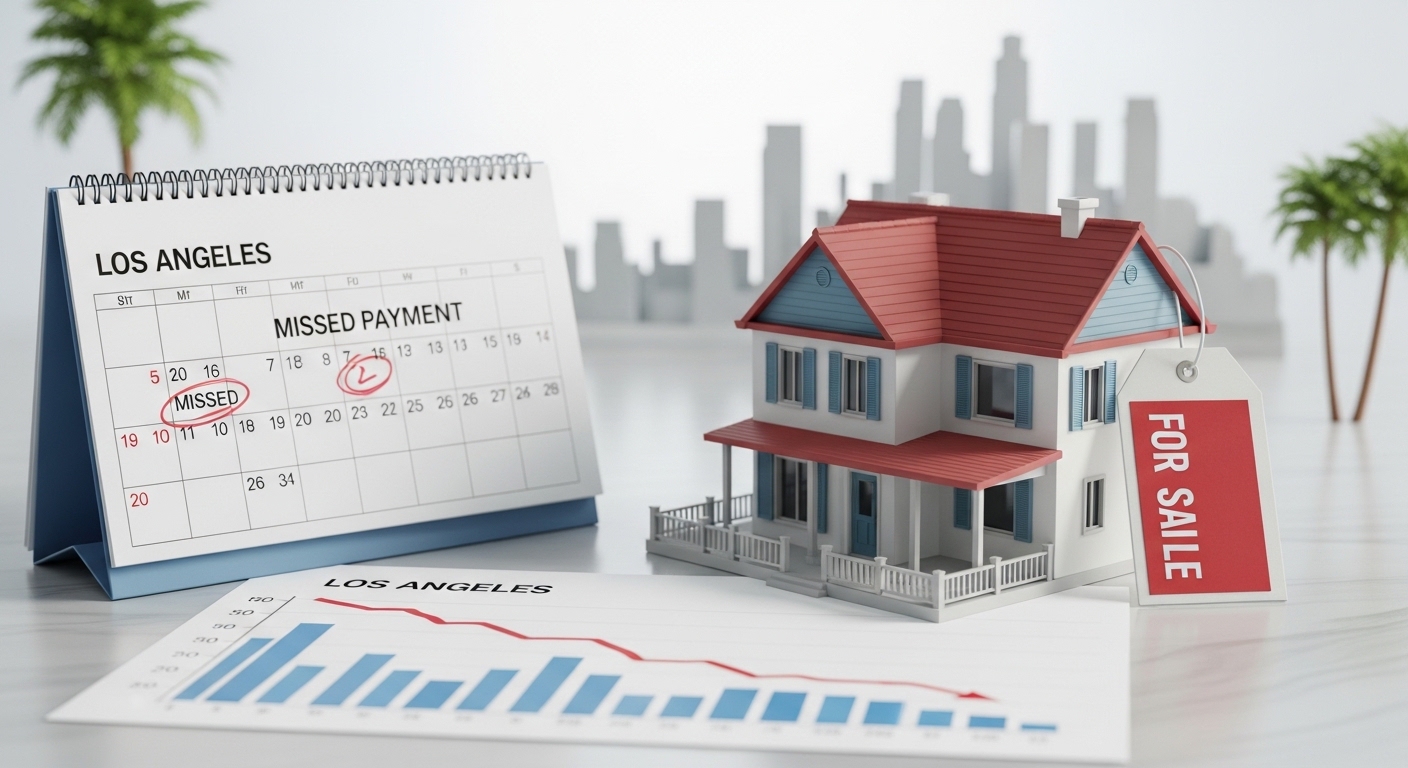
When you miss mortgage payments in California, the lender follows a specific legal process before they can take your home. Understanding this timeline is important because it tells you how much time you actually have to sell privately.
California uses a non-judicial foreclosure process in most cases, which means the lender does not have to go through court to foreclose. The process is governed by California Civil Code Section 2924 and moves through specific stages, each with its own timeline.
The California Foreclosure Timeline You Need to Know
The foreclosure process in California does not happen overnight. According to the California Department of Financial Protection and Innovation, lenders must follow a specific notice and waiting period process before a property can be sold at a trustee’s auction.
After 90 to 120 days of missed payments, the lender typically records a Notice of Default with the county recorder. After the Notice of Default is recorded, California law requires at least 90 more days before the lender can schedule a trustee’s sale. After the sale is scheduled, an additional 20-day notice period applies before the auction can happen.
In practice, from the first missed payment to an actual auction, the process in California often takes six months to over a year. That is a meaningful window to sell privately if you act once you realize you cannot bring the payments current.
At What Point Does Selling Become Difficult or Impossible
As long as you are the legal owner of the property and the auction has not happened, you have the legal right to sell. The practical difficulty increases as you get closer to the auction date, because the amount needed to clear the mortgage and any foreclosure fees grows, and buyers have less time to complete due diligence and close.
Once the trustee’s auction happens and the property is sold to a bidder, your ownership ends. At that point, selling is no longer an option. This is why acting before the auction, ideally well before, is so important.
Your Options for Selling Behind on Payments in LA
Being behind on payments limits some options but opens others. Your realistic paths depend on how much equity you have and how much time remains before any scheduled auction.
Option 1: Sell Normally if You Have Enough Equity
If the value of your home is significantly above what you owe on the mortgage plus any missed payment penalties and foreclosure fees, you can sell the home through any method and pay off the debt at closing. The lender gets paid, the foreclosure process stops, and you receive whatever equity remains.
This is the cleanest scenario. Even if you are several months behind, as long as there is equity in the home, a sale resolves the situation entirely. In the Los Angeles market where home values remain high, many sellers who are behind on payments still have meaningful equity that a sale can preserve.
Option 2: Short Sale if You Owe More Than the Home Is Worth
If your mortgage balance plus fees exceeds what the home will sell for, a short sale may be necessary. In a short sale, you sell the home for less than what you owe and the lender agrees to accept the sale proceeds as full or partial settlement of the debt.
Short sales require lender approval and take longer than a standard sale, often 60 to 120 days or more. However, they are a legitimate and commonly used option for homeowners who are underwater and facing foreclosure. The lender’s incentive to approve is that they typically recover more from a negotiated short sale than from a foreclosure auction.
Here is a comparison of your main selling options when you are behind on payments in LA.
| Situation | Best Option | Lender Approval Needed? | Time to Close | Outcome for Seller |
|---|---|---|---|---|
| Behind on payments, significant equity | Standard or cash sale | No | 7 to 45 days | Debt paid, equity preserved |
| Behind on payments, little equity | Cash sale, price it right | No | 7 to 21 days | Debt paid, minimal or no equity |
| Behind on payments, underwater | Short sale | Yes | 60 to 120 days | Debt reduced or forgiven, no equity |
| Near auction date, any equity situation | Emergency cash sale | No | 7 to 14 days | Auction avoided, equity or clean exit |
How Foreclosure Fees and Costs Affect Your Payoff Amount
One thing sellers in pre-foreclosure often underestimate is how quickly fees and costs accumulate once the formal foreclosure process starts. Understanding what you actually owe at any given point is essential for evaluating whether a sale will produce any equity for you.
What Gets Added to Your Payoff When You Are in Foreclosure
Once a Notice of Default is recorded, foreclosure-related fees begin to accumulate. These typically include attorney fees, trustee fees, title and recording costs, and property inspection fees. These can add several thousand dollars to your payoff amount beyond just the unpaid principal and interest on the missed payments.
- Unpaid principal balance on the mortgage
- Accumulated unpaid interest on all missed payments
- Late fees on each missed payment
- Foreclosure attorney or trustee fees
- Property inspection fees charged by the lender
- Any lender-paid property insurance or taxes that were advanced on your behalf
- Any other liens on the property such as HOA liens or tax liens
Requesting a full payoff statement from your lender before listing the home is important so you have an accurate picture of what the sale needs to generate to clear all obligations.
Can Selling Quickly Actually Stop the Foreclosure Process
Yes. Once a sale closes and the lender receives the full payoff from escrow, the foreclosure process stops entirely. The lender records a rescission of the Notice of Default, and the property is transferred to the new owner with a clear title. A completed sale is one of the most direct ways to resolve a pre-foreclosure situation.
The key is timing. If an auction is already scheduled, you need to close before the auction date. A cash buyer who can close in 7 to 14 days is often the only realistic option when the auction is close. You can also contact the lender directly to request a postponement of the auction to allow time for the sale to close, and many lenders will agree to a brief postponement if they can see a legitimate pending sale.
If you are navigating foreclosure while also carrying other financial obligations against the property, reading about selling a house with multiple liens in Los Angeles will help you understand how those interact and what needs to be resolved at closing.
For sellers facing an urgent auction timeline, our guide on how to sell a house fast before a sheriff’s sale in LA County covers the most time-sensitive version of this situation in detail.
If you want a private, no-pressure conversation about where you stand and what your fastest path to closing looks like, contact our team today. We work with pre-foreclosure sellers in Los Angeles all the time and can give you a clear picture within 24 hours.
To learn more about how we purchase homes in all situations including pre-foreclosure throughout Los Angeles, visit our Los Angeles cash home buyers page.
For official guidance on California foreclosure timelines and homeowner rights, the California Courts self-help foreclosure page provides accurate information on the legal process and your rights at each stage.
Conclusion
Being several months behind on your mortgage payments in LA does not mean you have lost the ability to sell your home. As long as the property has not gone to auction, you are still the legal owner and a sale is still possible. The sooner you act, the more options you have and the more equity you can preserve. A cash buyer can often close fast enough to stop a foreclosure before it becomes final.
Request a full payoff statement from your lender, understand exactly what you owe, and then make a decision about whether a standard sale, short sale, or emergency cash sale makes the most sense for your situation. You have more control than you probably think right now.
Frequently Asked Questions
Can I sell my LA home if I am 3 or 4 months behind on my mortgage?
Yes. Being behind on payments does not affect your legal ownership of the property. As long as the foreclosure auction has not taken place, you can sell the home. If you have enough equity, the sale proceeds pay off the full mortgage including missed payments and fees, and you keep whatever is left. The earlier you act, the more options you have.
What is a Notice of Default and what does it mean for selling my home?
A Notice of Default is a formal document recorded by your lender with the county after you have missed payments, typically after 90 to 120 days of non-payment. It begins the formal foreclosure process in California. After the Notice of Default is recorded, California law requires at least 90 more days before a trustee’s sale can be scheduled, giving you a meaningful window to sell privately or work out a solution with the lender.
Will selling my home stop the foreclosure process in California?
Yes. When a sale closes and the lender receives the full payoff from escrow proceeds, the foreclosure process stops completely. The lender records a rescission of the Notice of Default and the new owner receives clear title. This is one of the most direct ways to resolve a pre-foreclosure situation and avoid the damage of a completed foreclosure on your credit.
What if I owe more than my LA home is worth?
If your mortgage balance plus foreclosure fees exceeds what the home will sell for, you may need to pursue a short sale. In a short sale, the lender agrees to accept the sale proceeds as full or partial settlement of the debt even though the amount is less than what is owed. Short sales require lender approval and typically take 60 to 120 days or more. A real estate professional experienced with short sales should be involved.
How quickly can I close a sale when I am in pre-foreclosure?
With a cash buyer, you can typically close in 7 to 14 days, sometimes faster in urgent situations. A cash buyer does not need lender financing or an appraisal, which removes the biggest sources of delay. If an auction date is already scheduled, contact the lender immediately to request a postponement while the sale closes. Many lenders will agree to a brief delay when they can see a legitimate pending cash sale.