
Finding out your LA home has multiple liens against it right when you are trying to sell is a stressful moment. Tax liens, mechanic’s liens, HOA liens, all stacking up on the title at the same time. It feels like the sale is impossible before it even starts. But selling with multiple liens in Los Angeles is done all the time. You just have to know how the process actually works.
What Different Types of Liens Mean for Your LA Home Sale
A lien is a legal claim recorded against your property by someone who says you owe them money. It attaches to the title and generally must be resolved before or at the time of sale. Different types of liens come with different rules about priority, negotiability, and what happens if you cannot pay them in full.
In Los Angeles, the most common types of liens sellers encounter are tax liens from the IRS or California Franchise Tax Board, mechanic’s liens from contractors or sup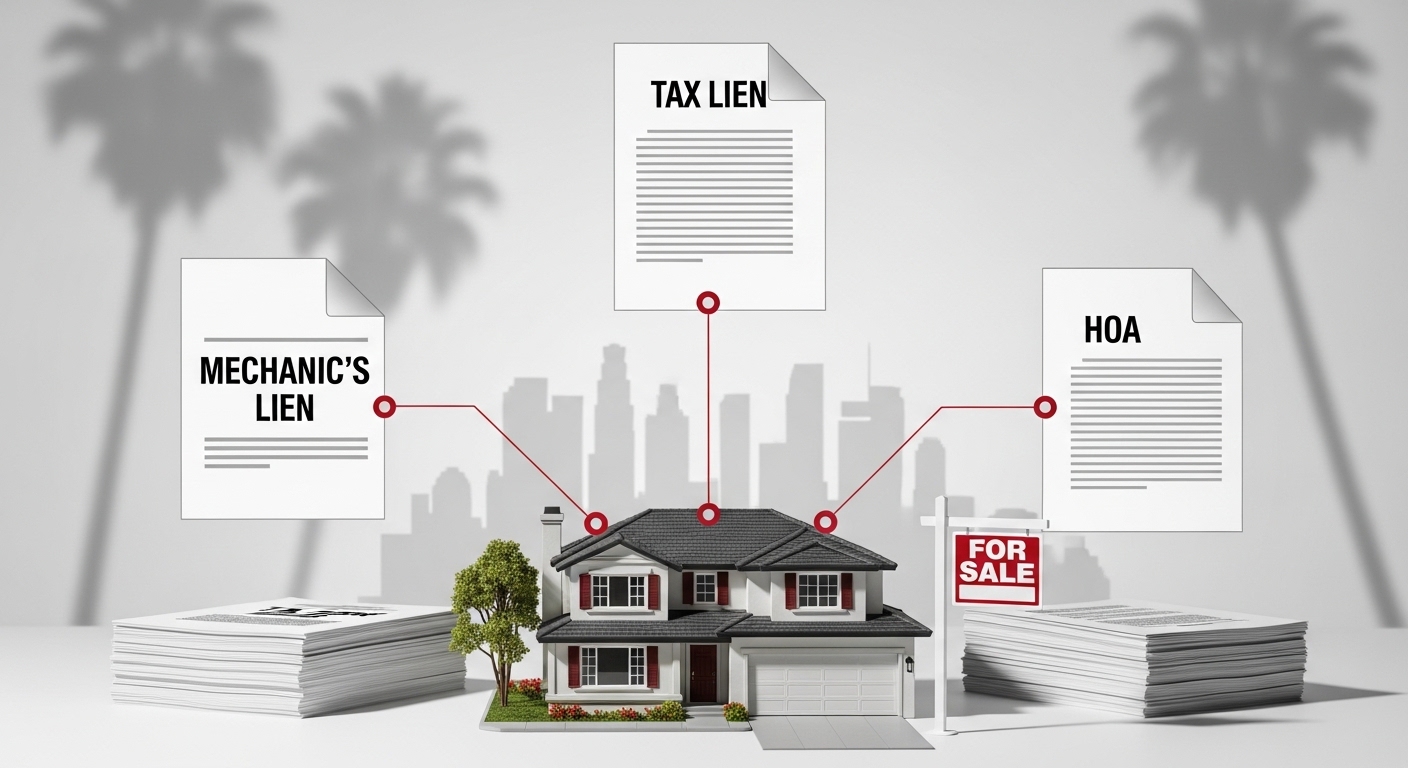 pliers who were not paid for work, and HOA liens from unpaid homeowner association dues and fines. Each one comes with its own process and its own set of complications for the sale.
How Tax Liens Work When Selling a Home in California
A federal tax lien filed by the IRS attaches to all of your property, including real estate, and must typically be paid off when you sell. According to the Internal Revenue Service, a federal tax lien gives the government a legal claim to your property as security for unpaid tax debt. The lien amount, plus any accrued interest and penalties, must be satisfied from sale proceeds before you receive anything.
California state tax liens work similarly through the Franchise Tax Board. If you have both a federal and a state tax lien on the same property, both must be addressed at closing.
One important option that sellers often miss is requesting a lien discharge or subordination from the IRS before selling. A discharge removes the lien from a specific property when the IRS agrees the sale will satisfy their claim. This can make the sale possible even when the total lien amount is close to or exceeds the expected proceeds.
Mechanic’s Liens and How They Affect Your Sale
A mechanic’s lien is filed by a contractor, subcontractor, or material supplier who performed work on or supplied materials to your property and was not paid. In California, these liens are governed by specific timing rules. A general contractor typically has 90 days after completing work to file, while subcontractors and suppliers have 60 days.
Mechanic’s liens must be resolved before or at closing because title insurance companies will not insure a transaction when a recorded mechanic’s lien is present. Your options are to pay the lien, negotiate a settlement, or challenge the lien’s validity if the contractor did not follow the proper preliminary notice requirements under California law.
Here is an overview of how the three most common lien types compare in terms of priority and resolution options.
| Lien Type | Who Files It | Priority Level | Can Be Negotiated? | Impact on Sale |
|---|---|---|---|---|
| Federal Tax Lien (IRS) | Internal Revenue Service | High, may supersede other liens | Yes, discharge or subordination possible | Must be paid from proceeds at closing |
| State Tax Lien (FTB) | California Franchise Tax Board | High | Limited negotiation possible | Must be paid from proceeds at closing |
| Mechanic’s Lien | Contractor or supplier | Depends on recording date | Yes, settlement often possible | Title insurance blocked until resolved |
| HOA Lien | Homeowner association | Generally lower than mortgage | Sometimes, especially for fees and fines | Must be cleared before title transfer |
How HOA Liens Work and What You Can Do About Them
HOA liens arise when a homeowner falls behind on monthly dues, special assessments, or fines imposed by the association. In California, HOAs have the legal right to record a lien against a property for unpaid amounts, and in severe cases they can initiate foreclosure to collect.
Negotiating HOA Liens Before Selling
The good news with HOA liens is that they are often more negotiable than tax liens. Many HOAs will accept a payment plan or a settlement for less than the full balance when they understand the home is going to be sold. Some HOAs will also agree to have the lien paid at closing from sale proceeds rather than requiring the seller to pay upfront.
It is worth calling the HOA directly and explaining the situation before listing. Many sellers are surprised to find out the HOA just wants to be paid and is willing to work with a realistic timeline to make that happen.
What Happens When Liens Exceed the Sale Price
This is where things get genuinely complicated. If the total of all liens plus the mortgage payoff exceeds what the home will sell for, you are looking at a situation where you cannot pay everyone off from the proceeds. This is sometimes called being underwater.
In this situation, you may need to negotiate a short sale where the lender agrees to accept less than what is owed, or you may need to negotiate settlements directly with individual lienholders before the sale can close. A real estate attorney with experience in distressed property sales can be invaluable in these situations.
Cash buyers who purchase distressed properties in LA are experienced at navigating multi-lien situations. They work with title companies and attorneys to determine what can be resolved and how to structure a closing that addresses all recorded claims. If your home has multiple liens and you need to sell quickly, working with a cash buyer who understands this process is often the most practical path.
If your home also has code enforcement issues on top of lien problems, our guide on dealing with code enforcement liens when selling in LA covers how those intersect with traditional liens and what your options are.
For sellers whose liens are connected to a failed renovation or contractor dispute, reading about selling a California home after a failed fix-and-flip project will give you useful context on how mechanic’s liens and contractor disputes are typically handled in distressed property sales.
When you are ready to talk through your specific lien situation and what your fastest path to close looks like, reach out to our team today. We work with LA homeowners dealing with multiple liens all the time.
To learn more about how we purchase homes in any condition throughout Los Angeles, visit our Los Angeles cash home buyers page.
Steps to Take Before Listing a Home With Multiple Liens
- Order a preliminary title report from a title company to get a full picture of all recorded liens against the property
- Contact each lienholder separately to understand the exact amount owed and whether settlement is possible
- If there is an IRS tax lien, contact the IRS to ask about discharge or subordination options before listing
- Get a real estate attorney involved early if liens are large or if the total of all liens is close to or above the expected sale price
- Contact the HOA if applicable to get a current payoff statement and ask about their process for releasing the lien at closing
- Talk to a cash buyer or distressed property specialist about what they can offer for the home with liens in place
Conclusion
Multiple liens on an LA home make the sale more complicated, but they rarely make it impossible. The key is getting a full picture of what is owed, understanding the priority of each lien, and working with the right people to negotiate or pay them off from sale proceeds. A title company, a real estate attorney, and a buyer who understands distressed properties are your most important allies in this process.
Do not let the number of liens on the title paralyze you. Make a list of what is there, what each one will take to resolve, and then make a decision about which selling path gets you to the other side with the least damage.
Frequently Asked Questions
Can I sell my LA home if it has multiple liens on the title?
Yes. Having multiple liens on the title does not legally prevent you from selling, but all recorded liens must be addressed before or at closing. Liens are typically paid off from sale proceeds. If the total liens plus mortgage exceed the sale price, you will need to negotiate with lienholders or explore a short sale with your mortgage lender.
What is the difference between a tax lien and a mechanic’s lien?
A tax lien is filed by a government agency like the IRS or California Franchise Tax Board for unpaid taxes. A mechanic’s lien is filed by a contractor, subcontractor, or material supplier who was not paid for work or materials provided to your property. Both must be resolved before title can transfer cleanly, but the process and negotiation options are different for each.
Can I negotiate down the amount on a lien before selling?
Sometimes. HOA liens are often the most negotiable, particularly if the balance includes fines and fees rather than just dues. Mechanic’s liens can sometimes be settled for less than the full amount, especially if there is a dispute about the quality of work done. IRS tax liens are the least flexible but the IRS does offer discharge and subordination options that can allow a sale to proceed.
Will a title company handle paying off liens at closing?
Yes. In a standard real estate sale, the title or escrow company collects all payoffs from sale proceeds and distributes funds to each lienholder at closing. The title company also verifies that all recorded liens are cleared before issuing title insurance and completing the transfer. This is part of the standard closing process in California.
What if I cannot afford to pay all the liens and the mortgage from the sale proceeds?
If your total debt exceeds what the home will sell for, you have a few options. You can negotiate a short sale where the mortgage lender agrees to accept less than what is owed. You can negotiate settlement amounts with individual lienholders to reduce the total. Or you can work with a distressed property buyer who has experience structuring transactions where proceeds are allocated strategically among multiple creditors. A real estate attorney is strongly recommended in this situation.