
Inheriting a home in LA sounds like good news, and it usually is. But before you sell it, there is one tax concept you absolutely need to understand. It is called the step-up in basis, and missing it can cost you tens of thousands of dollars in unnecessary capital gains taxes. The good news is that once you understand how it works, it is actually very straightforward.
What the Step-Up in Basis Means for Inherited LA Property
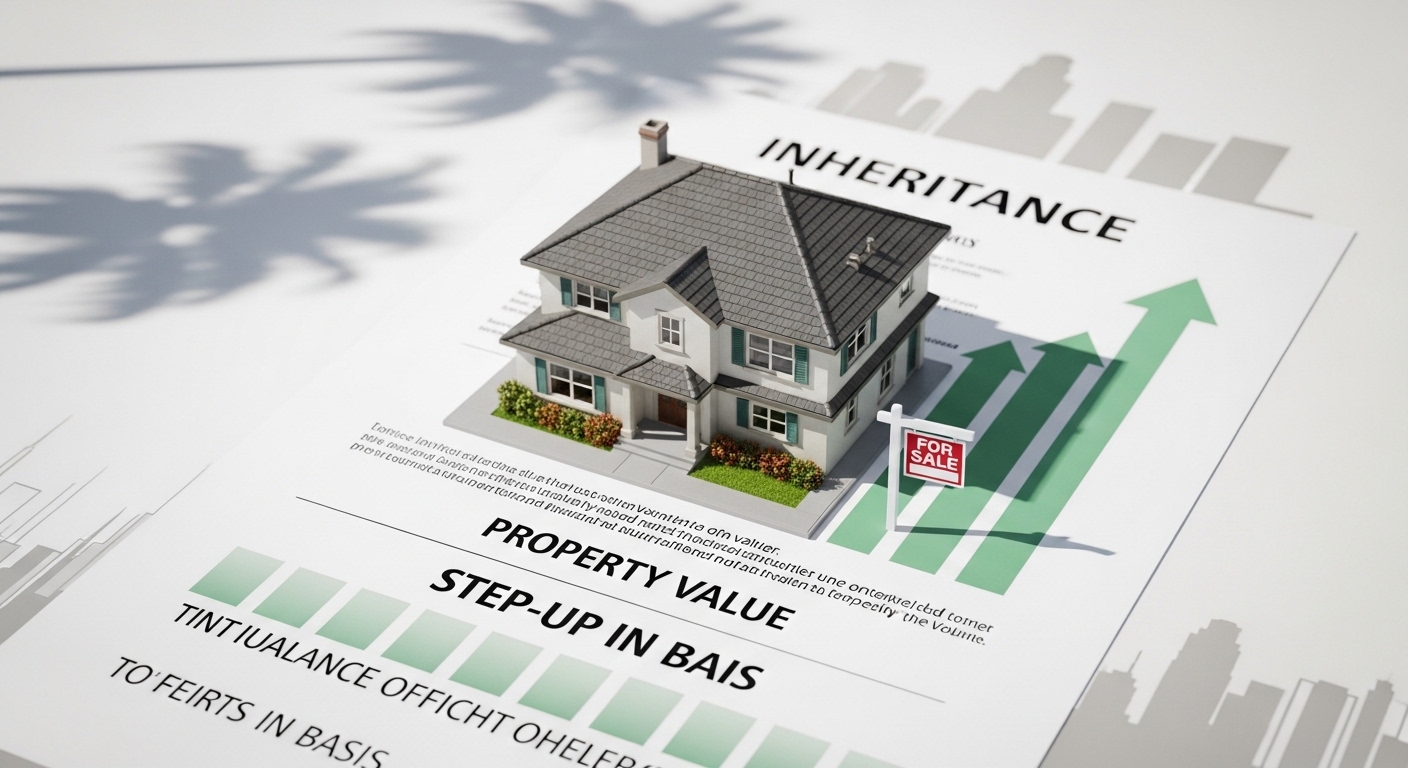
When someone passes away and leaves you their home, the tax rules treat the property differently than if you had bought it yourself. Instead of using the original purchase price as your cost basis for calculating capital gains when you sell, you get to use the fair market value of the home on the date the original owner died.
This is called a stepped-up basis. It is one of the most valuable tax benefits available in real estate, and it is especially meaningful in Los Angeles where property values have appreciated dramatically over the past several decades.
Why the Step-Up in Basis Matters So Much in Los Angeles
Consider a common situation. Someone bought a home in the San Fernando Valley in 1975 for $65,000. Over the decades, that home grew in value to $900,000 by the time the owner passed away in 2024. If you had bought that home yourself for $65,000 and sold it for $900,000, you would have a capital gain of $835,000 to report. Even after the primary residence exclusion, that would create a significant tax bill.
But because you inherited it, your basis is stepped up to $900,000, the value at the date of death. If you sell it for $900,000 shortly after inheriting, your capital gain is essentially zero. That is a massive difference in your tax outcome, and it is completely legal under current federal tax law.
How the Date of Death Value Is Determined
The stepped-up basis is established by the fair market value of the property on the date the original owner passed away. This value is typically determined through a formal appraisal by a licensed appraiser. For estate tax purposes and for establishing the step-up basis, the appraisal needs to reflect the property’s value on that specific date, not when you decide to sell.
According to the Internal Revenue Service, the basis of inherited property is generally the fair market value at the date of the decedent’s death, or an alternate valuation date if the executor elects to use one for estate tax purposes.
Getting a qualified appraisal done at or close to the date of death is important. If you wait a year or two to sell and prices have moved, the appraisal documentation becomes even more important for establishing what the value actually was at the time of inheritance.
Capital Gains Taxes on Inherited LA Property and When They Apply
The step-up in basis does not mean you never owe capital gains tax on an inherited property. It means your starting point for calculating gains is the stepped-up value. If the property increases in value after you inherit it, and you sell at that higher price, the gain above the stepped-up basis is taxable.
Short-Term vs Long-Term Capital Gains on Inherited Property
Inherited property is automatically treated as long-term property for capital gains tax purposes, regardless of how long you actually held it before selling. This is a significant benefit because long-term capital gains rates are lower than short-term rates, which are taxed as ordinary income.
The federal long-term capital gains tax rate in 2025 depends on your income level and ranges from 0 percent to 20 percent. California does not have a separate capital gains rate and taxes capital gains as ordinary income, which can reach up to 13.3 percent for high earners. California’s combined federal and state capital gains tax on a large LA home sale can be substantial, which makes the step-up in basis even more valuable.
Here is a simplified comparison of how capital gains work differently depending on whether you inherited the home or bought it yourself.
| Scenario | Original Purchase Price | Value at Date of Death | Sale Price | Taxable Gain |
|---|---|---|---|---|
| Bought the home yourself | $100,000 | Not applicable | $800,000 | $700,000 (before exclusions) |
| Inherited the home | $100,000 (original owner) | $800,000 | $800,000 | $0 (basis = sale price) |
| Inherited, then sold later | $100,000 (original owner) | $800,000 | $900,000 | $100,000 (gain since inheritance) |
The Primary Residence Exclusion Does Not Apply the Same Way
Many homeowners know about the primary residence exclusion, which allows you to exclude up to $250,000 of capital gains if you are single or up to $500,000 if you are married when selling a home you have lived in for at least two of the last five years. This exclusion can combine with the step-up in basis for inherited homes you move into, but if you sell an inherited home without living in it, the exclusion generally does not apply.
For most inherited properties in LA, the step-up in basis alone handles the bulk of the capital gains concern, especially if you sell relatively soon after inheriting. The primary residence exclusion becomes relevant if you move into the inherited home for at least two years before selling.
Practical Steps for Selling an Inherited LA Home
Beyond the tax considerations, selling an inherited home in LA involves the same practical challenges as any other property sale, often with added emotional weight and sometimes with added legal complexity if the estate is in probate.
What to Do Before Listing an Inherited Property in LA
- Confirm legal title is in your name or the estate’s name before entering into any sale agreement
- Get a formal appraisal establishing the fair market value at the date of death for tax basis documentation
- Consult with a tax professional or CPA about your specific capital gains situation before the sale
- Order a preliminary title report to check for any liens, judgments, or encumbrances on the property
- Document the property’s current condition with photos before any cleanup, as this helps establish disclosure information for buyers
- Decide whether to sell as-is or make repairs based on the property’s condition and your timeline
The Timing Question: How Soon Should You Sell an Inherited LA Home
There is no universal right answer on timing. From a tax standpoint, selling soon after inheriting typically minimizes any gap between the stepped-up basis and the sale price, which reduces the taxable gain. From a carrying cost standpoint, every month you hold an inherited property you are paying taxes, insurance, and potentially utilities on a home you are not living in.
Many families choose to sell relatively quickly after settling the estate for exactly these reasons. The decision is also often influenced by whether multiple heirs need to agree on the sale, which can create its own timeline pressures.
If the inherited property has probate complications, our guide on selling a California home during a contested probate battle covers the legal and logistical challenges that can affect your timeline and options.
For inherited homes that have significant condition issues or accumulated belongings, reading about discreet solutions for selling LA hoarder homes will give you useful context on how to approach an estate cleanout before selling.
When you are ready to talk through the sale of an inherited LA property, reach out to our team today for an honest conversation about timing, pricing, and what a cash sale looks like for your specific situation.
To learn more about how we work with inherited properties throughout Los Angeles regardless of condition or situation, visit our Los Angeles cash home buyers page.
For authoritative guidance on step-up in basis rules and how they apply to different inheritance scenarios, the IRS Publication 559 covers the tax treatment of inherited assets in detail.
Conclusion
The step-up in basis is one of the most significant financial benefits that comes with inheriting property in Los Angeles. Understanding how it works before you sell can save you a substantial amount in capital gains taxes. Get a formal appraisal at or close to the date of death, work with a qualified CPA to understand your specific tax situation, and then make selling decisions based on accurate information rather than assumptions.
The inherited home is often one of the most valuable things a family member leaves behind. Making sure you handle the sale correctly, both legally and from a tax standpoint, is the best way to honor that legacy.
Frequently Asked Questions
What is the step-up in basis on an inherited LA home?
The step-up in basis means that when you inherit a home, your cost basis for tax purposes is reset to the fair market value of the property on the date the previous owner passed away, not the original purchase price. This significantly reduces or eliminates capital gains tax if you sell the property at or near that value.
How is the stepped-up basis value established for an inherited property?
The stepped-up basis is typically established through a formal appraisal by a licensed appraiser who determines the fair market value of the property on the date of the previous owner’s death. This documentation is important for tax reporting purposes, especially if there is a gap in time between the inheritance and the sale.
Do I owe capital gains tax if I sell an inherited LA home for the same price as the appraised date-of-death value?
Generally no. If you sell the inherited property at or close to the stepped-up basis value, your taxable gain is minimal or zero. Gains only arise when you sell above the stepped-up basis. Since you inherited the property and not bought it at the original low price, you benefit from the reset that eliminates decades of appreciation from your tax calculation.
Can I use the primary residence exclusion on an inherited home in California?
Only if you meet the residency requirements yourself. To use the primary residence exclusion on an inherited home, you must live in the home for at least two of the five years immediately before selling. If you sell without moving in, the exclusion does not apply. For most inherited properties where heirs sell soon after inheritance, the step-up in basis alone handles the capital gains concern.
Are there California state taxes on the sale of an inherited home?
Yes. California does not have a preferential capital gains rate and taxes capital gains as ordinary income. Combined with federal capital gains rates, the total tax burden on a large LA home sale can be significant. California also has no estate or inheritance tax of its own, so the federal estate tax exemption threshold determines whether an estate tax return is required. Consulting a CPA who is familiar with California real estate tax rules is strongly recommended before any inherited property sale.