
Knob and tube wiring in an LA home is one of those issues that sounds worse than it sometimes is, but is more serious than some sellers want to admit. If your older home still has the original knob and tube electrical system from the 1920s, 1930s, or 1940s, you are going to face real challenges with buyers and lenders. Here is exactly what you are dealing with and what you can do about it.
What Knob and Tube Wiring Is and Why It Matters for Home Sales
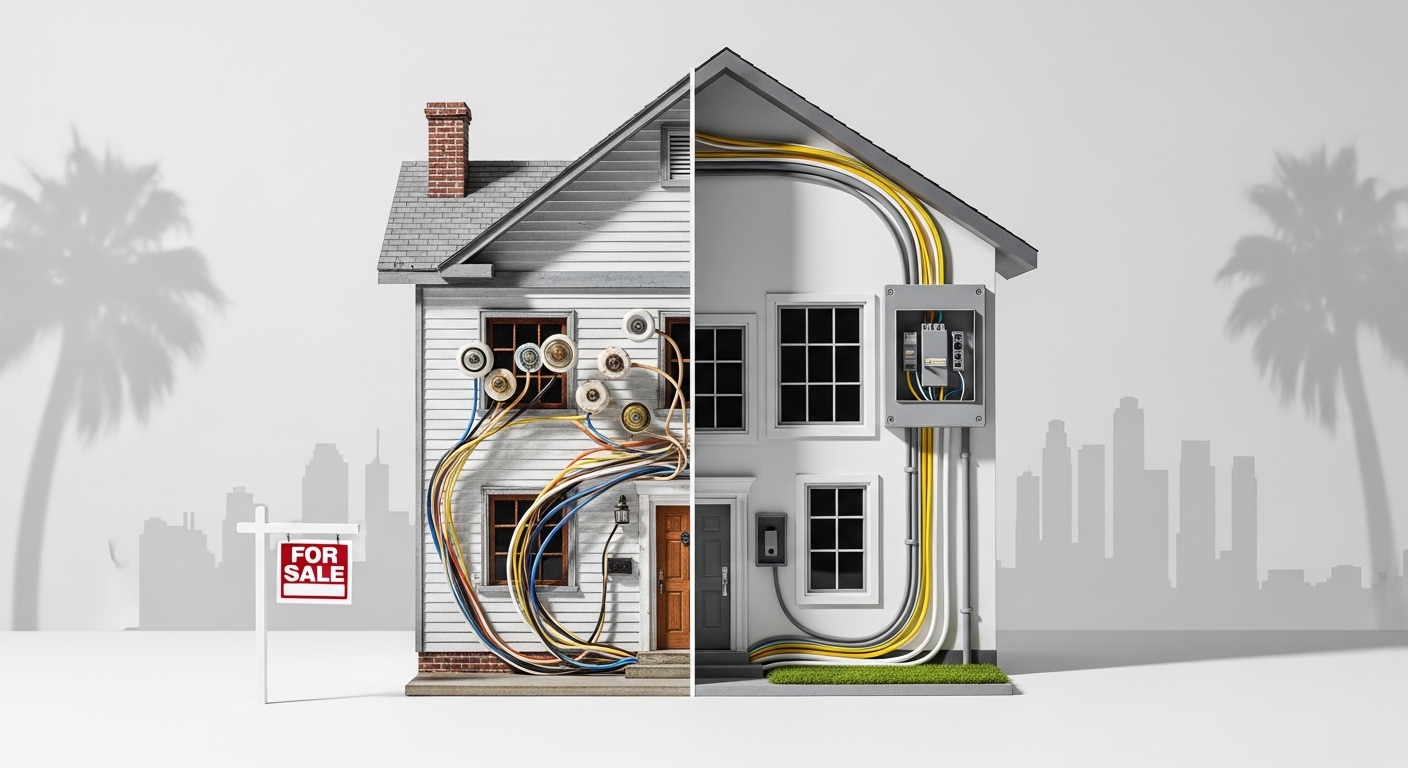
Knob and tube wiring is an early type of electrical wiring used in homes built roughly from the 1880s through the 1940s. It gets its name from the ceramic knobs used to hold the wires in place and the ceramic tubes that protect the wires where they pass through joists and framing. The system uses separate hot and neutral wires with no ground wire, which is the fundamental safety difference between it and modern wiring.
The core problem with knob and tube is not just age. It is that the system lacks a ground wire, which modern appliances and electronics require for safe operation. Without a grounding path, excess electricity has nowhere to go safely, which increases the risk of electric shock and fire. When this older wiring is combined with insulation that was added later in the home’s life, the fire risk increases further because the wiring cannot dissipate heat properly.
Is Knob and Tube Wiring Illegal in Los Angeles?
Knob and tube wiring is not automatically illegal in California. Existing wiring that has been inspected and found to be in good condition is often allowed to remain in place. However, it cannot be covered with insulation, it cannot be extended or modified without bringing the entire system up to modern code, and it creates major problems for insurance and financing on any home sale.
According to the California State Fire Marshal, older ungrounded wiring systems present elevated fire and safety risks compared to modern electrical standards, and any home improvement or renovation work that affects the electrical system in a home with knob and tube wiring triggers full compliance with current electrical codes.
The Insurance Problem That Will Limit Your Traditional Sale
This is the part that surprises most sellers. Many homeowner’s insurance companies in California will either refuse to insure a home with knob and tube wiring entirely, or they will require it to be fully replaced before issuing a policy. If a buyer cannot get homeowner’s insurance on your property, they almost certainly cannot get a mortgage. No insurance means no mortgage funding.
Even when insurance can be obtained, it may come with significantly higher premiums or exclusions for electrical fire damage. Buyers who are aware of this are going to factor it into their offer and their decision to proceed at all.
What Full Rewiring Costs in Los Angeles
A full rewiring of an older LA home is a significant project. It involves opening walls and ceilings to route new wiring throughout the home, installing a new electrical panel to current code, adding grounded outlets throughout the property, and passing inspections from LADBS. The work is invasive, requires the home to be uninhabited during much of the process, and takes weeks to complete.
Typical Rewiring Cost Ranges for LA Homes
In Los Angeles, a full rewiring project for a typical single-family home typically costs between $8,000 and $20,000 for smaller homes and can run $25,000 to $45,000 or more for larger or more complex properties. These costs include labor, materials, panel upgrade, and permit fees through LADBS. All work must be done by a licensed electrical contractor. You can verify contractor license status through the California Contractors State License Board.
Most sellers do not recover the full cost of rewiring in their sale price, particularly if the home needs other updates as well. The decision about whether to rewire or sell as-is depends on how much the rewiring will cost relative to what it adds to the sale price and how quickly you need to close.
How Knob and Tube Wiring Affects Buyer Financing
FHA and VA loans almost always refuse to fund on homes with knob and tube wiring because of the insurance and fire safety concerns. Conventional loan lenders are less restrictive but still commonly require the wiring to be updated before funding, especially if the appraiser notes it as a health or safety concern. Cash buyers are not affected by lender conditions, which is why they are often the most viable option for homes with this type of electrical system.
Here is a summary of how the main selling approaches compare when your older LA home has knob and tube wiring.
| Approach | Upfront Cost | Time to Sell | Buyer Pool | Best For |
|---|---|---|---|---|
| Full rewiring before listing | $8,000 to $45,000+ | 6 to 12 weeks | All buyers including financed | Sellers with budget and time |
| Disclose and offer credit | None upfront | 30 to 60 days | Mostly cash and some conventional | Sellers who want traditional process |
| Sell as-is to cash buyer | None | 7 to 21 days | Cash buyers and investors only | Sellers who need speed and certainty |
Your Options for Selling an LA Home With Knob and Tube Wiring
You have three real choices, and each one has a different cost, timeline, and buyer pool attached to it.
Should You Rewire Before Selling
If you have the budget and the time, rewiring before listing gives you the cleanest path to a traditional sale. A home with fully updated wiring, a new electrical panel, and grounded outlets is insurable and financeable. You open the home to all buyers, including those using FHA, VA, and conventional financing, which is where most buyer demand comes from in the LA market.
The honest trade-off is that full rewiring is a major project. You will likely need to leave the home for the work period, walls will need to be opened and patched, and the total cost can easily reach $20,000 to $30,000 for an average LA home. Most sellers do not get dollar-for-dollar back in the sale price from that investment, but they avoid deep buyer negotiations that typically result when knob and tube wiring is left in place.
According to the National Fire Protection Association, electrical fires account for roughly 46,700 home fires annually in the United States, and older ungrounded wiring systems are a contributing factor in many of these incidents. Having updated wiring not only helps you sell, it reduces risk for the future occupants of the home.
Selling As-Is With Disclosed Knob and Tube Wiring
If the rewiring cost is prohibitive or you simply want to sell quickly without managing a major construction project, selling as-is with full disclosure is a completely viable path. California law does not require you to rewire before selling. You must disclose the knob and tube wiring on the Transfer Disclosure Statement, and buyers will factor the cost into their offers.
Cash buyers and real estate investors who buy older homes in LA are very familiar with knob and tube wiring. They know how to price it accurately, and they do not have a lender or insurance company creating conditions on the deal. This is one of the cleaner as-is situations from a cash buyer perspective because the problem is well-understood and the cost of resolution is predictable.
For sellers dealing with other condition issues in older LA homes alongside the wiring, reading about selling an LA home that needs a roof replacement will give you a sense of how other major system issues play out in the selling process.
You might also find it helpful to read about how sellers navigate selling a Southern California home with severe weather damage, where similar as-is selling strategies and disclosure dynamics apply.
When you are ready to explore your options for selling your older LA home in any condition, contact our team today for a straightforward conversation about what your home is worth and how quickly we can help you close.
To learn more about how we work with sellers of all types of older and distressed properties throughout Los Angeles, visit our Los Angeles cash home buyers page.
Conclusion
Selling an older LA home with knob and tube wiring is manageable. The decision between rewiring before listing and selling as-is to a cash buyer comes down to your budget, your timeline, and what makes financial sense when you do the math honestly. If you can afford to rewire and want maximum buyer access, do the project right. If the cost is too high or you need to move quickly, disclose everything and let a cash buyer who understands older homes handle the work after closing.
Either way, trying to hide the wiring is not an option. Home inspectors in LA are trained to spot it, insurance companies will ask about it, and lenders will flag it. Full transparency is always your best protection.
Frequently Asked Questions
Do I have to disclose knob and tube wiring when selling in California?
Yes. California law requires sellers to disclose all known material defects including the type of electrical system in the home. Knob and tube wiring is a known safety and insurance issue that must be included on the Transfer Disclosure Statement. Failing to disclose it when you know it is present can result in legal liability after the sale.
Will a buyer’s insurance company cover a home with knob and tube wiring?
Many insurance companies in California either refuse to cover homes with knob and tube wiring or charge significantly higher premiums. Some insurers will only extend coverage if the wiring is replaced within a set timeframe. Without homeowner’s insurance, a buyer using a mortgage cannot get their loan funded. This is one of the main reasons knob and tube wiring limits your buyer pool to cash buyers.
How much does it cost to rewire an older LA home?
A full rewiring project in Los Angeles typically costs between $8,000 and $20,000 for a smaller home and can reach $25,000 to $45,000 or more for a larger or more complex property. These estimates include labor, materials, a new electrical panel, permit fees, and LADBS inspections. All work must be done by a licensed California electrical contractor.
Can I sell an LA home with knob and tube wiring without rewiring?
Yes. California law does not require you to rewire before selling. You must disclose the wiring type to buyers, but you can sell the home as-is. Cash buyers and investors are the most practical buyer pool for homes with knob and tube wiring because they do not face the insurance and financing barriers that traditional buyers encounter.
What is knob and tube wiring and when was it used?
Knob and tube wiring is an early electrical system used in homes built roughly from the 1880s through the 1940s. It uses ceramic knobs to hold individual wires along the framing and ceramic tubes where the wires pass through structural members. The system lacks a ground wire, which is required for modern appliances and electronics, and presents elevated fire safety risks compared to modern electrical systems.