
Getting a notice from the City of Los Angeles about a code enforcement violation is stressful enough on its own. Finding out there is a lien attached to your property right when you are trying to sell takes it to another level. The good news is that a code enforcement lien does not have to kill your sale. But you do need to understand what it means and what your real options are.
What Is a Code Enforcement Lien and How Does It Happen
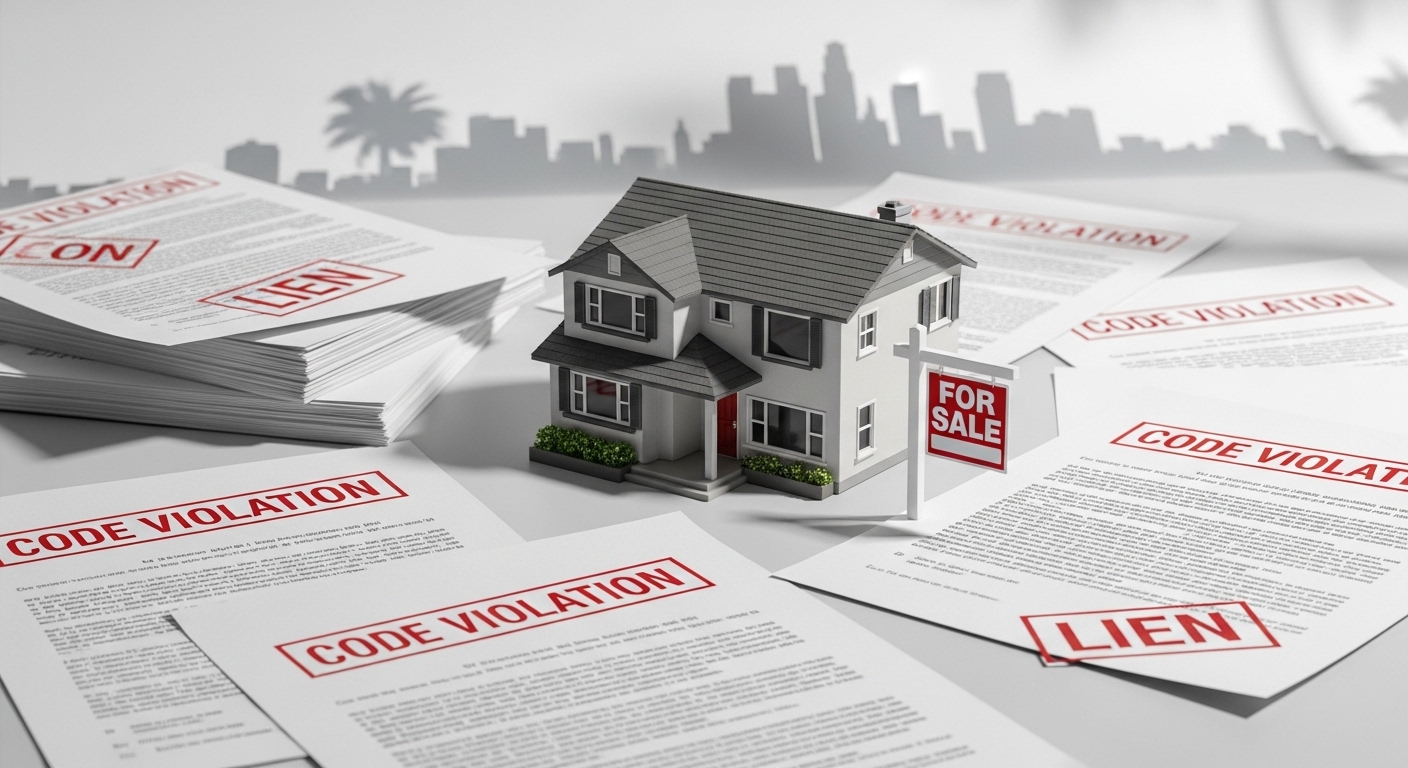
A code enforcement lien is a legal claim placed on your property by the city or county because of unresolved building or safety violations. In Los Angeles, the process starts when the Los Angeles Department of Building and Safety (LADBS) or the Los Angeles Housing Department (LAHD) issues a Notice of Violation or a Notice to Comply.
If the violation is not corrected within the deadline, fines start accumulating. If those fines remain unpaid and the violation is never addressed, the city can record a formal lien against the property title. According to the Los Angeles City Planning Department, code enforcement covers everything from unpermitted structures and hazardous conditions to zoning violations and nuisance properties.
Common Violations That Lead to Liens in Los Angeles
Most liens in LA come from a handful of common situations. Homeowners often do not realize a violation exists until they are deep into the selling process and the title company flags it.
- Unpermitted additions, garage conversions, or ADU construction done without city approval
- Roof or structural work completed without pulling the required permits
- Overgrown vegetation or debris that was cited as a nuisance and never cleared
- Electrical, plumbing, or HVAC work done without licensed contractors and permits
- Pool fence violations or safety hazards that were cited but not corrected
- Properties deemed substandard under the LAMC that were never brought into compliance
Fines in the City of Los Angeles can reach $1,000 per day per violation depending on severity, based on city enforcement guidelines. A situation that started as a small electrical issue can turn into a $20,000 or $30,000 lien if it sits unresolved for years.
How a Code Enforcement Lien Affects Your Home Sale
When you go to sell, a title company runs a search on the property. If there is a recorded lien, it shows up and must be addressed before or at closing. Most traditional buyers using mortgage financing simply cannot close on a property with an active lien because title insurance will not be issued, and no lender will fund a purchase without a clean title.
According to the Los Angeles County Department of Public Works, code enforcement cases initiated against private property can escalate through administrative action all the way to criminal or civil prosecution in extreme cases. This is why resolving violations before they become liens is always the smartest move.
How to Handle a Code Enforcement Lien Before Selling
The moment you find out about a lien, you have a few different paths you can take. None of them are impossible, and some are faster than others.
Option 1: Resolve the Violation and Pay Off the Lien
If the underlying violation is something you can fix, getting it corrected and then applying to have the lien removed is the most straightforward path. You hire a licensed contractor, pull the proper permits, get inspections done, and then request a clearance from the city. Once the violation is resolved, you work with the city to pay off the lien balance and get it released from your title.
This approach takes time, anywhere from a few weeks to several months depending on the complexity of the work and how backed up the city inspection schedule is. But it opens your home to the full pool of buyers, including those using conventional, FHA, or VA financing.
Option 2: Negotiate the Lien Amount With the City
Here is something a lot of sellers do not know. Cities and counties will sometimes negotiate the lien amount, especially if the violations have been or are being corrected. This is not guaranteed, but it does happen. You or your attorney can reach out to the relevant department and ask about a settlement or reduction based on your circumstances.
If the lien was accumulated largely through daily fines while the property was vacant, or if there were documented circumstances that delayed your ability to respond, those factors can sometimes work in your favor. It is worth at least asking before you assume you owe the full amount.
Option 3: Sell As-Is to a Cash Buyer Who Handles It
This is the path that many LA homeowners with code enforcement liens ultimately choose, especially when the violation is complicated or expensive to fix. Cash buyers and real estate investors regularly purchase properties with open code enforcement cases and liens. They factor the cost of resolution into their offer and take over the liability at closing.
If you need to sell quickly and do not have the time or money to correct violations and clear liens, working with our cash home buyers in Los Angeles is often the fastest and least stressful solution.
What Happens if You Ignore a Code Enforcement Lien When Selling
Some sellers think they can just disclose the lien and let the buyer deal with it. In practice, that rarely works for traditional sales. Here is a clear breakdown of how different situations play out.
| Situation | What Typically Happens | Impact on Sale |
|---|---|---|
| Active lien on title | Title company flags it during escrow | Most lenders will not fund the loan |
| Open code enforcement case | LADBS records show active violations | Reduces buyer pool to cash buyers only |
| Daily fines still accumulating | Lien balance grows during escrow period | Adds unpredictable cost to closing |
| Undisclosed violation found by inspector | Buyer may cancel contract or renegotiate | Loss of time and potential lawsuit risk |
California law requires sellers to disclose known violations and code enforcement actions on the Transfer Disclosure Statement. If you hide a lien or active case and a buyer discovers it after closing, you can face serious legal consequences. Full disclosure is not just the law, it is also your best protection.
Steps to Take Right Now if You Have a Code Enforcement Lien
Before you list your home or accept any offer, there are some practical steps that will help you understand exactly what you are dealing with.
- Look up your property on the LADBS Code Enforcement portal online to see all open cases and active violations
- Contact a title company early to get a preliminary title report that shows any recorded liens
- Get a written statement from the city showing the exact lien amount owed
- Talk to a licensed contractor about what fixing the underlying violation would actually cost
- Contact a real estate attorney if the lien is large or the situation involves complicated unpermitted work
Having all this information in hand before you start the selling process saves time and prevents deals from falling apart in escrow over surprises.
You might also find it helpful to read about how sellers handle red-tagged properties with unmaintained pools in LA, which involves a similar intersection of code enforcement, safety violations, and selling options.
It can also be useful to learn about how red-tagged earthquake damage properties are sold in California, since the code enforcement and disclosure process shares a lot in common with lien situations.
If your situation is urgent and you want to explore a fast cash sale, reach out to our team today. We can give you a clear picture of what your home is worth and how quickly we can help you move forward.
For official guidance on what violations qualify as code enforcement issues and what the formal resolution process looks like, the LADBS official website is the most reliable place to start your research.
Conclusion
A code enforcement lien in LA does not have to stop your sale. What it does require is a clear plan. Know your lien amount, understand your options, and choose a path based on your timeline and budget. For some sellers, paying off the lien and fixing the violation makes financial sense. For others, selling as-is to a cash buyer who handles it at closing is the smarter, faster move.
The worst thing you can do is ignore it and hope it goes away. Liens do not go away on their own. They sit on the title and grow if fines are still accumulating. Take action now, understand what you owe, and make a decision based on real information.
Frequently Asked Questions
Can I sell my LA home if there is an active code enforcement lien?
Yes, you can sell, but it significantly limits your options. Most mortgage lenders will not fund a purchase when there is an active lien on the title. Cash buyers and investors can still make offers, and the lien can often be paid off at closing from sale proceeds. You must disclose the lien to any buyer as part of California seller disclosure requirements.
How much can code enforcement fines grow to in Los Angeles?
According to Los Angeles enforcement guidelines, fines can reach up to $1,000 per day per violation depending on type and severity. A violation that goes unaddressed for months or years can generate a lien of $10,000 to $30,000 or more. This is why acting quickly after receiving any notice is so important.
Can code enforcement liens be negotiated down in California?
Sometimes, yes. Cities and counties will occasionally settle liens for less than the full amount, particularly if the underlying violations are being corrected or if there are documented circumstances that delayed compliance. Consulting with a real estate attorney is the best way to explore this option for your specific case.
Do I have to fix violations before selling my home in California?
California law does not require you to fix violations before selling. You are required to disclose known violations to buyers. Many cash buyers and investors will purchase homes as-is with open violations and handle the resolution after closing. For traditional buyers using financing, most lenders will require key violations to be resolved before funding the loan.
What should I do first if I find out my property has a code enforcement lien?
Start by looking up your property on the LADBS portal to see all open cases and violation details. Then get a preliminary title report from a title company to confirm the lien has been officially recorded. Once you know the exact amount and the nature of the violation, you can decide whether to resolve it yourself, negotiate with the city, or sell as-is to a buyer who will take it on.